
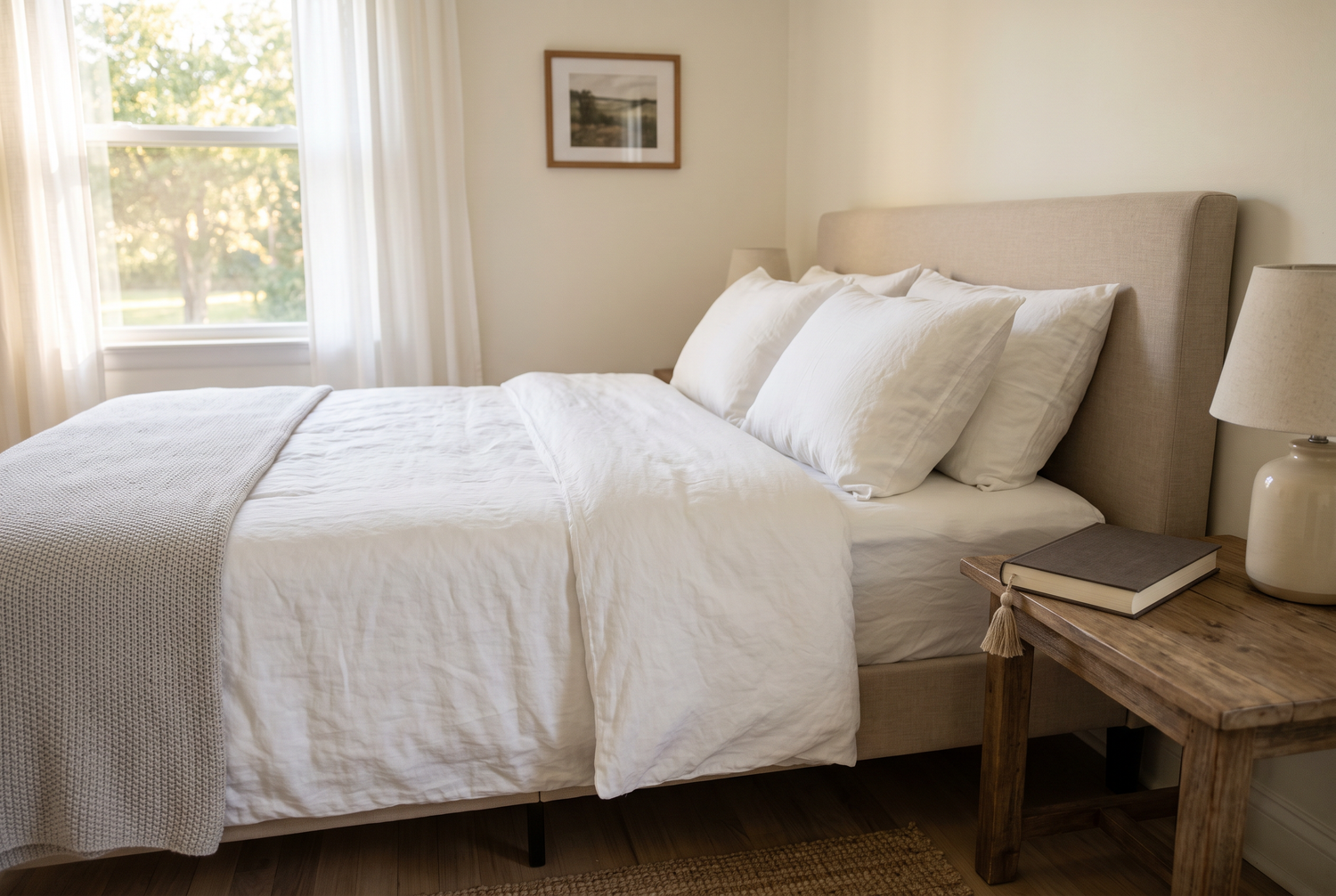
If you lie awake in bed for weeks and months, worrying, watching the clock, and getting annoyed by sleeplessness, you inadvertently train your brain: the bed becomes a signal for wakefulness, tension, and frustration. Many sufferers are familiar with the phenomenon of sleeping better on the sofa or in a hotel than in their own bed. This is precisely where stimulus control comes in, one of the oldest and best-researched methods against insomnia, developed in the 1970s by psychologist Richard Bootzin. It consists of a handful of clear behavioral rules that exclusively re-associate the bed with sleep. Studies show that stimulus control alone can reduce sleep onset time by an average of 30 to 40 minutes; in combination with sleep restriction, it forms the core of cognitive behavioral therapy for insomnia. This guide explains the rules, the psychology behind them, and practical implementation, including the question of what you should actually do at three in the morning if you have to get up.
The short answer: Stimulus control consists of six rules: Only go to bed when you are truly sleepy. Use the bed only for sleeping, not for reading, eating, watching TV, or worrying. If you haven't fallen asleep after about 20 minutes or are awake for longer at night, get up, leave the room, and only return when sleepiness sets in; repeat if necessary. Get up at the same time every morning, regardless of the amount of sleep. No naps during the day. And: establish a fixed ritual before going to bed. The method requires two to four weeks of consistency, but then works sustainably and without side effects.
- The bed should be a conditioned stimulus for sleep. Lying awake, worrying, and using screens in bed destroy this association.
- Core rule: After about 15–20 minutes of lying awake, get up, change rooms, engage in a quiet activity, and only return when sleepy; as often as necessary.
- Fixed wake-up time seven days a week stabilizes the internal clock; no naps.
- Do not look at the clock; a sense of time is sufficient. Turn the alarm clock away.
- First improvements after 1–2 weeks, stable effect after 3–4 weeks. Best combined with sleep restriction and sleep hygiene.
Why the bed can become the enemy: the psychology behind it
People learn through associations. A stimulus that is repeatedly coupled with a state will eventually trigger that state on its own. For healthy sleepers, the bed is associated with relaxation, darkness, and falling asleep; simply lying down lowers heart rate and muscle tension. For people with insomnia, this coupling is disturbed. After dozens of nights where the bed meant lying awake, worrying, and the fear of the next tired day, the body reacts with tension as soon as it lies down. The pulse rises, thoughts race, and the activation prevents exactly what one longs for.
This cycle is reinforced by behaviors that appear harmless at first glance: watching TV in bed, working, eating, talking on the phone, reading messages. Each of these activities couples the bed with wakefulness. Stimulus control erases the old association and builds a new one by consistently ensuring that you either sleep in bed or leave it. This sounds simple, but it is one of the most effective single measures in sleep medicine. Our article on stress and worrying in sleep problems describes how closely worrying and sleeplessness are related.
The six rules of stimulus control
Rule 1: Only go to bed when you are sleepy
Sleepy is not the same as tired or exhausted. Sleepiness is indicated by heavy eyelids, yawning, loss of concentration, and the feeling of drifting off right away. Anyone who goes to bed without this signal will lie awake.
Rule 2: Use the bed only for sleeping
No TV, no smartphone, no working, no eating, no prolonged reading. The only exception: sexuality. Everything else takes place outside the bed, ideally outside the bedroom.
Rule 3: Get up if you're awake
If you haven't fallen asleep after what feels like 15 to 20 minutes, get up, go to another room, and do something quiet in dim light. Only return to bed when sleepiness returns. This also applies to waking up at night and is repeated as often as necessary.
Rule 4: Fixed wake-up time
Get up at the same time every day, even on weekends, even after a bad night. The wake-up time is the strongest anchor for your internal clock. Read more in our article on the internal clock.
Rule 5: No naps
Daytime sleep reduces the sleep pressure you need at night. During the adjustment phase, naps are taboo; later, a short power nap before 3 PM is again possible.
Rule 6: Ritual before going to bed
A fixed sequence of 20 to 30 minutes, such as brushing teeth, dimming lights, reading a few pages in an armchair, breathing exercises, signals the body to transition. Our article on the perfect evening routine offers suggestions.

What to do if you have to get up at night?
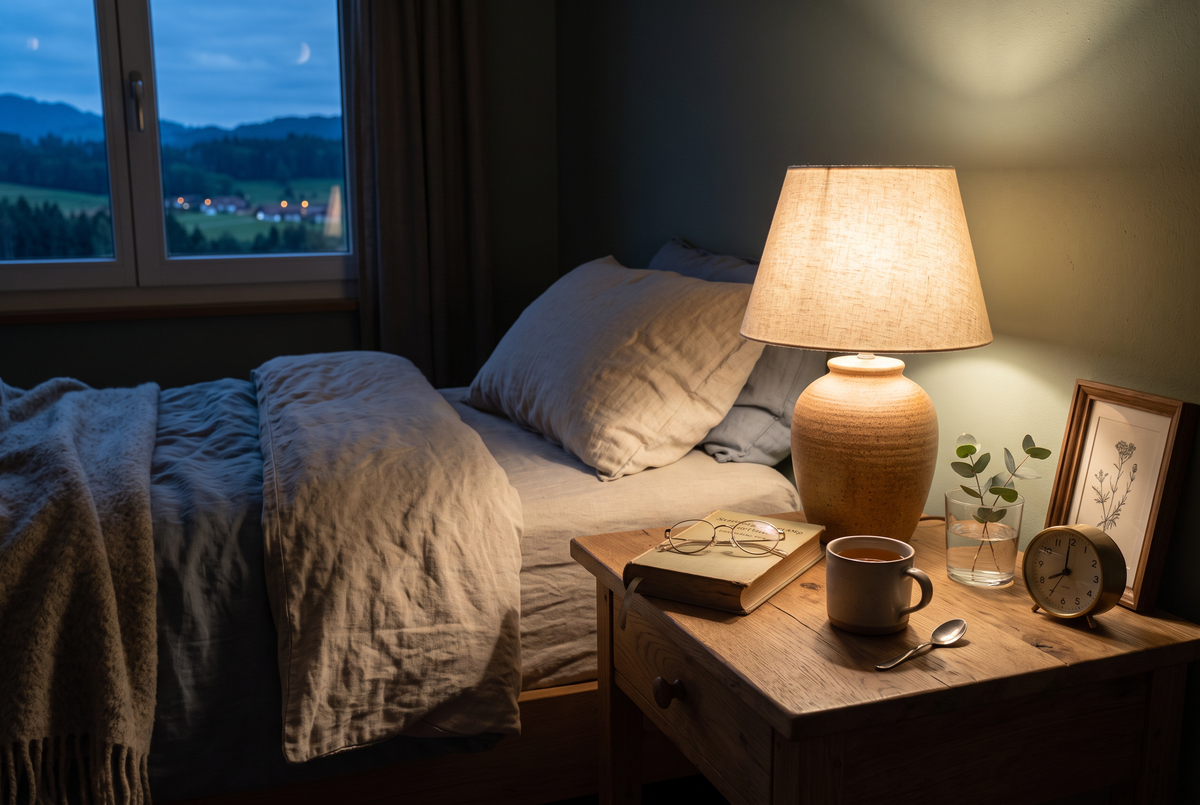
The "get up" rule is where most people have doubts. It feels wrong to leave a warm bed at three in the morning. But precisely this act of leaving breaks the connection between the bed and lying awake. What you do during this time is important. Anything quiet, not very stimulating, and not performance-related is suitable: reading a light book in an armchair in subdued, warm light (under 50 lux, like a small reading lamp), listening to calm music or an audiobook, doing a relaxation exercise such as a body scan or progressive muscle relaxation, drinking herbal tea, doing a boring household chore like folding laundry.
Unsuitable activities include screens with bright light, news and social media, work, stimulating conversations, eating large quantities of food, and exercise. Reading in bed also does not count as getting up. Keep the room you move to cool and dark enough so that melatonin production is not disturbed. Prepare everything in the evening: blanket, book, tea, so that the nighttime action does not require effort. Return to bed as soon as you feel you can fall asleep, not before. In the first few nights, this may happen three or four times; this is normal and will quickly decrease. If you cannot estimate the time without a clock: estimating is good enough. Looking at the clock would only create new calculations and new tension.
Stimulus control, sleep restriction, sleep hygiene: the comparison
| Method | Goal | Core Measure | Onset of Effect | Demands |
|---|---|---|---|---|
| Stimulus Control | Re-associate bed with sleep | Get up when awake, use bed only for sleeping | 1–2 weeks | Moderate (getting up at night) |
| Sleep Restriction | Build up sleep pressure, consolidate sleep | Limit time in bed to actual sleep time | 2–3 weeks | High (daytime sleepiness initially) |
| Sleep Hygiene | Remove disturbing factors | Regulate caffeine, light, temperature, alcohol | Immediate to weeks | Low |
| Cognitive Techniques | Reduce sleep-related worries | Examine thoughts, correct expectations | Weeks | Moderate |
| Relaxation Techniques | Reduce tension | PMR, breathing exercises, body scan | Days to weeks | Low |
Stimulus control alone is already effective; in combination with sleep restriction, studies show effects comparable to those of sleeping pills, but lasting longer. Both methods are core components of CBT-I.
Practice: the 4-week plan
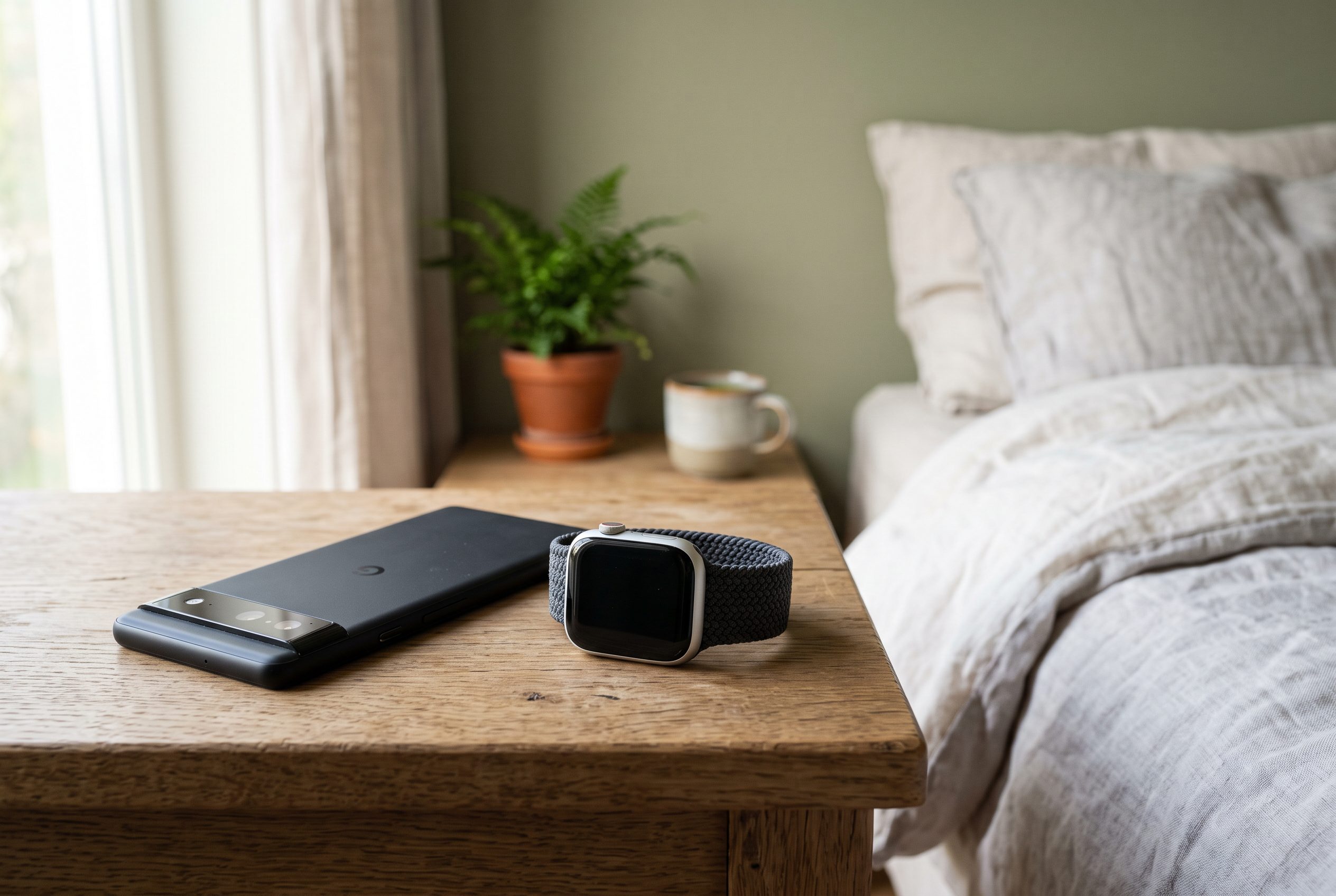
Week 1 is about preparation and observation. Keep a sleep diary, set a fixed wake-up time, and remove everything from the bedroom that doesn't belong to sleep: TV, laptop, work documents. Your smartphone now charges in another room; a simple alarm clock replaces it. Set up a "night spot" outside the bedroom: armchair, blanket, reading lamp, book. In Week 2, start with rules 1 to 5. Expect two to four getting-up episodes per night and daytime fatigue. Stick with it, even if it feels worse at first.
In Week 3, the getting-up episodes should become less frequent and the time to fall asleep should noticeably decrease. Now is the time to refine your sleep ritual and optimize your sleep environment: room temperature around 18 °C, blackout, quiet surroundings, a mattress that won't cause you to wake up due to pressure points or heat. In Week 4, stabilize the new pattern. Evaluate your diary: If sleep efficiency is over 85%, you can extend your time in bed in 15-minute increments. Stick to the rules, especially the fixed wake-up time; it is the most important protection against relapses even after the adjustment phase. In case of a relapse, for example after illness or travel, simply start again with Rule 3.
Common mistakes in stimulus control
The first and most common mistake is to stay in bed and wait. "Maybe I'll fall asleep soon" is the thought that maintains insomnia. If you don't implement the get-up rule, you can omit the rest. Second mistake: looking at the clock at night. Every glance creates calculations ("only four more hours") and tension. Turn your alarm clock away or cover it. Third mistake: picking up your smartphone when you get up. The bright light and content activate instead of calming, as our article on blue light and screens in the evening explains.
Fourth mistake: sleeping in on weekends as a reward. This shifts the internal clock and makes Monday a torment. If at all, deviate by a maximum of 30 to 60 minutes. Fifth mistake: going to bed too early because you are afraid of not getting enough sleep. Without sleepiness, the bed is the wrong place. Sixth mistake: catching up during the day after a bad night. The nap feels deserved but sabotages the coming night. Seventh mistake: giving up after two weeks because the effect is not yet stable. The method takes three to four weeks. Eighth mistake: perceiving stimulus control as punishment. It is not a test of willpower, but a learning process; kindness to oneself is part of it. And finally: applying the method even though there is an untreated physical cause such as sleep apnea, restless legs, or pain. These must be treated in parallel.

Get CHF 25 discount
Subscribe to our newsletter and receive a one-time CHF 25 discount. ✓ 200 nights trial sleep ✓ 10 years warranty
Frequent questions about stimulus control
What is stimulus control in sleep?
A behavioral therapy method that exclusively re-associates the bed with sleep. The core rules: only go to bed when sleepy, use the bed only for sleeping, get up if you're awake, fixed wake-up time, no naps.
How long should I lie awake before getting up?
About 15 to 20 minutes, estimated by feel, not measured by the clock. Looking at the clock would create new tension. As soon as you realize you can't fall asleep and are getting annoyed, that's the time.
What should I do at night if I get up?
Something quiet in dim light in another room: light reading in an armchair, calm music, a relaxation exercise, herbal tea. No screens, no work, no eating, no exercise. Return to bed only when sleepy.
How quickly does stimulus control work?
First improvements usually appear after one to two weeks, with a stable result after three to four weeks. In the first few nights, it may feel worse at first because you get up several times.
Can I read in bed?
Not during the adjustment phase. Reading belongs in an armchair or on the sofa. Later, when sleep is stable, a few minutes of quiet reading in bed can be part of the ritual, provided you don't stay awake.
Can I combine stimulus control and sleep restriction?
Yes, that is even the recommended approach in CBT-I. Sleep restriction builds up sleep pressure, stimulus control links the bed to sleep. Together, they are more effective than either method alone.
This article is for general information and does not replace medical advice.







Leave a comment
This site is protected by hCaptcha and the hCaptcha Privacy Policy and Terms of Service apply.