
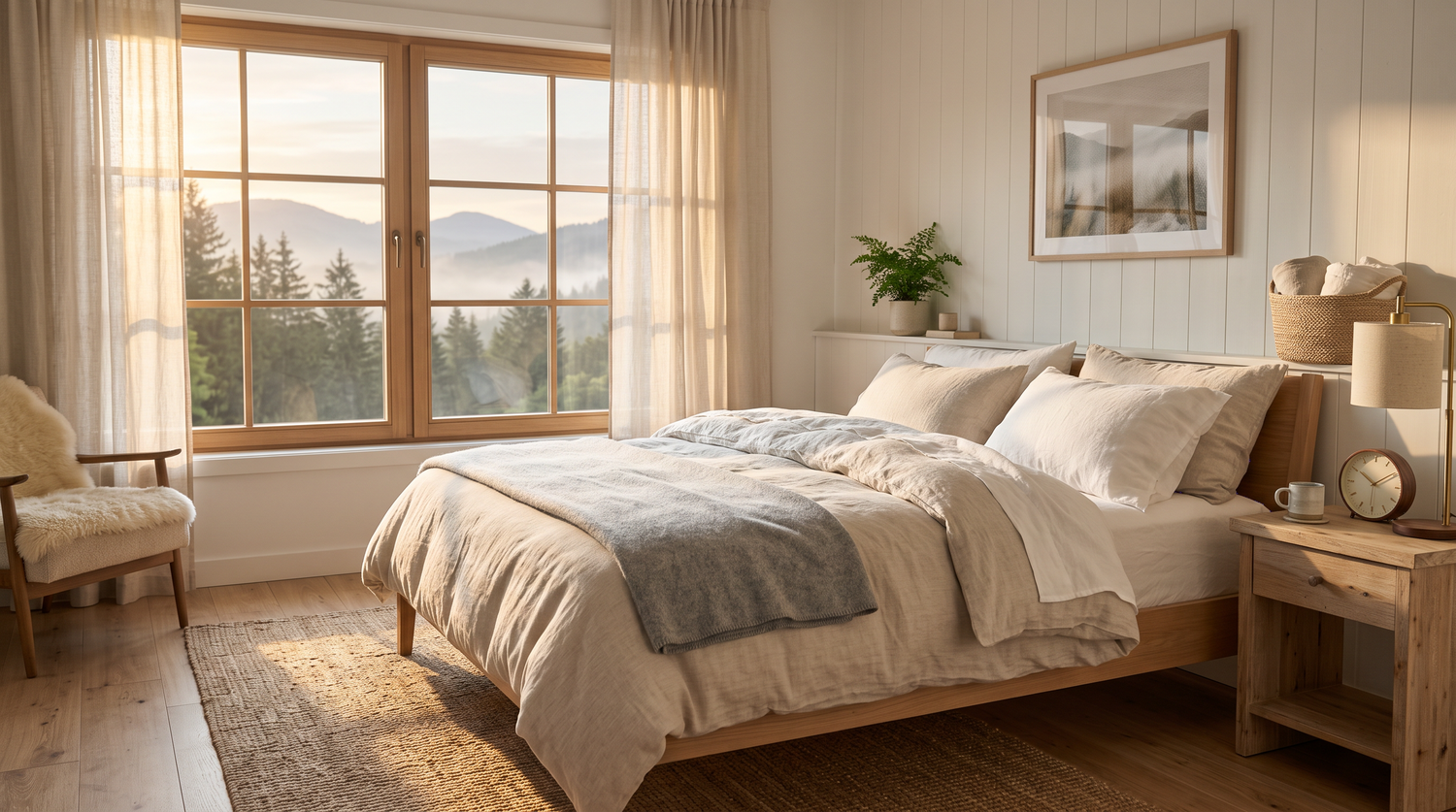
Why do you wake up at roughly the same time every morning – even without an alarm clock? And why do you often experience an energy slump in the afternoon? The reason for this is your internal clock, a delicate biological pacemaker that regulates sleep, wakefulness, hormones, and even your body temperature. Understanding and respecting this rhythm can lead to deeper sleep, more refreshed awakenings, and a more stable feeling throughout the day.
The short answer: The internal clock is the body's own 24-hour rhythm (circadian rhythm), primarily controlled by light. Daylight in the morning and darkness in the evening keep it in sync. Combining consistent sleep times, morning light, and a calm evening routine optimally supports your internal clock – the foundation for restful sleep.
- The internal clock follows an approximately 24-hour cycle and is readjusted daily by light.
- The main pacemaker is located in the brain (suprachiasmatic nucleus) and controls, among other things, melatonin release.
- Regular wake-up times and morning light are more effective than any miracle cure for sleep problems.
- A consistently comfortable sleep environment helps the internal clock reliably enter deep sleep.
What exactly is the internal clock?
The term "internal clock" describes a network of biological rhythms that affects almost every cell in the body. The entire process is centrally controlled by a tiny region in the brain, the suprachiasmatic nucleus in the hypothalamus. This group of cells acts like a conductor, coordinating the many small "clocks" in organs, muscles, and blood. Technically, this is referred to as the circadian rhythm – derived from the Latin "circa diem," meaning "about a day."
Interestingly, even without any external cues – for example, in a dark room without a clock – this rhythm continues. However, it is not exactly 24 hours long, but rather slightly longer for most people. Therefore, the internal clock needs to be "reset" daily. The most important control for this is light.

How light and melatonin interact
When daylight hits the retina in the morning, the eye sends a signal to the internal clock: the day is beginning. The sleep hormone melatonin is suppressed, and the body ramps up. In the evening, as it gets darker, melatonin production increases again – we get tired. This interplay explains why bright screen light late in the evening is so unfavorable: it tricks the internal clock into thinking it's daytime and delays sleepiness.
In addition to light, meals, exercise, and social routines also act as so-called zeitgebers (time cues). However, daylight remains the most powerful. Just 15 to 30 minutes outdoors in the morning can noticeably stabilize the internal clock – learn more in our guide on naturally boosting melatonin and blue light and screens in the evening.
The typical daily course of the internal clock
| Time of day | What happens in the body | How you can use it |
|---|---|---|
| approx. 6–9 am | Melatonin drops, cortisol and alertness rise | Get daylight, start the day actively |
| approx. 10 am–12 pm | Peak concentration ability | Plan demanding tasks |
| approx. 1–3 pm | Natural dip in performance | Short break, exercise, possibly power nap |
| approx. 6–9 pm | Body temperature begins to drop | Dim lights, reduce screen time |
| approx. 10 pm–6 am | High melatonin, deep sleep and regeneration | Darkness, cool environment, rest |
When the internal clock goes out of sync
Shift work, long-distance travel, irregular sleep times, or constant "scrolling" late into the night can disrupt the internal clock. The result: you lie awake at night, struggle to get out of bed in the morning, and feel exhausted during the day. Difficulty sleeping through the night is also often related to a shifted rhythm. The good news: the internal clock can be readjusted with patience and clear signals.
A frequently underestimated factor is the sleep environment. If you sweat at night, feel uncomfortable, or constantly change position, you interrupt deep sleep phases – and indirectly disrupt the circadian rhythm. A pleasantly cool, stable sleeping surface helps the body enter regeneration mode. Learn more in our articles on cool mattresses and the ideal sleep temperature.

7 everyday tips for a stable internal clock
- Fixed wake-up time: Try to wake up at the same time every day – even on weekends.
- Morning light: Go out into daylight or open the curtains wide after waking up.
- Dim lights in the evening: Reduce bright and blue light from late evening onwards.
- Time your caffeine intake: Avoid drinking coffee late in the afternoon – see our article on caffeine and sleep.
- Exercise: Regular physical activity during the day strengthens the rhythm.
- Bedtime ritual: A consistent evening routine signals to the body that it's time to sleep – more in our article on sleep hygiene.
- Comfort: Ensure a cool, dark, and comfortable sleep environment.
Get CHF 25 discount
Subscribe to our newsletter and receive a one-time CHF 25 discount. ✓ 200 nights trial sleep ✓ 10 years warranty
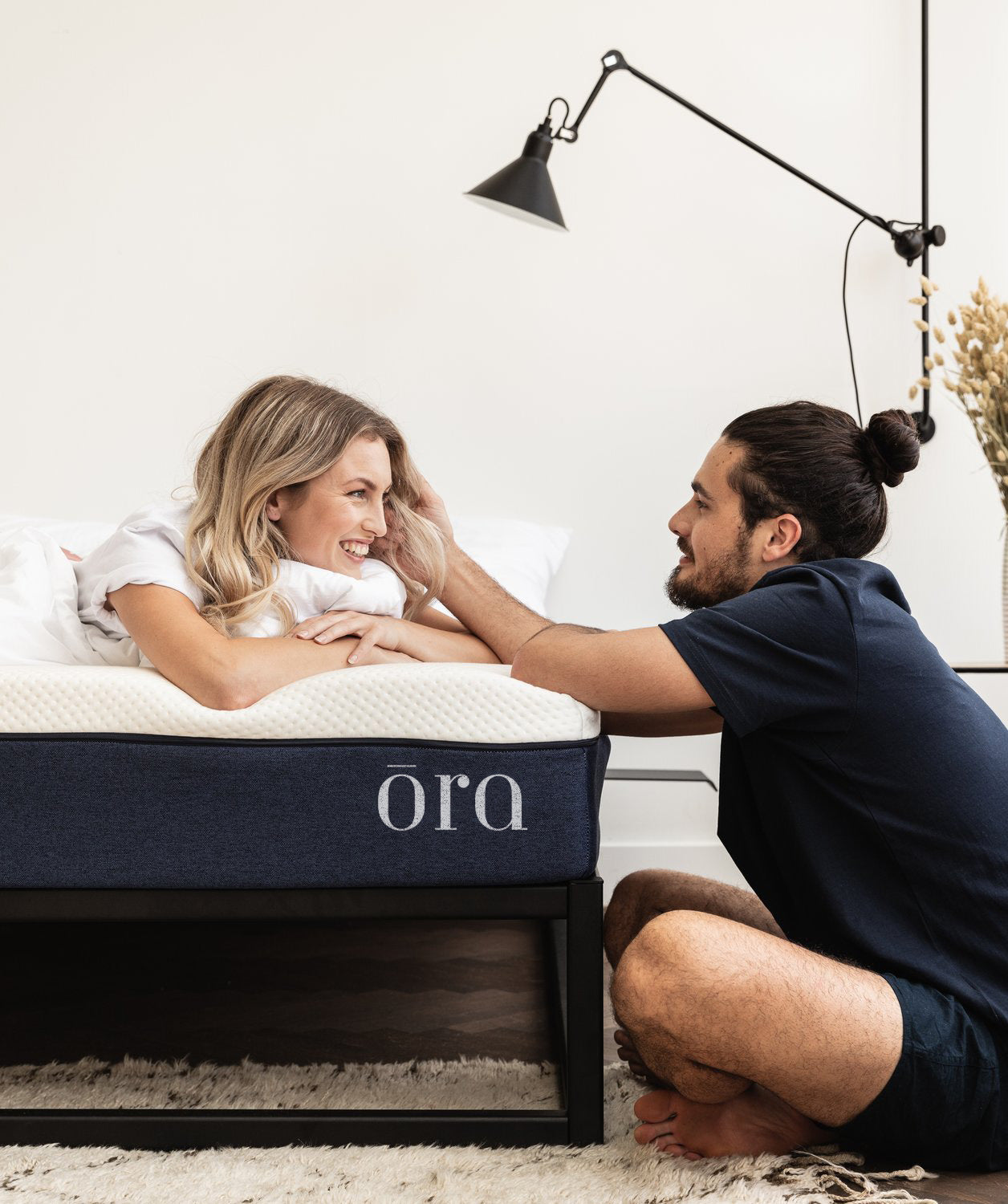
Your internal clock needs reliability – even when lying down. The Ora Ultra Mattress doesn't rely on rigid firmness levels, but on adaptive EvoPoreHRC Premium memory foam: A mattress that automatically adapts to your body and sleeping position – for everyone. This way, you'll find the same pleasantly cool, pressure-relieving sleeping surface night after night. Additionally, the Ora Ultra Topper provides extra comfort. Test it at your leisure: 200 nights trial sleep, 10 years warranty.
Frequently asked questions about the internal clock
Can you really reset your internal clock?
Yes, but gradually. The internal clock can only be shifted by about one to two hours per day. With consistent morning light, fixed times, and adjusted evening lighting, you can intentionally shift it forward or backward over several days.
How long does it take to stabilize the rhythm?
For minor shifts, a few days are often enough. After more significant disturbances like jet lag or shift changes, one to two weeks may be needed until everything has settled back into place.
Is a midday nap harmful to the internal clock?
A short power nap of 10 to 20 minutes in the early afternoon is usually unproblematic and can help overcome the afternoon slump. However, naps that are too long or too late can disrupt nighttime sleep.
Does the mattress affect the internal clock?
Not directly – but indirectly. A comfortable, temperature-regulating mattress promotes undisturbed deep sleep. And the more reliable your nights are, the more stable your circadian rhythm will be.
This article is for general information purposes only and does not replace medical advice.




Leave a comment
This site is protected by hCaptcha and the hCaptcha Privacy Policy and Terms of Service apply.