
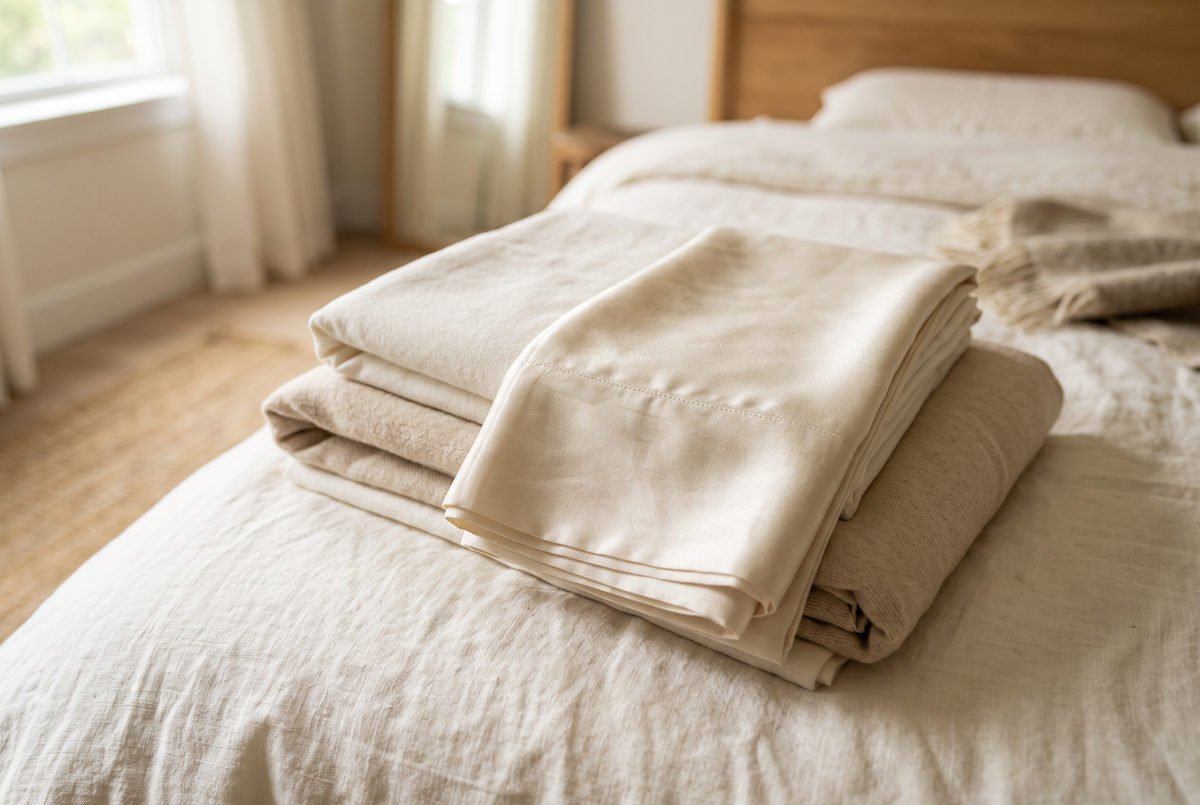
Anyone living with neurodermatitis knows that night is the most difficult time of day: itching increases in the evening, the skin gets warmer, scratching in semi-sleep is barely controllable, and in the morning, the sheets show what has happened. Approximately 2–4% of adults and up to 15–20% of children in Central Europe are affected by atopic dermatitis. Studies show that sleep disorders occur in over half of those affected and significantly impair quality of life. Bed linen lies directly on the skin for eight hours, making it one of the few factors you can immediately influence. This guide clarifies which materials soothe, which irritate, how often and how hot washing should be, and the role of room temperature and humidity.
The short answer: The best bedding for neurodermatitis is smooth, breathable, moisture-wicking, and free from irritants: long-staple cotton in sateen or percale weave, silk, Lyocell (Tencel), or special silver-fiber textiles. Wool, rough linen qualities, and most synthetic fibers irritate the skin or trap heat. Just as important as the material are washing at 60 °C without fabric softener and fragrances, weekly changes, and a cool bedroom at around 18 °C with 40–60% humidity, as heat and sweating are the strongest itching triggers at night.
- Heat, sweating, and friction are the main triggers for nocturnal itching. Bed linen must cool, wick away moisture, and be smooth.
- Recommended: Cotton sateen or percale made from long-staple cotton, silk, Lyocell, silver-fiber textiles. Avoid: Wool, coarse linen, polyester blends.
- Wash at 60 °C, without fabric softener, without fragrances and dyes, rinse thoroughly. Change weekly, in acute phases every 2–3 days.
- Bedroom at around 18 °C, humidity 40–60%, light, breathable duvet instead of heavy down comforter.
- Always wash new bedding before first use, pay attention to certificates such as OEKO-TEX Standard 100 or GOTS.
Why the skin itches more at night
Nocturnal itching in neurodermatitis has several biological reasons. First, skin temperature follows a diurnal rhythm: in the evening, blood vessels in the skin dilate to release body heat, the skin becomes 0.5 to 1 °C warmer, and heat directly enhances the sensation of itching. Second, the level of endogenous cortisol, which dampens inflammation and itching during the day, decreases in the evening. Third, transepidermal water loss increases at night, further drying out the already impaired skin barrier in neurodermatitis.
Added to this is the distraction gap: during the day, stimuli and tasks mask the sensation of itching, but in a quiet bed, it comes to the forefront. During sleep, conscious control is also lost, so sufferers scratch without realizing it. This leads to micro-arousals, less deep sleep, and a vicious cycle, because sleep deprivation itself increases inflammatory readiness. Our article Sleep and the Immune System explains the strong connection between sleep and the immune system. This is precisely where the right bed linen comes in: it can reduce heat and moisture and minimize mechanical friction.
What bed linen must do for neurodermatitis
Four properties determine whether a fabric soothes or irritates the skin.
Smooth surface
Every movement during sleep rubs fabric against the skin. Rough, short-fiber, or hairy materials act like fine sandpaper on the already weakened barrier. Smooth fabrics with a high thread count (sateen, percale, silk), on the other hand, glide.
Moisture management
Sweat on the skin is a strong itch trigger because salt and pH changes irritate the nerves. Fibers like Lyocell and cotton absorb moisture and release it into the ambient air; polyester hardly does this.
Temperature regulation
Breathable natural fibers allow heat to escape. Heat buildup under the duvet is one of the most common reasons for nocturnal scratching attacks.
Absence of harmful substances
Dyes, formaldehyde from finishes, optical brighteners, and fragrances from detergents can cause contact reactions in sensitive skin. Certificates such as OEKO-TEX Standard 100 (product class I for baby articles is the strictest) or GOTS provide guidance. More on this in our article on OEKO-TEX and harmful substances.

Material comparison: Which fabrics are suitable?
| Material | Suitability | Strengths | To consider |
|---|---|---|---|
| Cotton sateen / Percale (long-staple) | Very good | Smooth, breathable, boil-proof, affordable | Choose thread count from approx. 200 TC, undyed or GOTS |
| Silk | Very good | Extremely smooth, temperature-regulating, low friction | Washable only at 30 °C, expensive, delicate |
| Lyocell (Tencel) | Very good | Absorbs 50% more moisture than cotton, cool, smooth | Mostly washable only at 40–60 °C |
| Silver fiber textiles | Good (supplementary) | Antibacterial, can reduce Staphylococcus colonization | Research mixed, high price |
| Fine linen (washed) | Conditionally | Very breathable, cool | Coarse qualities rub, test individually |
| Wool, flannel (brushed) | Unsuitable | Warm | Hairy fibers irritate, heat buildup |
| Polyester / Microfiber | Unsuitable | Easy care | Poor moisture absorption, sweating, electrostatic |
A detailed comparison of all common fabrics can be found in our bed linen material comparison.
Proper washing: Temperature, detergent, frequency
For neurodermatitis, washing serves two purposes: it removes skin flakes, sweat, cream residues, and bacteria, and it must not leave behind any new irritants. The skin of neurodermatitis sufferers is colonized by the bacterium Staphylococcus aureus in over 80% of cases, which exacerbates inflammation. Bed linen thus becomes a reservoir. Washing at 60 °C kills the majority of these germs and also house dust mites, to which many sufferers are also allergic.
Regarding detergent: use liquid or powder detergent without fragrances, without dyes, and without optical brighteners, so-called sensitive products. Fabric softener is taboo because it leaves a film of cationic surfactants on the fibers, which can irritate the skin and reduce absorbency. Dose sparingly and use an extra rinse cycle so that no detergent residues remain in the fabric. If you are very sensitive, you can briefly iron the bed linen after washing; the heat smooths the fibers and further reduces germs. The change rhythm: normally weekly, in acute flare-ups with open sores every two to three days, pillowcases for facial eczema daily. Further information in our article How often to change bed linen.
The sleeping climate: the underestimated lever
Even the best bed linen is of little use if the bed becomes a heat trap. Dermatological recommendations and anecdotal evidence agree: cool nights mean less itching. A room temperature of around 18 °C, as cool as possible in summer, is a good target. Humidity should be between 40 and 60%: below that, the skin dries out further; above that, mites and mold spores multiply, both common allergens in atopic individuals.
The duvet is the second factor. Heavy down comforters trap heat; lighter duvets made of cotton, Lyocell, or thin synthetic fleece, which are washable at 60 °C, are better. In summer, a sheet is often sufficient. The mattress also plays a role: open-pored, breathable foams wick away moisture and can be combined with a washable cover or an encasing that shields mites. Our separate guide explains how an encasing works. A hygrometer and a thermometer by the bed together cost less than 20 Swiss francs and make the climate controllable. Further tips for the year-round indoor climate can be found in our article on the allergy-friendly bedroom.
Common mistakes with bedding and neurodermatitis
The first mistake is using new bedding unwashed. Textiles from the factory contain finishing agents, dye residues, and sometimes formaldehyde; two washes before the first use remove most of it. The second mistake is reaching for fabric softener because it makes the laundry feel "softer." However, the residue on the fibers is exactly what sensitive skin does not need.
Third, people often save money in the wrong places: a silk pillowcase for 40 Swiss francs is more beneficial for facial eczema than a complete silk set for 400 Swiss francs. Prioritize the contact surfaces that are most affected. Fourth: dark or brightly colored bedding. Dyes, especially disperse dyes in synthetics, are known contact allergens. Undyed or natural white fabrics are the safer choice. Fifth: sleeping too warm at night because one has kept the winter duvet out of habit. And finally: applying very greasy ointments immediately before going to bed, which then absorb into the bedding and clog the fabric. It is better to apply the evening basic care 20–30 minutes before bedtime and let it absorb, if necessary with cotton gloves or cotton pajamas for children to alleviate nocturnal scratching.

Get CHF 25 discount
Subscribe to our newsletter and receive a one-time CHF 25 discount. ✓ 200 nights trial sleep ✓ 10-year warranty
Frequently Asked Questions about Bedding for Neurodermatitis
Which bedding is best for neurodermatitis?
Smooth, breathable natural fibers: long-staple cotton sateen or percale, silk, or Lyocell. They cause little friction, wick away moisture, and, except for silk, can be washed at 60 °C. Undyed or GOTS-certified qualities are the safest.
Is silk bedding suitable for neurodermatitis?
Yes, especially as a pillowcase for facial eczema. Silk is extremely smooth and temperature-regulating. Disadvantage: it can only be washed at 30 °C, which limits germ reduction, and it is comparatively expensive.
At what temperature should I wash bedding for neurodermatitis?
Ideally at 60 °C. This temperature kills most skin germs like Staphylococcus aureus as well as house dust mites. Use a fragrance- and dye-free sensitive detergent and no fabric softener.
How often should I change my bedding?
Normally weekly. In acute flare-ups with open or weeping sores, every two to three days; pillowcases for facial eczema daily.
Does silver bedding help with neurodermatitis?
Silver fibers have an antibacterial effect and can reduce colonization by staphylococci. Some studies show an improvement in symptoms, others no clear advantage. It can be a useful supplement but does not replace basic care and sleeping climate.
What is the ideal room temperature at night for neurodermatitis?
Around 18 °C with 40–60% humidity. Heat and sweating are the strongest nocturnal itch triggers; a cool bedroom and a light, breathable duvet reduce both.
This article is for general information and does not replace medical advice.





Leave a comment
This site is protected by hCaptcha and the hCaptcha Privacy Policy and Terms of Service apply.