
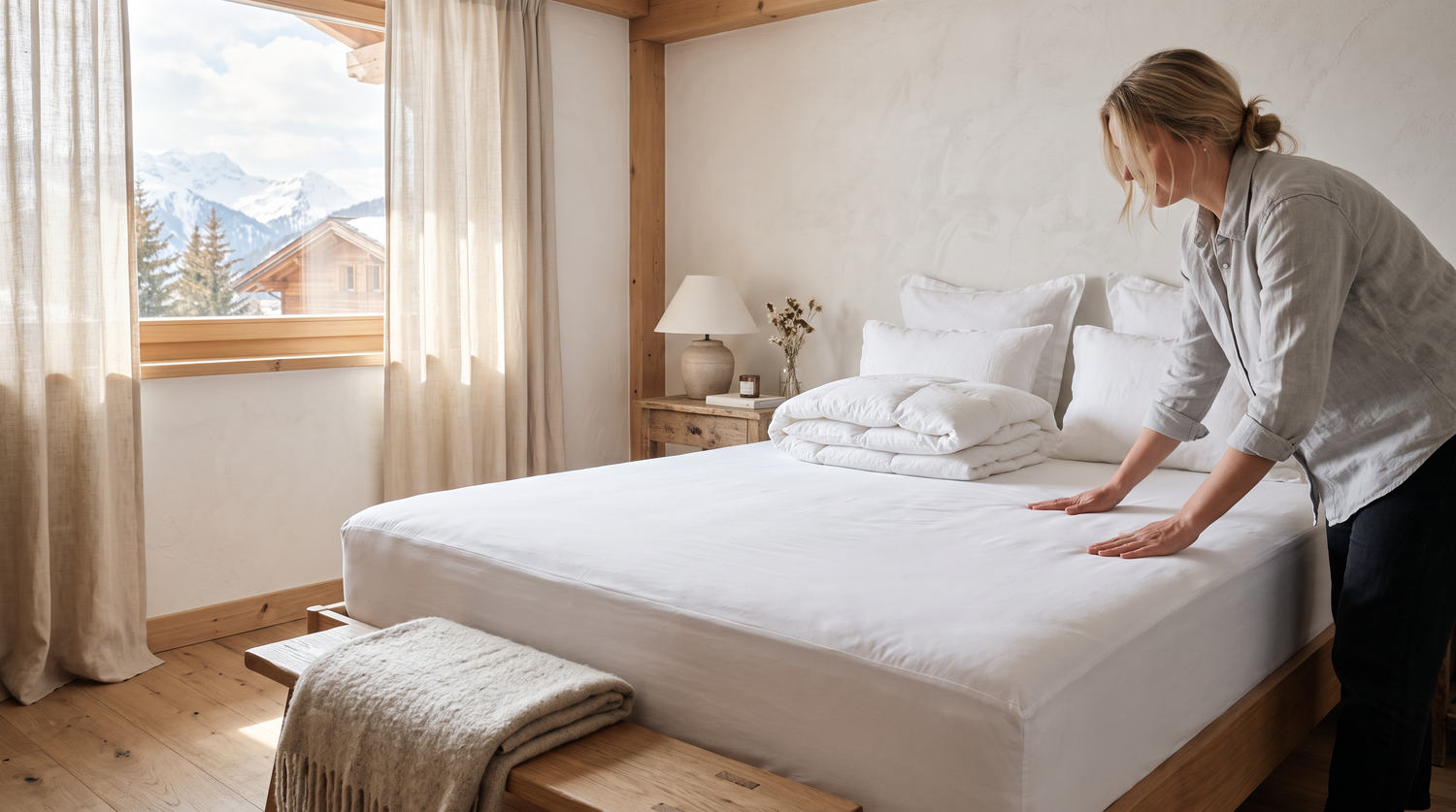
A good mattress is an investment in your sleep quality – and like any investment, it needs to be protected. At night, we lose up to half a liter of moisture, plus skin flakes, dust, and occasionally a spilled glass of water. Without a protective layer, all of this goes directly into the mattress core. Mattress protectors, waterproof pads, and encasings provide protection – but the terms are often confused. This guide brings clarity and shows which protection makes sense for whom.
The short answer: A mattress protector is a washable cover placed between the mattress and the fitted sheet, protecting against sweat, stains, and abrasion – for most people, it's the most sensible basic solution. An encasing, on the other hand, completely encloses the mattress with a dust mite-proof cover and is primarily intended for house dust allergy sufferers. Both extend the life of the mattress and significantly improve sleep hygiene.
- A mattress protector lies between the mattress and the fitted sheet, is washable at 60 degrees, and protects against sweat, skin flakes, and stains.
- An encasing completely covers the mattress in a dust mite-proof manner and is the most effective measure for house dust mite allergies.
- Waterproof pads with membranes are ideal for children, incontinence, or as stain protection – good models do not crinkle.
- Regular washing at 60 degrees kills mites and keeps the sleeping surface hygienic – this noticeably extends the life of the mattress.
Mattress protector, pad, encasing: An overview of the terms
Many names for similar products circulate in retail. Basically, four categories can be distinguished, which fulfill different tasks – and can sometimes be combined:
| Product | Position | Main purpose | Who it's suitable for |
|---|---|---|---|
| Mattress protector | Between mattress and fitted sheet | Protection against sweat, skin flakes, stains, and abrasion | Essentially for everyone |
| Waterproof pad | Between mattress and fitted sheet | Waterproof membrane against liquids | Children, incontinence, drinks in bed |
| Encasing | Completely covers the mattress | Dust mite-proof barrier | House dust allergy sufferers |
| Topper | On the mattress, under the sheet | Comfort and pressure relief, also protects the sleeping surface | Anyone who wants to improve sleeping comfort |
A topper, by the way, is not a substitute for a protector, but a comfort layer – our topper guide explains the differences in detail.
Why a mattress protector is worthwhile for almost everyone
The mattress itself cannot be put in the washing machine – its protector can. A good protector absorbs moisture and skin flakes before they get into the core and is simply washed regularly at 60 degrees. This reduces mite populations, prevents odor formation, and keeps the sleeping surface hygienic. At the same time, the additional textile layer protects the cover from abrasion and pilling. In short: A protector costs little but significantly extends the life of the mattress – you can read how to properly care for your mattress in general in the care guide.

Encasing: All-round protection for allergy sufferers
For a house dust mite allergy, a classic protector is not enough, because mites and their allergenic excretions are also found inside the mattress. An encasing – also called an allergen-proof mattress cover – completely encloses the mattress with a tightly woven fabric whose pore size is so small that mites and allergens cannot pass through. Studies show that when consistently used, the allergen load in the bed is significantly reduced. The complete package is important: Duvets and pillows should also receive an encasing, and bedding should be washed regularly at high temperatures. Additionally, a mattress with a removable, washable cover helps – more on this in the article about mite-resistant mattresses.
What to look for when buying an encasing
Look for a certified dust mite-proof fabric, an all-around zipper with a cover strip, breathable material without rustling, and washability at a minimum of 60 degrees. For house dust allergy sufferers, some health insurance companies in Switzerland cover part of the costs – it's worth asking.
Save CHF 25
Subscribe to the newsletter and receive a one-time discount of CHF 25. ✓ 200 nights trial sleep ✓ 10 years warranty
Care: How to keep the protection effective
Wash mattress protectors and waterproof pads every two to four weeks at 60 degrees – this temperature reliably kills mites. Encasings need to be washed less frequently, usually every two to three months. Air out the bed well in the morning before making it, so that residual moisture can escape. And while you're at it, take a look at the mattress itself: It's best to treat stains and odors early – you'll find instructions in the guide Cleaning your mattress. If the mattress already shows depressions, even the best protector won't help; in that case, it's worth taking a look at the article How often should you change your mattress?

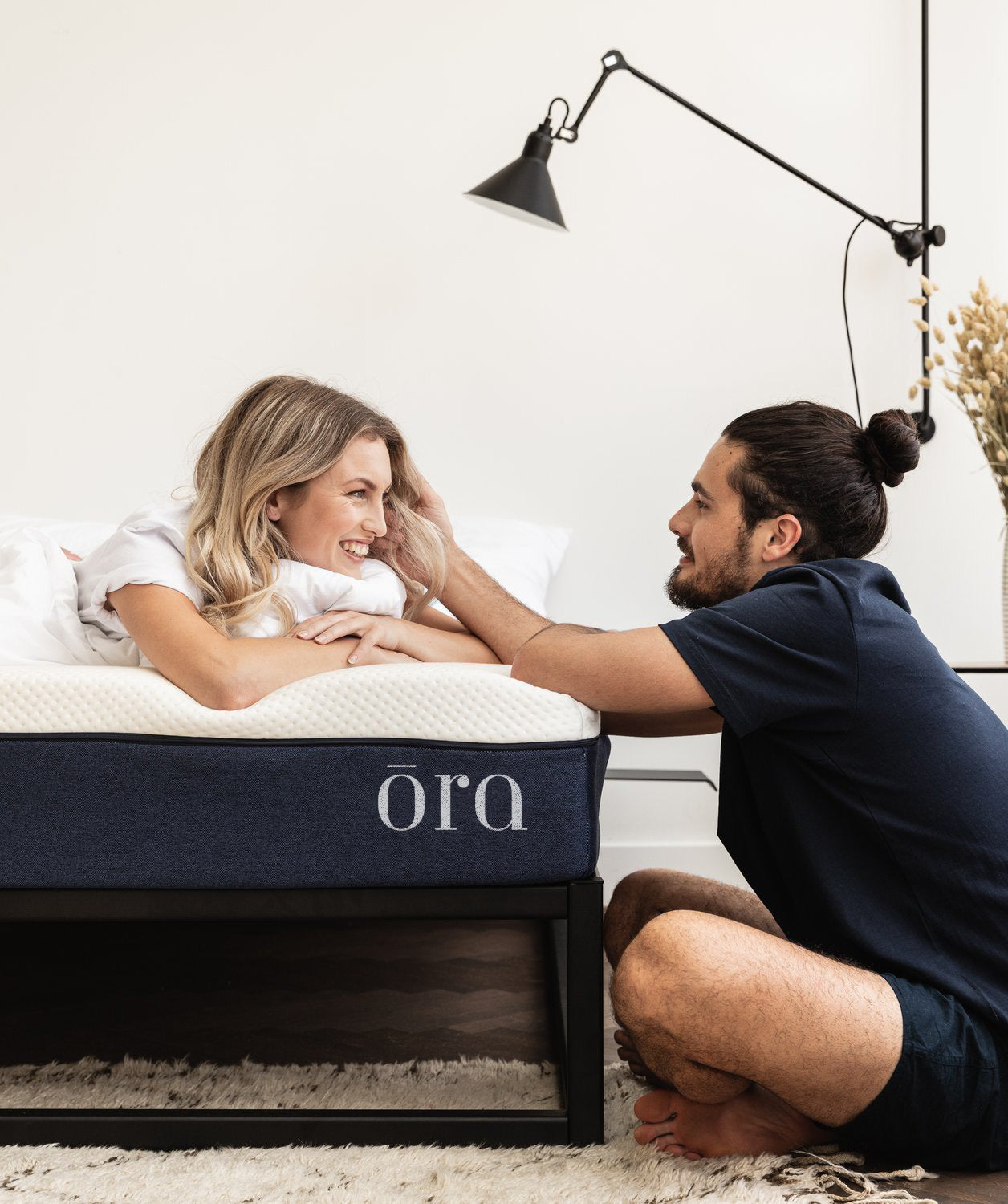
The Ora Ultra mattress is particularly easy to care for thanks to its removable, washable cover – and automatically adapts to every body and sleeping position with its EvoPoreHRC premium memory foam, without different firmness levels. If you also want a protective comfort layer, combine it with the Ora Ultra Topper; budget-conscious sleepers choose the tested Ora Ultra Second Life. All models come with 200 nights of trial sleep and a 10-year warranty.
Frequently asked questions about mattress protectors and encasings
What is the difference between a mattress protector and an encasing?
A mattress protector is a washable pad that lies on the mattress and protects against sweat and stains. An encasing completely surrounds the mattress with dust mite-proof fabric and is primarily aimed at house dust allergy sufferers.
Does every mattress need a protector?
It is recommended: A protector keeps moisture and skin flakes away from the mattress core, can be regularly hot-washed, and thus extends the hygiene and lifespan of the mattress – at low cost.
How often should a mattress protector be washed?
Every two to four weeks at 60 degrees. This temperature reliably removes mites and bacteria. Encasings are sufficient every two to three months.
Do mattress protectors make the bed warmer?
High-quality protectors made of breathable materials hardly affect the sleeping climate. For waterproof pads, it's worth looking at the membrane: Modern models are waterproof yet vapor-permeable, preventing heat build-up.









Leave a comment
This site is protected by hCaptcha and the hCaptcha Privacy Policy and Terms of Service apply.