
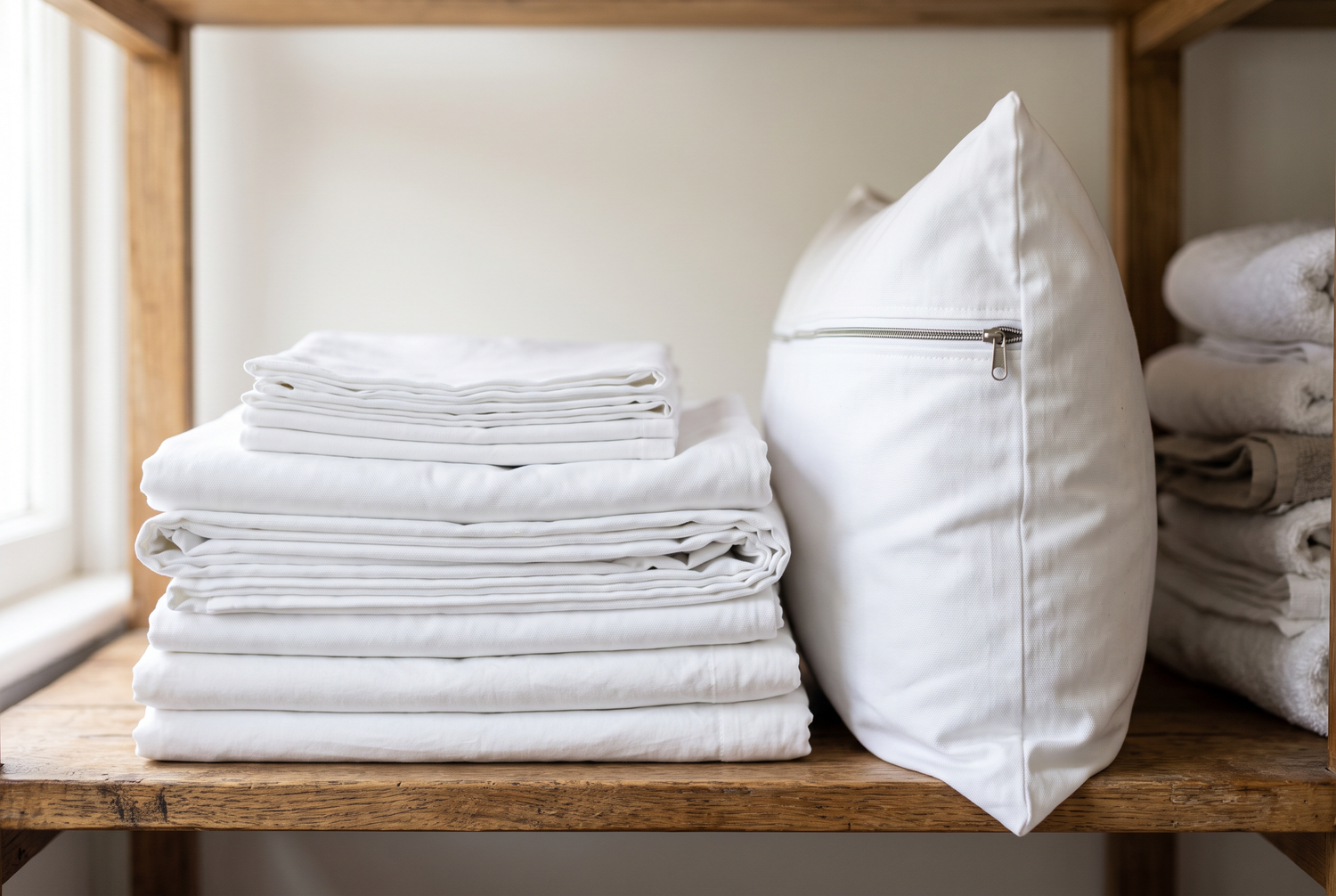
Anyone who wakes up with a stuffy nose, itchy eyes or a dry cough often attributes the cause to the pollen season – but it is frequently found right in the bed. Dust mites prefer to live where it is warm and humid and where there are plenty of skin flakes as food: in mattresses, pillows and duvets. Tens of thousands of mites can live in a used pillow, and it is not the mites themselves but their allergen-containing faecal particles that trigger the symptoms. For the approximately 20 percent of the population with a dust mite allergy – and also for pollen allergy sufferers and people with sensitive skin – the right bedding is therefore not a matter of comfort, but a preventative health measure. This guide shows which materials and weaves have proven effective, when an encasing makes sense, which washing routine reliably removes allergens and which mistakes unnecessarily increase the nightly allergen load.
The short answer: Allergy-friendly bedding is tightly woven, smooth and washable at at least 60 °C – cotton percale, cotton sateen or linen without synthetic coatings are ideal. For a confirmed dust mite allergy, a certified encasing for the mattress, pillow and duvet is additionally the most effective step: It physically separates the mite reservoirs from the sleeper. This includes a consistent washing routine: Bedding weekly to every two weeks at 60 °C, encasings every 2–3 months.
- Mite droppings are the main allergen in bed – it is crucial to reduce the allergen load: dense fabrics, 60°C wash, encasings.
- Percale, sateen and linen made of 100% natural fibre are ideal; microfibre bedding charges statically and attracts dust.
- Encasings with pore sizes below approx. 10 micrometres retain mites and allergens – the combination of mattress, pillow and duvet encasing is important.
- Washing at 60°C kills mites and removes allergens; at only 40°C, many mites survive the wash cycle.
- Pollen allergy sufferers should not dry bedding on the balcony indoors and rinse their hair before going to bed.
Why the bed is the most critical place in the home for allergy sufferers
We spend seven to eight hours a day with our faces a few centimetres above textiles that represent an ideal mite habitat: 25–30 °C warm, humid from sweat and breath, with approximately 1–2 grams of skin flakes per night as a food source. Mites themselves are harmless – they do not bite and do not transmit diseases. The proteins in their faecal pellets are problematic, as they disintegrate, are stirred up and inhaled. The consequences are a stuffy nose in the morning, sneezing fits, red eyes, and for asthmatics also nocturnal coughing and shortness of breath. Since the allergen concentration in bed is many times higher than in the rest of the living space, no other single measure is as effective as renovating the bed. You can read how severely the mattress itself is affected and what helps against it in the article Combating dust mites in the mattress.
Which materials are suitable for allergy-friendly bedding?
Three criteria count: weave density, washability and skin compatibility. Tightly woven fabrics offer mites and allergens less hiding space, 60°C washability ensures hygienic cleaning, and smooth, pollutant-tested fibres do not additionally irritate sensitive skin:
| Material | Washable up to | Suitability for allergy sufferers | Note |
|---|---|---|---|
| Cotton percale | 60–95 °C | very good | tightly woven, smooth, durable |
| Cotton sateen | 60 °C | very good | soft surface, good for sensitive skin |
| Linen | mostly 60 °C | good | moisture-regulating, naturally antistatic |
| Jersey (cotton) | 60 °C | good | elastic, but less tightly woven |
| Silk | 30 °C | limited | skin-friendly, but not hot washable |
| Microfibre/Polyester | 40–60 °C | less suitable | static charge attracts dust, traps heat |
Also pay attention to pollutant test seals such as OEKO-TEX Standard 100 – especially for sensitive skin and neurodermatitis, low-residue textiles are important. More on this in the guide OEKO-TEX and pollutants.

Encasings: the most effective single measure for mite allergy
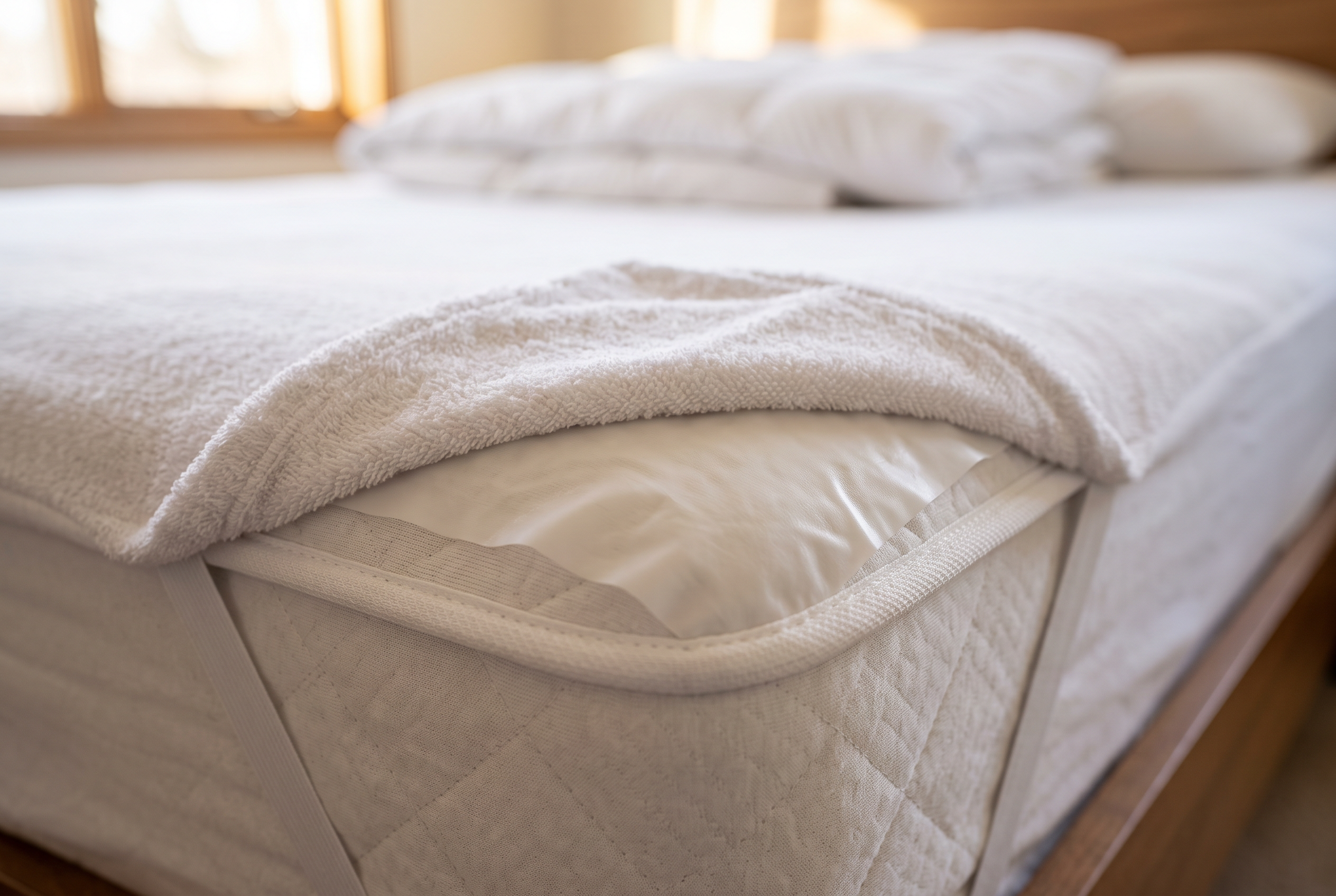
An encasing is an allergen-proof intermediary cover that completely encloses the mattress, pillow or duvet and seals it with a zip. High-quality encasings have pore sizes below approximately 10 micrometres – too small for mites and their faecal particles, but permeable enough for water vapour to keep the sleeping climate pleasant. Completeness is important: covering only the mattress is of little use if pillows and duvets remain an allergen source directly near the face. Studies have shown a significant reduction in allergen exposure with a complete encasing set, and many health insurance companies in Switzerland contribute to the costs for medically certified mite allergies – it’s worth asking. Normal bedding is simply pulled over the encasing and washed as usual; the encasing itself only needs to be machine-washed at 60 °C every two to three months. Detailed information on selection and care can be found in the article Mattress protectors and encasings.
The right washing routine against allergens
Temperature is key: at 60 °C, mites are reliably killed and protein allergens are washed out. At 40 °C, however, many mites survive – the laundry then reduces allergens, but does not solve the problem sustainably. The tried and tested routine: wash duvet covers and fitted sheets weekly to every two weeks at 60 °C, pillows and duvets (if washable) every three to six months, encasings every two to three months. Non-washable textiles such as some wool blankets can alternatively be placed in the freezer (–18 °C) for 24 hours – this kills mites, but does not remove the allergens, which is why subsequent rinsing or vacuuming is necessary. Heavy-duty detergents with bleaching components remove allergens somewhat better than delicate detergents; many sensitive people, however, react to fabric softeners with skin irritations. The article How often should bedding be changed? shows how often bedding should generally be changed.
Pollen, pet hair, neurodermatitis: other allergy triggers in bed
Not only mites disturb the sleep of allergy sufferers. Pollen allergy sufferers should not leave worn clothing in the bedroom, rinse their hair briefly before going to bed and not dry bedding outdoors during the season – otherwise the pollen will go directly into the bed. Briefly and vigorously ventilating in the morning (ideally 6–8 a.m. in the city, rather in the evening in the countryside) keeps the pollen load in the room low; more on this in the guide Pollen allergy in the bedroom. For pet hair allergy, the clear recommendation is: pets have no business in the bedroom – the allergens adhere stubbornly to textiles. And those who suffer from neurodermatitis benefit from smooth, soft fabrics without rough seams, from unscented detergents and from cool sleeping temperatures of around 17–18 °C, as sweating intensifies itching. A completely well thought-out concept for the room is provided in the article Allergy-friendly bedroom.
Common mistakes made by allergy sufferers when it comes to bedding
Mistake one: only changing the bedding, but keeping pillows and duvets for years. Both are true allergen reservoirs after years – choose washable models and replace them regularly. Mistake two: buying "anti-allergenic" bedding and neglecting the washing routine; no material replaces the 60°C wash. Mistake three: making the bed immediately in the morning. It's better to turn back the duvet and let moisture evaporate for an hour – a dry bed noticeably slows down mite growth, because mites hardly multiply below 50 percent relative humidity. Mistake four: using humidifiers in the bedroom for mite allergy – high humidity promotes mites. Mistake five: ignoring the old mattress. A mattress older than ten years contains a significant allergen load, which even the best encasing only dampens; at the latest then, switching to a hygienically fresh model with a removable, washable cover is the more sustainable solution.
Save CHF 25
Subscribe to the newsletter and receive a one-time CHF 25 discount. ✓ 200 nights trial sleep ✓ 10 years warranty

Frequently asked questions about bedding for allergy sufferers
What bedding is best for dust allergy sufferers?
Tightly woven, smooth natural fibre fabrics such as cotton percale or cotton sateen that are washable at at least 60 °C. In combination with encasings for mattresses, pillows and duvets, they are most effective in reducing the allergen load in bed.
At what temperature must allergy-friendly bedding be washed?
At 60 °C: This temperature reliably kills dust mites and washes out the protein allergens. At 40 °C, many mites survive the wash cycle, so the bed quickly becomes re-infested.
What does an encasing really do?
An allergen-proof encasing physically separates the mite reservoirs in mattresses, pillows and duvets from the sleeper and is considered the most effective single measure for mite allergies. The complete set is important – simply covering the mattress is not enough.
Is microfibre bedding good for allergy sufferers?
Not really. Microfibre charges statically and attracts dust, traps heat and moisture, thus creating mite-friendly conditions. Natural fibres that are washable at 60 °C are the better choice.
How often should allergy sufferers replace pillows and duvets?
Washable pillows and duvets should be washed every three to six months and, depending on their condition, replaced approximately every three to five years – they accumulate significant amounts of mite allergens over time.
Does frequent ventilation help against mites in bed?
Yes, indirectly: mites hardly reproduce below approximately 50 percent relative humidity. Daily airing and an uncovered bed airing out in the morning reduce humidity and thus slow down mite growth.
This article serves as general information and is not a substitute for medical advice.









Leave a comment
This site is protected by hCaptcha and the hCaptcha Privacy Policy and Terms of Service apply.