
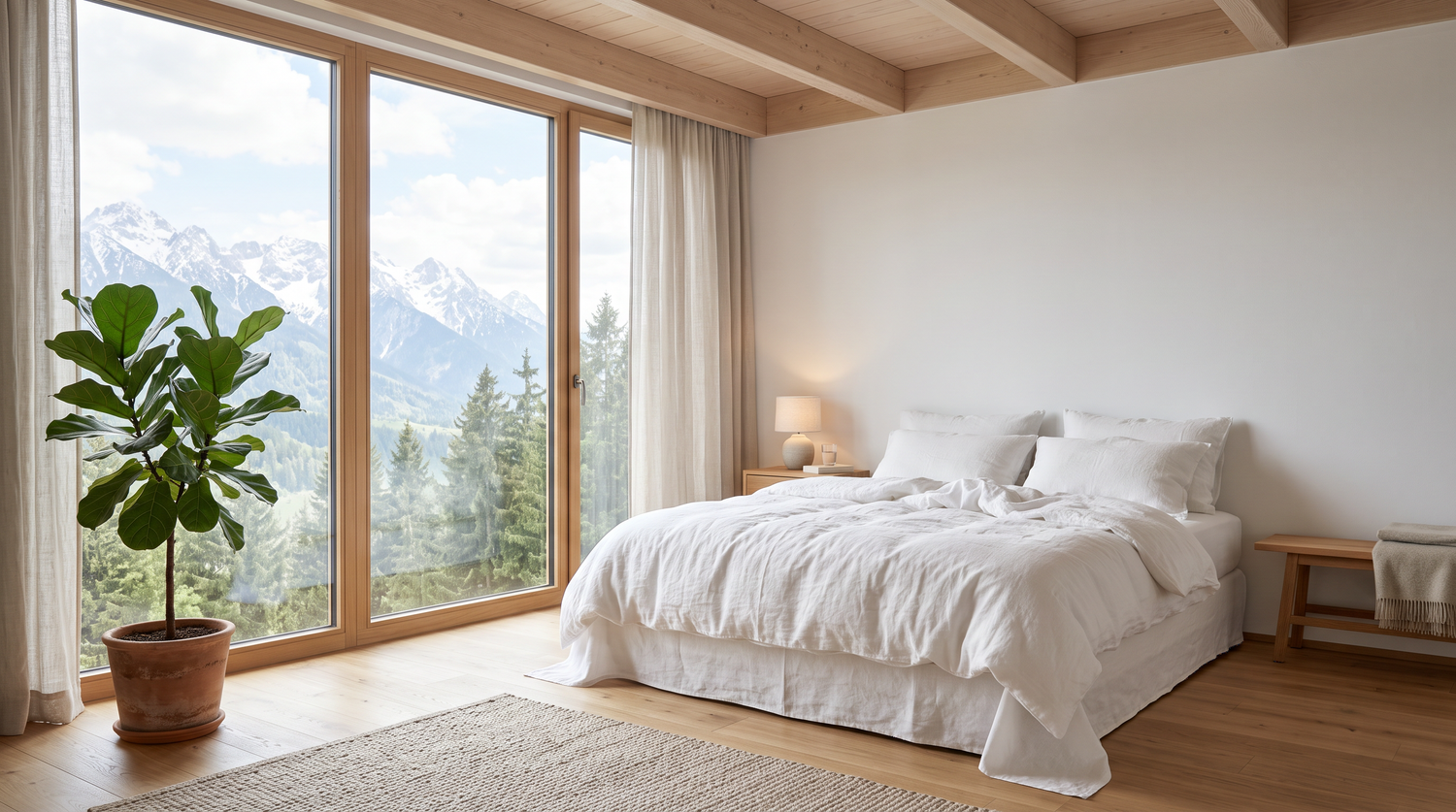
We spend about a third of our lives in bed – with our noses just a few centimetres from the cover and foam core. No wonder many people ask when buying a mattress: What's actually in it? Terms like OEKO-TEX mattress, "tested for harmful substances" or "low-emission" appear everywhere – but what of it is a genuine promise of quality and what is just marketing?
The short answer: OEKO-TEX Standard 100 is one of the world's best-known testing labels for textiles. It certifies that all components of a product – for mattresses, this means the cover, seams, zipper, and foam – have been tested for over 1000 potentially harmful substances and comply with defined limit values, which are often stricter than legal requirements. An OEKO-TEX certified mattress is therefore considered harmless to human health. However, the label says nothing about sleeping comfort, durability, or ecological balance – further criteria are needed for that.
- OEKO-TEX Standard 100 tests mattresses for over 1000 harmful substances – from formaldehyde to plasticizers.
- Product class I (baby articles) has the strictest limit values; many adult mattresses also meet them.
- A slight new smell is normal for freshly unpacked mattresses and dissipates after a few days of airing.
- The label does not replace an assessment of comfort and ergonomics – check both.
What harmful substances can be found in mattresses?
Modern brand mattresses from European production are generally harmless today. The main problems are very cheap imported goods without certification and older mattresses from times of laxer regulations. Relevant substance groups include:
- Volatile organic compounds (VOCs): Solvent residues from foam production that cause the typical "new smell". Harmless in low concentrations, they dissipate when aired.
- Formaldehyde: Can occur in adhesives and textile finishes; irritates mucous membranes and is classified as carcinogenic – therefore strictly limited.
- Plasticizers (phthalates): Primarily relevant in coated fabrics and foils; some are considered hormonally active.
- Flame retardants: Hardly necessary for residential mattresses in Switzerland and the EU; certain brominated compounds are controversial for health.
- Azo dyes and heavy metals: Can appear in dyed covers; certain azo dyes are banned in the EU.
Important for classification: The dose makes the poison. Certified mattresses usually fall significantly below the limit values – the real everyday problem in bed is more likely to be mites and allergens than chemicals.
What exactly does OEKO-TEX Standard 100 test?
The STANDARD 100 by OEKO-TEX has existed since 1992 and is awarded by independent institutes. The entire product, with all its components, is always tested: cover fabric, yarn, zipper, adhesives, and foam core. The criteria are updated annually and often go beyond legal requirements in many respects. Certificates are time-limited and must be renewed regularly – including control tests.
The four product classes
| Product Class | Purpose | Requirement Level |
|---|---|---|
| Class I | Babies and toddlers up to 3 years | Strictest limit values, incl. saliva fastness |
| Class II | Textiles with direct skin contact (e.g. bedding, mattress covers) | Very strict |
| Class III | Textiles without direct skin contact (e.g. jacket outer fabrics) | Strict |
| Class IV | Decoration materials (e.g. curtains, tablecloths) | Basic level |
For mattresses and covers, Class II is the usual standard; children's mattresses should ideally meet Class I. In addition to Standard 100, there are other testing approaches such as the supplementary standard for leather or comprehensive sustainability labels – for the issue of harmful substances in mattresses, Standard 100 is the most important reference.

How to recognise a harmless mattress
1. Check the certificate instead of believing advertising promises
"Tested for harmful substances" is not a protected term. Look for the specific label with the test number and institute – every valid OEKO-TEX certification can be verified online in the label check. Reputable manufacturers transparently state the number.
2. Pay attention to European production
Mattresses from Swiss or EU production are subject to the REACH chemical regulation and strict product safety requirements. You can read more about regional quality characteristics in the article on Swiss mattresses.
3. Correctly classify the new smell
A slight inherent odour after unpacking – especially with vacuum-packed rolled mattresses – is not an alarm sign, but physically normal: volatile substances could not disperse in the foil. Let the mattress air out in a well-ventilated room for two to three days. However, if a pungent odour persists for weeks, it is a reason for complaint.
4. Choose a removable, washable cover
Hygiene is everyday harmful substance prevention: A washable cover reduces mites, skin flakes, and moisture. The guide Cleaning a mattress shows how to keep the cover and core clean.

Harmful substance-free is a must – ergonomics is the bonus
A clean test certificate is the basis, but not yet a guarantee for good sleep. At least as important is that the mattress supports your body correctly. Here it is worth taking a critical look at the widespread firmness level system: The levels H2 to H4 are not standardised and vary from manufacturer to manufacturer – an outdated concept that causes more confusion than guidance.
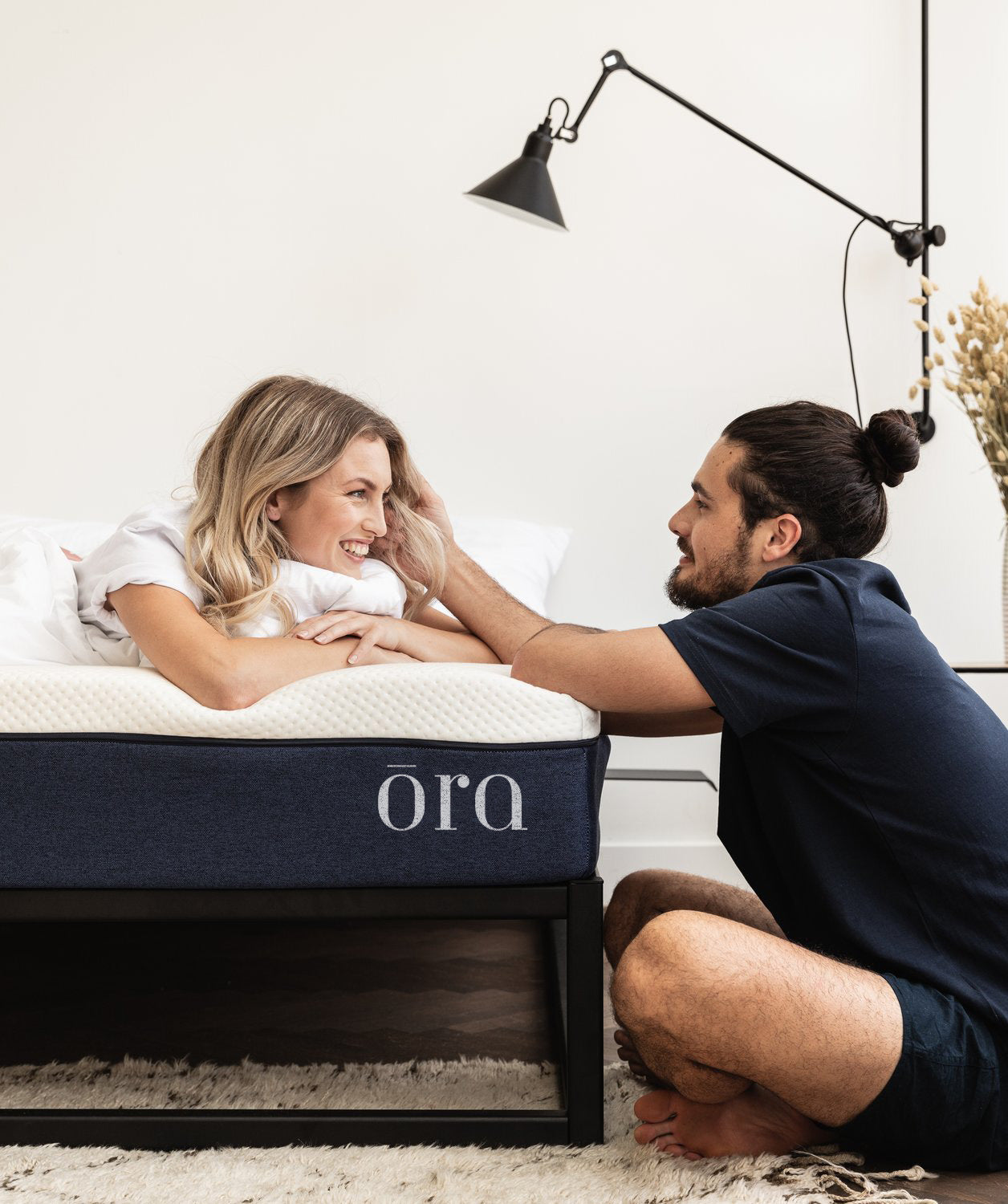
Modern materials solve this more elegantly: The EvoPoreHRC Premium memory foam of the Ora mattress automatically adapts to body weight, body shape, and sleeping position – an adaptive mattress for everyone, without a firmness level decision. So when buying, you only have to pay attention to two things: tested material quality and the right mattress size. You can read about what else distinguishes high-quality mattresses in the article on quality features of mattresses.
Get CHF 25 discount
Subscribe to the newsletter and receive a one-time CHF 25 discount. ✓ 200 nights trial sleep ✓ 10 years warranty
Tested quality that adapts: the Ora Ultra mattress
The Ora Ultra mattress combines harmful substance-tested materials with adaptive EvoPoreHRC Premium memory foam, which automatically adapts to every body. The cover is removable and washable. Sustainable and more affordable: the refurbished Ora Ultra Second Life mattress. Both with 200 nights trial sleep and 10 years warranty.
Frequently Asked Questions about OEKO-TEX and Harmful Substances in Mattresses
What does OEKO-TEX mean for a mattress?
The STANDARD 100 by OEKO-TEX label certifies that all components of the mattress – cover, seams, zipper, and foam – have been tested in independent laboratories for over 1000 potentially harmful substances and comply with strict limit values.
Are foam mattresses harmless to health?
Yes, provided they are certified. Modern cold foams and memory foams from European production are fully polymerised and low-emission. The slight new smell after unpacking consists of harmless volatile substances and dissipates after a few days of airing.
How long should a new mattress air out?
Two to three days in a well-ventilated room are usually sufficient. Do not put a cover on the mattress during this time and ventilate the room several times a day. After that, the typical new smell has usually completely disappeared.
Is an OEKO-TEX mattress automatically sustainable?
No. Standard 100 tests the freedom from harmful substances of the end product, not the ecological balance of production. For sustainability, longevity, reparability, and recyclability are also important – for example, through concepts such as refurbished Second Life mattresses.
Which OEKO-TEX class does a child's mattress need?
For babies and toddlers up to three years, Product Class I applies with the strictest limit values, including saliva and perspiration fastness. For older children and adults, Class II is the usual standard.
This article is for general information only and does not replace medical advice.




Leave a comment
This site is protected by hCaptcha and the hCaptcha Privacy Policy and Terms of Service apply.