
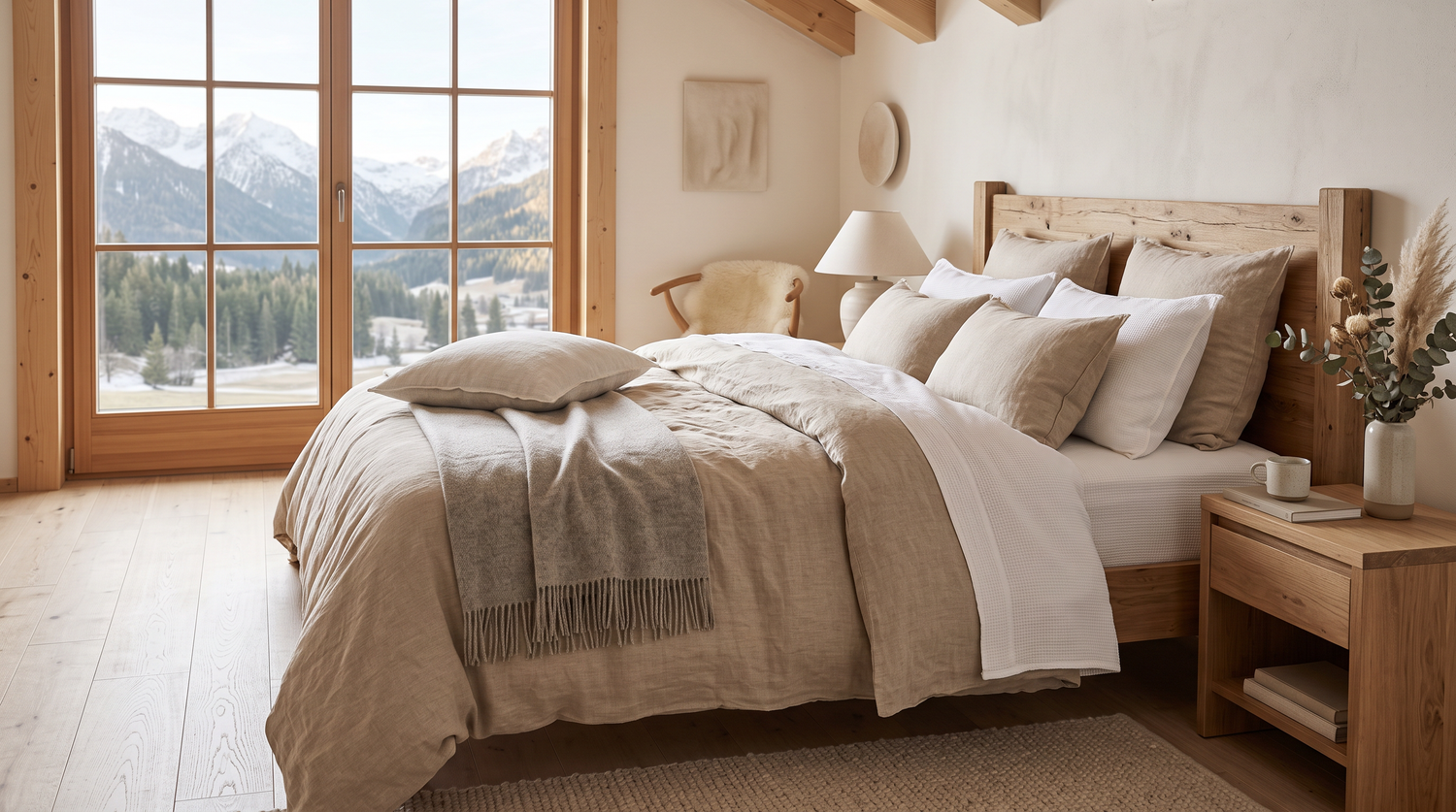
Whether you sweat or shiver at night, whether your bed feels crisply fresh or snugly warm – hardly any detail influences your sleep climate as directly as the bed linen material. Nevertheless, many people simply choose the prettiest pattern and then wonder about damp nights in summer or clammy cold in winter. Yet, it's worth taking a look at the label: there are worlds of difference between percale, sateen, linen, Tencel, and flannel.
The short answer: For most people, cotton is the best base – breathable, skin-friendly, and easy to care for. If you sweat at night, percale, linen, or Tencel are best; if you get cold easily, flannel or beaver in winter and sateen during transitional periods. Microfiber is cheap, but usually the worst choice for sweaters and allergy sufferers.
- The material determines moisture transport, warmth, and care requirements of your bed linen.
- Percale, linen, and Tencel cool – ideal for warm sleepers and summer months.
- Flannel and beaver warm – ideal for those who get cold easily and for cold bedrooms.
- Change bed linen every 1–2 weeks and wash it at a minimum of 60 °C if you are an allergy sufferer.
Why the bed linen material is so important
Humans release up to half a liter of moisture per night. The bed linen is the first layer that must absorb and transfer this moisture – if this doesn't work, a damp-warm microclimate develops, which disturbs sleep and promotes mites. The right material supports the ideal sleeping temperature instead of working against it. And: bed linen always works in conjunction with duvets, pillows, and mattresses – even the best fiber is of little use if the mattress traps heat.
Overview of the most important bed linen materials
Cotton: the all-rounder
Cotton is breathable, absorbent, robust, and boil-proof. The weave is crucial: Renforcé is the smooth standard for year-round use. Percale is more finely and densely woven, feels cool and crisp – the "freshly made hotel bed" feeling. Mako sateen is woven from fine Egyptian cotton in a sateen weave: silky shiny, softly flowing, slightly temperature-regulating. Jersey is knitted instead of woven, stretchy and non-iron – uncomplicated, but less luxurious. Flannel and beaver are brushed cotton fabrics that trap air and feel immediately warm.
Linen: the cool character
Linen made from flax fibers excellent at wicking moisture, feels dry-cool even in heat, and gets softer with every wash. The natural wrinkle look is a matter of taste, its durability legendary. Ideal for summer and warm sleepers – in the upper price segment.
Tencel/Lyocell: the modern functional fiber
This fiber, extracted from wood cellulose, absorbs moisture even faster than cotton and releases it quickly. The result: a dry, cool skin feel, also appreciated by people with sensitive skin. An excellent choice for anyone who sweats at night – especially effective in combination with a breathable mattress such as a cooling mattress.
Silk: the luxury item
Silk is temperature-regulating, feather-light, and skin-flattering, but delicate and high-maintenance – usually hand wash or delicate cycle only. More of a luxury item than an everyday solution.
Microfiber/Polyester: cheap, but with a catch
Synthetic bed linen is cheap, light, and quick-drying. However, it absorbs hardly any moisture – sweaters quickly feel clammy – and builds up static electricity. Relevant for allergy sufferers: it often cannot be washed hot enough to reliably remove mites.

Comparison table: Which material for which type of sleeper?
| Material | Climate feel | Ideal for | Care |
|---|---|---|---|
| Renforcé (Cotton) | Neutral, year-round | All-rounder, beginners | 60 °C, easy care |
| Percale (Cotton) | Cool, crisp | Warm sleepers, summer | 60 °C, ironing optional |
| Mako sateen | Soft, slightly temperature-regulating | Comfort lovers, transitional seasons | 40–60 °C |
| Jersey | Soft, warmer | Uncomplicated, non-iron care | 40–60 °C, non-iron |
| Linen | Dry-cool | Sweaters, summer, nature lovers | 40–60 °C, wrinkled look |
| Tencel/Lyocell | Cool, very moisture-active | Heavy sweaters, sensitive skin | 40–60 °C |
| Flannel/Beaver | Warm, fluffy | Those who get cold easily, winter, cold rooms | 60 °C |
| Silk | Temperature-regulating | Luxury, sensitive skin | Hand wash/delicate cycle |
| Microfiber | Clammy when sweating | Budget, guest bed | Mostly only 40 °C |
Hygiene and care: How to keep bed linen fresh
- Change rhythm: Every 1–2 weeks, weekly if you sweat a lot or have allergies.
- Washing temperature: 60 °C reliably kills mites – important for dust mite allergy sufferers, ideally combined with a mite-resistant mattress.
- Ventilate: Turn back the bed in the morning instead of making it immediately so moisture can escape – a basic principle of good sleep hygiene.
- Don't forget: The mattress also needs care – how to do that is shown in the guide cleaning your mattress.

Bed linen is the finishing touch – the mattress is the foundation
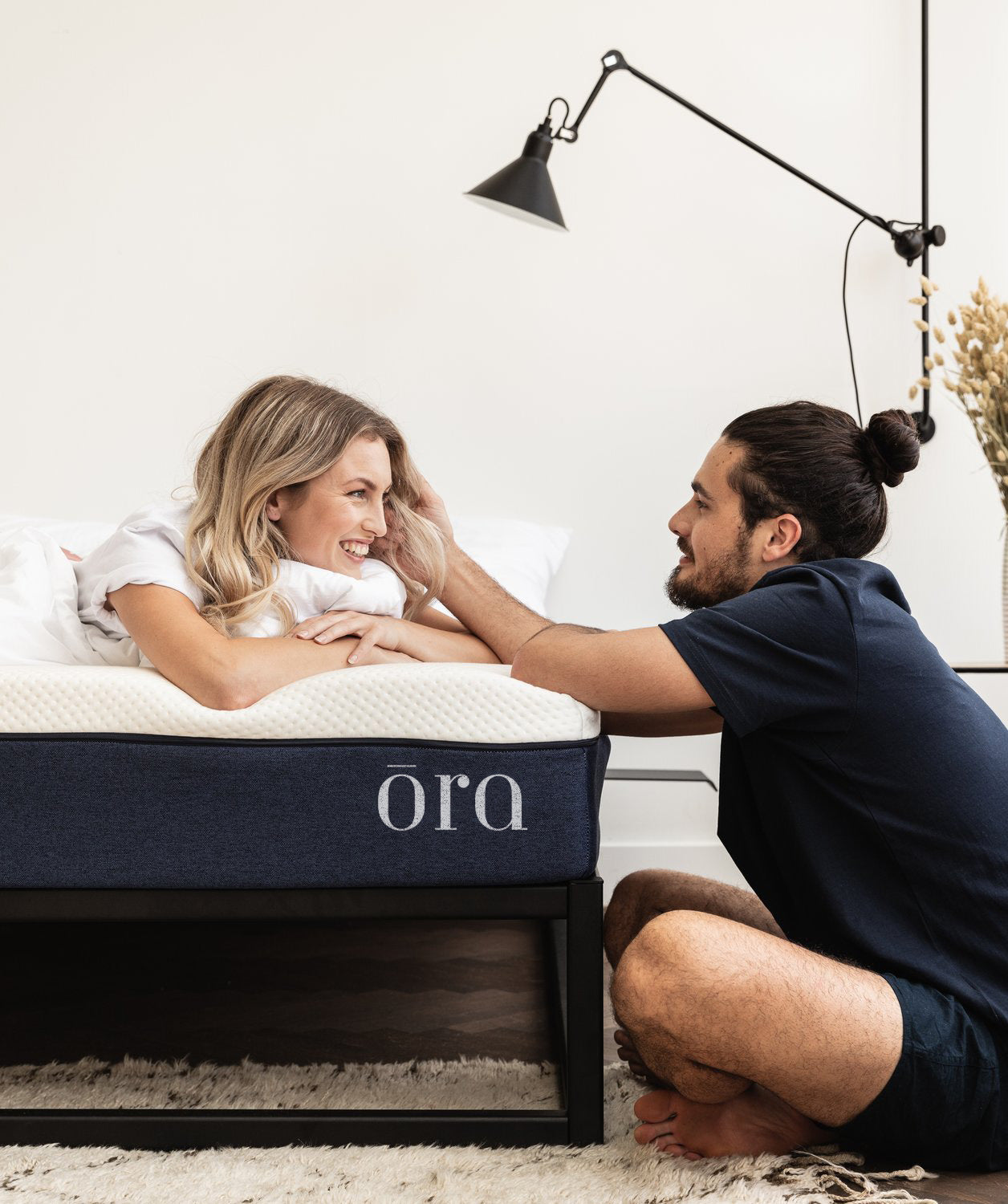
As great as the influence of the cover fabric is: the sleep climate largely originates in the mattress itself. If the core traps heat or supports the body incorrectly, even the best linen won't save the night. When buying a mattress, the classic firmness thinking often leads astray – H2 to H4 are not standardized and say little about the actual lying feeling, as our article on firmness shows. The Ora mattress takes a different approach: its EvoPoreHRC Premium memory foam automatically adapts to the body and sleeping position – an adaptive mattress for everyone, openly and breathably constructed. This way, it harmonizes with every bed linen material, from cool percale to warm flannel.
Get CHF 25 discount
Subscribe to our newsletter and receive a one-time CHF 25 discount. ✓ 200 nights trial sleep ✓ 10-year warranty
The perfect foundation for any bed linen: the Ora Ultra Mattress
The Ora Ultra Mattress provides a balanced sleep climate with adaptive EvoPoreHRC Premium memory foam and a breathable design – without guessing firmness levels. For even more comfort on your existing mattress: the Ora Ultra Topper. Both come with 200 nights of trial sleep and a 10-year warranty.
Frequently asked questions about bed linen material
Which bed linen material is best for night sweats?
Percale, linen, and Tencel/Lyocell wick away moisture best and feel cool and dry. Heavy sweaters should avoid microfiber, as it absorbs hardly any moisture.
What is the difference between percale and Mako sateen?
Both are made of cotton but differ in weave: Percale is smooth and matte woven, feels cool and crisp. Mako sateen has a silky sheen, drapes softly, and feels slightly warmer – ideal for transitional periods.
How often should bed linen be changed?
Every one to two weeks. If you sweat a lot, have pets in bed, or suffer from a dust mite allergy, ideally change weekly and wash at 60 °C.
Which bed linen is suitable for allergy sufferers?
Smooth, densely woven cotton qualities like percale or renforcé, which can be washed at 60 °C. Regular hot washing is important, as it is the only way to reliably remove mites and their allergens.
Is expensive bed linen really better?
Often yes – up to a point. Higher thread count and longer fibers mean more durability and a finer skin feel. More important than the price, however, is that the material suits your temperature perception and willingness to care for it.




Leave a comment
This site is protected by hCaptcha and the hCaptcha Privacy Policy and Terms of Service apply.