

A stuffy nose in the morning, watery eyes, sneezing fits upon waking: for about one in five people in Switzerland, the bedroom is not a place of rest, but an allergy zone. The reason lies literally in the bed – house dust mites love the warm, humid environment of mattresses, duvets, and pillows. Depending on the season, pollen also enters the bedroom through windows, hair, and clothing, and mold spores can also be present in poorly ventilated rooms. The good news: hardly any room can be made as effectively allergy-friendly as the bedroom.
The short answer: An allergy-friendly bedroom is based on four pillars: starving mites (cool temperatures, low humidity, regular ventilation), creating allergen barriers (encasings for mattresses, duvets, and pillows), removing allergens (washing bedding at 60 °C, wet wiping smooth floors), and reducing dust collectors (minimizing carpets, heavy curtains, and open shelves). Those who consistently implement these points drastically reduce the allergen load in the bedroom.
- House dust mites are the number one allergy trigger in the bedroom – not the mite itself, but its feces are the problem.
- Sleeping cool (16–19 °C) and dry (below 50% humidity) deprives mites of their livelihood.
- Encasings and washing bedding at 60 °C every 1–2 weeks are the most effective individual measures.
- A removable, washable mattress cover and breathable foam without natural material fillings significantly simplify life for allergy sufferers.
The three most common allergy triggers in the bedroom
House dust mites: The invisible co-inhabitants
Mites live in every bed – this is normal and not a sign of poor hygiene. These microscopic arachnids feed on skin flakes and thrive best at 20–30 °C and over 60% humidity. Their feces are what trigger allergies: they break down into fine dust, are stirred up when turning in bed, and inhaled. Since we release up to half a liter of moisture per night, the bed is their paradise – our guide to mite-resistant mattresses also shows how to counteract this.
Pollen: The seasonal intruders
From February (hazel) to September (herbs), pollen enters the bedroom through tilted windows, clothing, and hair. There, it settles on textiles and is inhaled throughout the night.
Mold spores: The moisture problem
Poorly ventilated bedrooms with furniture directly against cold outer walls encourage mold – often invisibly behind the wardrobe or under the mattress if it lies directly on the floor.
Action plan: Step by step to an allergy-friendly bedroom
1. Control the climate: cool and dry
Keep the bedroom at 16–19 °C and below 50% relative humidity – this corresponds to the ideal sleeping temperature anyway. Air the room by opening windows wide two to three times a day for five to ten minutes, preferably in the morning during pollen season in urban areas, and in the evening in rural areas. A hygrometer for a few francs provides clarity.
2. Neutralize the bed as a core zone
Encasings – allergen-proof covers for mattresses, duvets, and pillows – are considered the most effective single measure for dust mite allergies; many health insurance companies contribute to the costs with a doctor's prescription. Our article Mattress Protector and Encasing explains how to properly combine encasings and mattress protectors. This also includes a consistent washing routine – the overview:
| Textile | Washing temperature | Frequency |
|---|---|---|
| Bed linen (duvet/pillow cover) | 60 °C | every 1–2 weeks |
| Encasings | 60 °C | every 4–8 weeks |
| Duvet & pillows (washable) | 60 °C | 2–4 times per year |
| Mattress cover (removable) | according to label, ideally 60 °C | 2–4 times per year |
| Curtains, cushion covers (decor) | according to label | every 2–3 months |

3. Reduce dust collectors
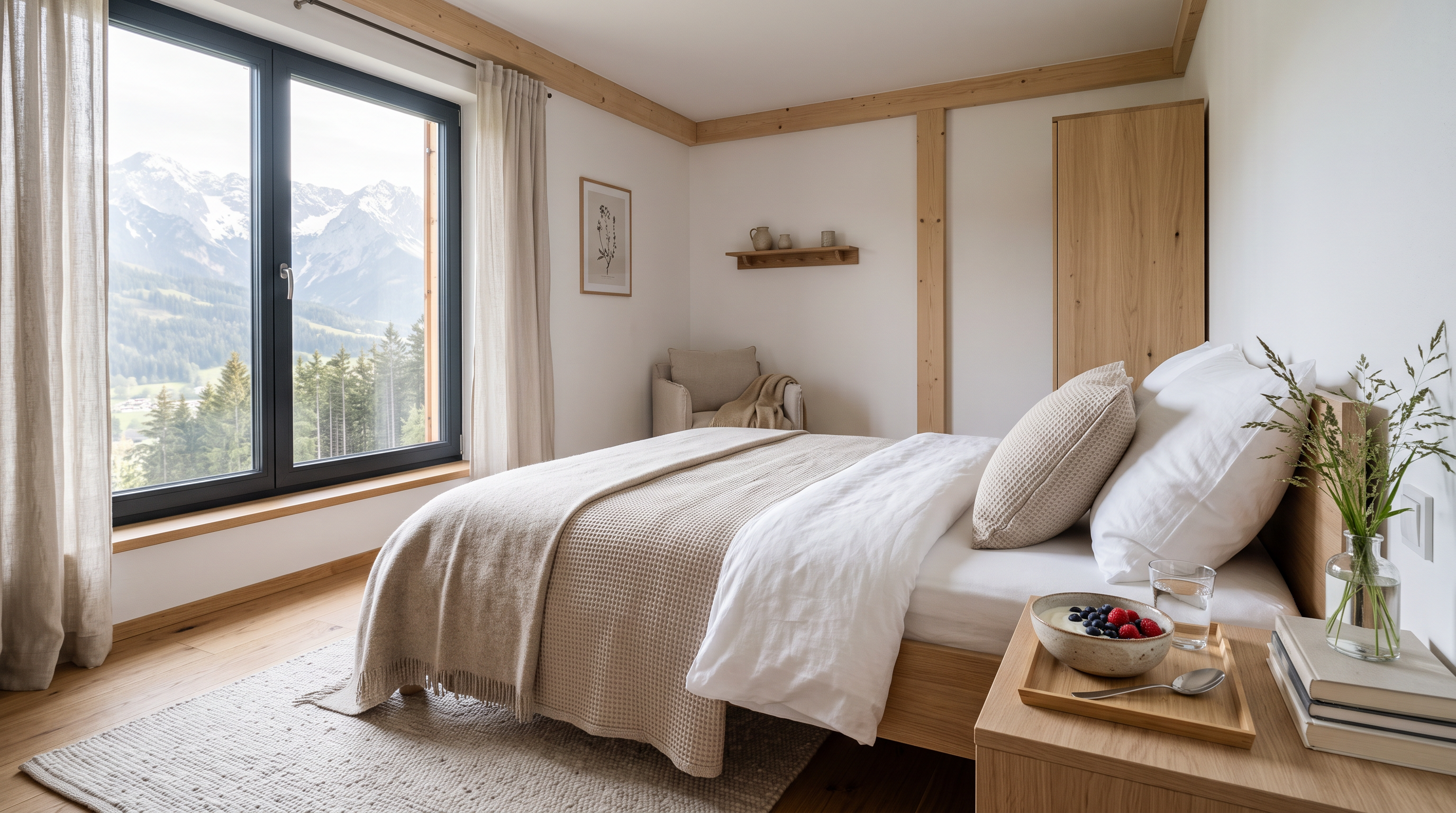
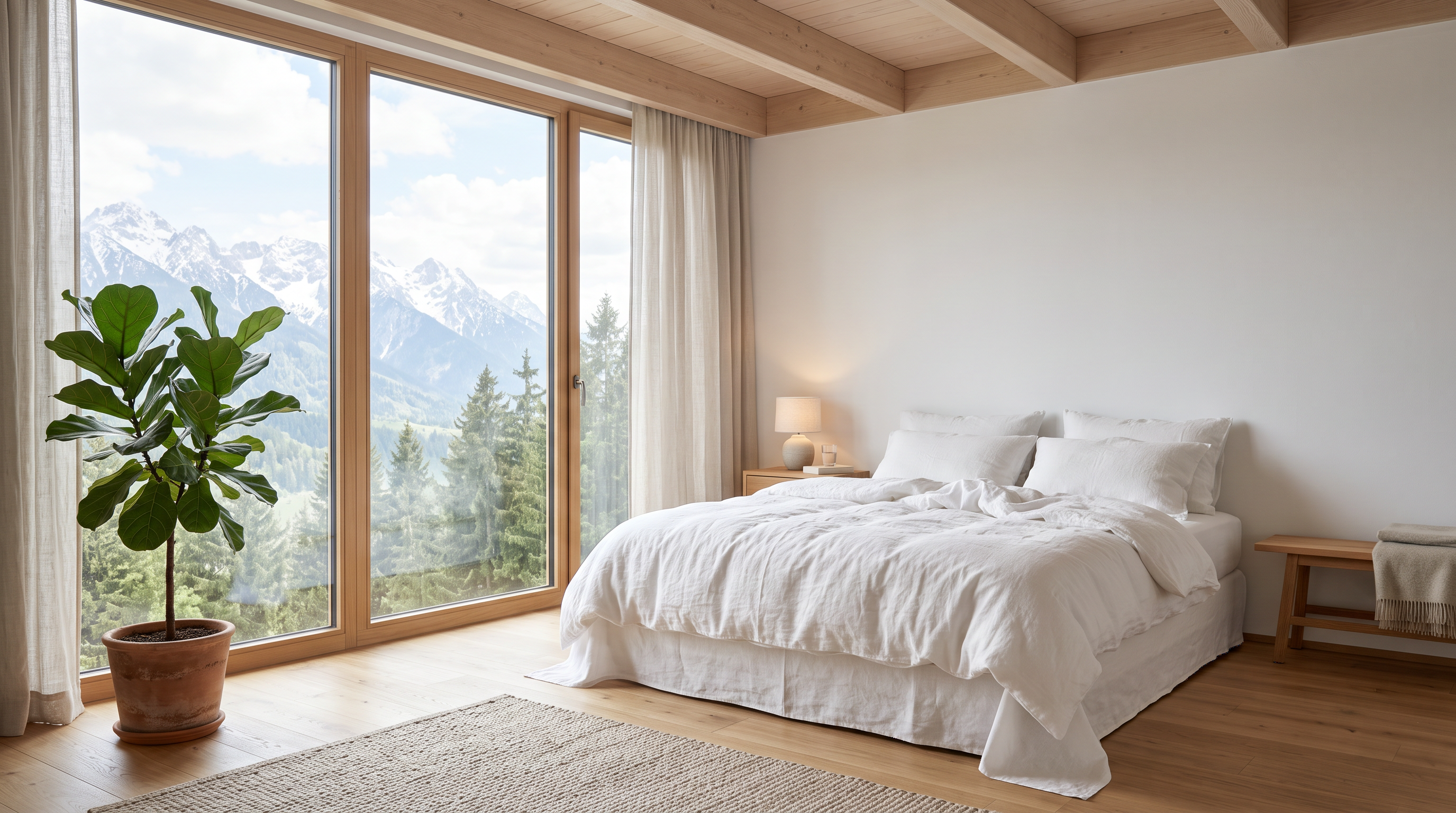
Smooth floors (parquet, vinyl, linoleum) can be wet-wiped and do not store allergens – carpets, on the other hand, are depots for mites and pollen. Avoid heavy curtains, open bookshelves, and stuffed animals on the bed; closed wardrobes are a better choice. Vacuum with a HEPA filter vacuum cleaner and wipe surfaces with a damp cloth instead of dry. An uncluttered, minimalist bedroom is not only more hygienic but also aesthetically pleasing – our design principles for bedrooms provide inspiration.
4. Set up a pollen barrier
During hay fever season: do not take off or store street clothes in the bedroom, wash or at least brush out hair before going to bed, and do not dry laundry outdoors. Pollen screens on windows also significantly reduce entry.
5. The right mattress and care
Mites do not live in the foam core itself, but primarily in the cover and the uppermost millimeters – therefore, a removable, washable cover and an open-pored, breathable foam that quickly wicks away moisture are crucial. The Ora Ultra mattress meets exactly this profile: its EvoPoreHRC premium memory foam is breathable, offers mites little habitat, and automatically adapts to the body and sleeping position – as an adaptive mattress for everyone, without the outdated firmness logic, which is not standardized anyway. Regular mattress care is also important: airing, turning according to manufacturer's instructions, and washing the cover. Our guide Cleaning a Mattress deals with more stubborn cases. And if the old mattress is older than eight to ten years, it's worth taking a look at our guide How often should you change your mattress? – old mattresses are true allergen depots.

Get CHF 25 discount
Subscribe to the newsletter and receive a one-time CHF 25 discount. ✓ 200 nights trial sleep ✓ 10 years warranty
Allergy-friendly sleep with Ora: The Ora Ultra mattress combines a removable, washable cover with breathable EvoPoreHRC premium memory foam that automatically adapts to your body and sleeping position. As a hygienic supplement, the Ora Ultra Topper additionally protects the mattress and can be maintained separately. 200 nights trial sleep, 10-year warranty – test it in your own bedroom.
Frequently asked questions about allergy-friendly bedrooms
Which mattress is best for dust mite allergy sufferers?
Foam mattresses with a removable, 60 °C washable cover and an open-pored, breathable core are recommended. Mites primarily settle in the cover – if it can be washed regularly, the allergen load significantly decreases. Encasings also help as an allergen-proof barrier.
How often should allergy sufferers wash their bedding?
Ideally, every one to two weeks at 60 °C – this temperature reliably kills mites and removes allergens. Duvets and pillows, if washable, should be machine-washed two to four times a year.
Do air purifiers help with allergies in the bedroom?
Air purifiers with HEPA filters can reduce airborne pollen and fine dust and are perceived by many pollen allergy sufferers as a noticeable relief. They only have a limited effect against mite allergens, as these are heavy and quickly sink to the floor – here, encasings and washing routines remain more important.
Should allergy sufferers avoid plants in the bedroom?
A few, easy-care plants are usually unproblematic. Caution is advised with heavily flowering species and with overwatering: moist potting soil is a breeding ground for mold spores. If you have a mold allergy, it's better to avoid potted plants in the bedroom.
Is a carpet forbidden in an allergy-friendly bedroom?
Large carpets are unfavorable because they store mites, dust, and pollen and are difficult to deep clean. A small, regularly 60 °C washable bedside rug, however, is generally acceptable.
This article is for general information purposes only and does not replace medical advice.








Leave a comment
This site is protected by hCaptcha and the hCaptcha Privacy Policy and Terms of Service apply.