
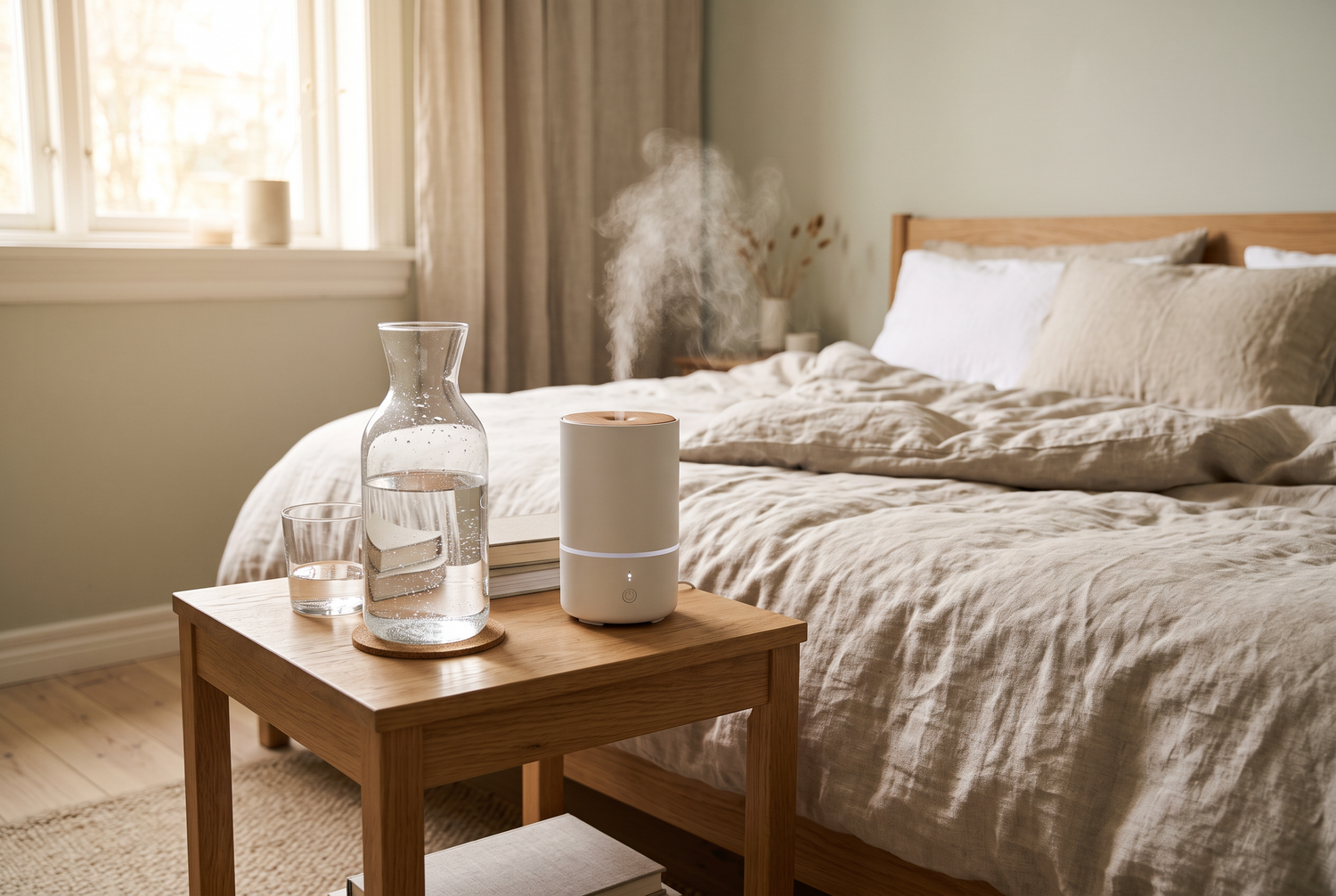
A sticky tongue, chapped lips, the first thing you reach for is a glass of water: a dry mouth in the morning is one of the most common minor complaints after waking up. It is estimated that about one in five adults experiences this feeling regularly, and its frequency increases significantly with age. Most of the time, the cause is harmless and lies in how we breathe at night or in the air we breathe. However, sometimes there's more to it: certain medications, an untreated snoring problem, or reduced saliva production. This guide explains why your mouth dries out at night, how to pinpoint the cause, and the ten most effective practical measures.
The short answer: A dry mouth in the morning occurs because saliva production naturally decreases to a minimum during sleep, and additional moisture is lost, usually due to mouth breathing, snoring, or overly dry room air. Therefore, three levers are most effective: promoting nasal breathing, bringing the humidity in the bedroom to 40–60%, and avoiding triggering factors like alcohol, caffeine, and nicotine in the evening. If the dryness persists for weeks despite these measures, or if pain, dental problems, or severe daytime fatigue occur, the cause should be investigated by a doctor or dentist.
- During sleep, the body produces only about one-tenth of the amount of saliva it does during the day. Any additional evaporation is therefore very noticeable.
- Most common triggers: mouth breathing, snoring, dry heating air, alcohol in the evening, and over 400 common medications with a dry mouth side effect.
- Saliva protects teeth; chronic dry mouth increases the risk of tooth decay and gum inflammation.
- Humidity 40–60%, sleeping on your side, and nasal care solve the problem in many cases.
- Warning signs such as breathing pauses, severe thirst with frequent urination, or burning mucous membranes require medical clarification.
Why your mouth dries out specifically at night
Saliva is not just liquid; it's a protective system. During the day, the salivary glands produce about 0.5 to 1.5 liters; during sleep, the rate drops to a fraction of that. The body conserves resources because we neither chew nor speak at night. This baseline state is normal and causes few problems with a closed mouth and nasal breathing, as the oral cavity remains a closed, moist system.
The problem begins when air flows through the mouth. Every breath through the open mouth carries moisture away from the tongue, palate, and throat. With around 12 to 16 breaths per minute and seven to eight hours of sleep, this adds up to several thousand breaths, each taking a little moisture. If the room air is also dry, as is often the case in winter with heating running at only 25–35% relative humidity, the effect is intensified. The result is the familiar sticky, furry mouth upon waking. You can read more about why nasal breathing is so much gentler in our article on mouth breathing at night.
Overview of the most common causes
Mouth breathing and snoring
By far the most common cause. Those who breathe through their mouth at night or snore systematically dry out their mouth and throat. Triggers include a blocked nose, sleeping on your back, or relaxed throat muscles. Loud snoring with breathing pauses can indicate sleep apnea; here, dry mouth is often the most harmless symptom.
Dry room air
Below 40% relative humidity, mucous membranes in the nose and mouth noticeably dry out, the nose swells, and the body resorts to mouth breathing. A vicious cycle that occurs particularly during the heating season.
Medication
Several hundred active ingredients have dry mouth as a side effect, including many antidepressants, antihistamines for allergies, blood pressure medications, diuretics, and medications for bladder weakness. Anyone who starts a new medication and suddenly has a dry mouth in the morning should discuss the connection with their doctor but never stop it on their own.
Alcohol, caffeine, nicotine
Alcohol has a dehydrating effect and relaxes the throat muscles, which promotes snoring. Caffeine in the afternoon and smoking also reduce saliva flow. Our article Alcohol and Sleep Quality explains how alcohol affects sleep overall.
Dehydration and illnesses
Anyone who drinks too little during the day goes to bed already dehydrated. Less commonly, illnesses are behind it: undiagnosed diabetes (typical: severe thirst, frequent urination), Sjogren's syndrome (autoimmune disease of the salivary glands), or consequences of radiation therapy in the head and neck area.

Pinpointing the cause: the symptom table
Accompanying symptoms often provide a clear indication of the cause. The following overview helps with initial classification.
| Accompanying symptom | Likely cause | First step |
|---|---|---|
| Saliva on the pillow, partner reports open mouth | Mouth breathing | Clear nose, sleep on your side |
| Loud snoring, breathing pauses, daytime fatigue | Snoring / possible sleep apnea | Medical assessment |
| Only in winter, nose crusted in the morning | Dry heating air | Hygrometer, increase humidity |
| Onset after new medication | Side effect | Discuss with doctor |
| Severe thirst, frequent urination, also during the day | Possible diabetes | Have blood sugar checked |
| Also dry eyes, joint pain | Possible Sjogren's syndrome | Rheumatological assessment |
Why a dry mouth endangers your teeth
Saliva neutralizes acids, washes away food debris, supplies minerals for enamel repair, and contains antibacterial substances. If it is absent for hours, the oral environment shifts towards acidic, and cavity-causing bacteria multiply more easily. Dentists observe significantly more tooth decay at the gumline, gum inflammation, and bad breath in chronic mouth breathers.
The oral mucosa itself also suffers: it becomes more susceptible to small cracks, canker sores, and fungal infections. Anyone who regularly wakes up with a dry mouth should therefore brush their teeth particularly thoroughly in the evening, use fluoride toothpaste, and address the issue at their next dental appointment. Sugar-free chewing gum during the day stimulates saliva flow; at night, of course, it doesn't help. Some people benefit from special oral gels or sprays with saliva substitutes, which are applied before sleep and retain moisture for several hours.
10 measures against dry mouth in the morning
The following steps are ordered by effectiveness and effort. The first five solve the problem for most people.
1. Measure and adjust humidity
A hygrometer costs a few francs. If the value at night is below 40%, a humidifier, houseplants, a damp cloth over the heater, or simply a lower room temperature of 16–19 °C will help, as cooler air retains relatively more moisture. Details in our guide to humidity in the bedroom.
2. Clear your nose in the evening
A nasal rinse with isotonic saline solution before bed loosens mucus and reduces swelling of the mucous membranes. For allergies: encasing for the mattress, wash bedding at 60 °C.
3. Promote side sleeping
The mouth opens more easily when lying on your back. A pillow behind your back or a side sleeper pillow prevents rolling onto your back.
4. Eliminate alcohol, caffeine, and nicotine in the evening
Ideally, no alcohol in the last three hours before sleep, no caffeine after 2 PM.
5. Drink enough during the day
About 1.5 to 2 liters spread throughout the day, but not all of it just before sleep, otherwise you'll wake up needing the toilet.
6. Check pillow and head position
A pillow that is too high pushes the chin to the chest and opens the mouth. The head should extend the cervical spine straight. Our pillow guide helps.
7. Adjust oral hygiene
Alcohol-free mouthwash, fluoride toothpaste, moisturizing gel for the night if needed.
8. Review medication list
Check with your doctor whether a preparation is responsible and if there are alternatives or a different time of intake.
9. Water readily available
A glass of water by the bed immediately relieves nocturnal dryness but does not solve the cause.
10. Clarify snoring
If your mouth remains dry despite everything and you snore loudly, a sleep medicine examination is advisable. Our article Recognizing Sleep Apnea lists the warning signs.
Myths fact-checked
"Drinking lots of water before sleep prevents dry mouth." Only partially. The body does not specifically store fluid in the oral mucosa; it is crucial that enough is drunk during the day. Half a liter directly before sleep is more likely to lead to nocturnal toilet visits than a moist mouth.
"Dry mouth is normal with age." Saliva production decreases only slightly with age. The fact that older people are more frequently affected is mainly due to the higher number of medications taken. Dry mouth is therefore often treatable, not inevitable.
"A humidifier is enough." It helps with dry room air, but not with mouth breathing due to a blocked nose or sleep apnea. Too much humidity above 60% also promotes mold and mites. Our guide to bedroom climate shows how to manage the indoor climate all year round.
"Bad breath in the morning is unavoidable." A slight morning breath is normal because less saliva flows at night. However, strong bad breath is a sign of pronounced dryness or bacterial load and can usually be significantly reduced with the measures mentioned above.

Get CHF 25 discount
Subscribe to the newsletter and receive a one-time CHF 25 discount. ✓ 200 nights trial sleep ✓ 10 years warranty
Frequent questions about dry mouth in the morning
Why do I have a dry mouth every morning?
Mostly because you breathe through your mouth or snore at night and lose moisture, while saliva production is already greatly reduced during sleep. Dry room air, alcohol in the evening, and certain medications amplify the effect.
Is a dry mouth in the morning a sign of diabetes?
It can be, but it's not a reliable indicator on its own. If severe thirst, frequent urination also during the day, fatigue, or weight loss occur, blood sugar should be medically checked.
What is the ideal humidity in the bedroom?
40 to 60% relative humidity at 16 to 19 °C. Below that, mucous membranes dry out; above that, the risk of mold and dust mites increases.
Does a humidifier help against dry mouth?
Yes, if dry room air is the cause. It helps only limitedly with mouth breathing due to a blocked nose or with sleep apnea. The device should be cleaned regularly to prevent the spread of germs.
Which medications cause a dry mouth?
Many, including antidepressants, antihistamines, blood pressure medications, diuretics, medications for bladder weakness, and some pain relievers. Talk to your doctor about alternatives, but never stop anything on your own.
When should I see a doctor about dry mouth?
If the dryness persists for several weeks despite measures, if swallowing difficulties, burning mucous membranes, dry eyes, breathing pauses, severe daytime fatigue, or sudden severe thirst occur.
This article serves as general information and is not a substitute for medical advice.









Leave a comment
This site is protected by hCaptcha and the hCaptcha Privacy Policy and Terms of Service apply.