
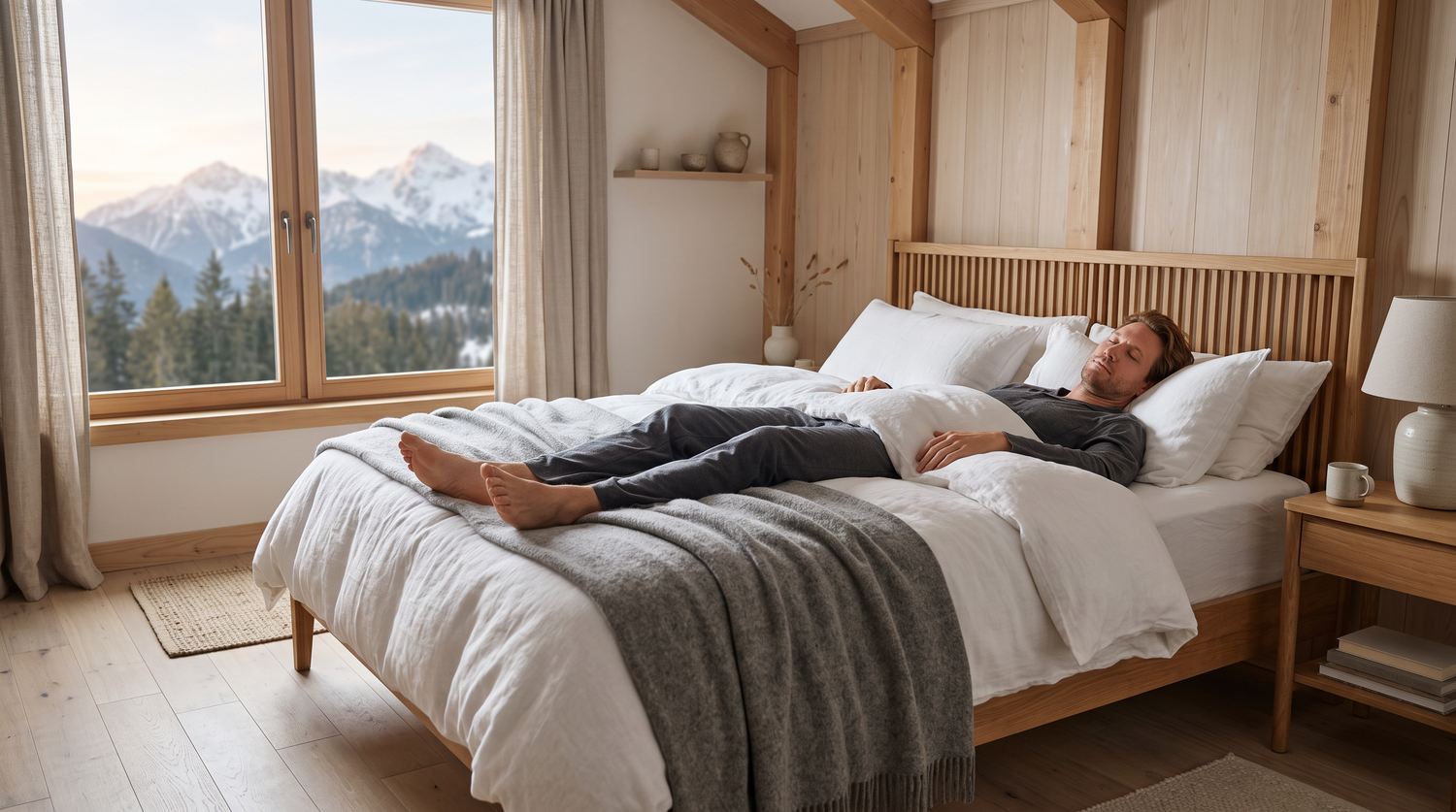
Snoring is often considered a harmless nuisance – but if loud snoring is repeatedly followed by pauses in breathing, it could be sleep apnea. These nocturnal breathing pauses usually go unnoticed by those affected, but they rob them of rest night after night and put a long-term strain on the cardiovascular system. In Switzerland, an estimated several hundred thousand people are affected – many without knowing it. This article shows how to recognize sleep apnea, when a doctor's visit is indicated, and what you can do yourself for better nights.
The short answer: Sleep apnea is recognized by loud, irregular snoring with audible breathing pauses, by waking up at night with shortness of breath, and by pronounced daytime fatigue despite sufficient sleep duration. Anyone who notices these signs in themselves or their partner should have them medically checked – the diagnosis is straightforward via sleep measurement. Supportive measures include sleeping on your side, weight reduction, and avoiding alcohol in the evening.
- In obstructive sleep apnea, the pharyngeal muscles relax during sleep and block the airways – leading to repeated breathing pauses.
- Typical warning signs: loud snoring with breathing pauses, waking up at night with a start, morning headaches, severe daytime fatigue, and concentration problems.
- Untreated sleep apnea increases the risk of high blood pressure, cardiovascular disease, and microsleep at the wheel – an assessment is always worthwhile.
- Sleeping on your side instead of your back, weight reduction, and avoiding alcohol in the evening can significantly improve mild forms.
What is sleep apnea?
In the most common form, obstructive sleep apnea (OSA), the muscles in the pharyngeal area relax so much during sleep that the upper airways are partially or completely blocked. Breathing stops for ten seconds or longer – sometimes dozens of times per hour. The body reacts with an arousal: the brain sounds an alarm, the muscles tense, and breathing audibly resumes. Those affected do not remember these micro-arousals in the morning – but they fragment sleep and prevent the restorative deep and REM phases, which are described in our article on sleep phases.
Snoring or sleep apnea? The differences
Not everyone who snores has sleep apnea – but almost everyone with apnea snores. The following overview helps with classification:
| Feature | Harmless snoring | Suspected sleep apnea |
|---|---|---|
| Sound | Even, constant | Loud, irregular, with pauses and explosive resumption |
| Breathing pauses | None | Audible pauses of 10 seconds or more |
| Daytime well-being | Rested | Fatigue, concentration problems, dozing off during the day |
| In the morning | Normal | Headaches, dry mouth, feeling worn out |
| Nighttime awakenings | Rare | Waking up with shortness of breath, racing heart, night sweats |
If the left column largely applies, you will find practical tips in the article Reducing snoring. If the right column applies, the advice is: get it medically checked.
Take warning signs seriously: When to see a doctor?
Talk to your family doctor or a sleep medicine clinic if your partner regularly observes breathing pauses, you are constantly tired despite sufficient sleep, you involuntarily doze off during the day, or you often have headaches in the morning. The clarification is straightforward today: often, an outpatient sleep measurement at home (polygraphy) is sufficient first, followed by a night in a sleep laboratory if necessary. Untreated sleep apnea increases the risk of high blood pressure, heart attack, and stroke and causes drowsiness at the wheel – early diagnosis therefore protects twice over.

What helps with sleep apnea?
Treatment by a specialist
For moderate to severe sleep apnea, CPAP therapy is the standard: a mask keeps the airways open with slight overpressure. Alternatively, individually adapted mandibular advancement devices may be considered, and in certain cases, surgical interventions. Which therapy is appropriate is decided by the sleep medicine assessment.
Side sleeping instead of back sleeping
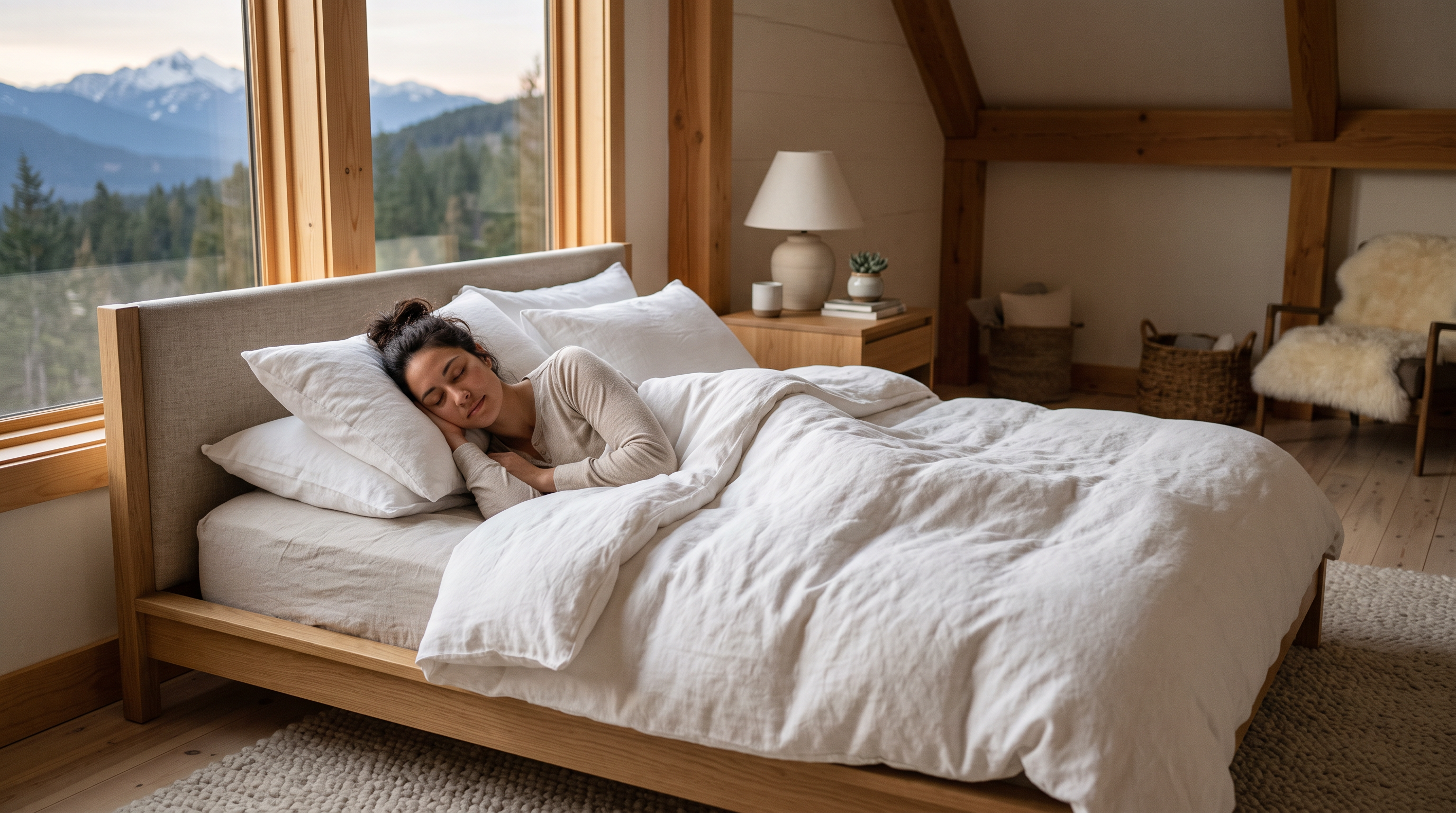
In the supine position, the tongue tends to fall backwards more easily and narrow the throat – many affected individuals have significantly fewer breathing pauses when sleeping on their side. For the side position to remain comfortable permanently, the shoulder and hip must be able to sink in while the spine remains straight: a point-elastic, adaptive mattress that automatically adjusts to the body and sleeping position makes side sleeping comfortable even for habitual back sleepers. The guide Mattress for side sleepers explains what matters here.
Lifestyle: The most effective levers
Obesity is the biggest risk factor – even a moderate weight loss can significantly reduce the number of breathing pauses. In addition, avoid alcohol and sleeping pills in the evening, as both relax the throat muscles even further, and ideally stop smoking. Regular sleep times and good sleep hygiene support any therapy.

Get CHF 25 discount
Subscribe to newsletter and receive a one-time CHF 25 discount. ✓ 200 nights trial sleep ✓ 10 years warranty
The Ora Ultra Mattress automatically adapts to your body and sleeping position thanks to EvoPoreHRC premium memory foam – so the airway-friendly side position remains comfortable all night long, without guessing the firmness level. In addition, the Ora Ultra Topper improves pressure relief on an existing mattress, and the tested Ora Ultra Second Life offers the same comfort at a lower price. All models come with 200 nights of trial sleep and a 10-year warranty.
Frequently Asked Questions about Sleep Apnea
How do I recognize sleep apnea if I sleep alone?
Pay attention to indirect signs: pronounced daytime fatigue despite sufficient sleep, morning headaches, dry mouth, waking up at night with a start, or frequent nocturnal urination. Sleep apps that record sounds can also provide initial clues – but the diagnosis is always made by a doctor.
Is all snoring dangerous?
No. Regular snoring without breathing pauses and without daytime fatigue is usually harmless. However, audibly interrupted breathing, explosive resumption, and severe daytime fatigue are warning signs that should be investigated.
Can sleeping position affect sleep apnea?
Yes. In the supine position, the tongue tends to fall backwards more easily and narrow the airways. Many affected individuals have measurably fewer breathing pauses when sleeping on their side – a comfortable, pressure-relieving mattress helps to maintain the side position.
Does sleep apnea disappear on its own?
Typically not. In mild forms, weight loss, avoiding alcohol, and sleeping on your side can significantly alleviate symptoms; moderate and severe forms should be treated by a sleep specialist to prevent secondary diseases.
This article is for general information purposes only and does not replace medical advice.





Leave a comment
This site is protected by hCaptcha and the hCaptcha Privacy Policy and Terms of Service apply.