
You can own the best mattress in the world and still sleep poorly if the room climate isn't right. Too warm, too dry, too stuffy: each of these deviations measurably disrupts sleep architecture, often without the cause being recognized. To fall asleep, the body must lower its core temperature by about 0.5 to 1 °C, the airways need sufficiently humidified air, and the CO2 content should ideally remain below 1000–1400 ppm – otherwise, awakenings accumulate and the morning begins with a dull head. A good bedroom climate is not a question of expensive technology, but of a few key figures and routines that can be easily adjusted throughout the year. This guide provides target values for temperature and humidity, a roadmap for all four seasons, and concrete solutions for the most common climate problems, from fogged windows to dry winter air.
The short answer: Ideal are 16–18 °C room temperature and 40–60 percent relative humidity – all year round. In addition, fresh air: ventilate thoroughly for 5–10 minutes before going to bed, briefly and vigorously in winter, longer and at night in summer. A simple hygrometer (from about 15 francs) makes the values visible. Those who have temperature, humidity and ventilation under control demonstrably sleep deeper and wake up less often – regardless of the season and location.
- Target values: 16–18 °C room temperature, 40–60% relative humidity, CO2 preferably below 1000–1400 ppm.
- An adult releases 300–500 ml of moisture per night – without ventilation, humidity quickly rises above 60% and promotes mites and mold.
- In winter, dry heating air (below 40%) is the main problem, in summer heat accumulation – both can be solved without expensive equipment.
- Shock ventilation beats tilted windows: 5–10 minutes of wide-open windows almost completely exchange the room air.
- Mattress and bedding are part of the climate system: breathable materials and good under-ventilation prevent heat and moisture accumulation in the bed.
The three control variables: temperature, humidity, fresh air
Three factors interact in the bedroom climate. First, temperature: 16–18 °C are considered optimal because the body can then dissipate its heat well; below 15 °C, muscles and airways cool down, above 20 °C, deep sleep suffers. The article on ideal sleep temperature provides more details. Second, relative humidity: 40–60 percent keeps the mucous membranes functional – they are the first barrier against viruses and dust – without promoting mites and mold. Third, air quality: in a closed bedroom, CO2 levels can easily rise to 2000–3000 ppm overnight; studies show more frequent awakenings and poorer subjective sleep quality from around 1400 ppm. Those who pay attention to all three factors have already pulled the biggest lever for better sleep – even before the mattress, pillow, or evening routine.
Measure, don't guess: hygrometer and thermometer
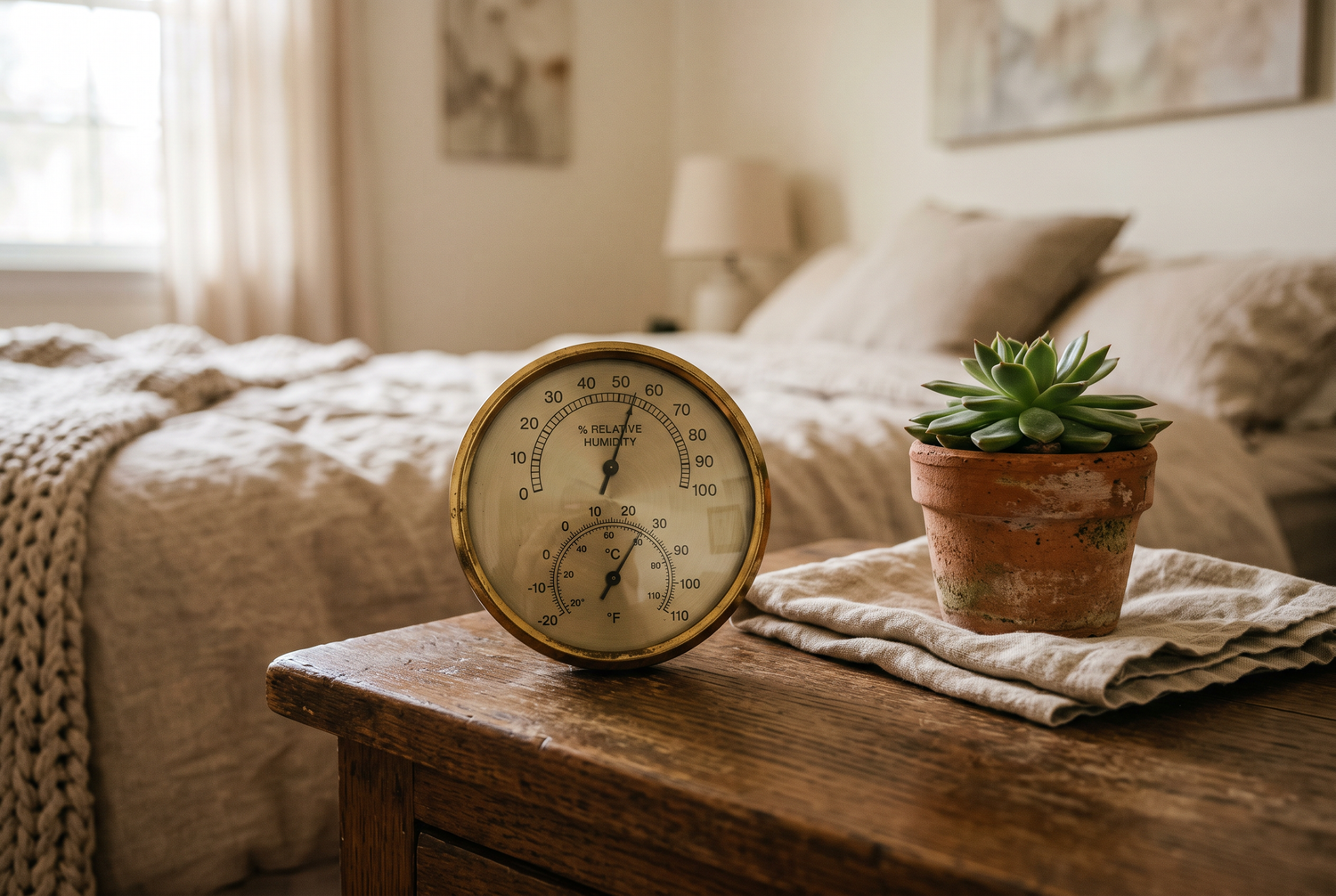
The indoor climate cannot be reliably felt – someone coming into the room from the cool night will find 21 °C pleasant, even though it is too warm for sleeping. A digital or analog thermo-hygrometer, available from about 15 francs, provides clarity. Place it at bed height, not directly by the window or above the heater, and read the values in the evening before going to bed and in the morning immediately after waking up. The morning value is particularly insightful: if the humidity is then above 65 percent or the window is fogged up inside, too much moisture has accumulated overnight – a warning sign for mite growth and mold risk, especially behind cupboards on exterior walls. More comfortable, but not necessary, are smart sensors with CO2 measurement: they show in black and white when ventilation is needed. The guide on humidity in the bedroom explains how to deal with the measured values.

The seasonal plan for bedroom climate
Each season presents the bedroom with different tasks – the following overview summarizes the most important measures:
| Season | Typical Problem | Most Effective Measures |
|---|---|---|
| Winter | dry heating air (often below 35%), risk of mold on the window | ventilate thoroughly 2–3 times a day for 5 minutes, turn down heating in the bedroom (16–17 °C), dry laundry in an adjacent room or use evaporators |
| Spring | pollen, fluctuating temperatures | ventilate in the morning in the city, in the evening in the countryside; consider pollen screens; switch duvet to transitional weight |
| Summer | heat accumulation, tropical nights above 20 °C | close blinds during the day, ventilate crosswise at night, light linen/percale bedding, fan for air movement |
| Autumn | humid outdoor air, beginning of heating season | consistently ventilate thoroughly instead of tilting windows, monitor humidity, move furniture 5–10 cm away from exterior walls |
For hot weeks, you can find in-depth strategies in the article Cooling the bedroom in summer, and the appropriate ventilation techniques are described in detail in the article Proper ventilation for a better sleep climate.
Winter Problem Number One: Air that is too dry
If the relative humidity drops below 40 percent – which quickly happens in heated rooms – the nasal and throat mucous membranes dry out. The consequences: scratchy throat in the morning, increased susceptibility to infection, increased snoring, and irritated eyes for contact lens wearers. Before buying a device, simple measures help: open the bedroom door to more humid rooms during the day, place houseplants like papyrus or hang a damp cloth over the radiator. Electric humidifiers are useful if values remain permanently below 35 percent – but then choose evaporators or vaporizers and clean them weekly so that no germs are nebulized. Important: do not humidify above 60 percent, otherwise you exchange the dryness problem for the risk of mites and mold. The target corridor of 40–60 percent is not a pedantic value, but the range in which airways, bedding, and building structure remain equally healthy.
Summer Problem Number One: Heat Accumulation
In summer, most bedrooms struggle with stored daytime heat: walls, once heated, release their energy for hours. The most effective measure is prevention – keep blinds and shutters closed from morning on, because once heat has entered, it is hard to get it out in the evening. At night, ventilate crosswise as soon as the outside temperature drops below the inside temperature, usually from 10-11 p.m. A fan lowers the perceived temperature by 2-3 °C by accelerating evaporation on the skin – but it does not cool the room and should not be directed directly at the body all night. The bed itself also counts: light natural fiber bedding and a breathable, open-pored mattress prevent heat accumulation directly on the body. Specific tips for heat waves are provided in the article Sleeping in the heat.
The bed as a microclimate: why the mattress plays a decisive role
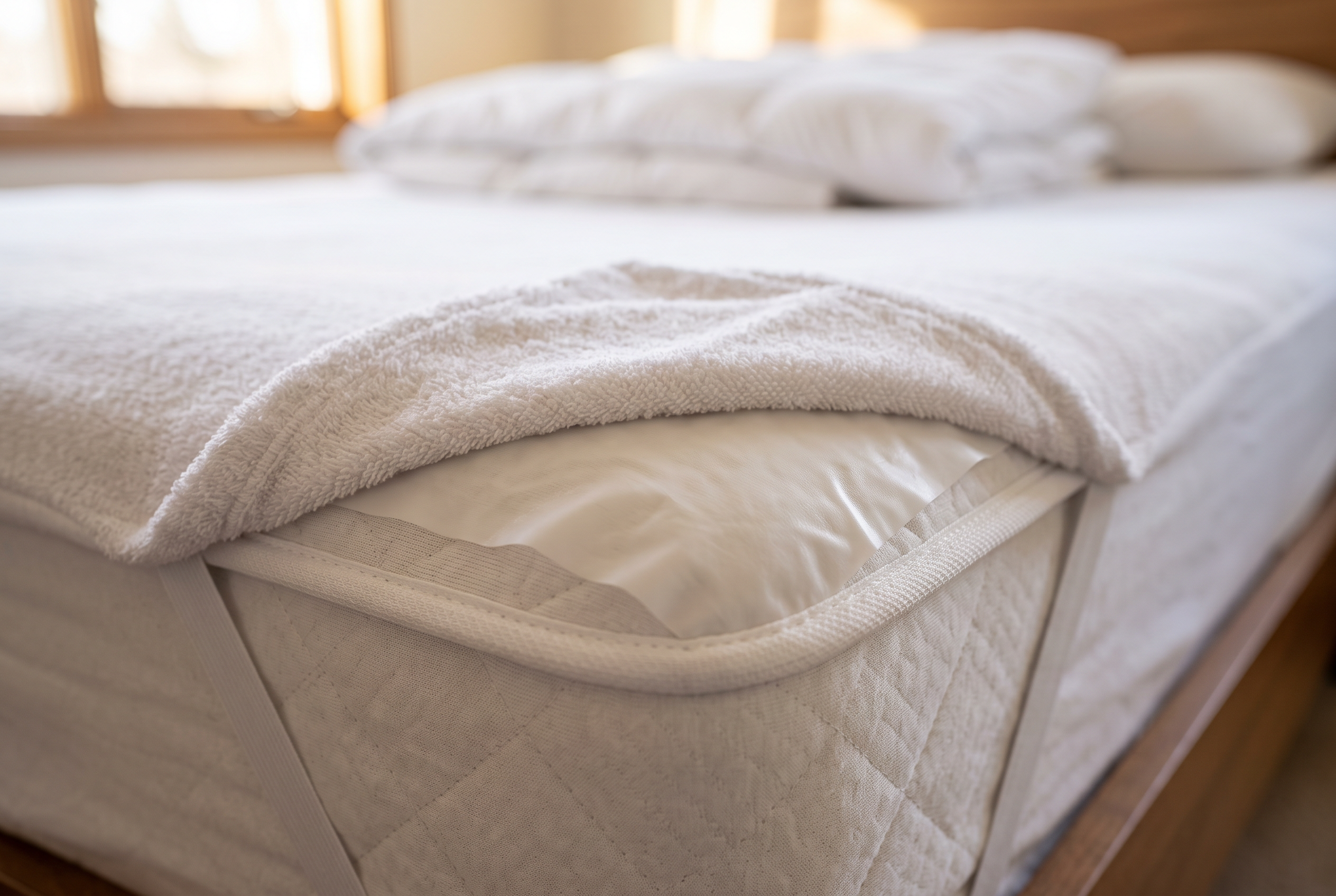
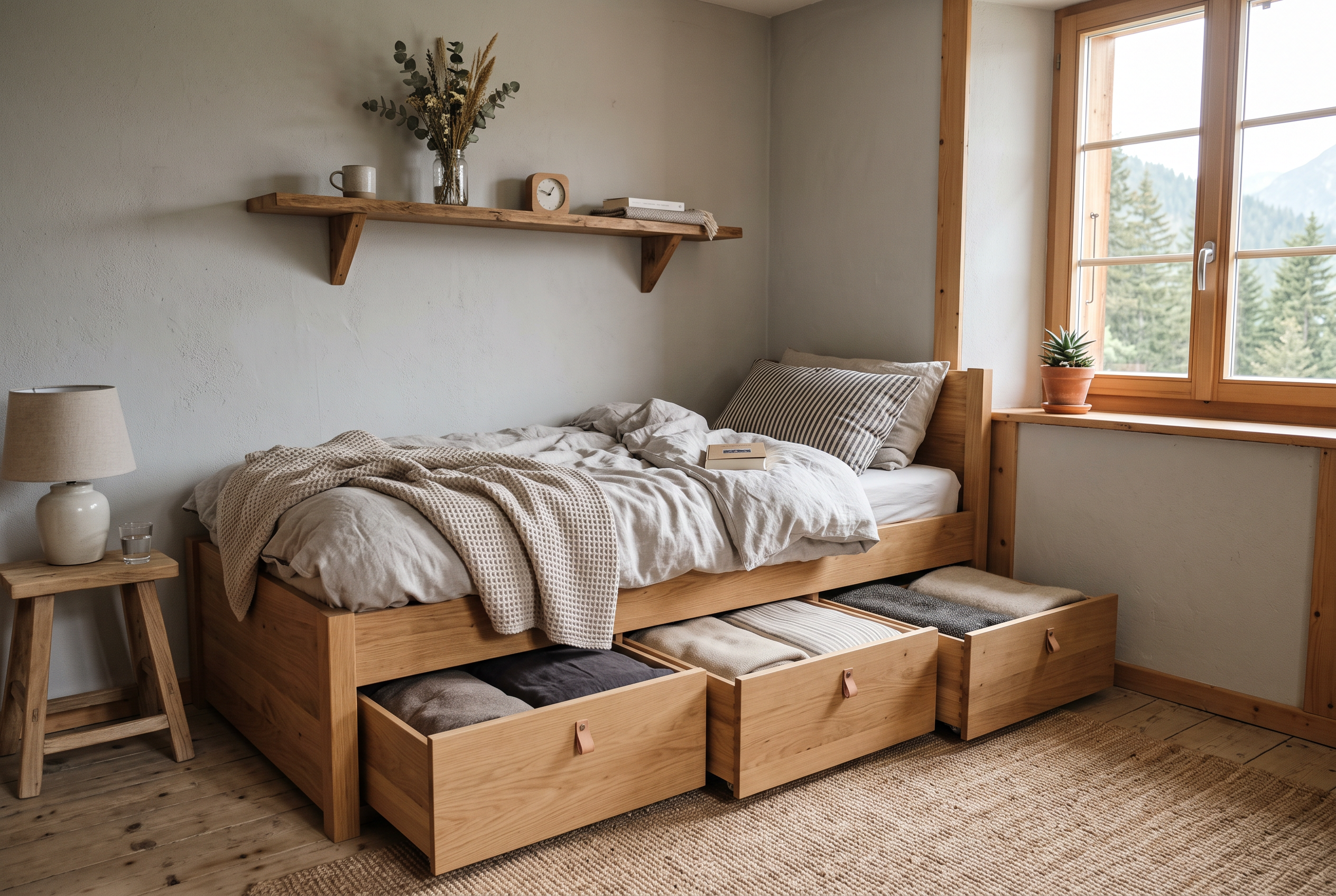
In addition to the room climate, there is a second, often overlooked climate: the bed climate. Between the mattress, sheet, and duvet, ideally, temperatures are 28–32 °C with 40–60 percent humidity – this microclimate determines whether you sweat or freeze. The 300–500 ml of moisture released nightly must be transported out through the bedding and mattress. Open-pored foams with good air circulation and a slatted frame with sufficient spacing allow the mattress to dry during the day; a bed lying close to the floor or a closed bed base without ventilation, however, traps moisture – with the risk of mold on the underside of the mattress. Therefore: air the bed with the covers turned back for 30–60 minutes in the morning, occasionally air the mattress upright, and check that the underside remains dry. The guide Preventing mold on the mattress shows how to avoid mildew stains.
Get CHF 25 discount
Subscribe to newsletter and receive a one-time CHF 25 discount. ✓ 200 nights trial sleep ✓ 10 years warranty

Frequently Asked Questions about Bedroom Climate
What is the ideal temperature in the bedroom?
16–18 °C is considered optimal: in this range, the body can easily lower its core temperature to fall asleep. Below 15 °C, muscles and airways cool down, above 20 °C, the deep sleep portion suffers.
What humidity should prevail in the bedroom?
40–60 percent relative humidity. Below this, the mucous membranes dry out; above this, the risk of dust mites and mold significantly increases. A simple hygrometer at bed height makes the values visible.
Should you sleep with an open window?
If external noise and temperature permit, yes – a tilted window keeps the CO2 content low. Alternatively, thorough shock ventilation directly before going to bed plus a slightly open bedroom door is sufficient.
Why is the window fogged up on the inside in the morning?
Moisture released overnight condenses on the coolest surface in the room – usually the window glass. This is a sign of excessive humidity: ventilate more frequently, do not lower the room temperature too much, and move furniture away from exterior walls.
Does a humidifier help in winter?
If the humidity is consistently below 35–40 percent, yes. Choose an evaporator or vaporizer, clean the device weekly, and do not humidify above 60 percent – otherwise, you promote mites and mold.
How is the room climate related to the mattress?
The mattress is part of the bed's climate system: it must absorb and release nocturnal moisture. Breathable, open-pored materials and a well-ventilated base prevent heat accumulation at night and moisture accumulation during the day.








Leave a comment
This site is protected by hCaptcha and the hCaptcha Privacy Policy and Terms of Service apply.