

Stuffy air, fogged-up windows in the morning, and a musty smell in the bedroom – who hasn't experienced it? While we sleep, we release up to half a liter of moisture per night and enrich the room air with CO2. Without regular air exchange, not only does sleep quality suffer, but also the building structure in the long run: mold loves damp bedrooms. Fortunately, ventilating correctly is neither complicated nor time-consuming – if you know how.
The short answer: Ventilate the bedroom two to three times a day by shock ventilation – open windows completely, for 5 minutes in winter, 15–25 minutes in summer – absolutely right after getting up and again before going to bed. Continuously tilted windows exchange hardly any air, but they cool down the walls and promote mold growth. Fresh, cool air with sufficient oxygen is one of the simplest measures for deeper sleep.
- One to two people release up to one liter of moisture into the indoor air per night – without ventilation, the risk of mold increases.
- Shock ventilation with wide-open windows is significantly more effective than a permanently tilted window.
- The most important ventilation times: directly after getting up and shortly before going to bed.
- Ideal for falling asleep are 16–19 °C room temperature and fresh, oxygen-rich air.
Why fresh air in the bedroom is so important
In a closed room, the CO2 content quickly rises to three to four times that of the outside air overnight. Studies show: The higher the CO2 concentration in the bedroom, the more restless the sleep and the more tired we feel in the morning. At the same time, moisture accumulates – through breathing and sweating. This moisture penetrates into duvets, mattresses, and walls. A well-ventilated bedroom also supports the ideal sleeping temperature of 16–19 °C, at which the body best enters deep sleep.
Consistent ventilation is also worthwhile for allergy sufferers: Drier, cooler air deprives house dust mites of their livelihood. Read more about this in our guide to an allergy-friendly bedroom.
Shock ventilation instead of tilted windows: The crucial difference
A permanently tilted window feels like fresh air, but it is the most inefficient way to ventilate: Air exchange is minimal, but the reveals around the window cool down significantly – precisely where moisture then condenses, leading to mold. With shock ventilation, you open the window completely for a short time: the entire room air is exchanged without walls and furniture cooling down. Cross-ventilation is even faster – opening opposite windows or doors simultaneously to create a draft.

How long you should ventilate – depending on the season
| Season | Duration of shock ventilation | Frequency | Note |
|---|---|---|---|
| Winter | approx. 5 minutes | 2–3× daily | Turn off heating during this time |
| Spring / Autumn | 10–15 minutes | 2–3× daily | Pollen allergy sufferers: ventilate in the morning in the city, in the evening in the countryside |
| Summer | 20–30 minutes | early morning and late evening | Keep windows closed and shaded during the day to block out heat |
The ideal ventilation rhythm for the bedroom
Mornings: Ventilate out moisture
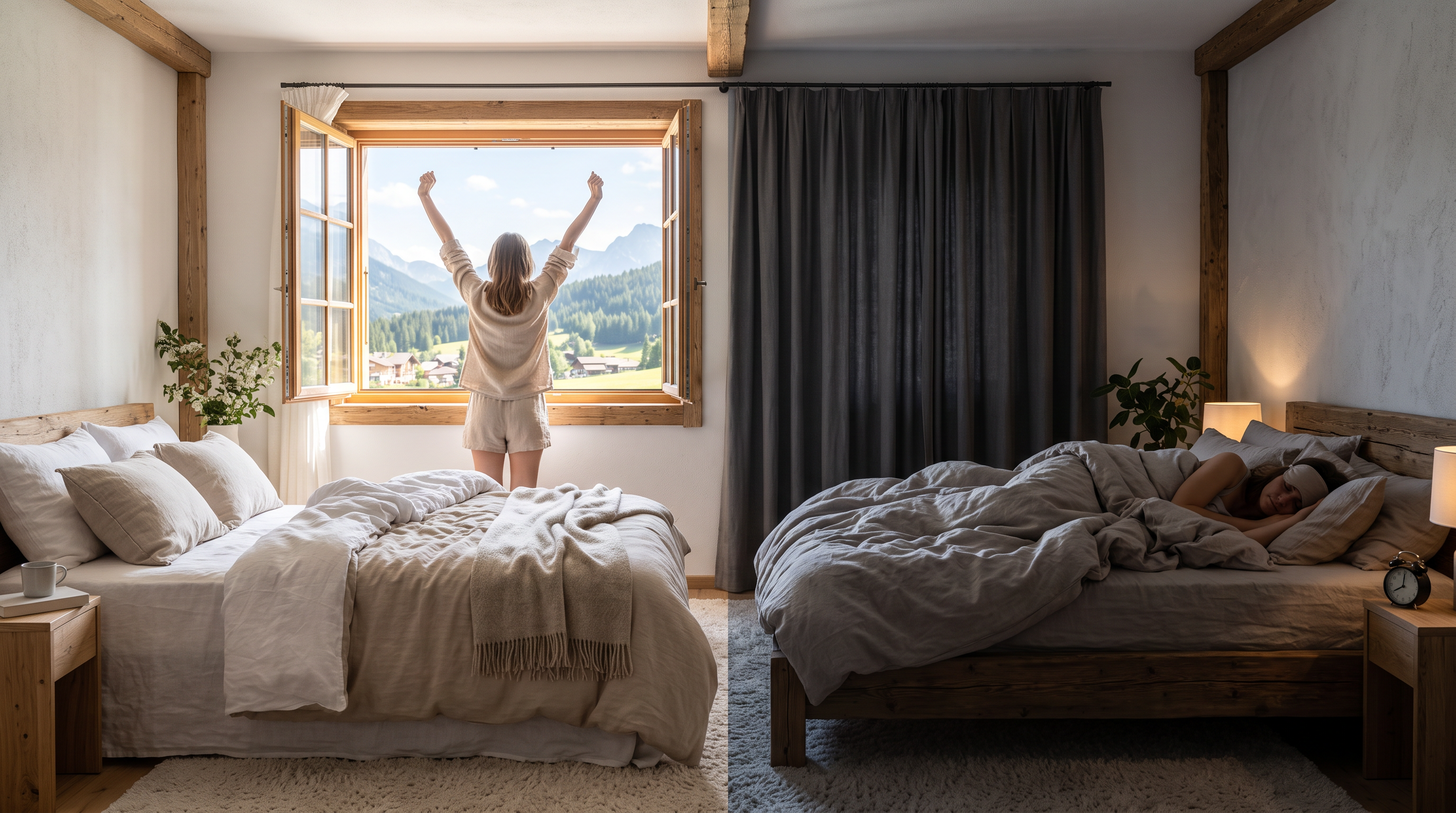
Immediately after waking up, the humidity in the bedroom is at its highest. Turn back the duvet – don't make the bed immediately! – and open the window wide. This allows the nocturnal moisture from the duvet, pillow, and room air to escape before it settles into textiles and walls. This also prevents mite infestation – a topic we delve into in the guide to mite-resistant mattresses.

Evenings: Prepare the room for sleeping
A second fixed ventilation appointment should be shortly before going to bed – ideally as part of a fixed evening routine, as we describe in the article on sleep hygiene. The fresh, cool air lowers the room temperature, increases the oxygen content, and helps the body initiate the core temperature reduction needed for falling asleep. Those who sweat heavily at night can find further tips in our article on night sweats and their causes.
At night: Leave windows open – yes or no?
If external noise, pollen, and security allow, there's nothing wrong with an open or tilted window during the night – in summer, it's even ideal. In winter, shock ventilation before going to bed is sufficient; a continuously open window would cool the room too much and unnecessarily increase heating costs. It's important that there's no direct draft over your head and neck.
Ventilation also protects your mattress
A large part of nocturnal moisture ends up in the mattress. If it is not regularly aired out, a warm, moist environment develops – ideal for mites and mildew stains. Let the mattress breathe in the morning, ventilate the room consistently, and follow our tips for mattress care and cleaning your mattress. Modern materials also help: The Ora Ultra uses open-pored EvoPoreHRC Premium memory foam, which effectively wicks away moisture and automatically adapts to your body and sleeping position – all without the outdated, never-standardized firmness level logic where you have to choose between rigid levels.
Get CHF 25 discount
Subscribe to newsletter and receive a one-time CHF 25 discount. ✓ 200 nights trial sleep ✓ 10 years warranty
Fresh climate, fresh sleeping experience: The Ora Ultra mattress with breathable EvoPoreHRC Premium memory foam automatically adapts to your body and sleeping position and ensures a dry, pleasant sleeping climate. Sustainably price-conscious sleepers choose the Ora Ultra Second Life. Both with 200 nights trial sleep and 10 years warranty.
Frequently asked questions about ventilating the bedroom
How often should you ventilate the bedroom?
At least twice a day by shock ventilation: immediately after getting up and before going to bed. If you are home during the day, ideally ventilate a third time at noon or in the afternoon.
Is sleeping with an open window healthy?
Generally, yes: Fresh air lowers the CO2 content and temperature in the room. Make sure that there is no direct draft over your head and neck, and close the window in case of strong noise, pollen, or freezing temperatures.
Why is a tilted window problematic in winter?
A permanently tilted window exchanges hardly any air, but it significantly cools the wall areas around the window. Moisture condenses there – the most common cause of mold in the bedroom. Short shock ventilation is more effective and energy-saving.
Should you make the bed immediately after getting up?
It's better not to: Turn back the duvet and let the bed and mattress air out for at least 30 minutes with the window open. This allows the nocturnal moisture to escape instead of remaining in the bedding.
What to do if the windows are fogged up in the morning?
Fogged-up windows indicate too high humidity. Wipe off the condensation, ventilate vigorously immediately with cross-ventilation, and check if you should ventilate additionally in the evening. If the problem persists, a hygrometer can help with monitoring.
This article is for general information only and does not replace medical advice.









Leave a comment
This site is protected by hCaptcha and the hCaptcha Privacy Policy and Terms of Service apply.