
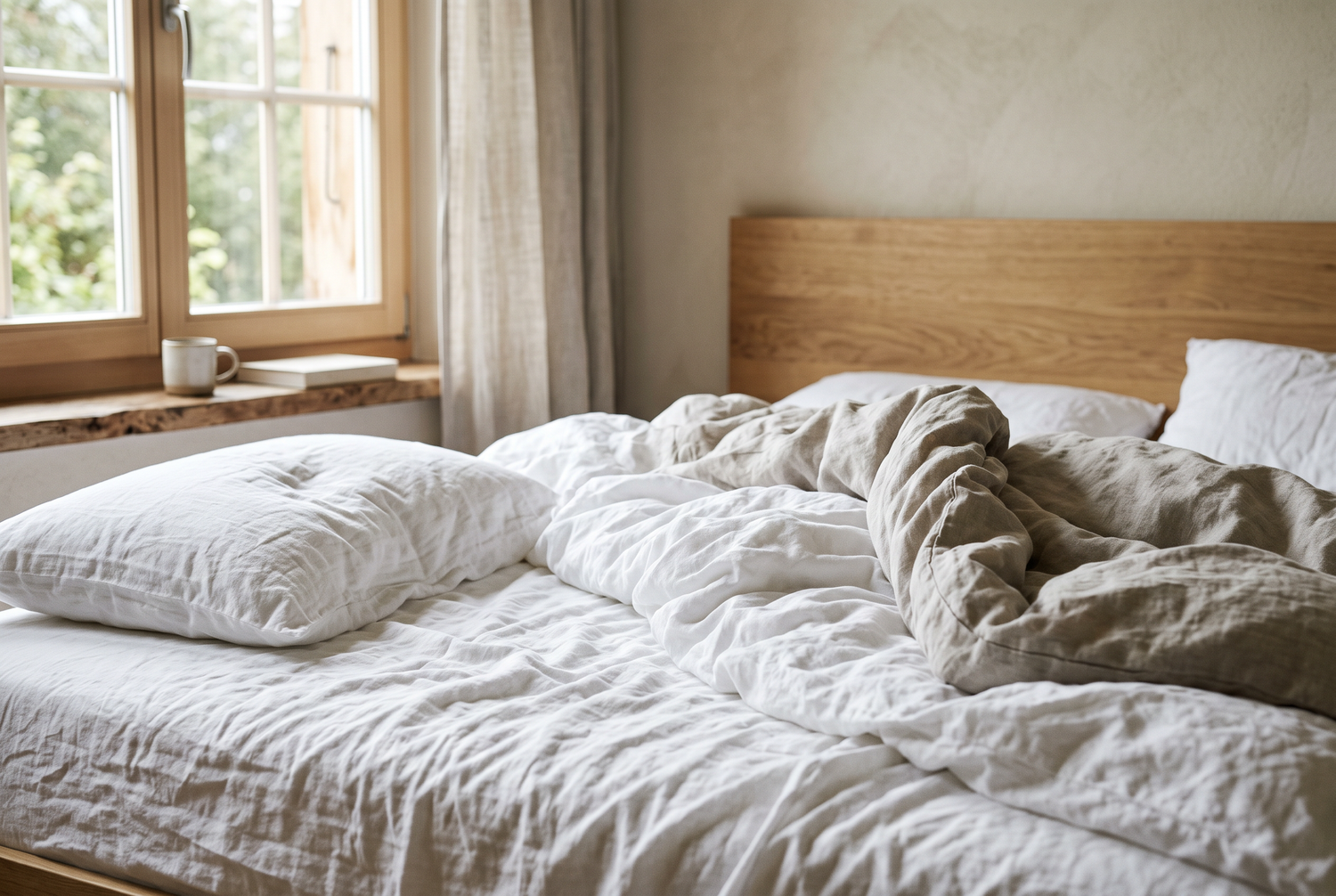
You wake up at three in the morning, your T-shirt stuck to your back, the sheet damp – and it’s not even particularly warm in the room. Night sweats in men are significantly more common than the topic is discussed: Surveys in general practitioners' offices find that, depending on the definition, around a quarter to a third of adult men experience at least occasional night sweats. In the vast majority of cases, there is no serious illness behind it, but rather a chain of trivial factors: a bedroom at 22 degrees, an all-season duvet with 800 grams of filling, two glasses of wine after exercise, and a mattress that retains heat instead of dissipating it. Nevertheless, it's worth taking a closer look – because a small percentage of cases have a medical cause that should not be overlooked. This article categorizes what is normal, what you can change yourself in a week, and where the line is for medical clarification.
The short answer: Night sweats in men usually occur when the body's heat dissipation is blocked – by a room that is too warm, too much bedding, heat-retaining mattress materials, or alcohol in the evening. The body's core temperature must drop by about 0.5 to 1 degree Celsius to fall asleep; if this does not happen, the body compensates through the sweat glands. Those who consistently adjust their bedroom, duvet, and evening routine for heat dissipation will, in most cases, significantly get rid of the symptoms within one to two weeks. If night sweats persist despite an optimal sleeping environment, or if fever, unintentional weight loss, or pauses in breathing occur, it should be medically evaluated.
- The ideal bedroom temperature is between 16 and 19 degrees Celsius – above 21 degrees, the tendency to sweat increases significantly.
- In men, more muscle mass, a higher metabolic rate, and more active sweat glands lead to greater heat production than in women.
- Alcohol is the most underestimated trigger: It dilates the skin's blood vessels and simultaneously disrupts temperature regulation during deep sleep.
- Mattress, cover, and duvet form a system – a breathable core is of little use under an airtight topper.
- Warning signs for medical evaluation: soaked clothing several nights per week over four weeks, fever, weight loss, pauses in breathing, or new medications.
What actually counts as night sweats?
Not every damp neck hair is a medical problem. During a normal night, the body releases around 200 to 500 milliliters of fluid through the skin and breathing – significantly more on warm summer nights. In medicine, night sweats that require treatment are only considered when you regularly sweat so heavily that you have to change sleepwear or bedding, regardless of room temperature. A useful self-test: For one night, set the room to 17 degrees, use a light summer duvet, and observe the result. If the sweating does not occur, the environment was the cause. If it does occur despite a cool, dry environment, that is a different signal.
The distribution is also important. Sweating that occurs evenly over the entire body and wakes you up from sleep should be evaluated differently than local dampness on the back and neck – the latter almost always indicates heat build-up between the body and the mattress surface. For two weeks, note the time, intensity, and accompanying circumstances such as alcohol, late exercise, or stress. This simple log provides more insight in practice than any assumption and is invaluable for a doctor's consultation.
Why men physiologically sweat more easily
There are solid reasons why night sweats are more frequent and intense in men. First, heat production: muscle tissue consumes more energy even at rest than fat tissue, and men have, on average, about 10 to 15 percent more muscle mass. An 85-kilogram man releases significantly more heat into his bed overnight than a 60-kilogram woman – with an identical duvet.
Second, thresholds: Thermoregulation studies show that in men, sweat production begins at a slightly lower skin temperature and more fluid is released per gland. The body thus chooses the path of evaporative cooling earlier and more aggressively, rather than first only increasing blood flow to the skin.
Third, contact area: Men are, on average, heavier and therefore lie deeper in the mattress. The more body surface is enclosed by material, the less air can circulate. This is precisely where the typical pattern of a damp back occurs in a pleasantly cool room. Anyone who understands this connection will look for the solution not in the heating control, but in the sleeping surface – more on this below.

Overview of the most common causes
Night sweats are a symptom, not a disease. The list of causes is long, but can be well sorted by probability. The following overview shows what is typically behind it in practice and how often, and how you can recognize it.
| Cause | Typical Pattern | First Step |
|---|---|---|
| Sleep environment too warm | Back and neck damp, year-round, worse in summer | Room to 16–19 °C, lighter duvet |
| Heat retention in the sleeping surface | Only contact zones damp, room cool | Check mattress and toppers for air circulation |
| Alcohol in the evening | Sweat surge 3–5 hours after falling asleep | Test two weeks without alcohol |
| Late exercise or late meal | Sweating in the first half of the night | Finish training and eating 3 hours before bed |
| Stress and brooding | Sweating with palpitations and waking up | Establish evening routine and relaxation technique |
| Sleep-related breathing disorder | Sweating plus snoring, breathing pauses, daytime fatigue | Medical evaluation |
| Medication | Onset linked to new medication | Consult prescribing doctor |
| Hormonal or internal medical causes | Soaking through despite cool environment, accompanying symptoms | Medical evaluation |
The order is deliberately chosen: Address the top rows first. It would be a shame to lose weeks with blood tests if simply a 22-degree bedroom and an overly thick duvet were the cause.
Sleep climate: the biggest lever
The ideal sleep temperature for most people is between 16 and 19 degrees Celsius. This sounds cool, but it's precisely the range in which the body can lower its core temperature effortlessly. If the room rises to 22 degrees, thermoregulation must actively counteract it – and the only effective lever left to it then is sweat.
Humidity is just as important: 40 to 60 percent relative humidity is optimal. Above 65 percent, sweat evaporates less effectively, cooling no longer works, and the body produces even more of it – a vicious circle that many know in midsummer. An inexpensive hygrometer for about 20 Swiss francs can provide clarity here in a single night. Airing out the room thoroughly in the evening has proven practical: five to ten minutes with the windows wide open, instead of leaving them tilted all night. More on this in the article about proper ventilation.
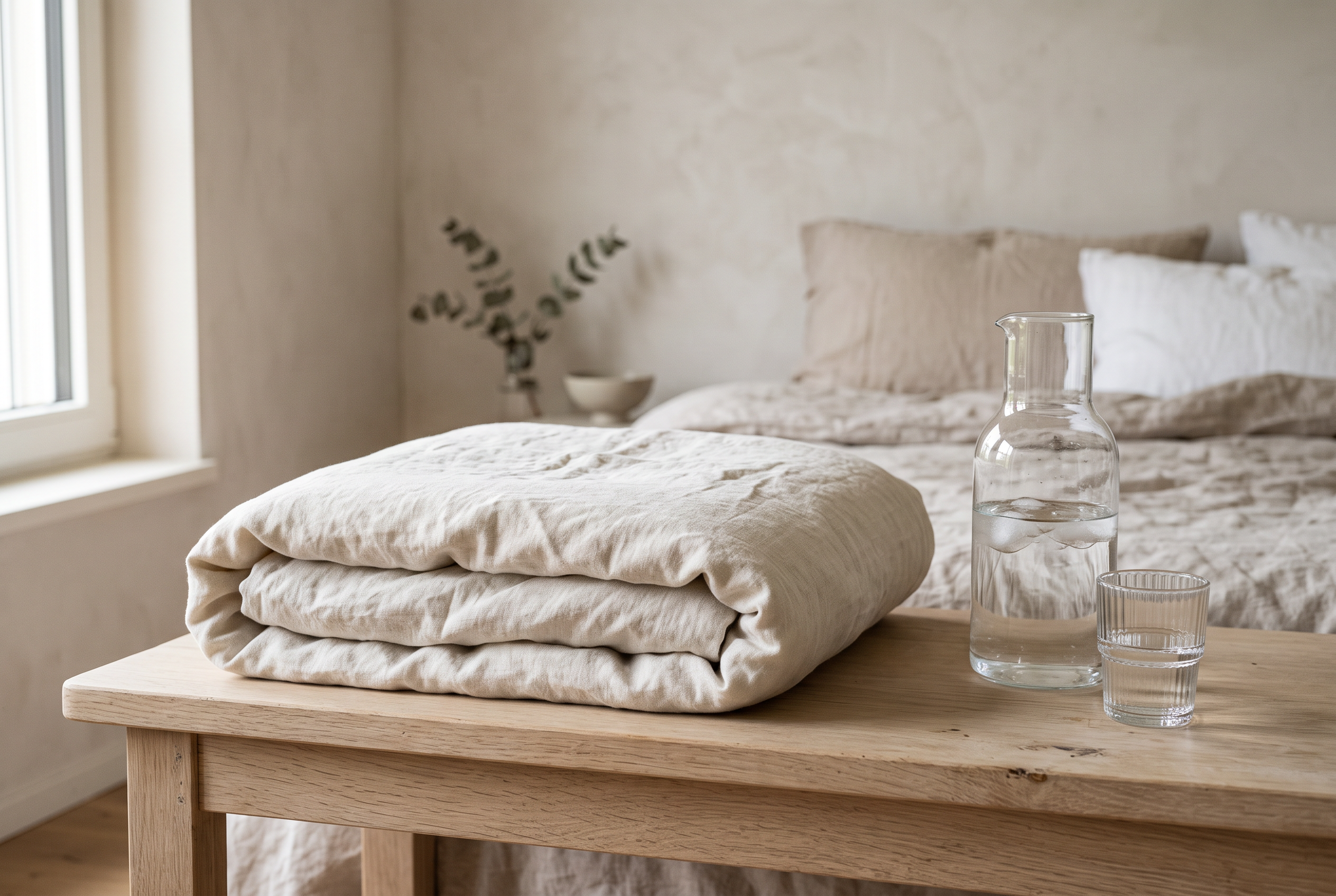
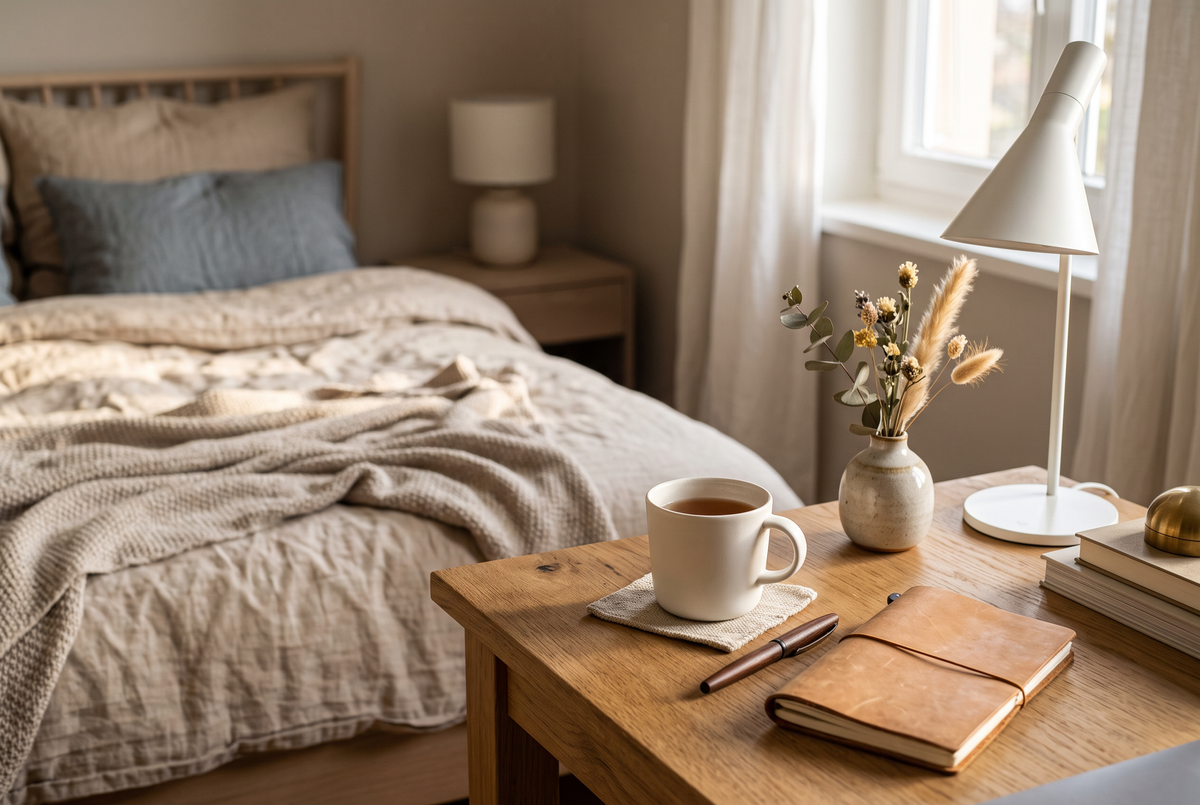
When it comes to duvets, seasonal changes are worthwhile. A summer duvet with 200 to 300 grams of filling is usually sufficient for most men at a room temperature of 17 degrees. Those who sleep year-round under an 800-gram duvet create a microclimate of well over 30 degrees under the covers – even the coolest room won't help there.
When the mattress retains heat
Around 40 percent of your body surface rests on the mattress at night. What happens there significantly determines the sensation of warmth. Classic, dense foam cores without an open cell structure absorb heat and release it slowly – you literally lie in a heat trough. Modern, open-pored foams with high air permeability solve the problem because air is pumped through the core when you change sleeping positions.
A common misconception: many invest in a breathable mattress and then place a coated, waterproof topper on top. This negates the advantage. If you need a protective cover, look for membranes that are designated as breathable – the difference in practice is significant. The cover also counts: washable covers with proportions of Tencel, cotton, or linen wick away moisture better than pure polyester fabrics. How often it should be washed is covered in the guide to washing mattress covers. And finally, the base: a mattress directly on a closed wooden board cannot release moisture downwards – a slatted frame with sufficient spacing between the slats is essential.
Alcohol, exercise and food: the evening factors
Alcohol is a classic trigger. It dilates the skin's blood vessels, which initially feels pleasantly warm, and then disrupts temperature regulation for hours. During breakdown, acetaldehyde is also produced, which activates the sympathetic nervous system – typically three to five hours after falling asleep, precisely when many men wake up drenched in sweat. A two-week self-experiment without alcohol is the quickest way to clarity; more background can be found in the article on alcohol and sleep quality.
Intensive exercise late in the evening raises the body's core temperature by up to one degree, and the recovery takes two to four hours depending on the intensity. Anyone who leaves the gym at 9 PM and goes to bed at 10:30 PM starts the night with an excess of heat. A lukewarm shower after exercise accelerates cooling better than an ice-cold one, because the latter constricts the skin's blood vessels and even temporarily slows down heat dissipation.
When it comes to meals, it's less about calories and more about timing and spiciness. Digesting a heavy meal measurably increases energy expenditure for two to three hours; spicy ingredients with capsaicin also directly trigger a sweating reaction. Three hours between the last large meal and bedtime is a solid rule of thumb.
Common mistakes when dealing with night sweats
Mistake 1: Only turning up the heating. If you cool the room to 15 degrees but continue to lie under a thick winter duvet on a heat-retaining mattress, you are only changing the problem – now your nose is cold and your back is still damp.
Mistake 2: Swapping cotton pyjamas for functional clothing. Synthetic sports shirts wick away moisture, but they retain it in the fabric. In bed, there's no wind to evaporate it. Light cotton or linen usually works better at night.
Mistake 3: Leaving the windows completely open at night. In Swiss summer nights, the outside air often doesn't cool below room temperature until after 2 AM. Until then, an open window brings warm, humid air into the room. Better: darken and keep closed during the day, ventilate consistently from late evening. Details in the article Cooling the bedroom in summer.
Mistake 4: Enduring symptoms for years. Especially the combination of night sweats, loud snoring, and daytime fatigue should not be ignored – it could be sleep apnea, which is treatable.
The 7-day plan against night sweating
Don't change everything at once – otherwise, you won't know what worked. This staggered plan has proven effective in practice:
Day 1 to 2 – Temperature: Turn down the heating in the bedroom, target value 17 degrees. Place a thermometer and hygrometer, note values in the morning.
Day 3 – Bedding: Switch to a light summer duvet. Remove waterproof or coated toppers or replace them with a breathable alternative. Use fresh cotton or linen bedding.
Day 4 to 5 – Evening routine: No alcohol, last large meal three hours before bed, move exercise to early evening. A lukewarm shower 60 to 90 minutes before bedtime helps lower core temperature.
Day 6 to 7 – Sleeping surface: Check mattress and base. Is the slatted frame ventilated? Is the bed directly against a cold exterior wall where moisture collects? Can the cover be removed and washed?
In parallel, keep a brief log with a scale of 0 to 3 for sweat intensity. After seven days, in most cases, you will see a clear pattern – and know which measure made a difference. If you want to delve deeper into evening routines, our article on sleep hygiene provides a complete systematic approach.

When to seek medical attention
The majority of night sweats are harmless and environmentally caused. However, there are situations where medical evaluation is advisable – not as a cause for concern, but for safety. Consult a general practitioner if you experience such severe sweating multiple times a week for more than four weeks that clothing or bedding needs to be changed, even in a cool, dry sleeping environment.
Accompanying symptoms also require clarification: unexplained weight loss, recurring fever, swollen lymph nodes, pronounced daytime fatigue despite sufficient sleep duration, observed breathing pauses during sleep, racing heart, or a significant loss of drive and performance. The temporal connection with a newly started medication is also a good reason for a discussion – quite a few preparations, including certain antidepressants, blood pressure medications, and hormone preparations, can cause night sweats as a side effect. Never stop prescribed medications on your own.
Bring your two-week log to the consultation. Time, intensity, room temperature, alcohol, and accompanying symptoms on a single sheet of paper often significantly shorten the diagnosis and save unnecessary examinations.
Get CHF 25 discount
Subscribe to the newsletter and receive a one-time CHF 25 discount. ✓ 200 nights trial sleep ✓ 10-year warranty
Frequently Asked Questions About Night Sweats in Men
When is nocturnal sweating no longer normal?
Night sweats are considered noteworthy if you sweat so profusely several times a week for more than four weeks that sleepwear or bedding needs to be changed, and this occurs even with a cool bedroom temperature of 16 to 19 degrees and a light duvet. Occasional sweating on warm summer nights or after alcohol is, however, normal.
What room temperature helps against night sweats?
16 to 19 degrees Celsius is the target range, with a relative humidity of 40 to 60 percent. Within this window, the body can lower its core temperature by the necessary 0.5 to 1 degree to fall asleep, without having to counteract it via the sweat glands. Above approximately 21 degrees, the tendency to sweat increases significantly.
Can the mattress be to blame for sweating?
Yes. Around 40 percent of the body's surface rests on the mattress at night. Dense, closed-cell foam cores store heat and release it slowly, leading to heat build-up. A typical sign is a damp back in a cool room. Open-cell foams, breathable covers, and a ventilated slatted frame usually solve the problem.
Why do I sweat particularly heavily after drinking alcohol?
Alcohol dilates the skin's blood vessels and simultaneously disrupts central temperature regulation for hours. During its breakdown, acetaldehyde is produced, which activates the sympathetic nervous system. The typical sweat surge occurs three to five hours after falling asleep – precisely when many men wake up drenched in sweat.
Do night sweats in men have to do with hormones?
This is possible, but significantly less common than in women during menopause. Changes in hormone balance, as well as thyroid and metabolic disorders, can trigger night sweats. However, these causes should only be investigated if the sleeping environment, bedding, and evening routine have already been optimized and sweating persists.
Which bedding is best for night sweats?
Linen and light cotton with an open weave like percale or batiste work best because they absorb moisture and release it quickly. Synthetic functional fabrics retain moisture in the fabric because there is no evaporative airflow in bed. A light summer duvet with 200 to 300 grams of filling complements the system.
This article is for general information purposes only and does not replace medical advice.





Leave a comment
This site is protected by hCaptcha and the hCaptcha Privacy Policy and Terms of Service apply.