
It starts with a tingling in the back of your neck, then the heat rushes to your face and chest in seconds, your heart beats faster – and three minutes later you're shivering in damp sheets. Hot flashes at night are the most bothersome symptom for many women in perimenopause, not only because they are uncomfortable, but because they systematically disrupt sleep. Menopause studies find vasomotor symptoms in up to 80 percent of women, and in about a third of them, they occur so frequently that sleep quality significantly suffers. However, men undergoing certain therapies, as well as people with thyroid or metabolic issues, are also affected. The good news: while you can only influence the frequency of flashes to a limited extent, you can very much influence their impact on sleep. That's exactly what this is about – what happens between you and the mattress.
The short answer: Hot flashes at night occur because the thermoneutral zone in the brain narrows – even the smallest temperature increases then trigger a full cooling reaction with vasodilation and sweating. Therefore, anything that keeps the body at the lower end of this zone from the outset is effective: 16 to 18 degrees room temperature, a layering system of light natural materials instead of a thick duvet, a sleeping surface that dissipates heat instead of storing it, and avoiding alcohol, caffeine, and spicy foods in the evening. These measures often significantly reduce the number of awakenings in practice, even if the flashes themselves remain. If suffering is severe, a conversation with a doctor about medical options is also worthwhile.
- A typical hot flash lasts 1 to 5 minutes; the skin temperature rises by up to 4 degrees Celsius.
- Target values in the bedroom: 16 to 18 degrees Celsius with 40 to 60 percent humidity.
- A layering system of two thin blankets beats any single thick duvet, because you can regulate in seconds.
- Alcohol, caffeine after 2 PM, and spicy foods in the evening are among the most common self-influencable triggers.
- The post-shivering phase is the real sleep thief: those who shiver after the flash truly wake up. Keep dry spare clothing ready.
What happens in the body during a nocturnal hot flash
The hypothalamus regulates the core body temperature within a narrow corridor, the thermoneutral zone. In healthy people, this corridor is about 0.4 degrees wide – only when the core temperature exceeds the upper limit does the cooling reaction start. Declining and fluctuating estrogen levels narrow this corridor to a fraction. The result: even the normal physiological temperature increase, which begins about four to five hours after falling asleep, is enough to trigger the full alarm cascade.
This cascade always runs the same way. The skin blood vessels abruptly dilate, the skin temperature on the face, neck, and chest rises by up to 4 degrees, the heart rate increases by 7 to 15 beats per minute, and the sweat glands activate. The whole process typically lasts 1 to 5 minutes. After that comes the phase that is often underestimated in everyday life: the evaporation continues to cool, even though the heat surge has long passed. You shiver in wet fabric – and it is precisely this shivering that turns a brief moment of waking into 40 minutes of lying awake. Those who get the post-shivering phase under control often regain more sleep than through any measure against the flash itself.
Why the night is worse than the day
Many affected individuals report that hot flashes are more frequent and intense at night. There are several reasons for this. Firstly, the circadian rhythm: the core body temperature reaches its minimum around 4 AM and slowly rises for hours before that – a pattern that touches the trigger threshold multiple times a night. Secondly, insulation: a microclimate of 30 to 34 degrees develops under a duvet. The body practically has no way to passively release heat; any slight excess must be compensated by sweat.
Thirdly, the lack of distraction. During the day, you register a hot flash, fan yourself, and move on. At night, the same physical reaction meets a sleeping brain and leads to a complete arousal – meaning a switch from deep sleep to superficial sleep stages or wakefulness. That's why the consequences are so severe: the hot flash is not the problem, but the fragmented sleep architecture. If you want to know how this architecture is structured, you can find the basics in the article on sleep stages.

The Bedroom: Target Values Instead of Gut Feeling
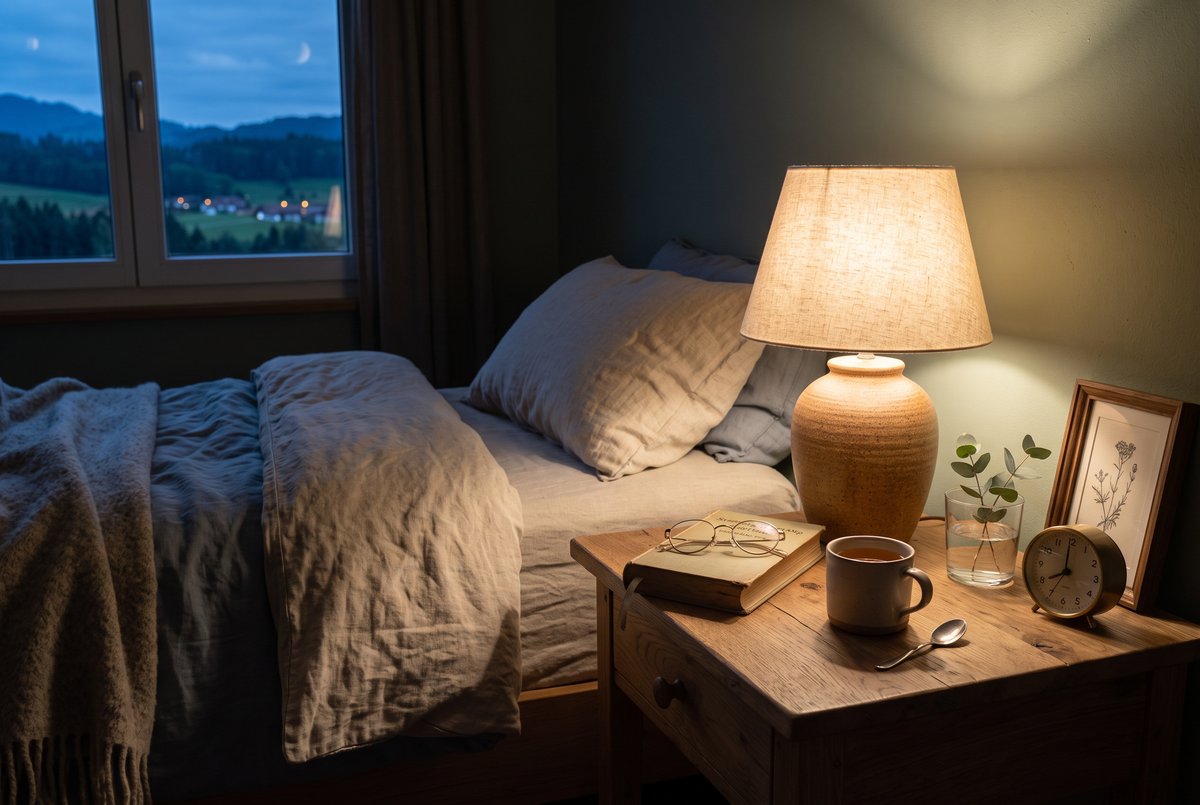
For hot flashes, the bedroom can be cooler than usually recommended. Instead of the general recommendation of 16 to 19 degrees, affected individuals should aim for the lower end: 16 to 18 degrees. The idea behind this is simple – the greater the difference between body and ambient temperature, the more heat can dissipate passively before the sweating reaction even starts.
Humidity is the second, often overlooked factor. Above 65 percent relative humidity, sweat barely evaporates; cooling fails, and the hot flash feels longer and more intense. 40 to 60 percent is the target range. A simple hygrometer for around 20 francs provides the necessary information. On Swiss summer nights, the combination of darkening during the day and consistent airing after 10 PM is most reliable; described in detail in the article on proper ventilation.
A fan on the lowest setting, angled towards the edge of the bed, is particularly effective for hot flashes because it speeds up evaporation and thus shortens the post-chilling phase. Do not aim it directly at your head or shoulder – this causes tension and dry mucous membranes for many people.
The Bed System: Three Layers Instead of One Duvet
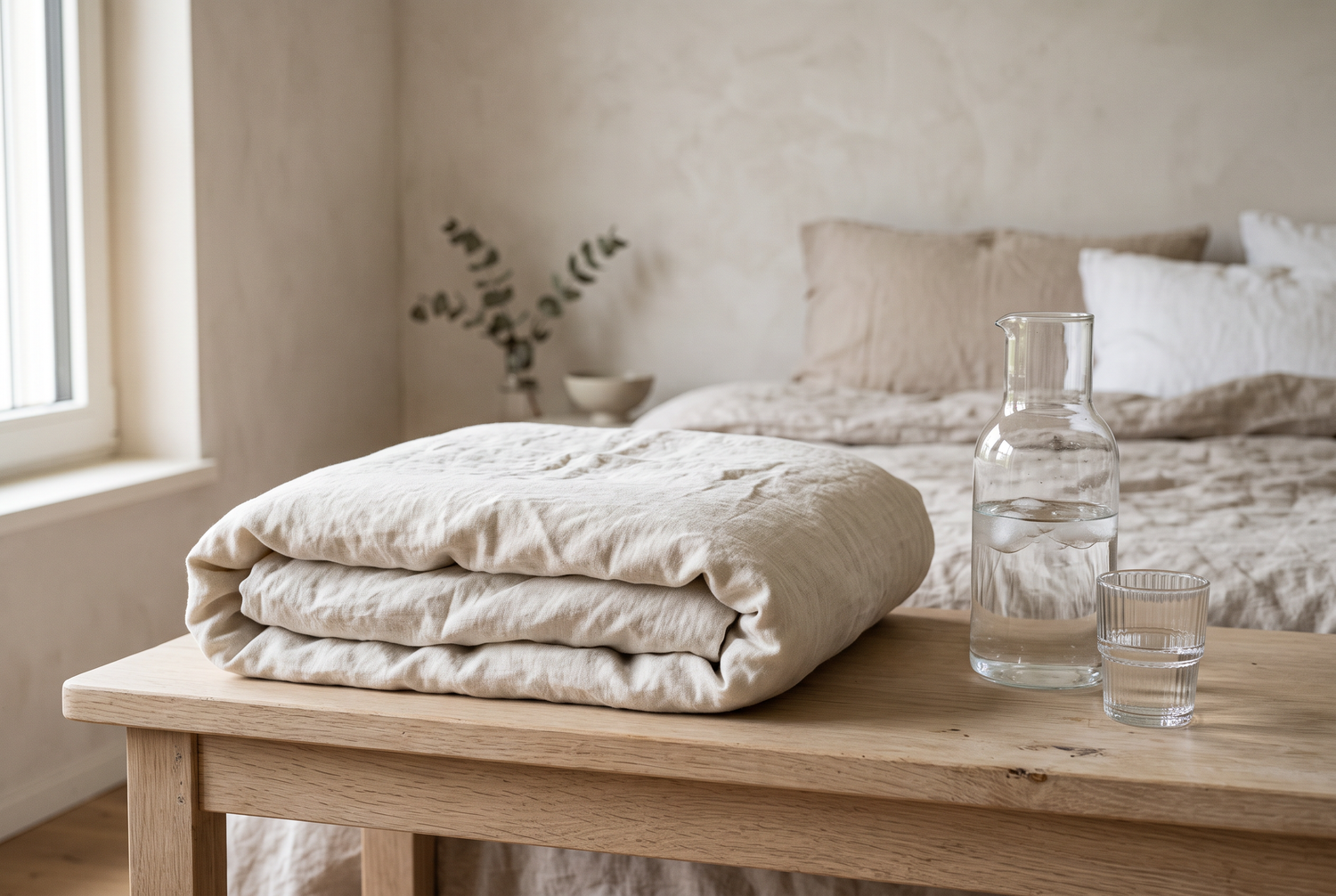
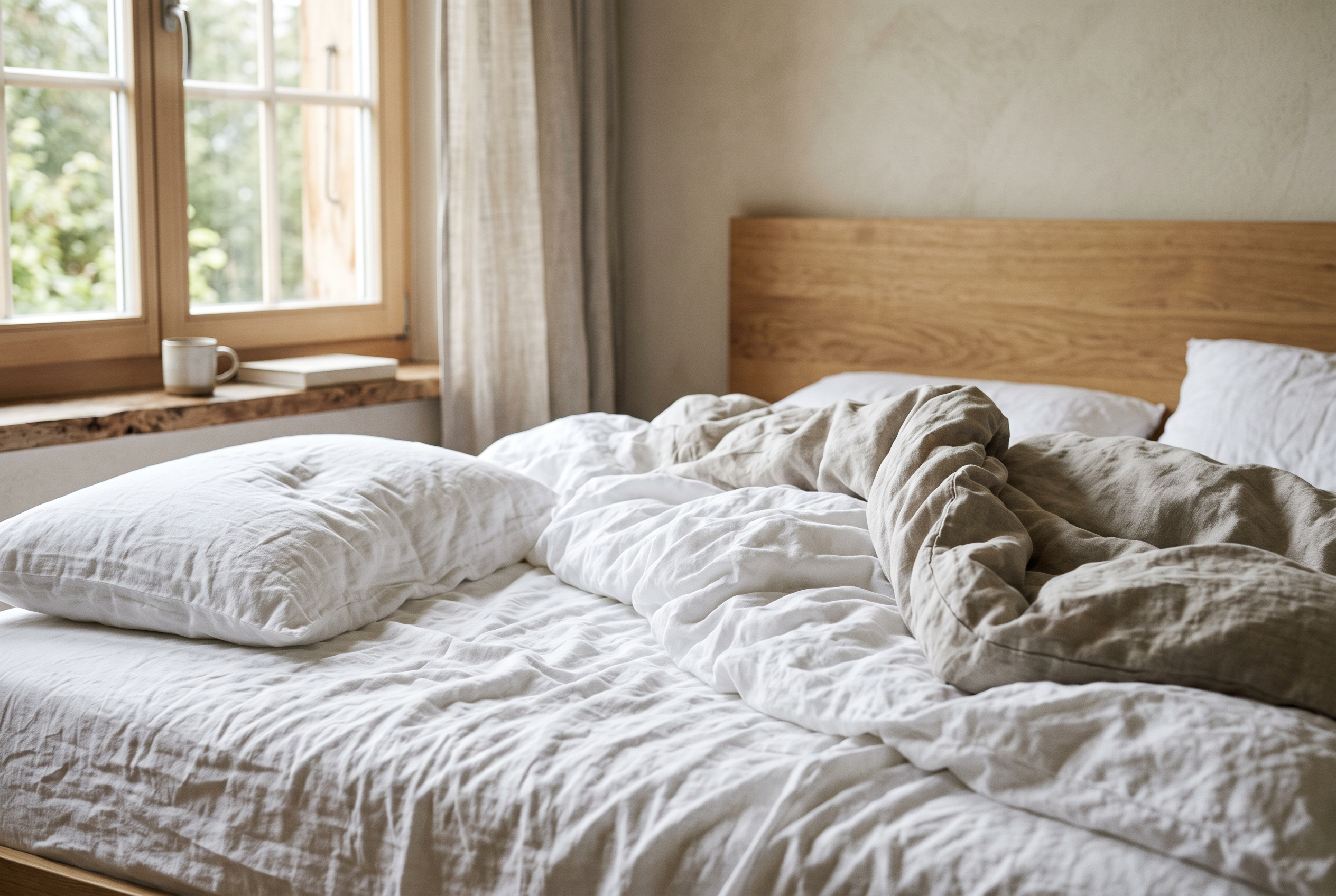
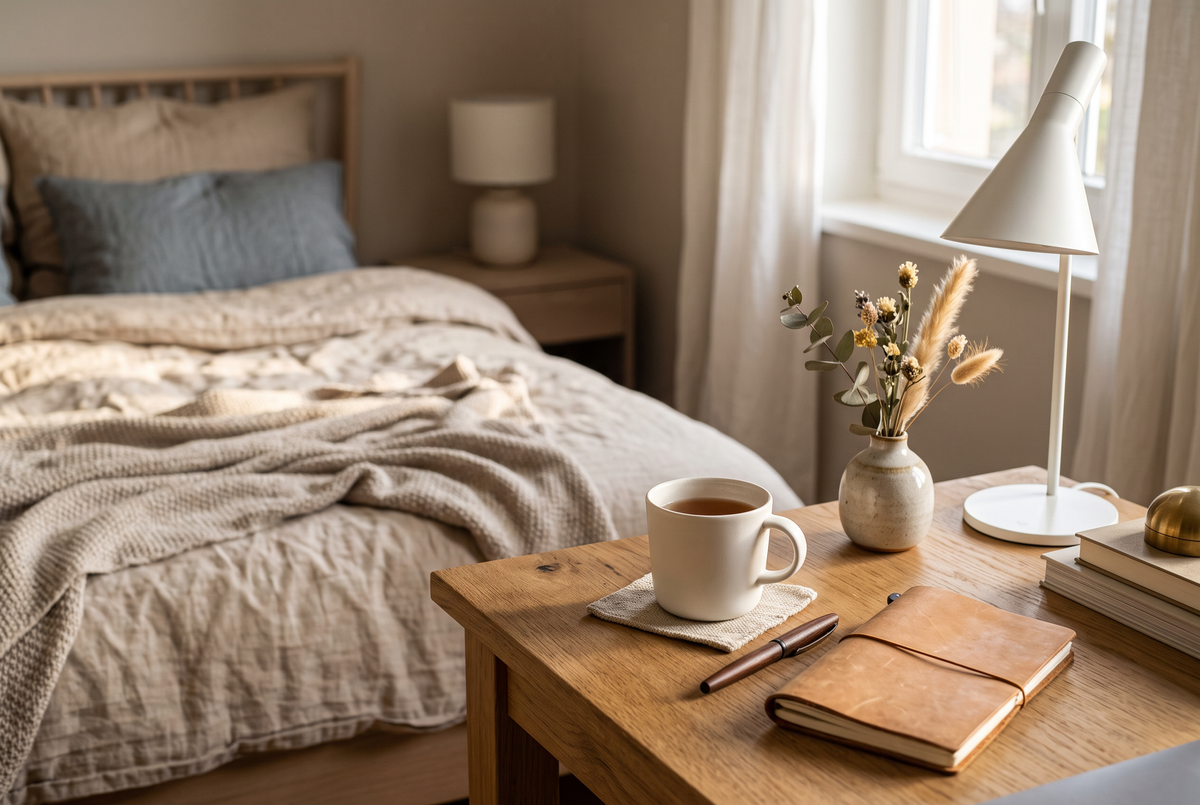
The most important practical change is switching from a single duvet to a layering system. The reason is adjustability: during a hot flash, you need to get rid of heat in seconds, then be able to cover up just as quickly – without getting up and without waking up.
| Layer | Recommendation | Why |
|---|---|---|
| Sleeping surface | Open-pore foam, breathable cover, ventilated slatted frame | 40% of the body surface lies on it; this is where heat accumulates |
| Sheet | Linen or percale cotton | Absorbs moisture and releases it quickly |
| Blanket 1 | Thin summer duvet, 200–300 g filling | Basic warmth without heat buildup |
| Blanket 2 | Light cotton blanket or waffle piqué | Pushed away during the hot flash, then pulled back |
| Sleepwear | Light cotton, short-sleeved, loose | Absorbent; synthetics keep moisture on the body |
| Reserve | Dry T-shirt and towel within reach | Shortens the post-chilling phase and lying awake |
With separate blankets in a double bed, there's a pleasant side effect: you can regulate your own climate without waking your partner. How this works for both parties can be found in the guide to mattresses for couples.
Evening triggers: what you have in your own hands
Not every hot flash can be prevented, but the trigger threshold can be shifted. Alcohol is at the top of the list: it dilates skin vessels, which adds to an incipient hot flash, and at the same time disturbs temperature regulation during deep sleep. Many sufferers report significantly quieter nights after just two alcohol-free weeks – background information can be found in the article on alcohol and sleep quality.
Caffeine has a half-life of about five to six hours. An espresso at 5 PM means that half of it is still effective at 11 PM – and caffeine increases sympathetic tone, which is precisely the axis through which hot flashes also run. 2 PM is a practical limit. Spicy foods containing capsaicin directly cause vasodilation and should be avoided three hours before bedtime. Hot drinks late in the evening, a too-hot bath just before bed, and smoking are also well-documented triggers.
Conversely, there is an effect that often surprises: a lukewarm bath or shower 60 to 90 minutes before bedtime promotes the lowering of core temperature because the increased blood flow to the skin then carries heat outwards. The timing is important – directly before bed, it has the opposite effect.
Myths Fact-Checked
"A cold shower in the middle of the night helps best." In the short term, yes, in the medium term, no: cold water constricts the skin vessels, heat dissipation breaks down, and the core temperature rises again afterwards. Moreover, the procedure makes you really awake. Better: run cool water over your forearms and wrists, put on a dry shirt, lie down again.
"A cooling pillow solves the problem." Cooling gels feel pleasant for the first few minutes, but quickly warm up to body temperature and then store the heat. A continuously breathable system of pillow, cover, and mattress has a more lasting effect.
"If you sweat, you just have to drink more." Fluid balance is sensible, but large amounts of liquid after 8 PM lead to nocturnal toilet visits, which further fragment sleep. Distribute the amount throughout the day and keep only a small glass ready at night.
"You just have to put up with it." That's not true. In addition to environmental measures, there are effective medical options, from hormone therapy to non-hormonal alternatives. If the suffering is severe, this conversation belongs in the gynecologist's or family doctor's office – the individual benefit-risk assessment cannot be made generally. Take a two-week log with you: time, duration, intensity on a scale of 1 to 3, and triggers like alcohol or spicy food. Read more about the overall picture in the article on sleep during menopause.
Practice: the routine for the next hot flash
Prepare the routine while you are awake and clear-headed – no one makes good decisions at 3:30 AM. This sequence has proven effective:
Evening preparation: Place a dry T-shirt and a small towel on the bedside table. Lay a second blanket at the foot of the bed. Fan on the lowest setting, keep the window closed after airing, room at 16 to 18 degrees.
During the hot flash: Push aside the top blanket, expose arms and shoulders. Do not get up, do not turn on the light – bright light suppresses melatonin and delays falling back asleep by up to 30 minutes. Breathe calmly and slowly; longer exhalation measurably dampens the sympathetic nervous system.
Afterwards: As soon as the heat subsides, dry your neck and back with the towel, change your T-shirt, pull back the second blanket. These 30 seconds prevent shivering – and thus usually long periods of lying awake.
If you stay awake for longer than 20 minutes: Get up, go to another room in dim light, do something quiet, and only return when you are tired. This is standard behavioral therapy and prevents the bed from becoming a place of lying awake. For persistent rumination, the article on stress and rumination helps.

When a medical check-up is advisable
Hot flashes in connection with menopause are well explainable. Nevertheless, there are situations in which a doctor's visit is indicated: if the hot flashes occur significantly before the age of 40, if they are accompanied by unintended weight loss, fever, heart rhythm disorders or severe trembling, if they suddenly increase during ongoing therapy, or if the lack of sleep noticeably impairs your performance and mood in everyday life.
Hyperthyroidism, certain medications and other internal medical causes can be distinguished with a few examinations. And regarding therapy: the decision for or against hormone therapy depends on age, time of onset, pre-existing conditions and personal priorities – this can only be seriously clarified in an individual discussion. Bring a two-week log: time, duration, intensity on a scale of 1 to 3, and triggers such as alcohol or spicy food. More about the overall picture can be found in the article on sleep during menopause.
Secure a CHF 25 discount
Subscribe to our newsletter and receive a one-time CHF 25 discount. ✓ 200 nights trial sleep ✓ 10-year guarantee
Frequently asked questions about hot flashes at night
How long does a nocturnal hot flash last?
A typical hot flash lasts 1 to 5 minutes. Skin temperature on the face, neck, and chest can rise by up to 4 degrees Celsius, and heart rate increases by about 7 to 15 beats per minute. The subsequent cooling phase with shivering in damp clothing often lasts longer than the flash itself and is the main reason for prolonged awakenings.
What is the ideal room temperature for hot flashes?
16 to 18 degrees Celsius, which is the lower end of the general recommendation, with a relative humidity of 40 to 60 percent. The greater the difference between body and ambient temperature, the more heat can passively dissipate before the sweating reaction even starts. Above 65 percent humidity, sweat hardly evaporates and cooling fails.
Does a fan help with nocturnal hot flashes?
Yes, a fan on the lowest setting accelerates evaporation and thus shortens the unpleasant cooling phase after the hot flash. Aim it diagonally at the edge of the bed and not directly at your head or shoulder, as continuous drafts can lead to tension and dry mucous membranes for many people.
Which drinks and foods trigger hot flashes?
Among the most well-documented triggers are alcohol, caffeine in the afternoon and evening, spicy foods with capsaicin, very hot drinks, and smoking. Practical limits are: no caffeine after 2 PM, no spicy foods and no alcohol in the three hours before bedtime. A two-week self-experiment quickly shows what works for you.
Can a heat-retaining mattress worsen hot flashes?
The mattress doesn't cause hot flashes, but it lowers the threshold. Around 40 percent of the body's surface lies on the mattress at night. Dense, closed-cell foam cores store heat and release it slowly, causing the core temperature to reach the trigger threshold faster. Open-pore foams, breathable covers, and a ventilated slatted frame help.
What do I do if I can't fall back asleep after a hot flash?
First, change your damp shirt and rub your neck and back dry to prevent chills. Avoid bright light, as it suppresses melatonin secretion. If you're awake for more than 20 minutes, get up, go to another room with dim lighting, and only return to bed when you feel tired again.
This article is for general information purposes only and does not replace medical advice.



Leave a comment
This site is protected by hCaptcha and the hCaptcha Privacy Policy and Terms of Service apply.