
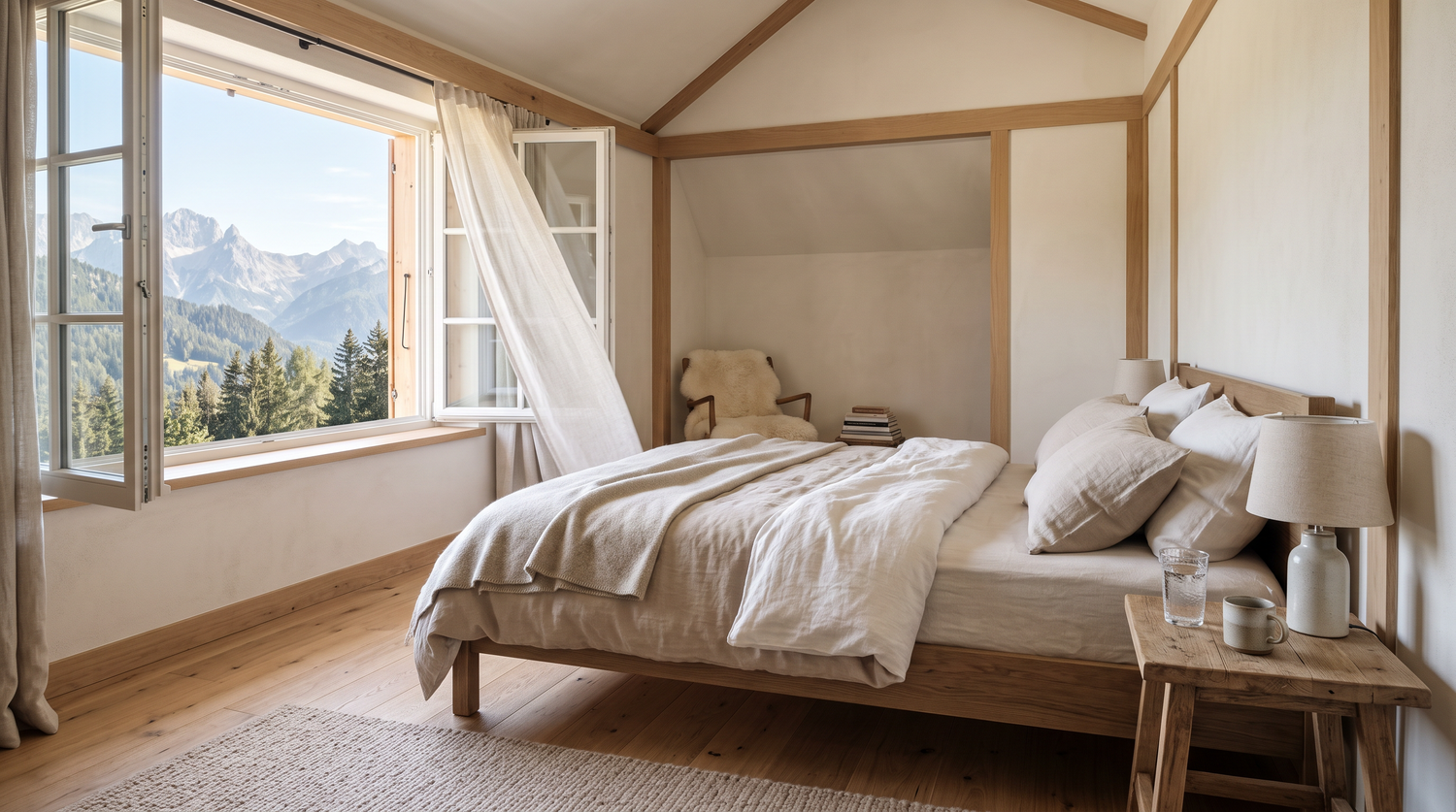
You wake up in the middle of the night, your pajamas clinging to your back, your pillow feeling damp – and falling back asleep seems almost impossible. Night sweats are unpleasant, widespread, and in most cases harmless. Nevertheless, it's worth investigating the causes of night sweats: knowing the triggers allows you to take targeted action and sleep much more peacefully.
The short answer: Night sweats are usually caused by a room that is too warm for sleeping, heat-retaining bedding, hormonal changes, heavy meals or alcohol in the evening, and stress. Only rarely is a treatable illness behind it. The most effective levers are a cool bedroom of 16 to 18 degrees Celsius, breathable bedding, and a mattress with an open-pored, air-permeable foam structure that dissipates heat and moisture instead of storing it.
- Most common causes: too warm room climate, dense bedding, hormones (e.g., menopause), alcohol, spicy food, and stress.
- The ideal bedroom temperature is 16–18 °C – often the simplest and most effective lever.
- Mattress and bedding make a difference: Open-pored foams and natural fibers dissipate heat and moisture.
- If severe night sweats persist for weeks or are accompanied by fever and weight loss, medical clarification is necessary.
What are night sweats – and when are they normal?
Sweating is the body's air conditioning system: it regulates its temperature by evaporating sweat. At night, the body consciously lowers its core temperature slightly – this is part of healthy sleep phases. Light sweating under the covers is therefore completely normal; every person loses about half a liter of fluid per night.
Experts only refer to true night sweats when you regularly sweat so much that your pajamas or bedding are soaked, and you wake up from it. In that case, it's worth taking a closer look at the possible triggers.
Overview of the most common causes of night sweats
1. Too warm sleep environment
The classic scenario: the bedroom is too warm, the duvet is too thick, the air is stagnant. The ideal sleeping temperature is between 16 and 18 degrees Celsius. Even two or three degrees more can be enough for the body to have to sweat at night.
2. Heat-retaining bedding
Synthetic bedding, a duvet that is too warm for summer, or a mattress with a closed, dense structure act like an insulating layer. Heat and moisture accumulate directly on the body. Our guide to summer and winter duvets shows which duvet suits which season – and why some mattresses sleep cooler than others is explained in our article on cool mattresses.
3. Hormonal changes
Hot flashes and night sweats are among the most common accompanying symptoms of menopause – triggered by declining estrogen levels, which make the brain's temperature regulation center more sensitive. Pregnancy, menstrual cycle, or an overactive thyroid can also increase sweating. Learn more in the guide Sleep during Menopause.
4. Diet, alcohol, and stimulants
Spicy food, late heavy meals, alcohol, and nicotine stimulate metabolism and heat production. Alcohol, in particular, is insidious: it dilates blood vessels, disrupts temperature regulation, and fragments sleep. How strongly diet affects sleep is discussed in our article on sleep-friendly nutrition.
5. Stress and psychological strain
Tension activates the sympathetic nervous system – pulse, body temperature, and sweat production increase. Those who cannot switch off in the evening sweat measurably more at night. Rituals and good sleep hygiene help to reduce stress levels before bedtime.
6. Medications and illnesses
Certain antidepressants, fever reducers, and hormone preparations are among the known triggers. Infections, untreated sleep apnea, or – rarely – serious illnesses can also be behind it. Important: If severe night sweats persist for more than three to four weeks, or if fever, unintentional weight loss, or severe fatigue occur, it should be medically investigated.

Causes and solutions at a glance
| Cause | Typical signs | Effective solution |
|---|---|---|
| Bedroom too warm | Sweating all over the body, stuffy air | 16–18 °C, ventilate in the evening, turn down heating |
| Wrong bedding | Damp bedding, heat accumulation under the duvet | Natural fibers, seasonal duvet, breathable mattress |
| Menopause / Hormones | Sudden hot flashes, often with heart palpitations | Layered sleepwear, medical consultation |
| Alcohol & late eating | Sweating in the first half of the night | Last large meal 3 hours before sleep, reduce alcohol |
| Stress | Overthinking, difficulty falling asleep, sweating | Evening routine, relaxation techniques, screen break |
| Medication / Illness | Soaked clothes for weeks, accompanying symptoms | Medical investigation |
Optimizing your sleep environment: How to stay dry at night
Room and Routine
Ventilate thoroughly before going to bed, keep the bedroom cool and dark, and schedule sports and hot showers at least two hours before sleeping. A light, lukewarm shower right before bed, however, can help to gently lower body temperature. Room design also plays a role – you can find tips on this in our Bedroom Design Principles.
Choose textiles wisely
Opt for bedding made of cotton, linen, or Lyocell, and pajamas made of natural fibers. A washable mattress protector guards your mattress against moisture – our guide to mattress protectors and encasings explains what matters. And if sweat stains do occur: Here's how to properly clean your mattress.
The mattress: an underestimated factor in night sweats
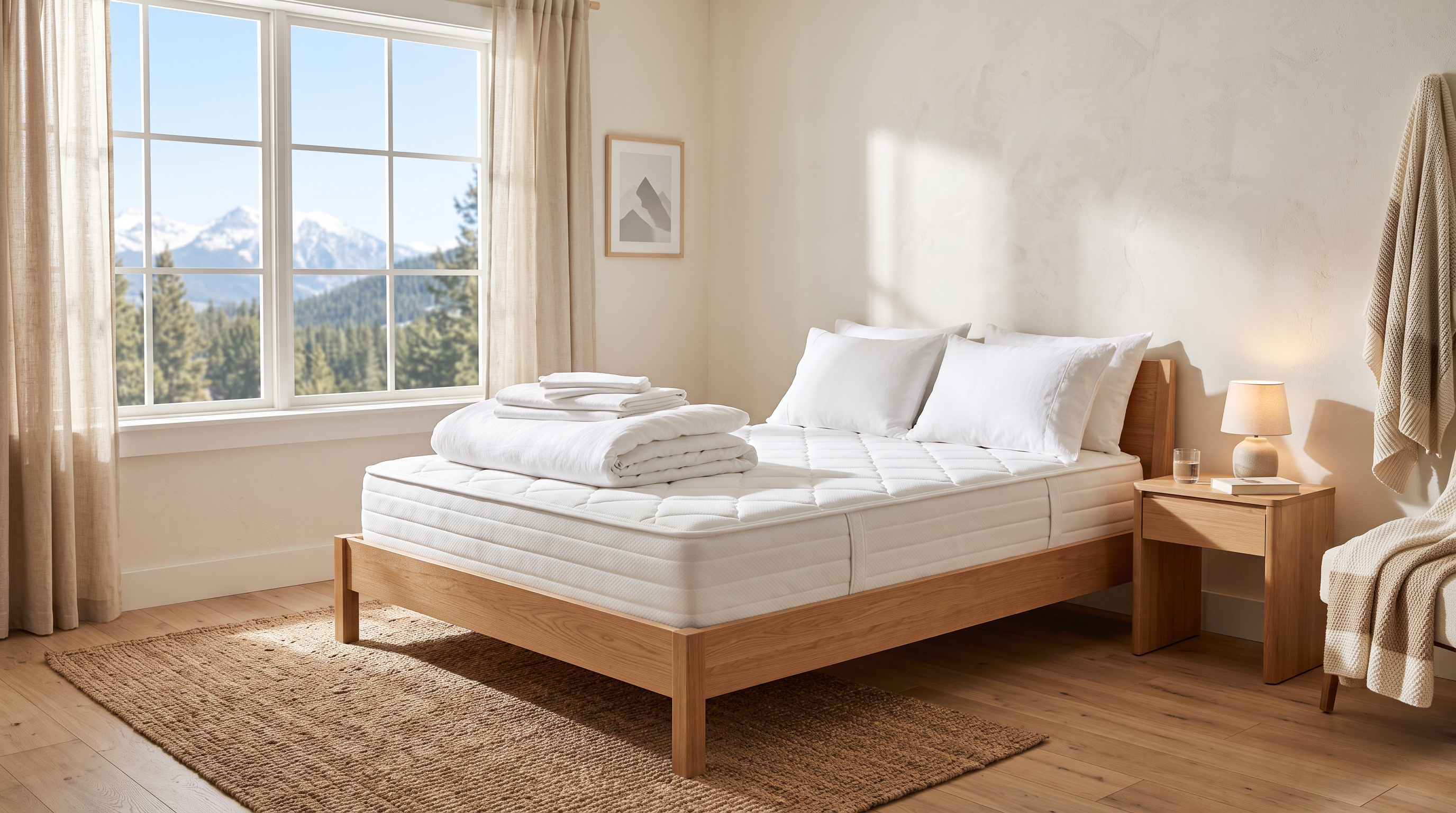
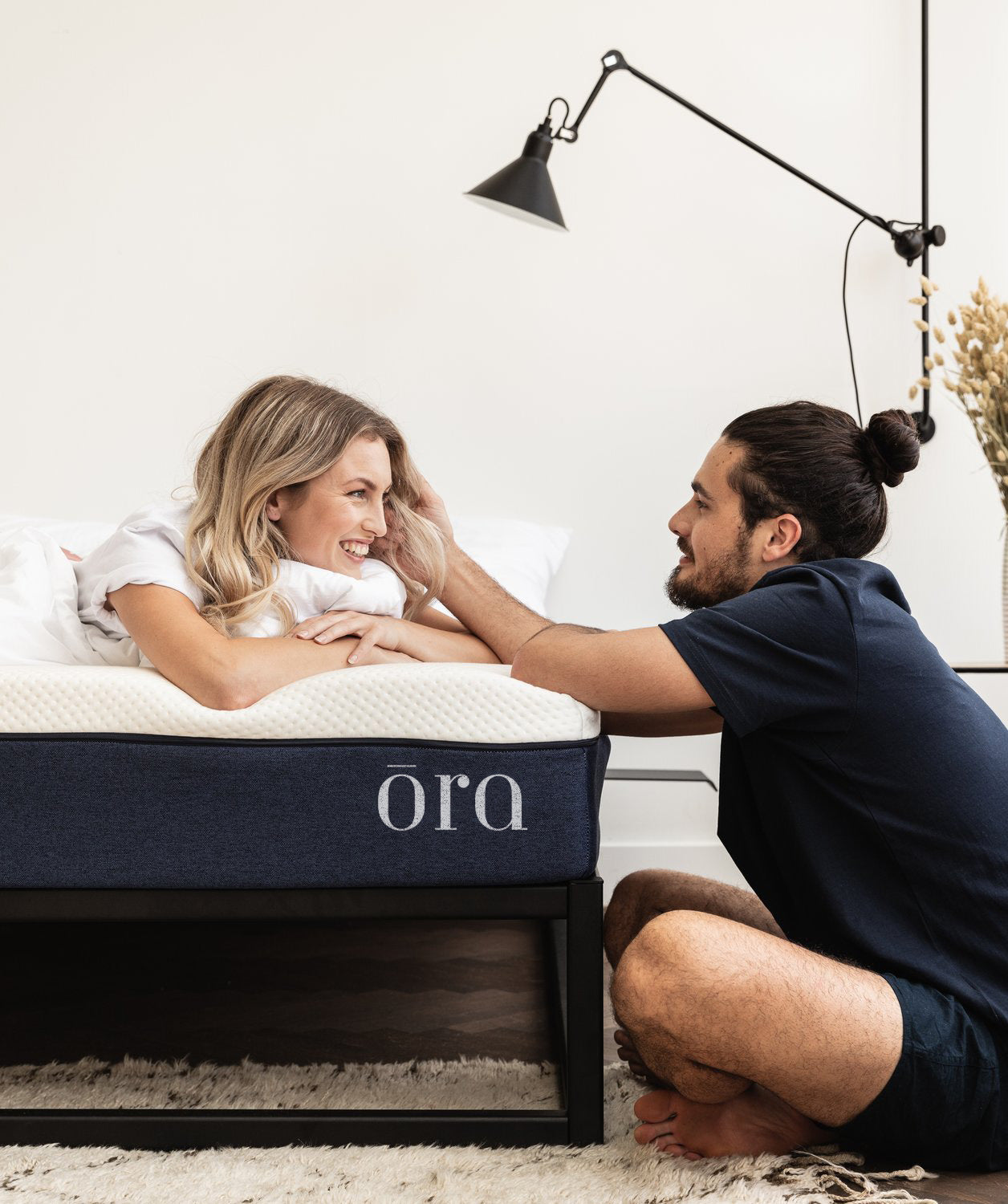
A mattress that retains heat negates all other measures. A crucial factor is an open-pored foam structure that allows air to circulate and dissipates moisture. The EvoPoreHRC premium memory foam in the Ora mattress is designed exactly for this: It automatically adapts to your body and sleeping position without the typical heat retention of classic memory foams – and it does so completely without the outdated firmness level logic, which is not standardized anyway. Instead of having to choose between H2 and H4, the material regulates pressure and climate by itself. Our article Visco foam and memory foam explained provides more background.

When you should seek medical advice
Most cases of night sweats can be managed by adjusting the room climate, textiles, and lifestyle. However, you should seek medical advice if you wake up soaked at night for several weeks, even though your bedroom and bedding are appropriate – especially in combination with fever, weight loss, swollen lymph nodes, or pronounced exhaustion. Loud snoring with breathing pauses should also be investigated; our article on snoring and mattresses provides initial insights.
Get CHF 25 discount
Subscribe to newsletter and receive a one-time CHF 25 discount. ✓ 200 nights trial sleep ✓ 10 years warranty
Sleep cooler with the Ora Ultra Mattress: The open-pored EvoPoreHRC premium memory foam dissipates heat and moisture and automatically adapts to your body and sleeping position – a mattress for everyone, without the guesswork of firmness levels. For an even fresher lying sensation on an existing mattress, the Ora Ultra Topper is suitable.
Discover the Ora Ultra Mattress now – 200 nights trial sleep, 10 years warranty.
Frequently Asked Questions about Night Sweats
Why do I sweat so much at night, even though it's cool?
Often, it's due to heat-retaining bedding: synthetic sheets, a duvet that's too thick, or a mattress with a dense, closed structure. Stress, alcohol in the evening, late meals, or hormonal changes can also cause the body to sweat regardless of room temperature.
Which mattress helps with night sweats?
A mattress with open-pored, breathable foam that allows air to circulate and wicks away moisture. Modern adaptive foams like EvoPoreHRC prevent the heat buildup of classic memory foams while automatically adapting to your body and sleeping position.
Are night sweats dangerous?
In most cases, no – usually, the sleep environment, lifestyle, or hormones are behind it. You should seek medical advice for severe night sweats that persist for weeks or are accompanied by fever, unintentional weight loss, or severe exhaustion.
What is the ideal bedroom temperature to combat night sweats?
16 to 18 degrees Celsius is recommended. Ventilate well before going to bed and choose a duvet appropriate for the season – a light one in summer, a warmer one in winter.
Does showering before bed help?
Yes, a lukewarm shower shortly before bed can help: it dilates blood vessels, aids the natural drop in body temperature, and improves sleep onset. Very hot showers right before sleep, however, are counterproductive.
This article is for general information purposes and does not replace medical advice.




Leave a comment
This site is protected by hCaptcha and the hCaptcha Privacy Policy and Terms of Service apply.