
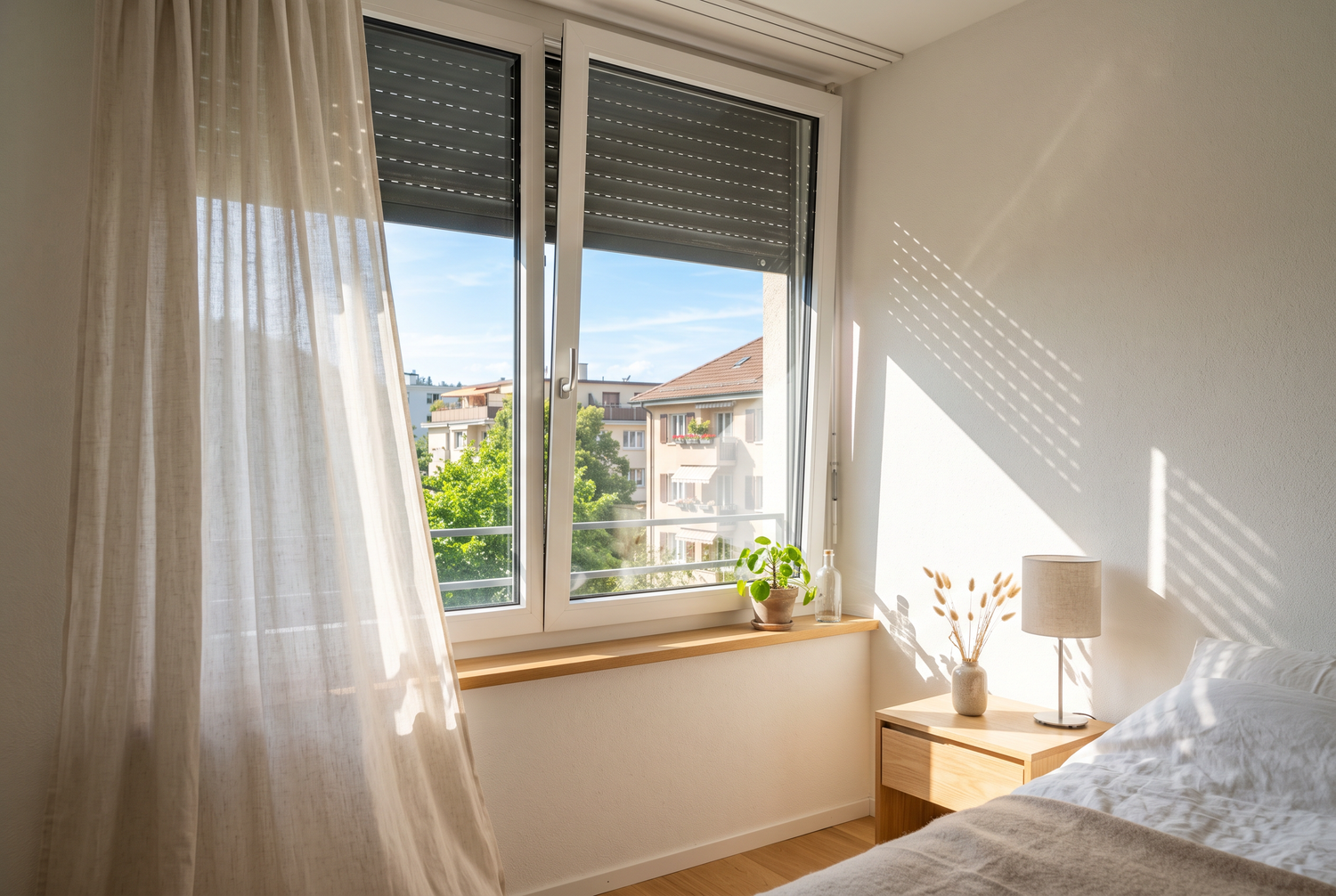
When the thermometer in the bedroom still reads 26 degrees at midnight, the night becomes a test of patience. In Swiss homes – especially under the roof or in well-insulated new buildings – daytime heat accumulates and barely dissipates by morning. Air conditioning systems are rare in this country, and many online tips are ineffective or even worsen the situation. However, with the right sequence of shading, ventilation, and material choices, much can be achieved even without technical upgrades. This article shows you how to cool your bedroom in summer – sorted by effectiveness.
The short answer: The most effective approach is to prevent heat from entering in the first place: Shade from the outside during the day and keep windows closed in the heat. Ventilate intermittently at night and in the early morning, ideally with cross-ventilation. Only then do linen or cotton bedding, a lighter duvet, and a fan come into play. The goal is 16 to 19 degrees; on hot days, 22 to 24 degrees are often realistic – which is still enough for significantly better sleep.
- External shading such as roller shutters or slatted blinds works significantly better than internal curtains.
- Keep windows closed during the day, cross-ventilate at night and in the early morning.
- A fan doesn't cool the room, but it cools the skin – which is often sufficient.
- Linen and cotton wick moisture better than microfiber.
Step 1: Keep the heat out
The greatest leverage comes from shading, and from the outside. A roller shutter, slatted blind, or awning intercepts solar radiation before it enters through the window. Internal curtains block light, but the heat is already in the room. The difference is significant: External sun protection reduces heat input many times over. Close the blinds in the morning before the sun hits the window – early for east-facing windows, and by early afternoon at the latest for west-facing windows. It's also important not to ventilate during the hottest hours: An open window with an outside temperature of 32 degrees will further heat up the room. Tips for darkening your bedroom can be found in the article on darkening the bedroom.
Step 2: Ventilate correctly – at night and with cross-ventilation
As soon as the outside temperature drops below the inside temperature, usually between 10 p.m. and 6 a.m., it's time to ventilate. Cross-ventilation is most effective: open two opposite windows or a window and a door wide simultaneously. Ten to twenty minutes of drafts completely exchange the room air – significantly more than an hour of tilted window position. Those who sleep all night with an open window should be mindful of noise and pollen. An often-overlooked point: walls, floors, and furniture also store heat. A single cool night is not enough to release these stores after a prolonged heat period. Find more information in the article about proper ventilation and sleep climate.

What individual measures achieve
Not every tip is worth the effort. The following overview classifies common measures by effect and effort.
| Measure | Effectiveness | Note |
|---|---|---|
| External shading | Very high | Close before sun exposure, not after |
| Night cross-ventilation | High | Only when it is cooler outside than inside |
| Fan | Medium | Cools the skin, not the room; do not direct at face |
| Light duvet and linen cover | Medium | Moisture wicking more important than pure thickness |
| Switch off devices | Low to medium | Standby devices and lamps give off noticeable heat |
| Wet cloth in front of window | Low | Increases humidity, which often feels more uncomfortable |
Adjusting bed, bedding, and mattress
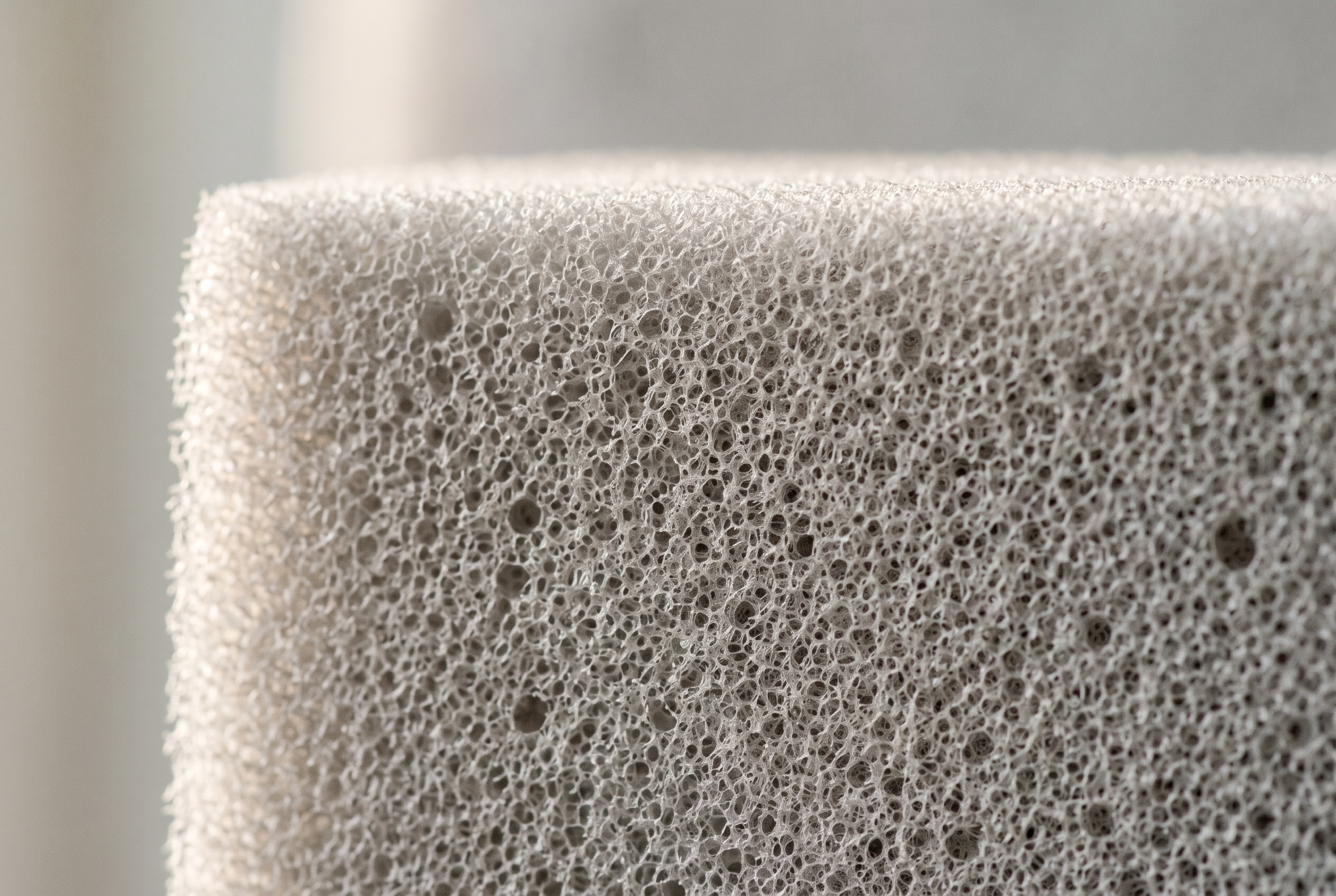
What directly touches the skin determines the feeling of warmth more than the room temperature. Linen and cotton absorb moisture and release it into the air; microfiber hardly does this and quickly feels clammy. A summer duvet with a low fill volume is usually sufficient at room temperatures above 22 degrees. The mattress also plays a role: a closed-cell, dense foam traps heat more than an open-pore structure with air exchange. Those who frequently wake up sweaty will find further tips in the article on cool mattresses and in the material comparison for bedding. A practical tip for particularly hot nights: Briefly place bedding on the windowsill before going to bed or put it in the refrigerator for an hour – the effect only lasts until you fall asleep, but that is often the critical moment.
When heat affects health
During prolonged heat periods, particular caution is advised for the elderly, small children, and individuals with cardiovascular diseases. Ensure adequate hydration throughout the day, avoid alcohol in the evening, and schedule physical exertion for the morning hours. Persistent headaches, dizziness, confusion, or lack of sweating despite the heat are warning signs that should be medically investigated. If, despite all measures, you barely sleep for weeks during the night and feel exhausted during the day, also discuss this with a medical professional.

Get CHF 25 discount
Subscribe to our newsletter and receive a one-time CHF 25 discount. ✓ 200 nights trial sleep ✓ 10 years warranty
Frequently asked questions about cooling the bedroom in summer
Should I leave the window open at night?
Yes, provided it is cooler outside than inside and noise or pollen are not an issue. Cross-ventilation with two opposing openings is particularly effective. During the day, however, windows should remain closed as long as it is warmer outside.
Does a fan really cool the room?
No, a fan does not lower the room temperature; it minimally increases it due to motor heat. However, it improves evaporation on the skin, which feels significantly cooler. Do not direct it directly at your face to avoid dry mucous membranes and neck tension.
What temperature is still acceptable in summer?
Ideally 16 to 19 degrees, but often unrealistic on hot days. Most people can still sleep well up to about 22 to 24 degrees. More important than the absolute number is that the temperature does not rise further during the night.
Do cooling mats or gel overlays help?
Their effect is short-lived: as soon as the material has adjusted to body temperature, the cooling effect disappears. This can still be pleasant for the falling asleep phase, but for the entire night, breathable materials and good ventilation are more beneficial.
Is a summer duvet really necessary?
It's worthwhile because a duvet that's too warm hinders the nightly temperature drop. More important than pure thickness is moisture transport: natural materials like cotton, linen, or Lyocell wick away sweat better than microfiber.





Leave a comment
This site is protected by hCaptcha and the hCaptcha Privacy Policy and Terms of Service apply.