
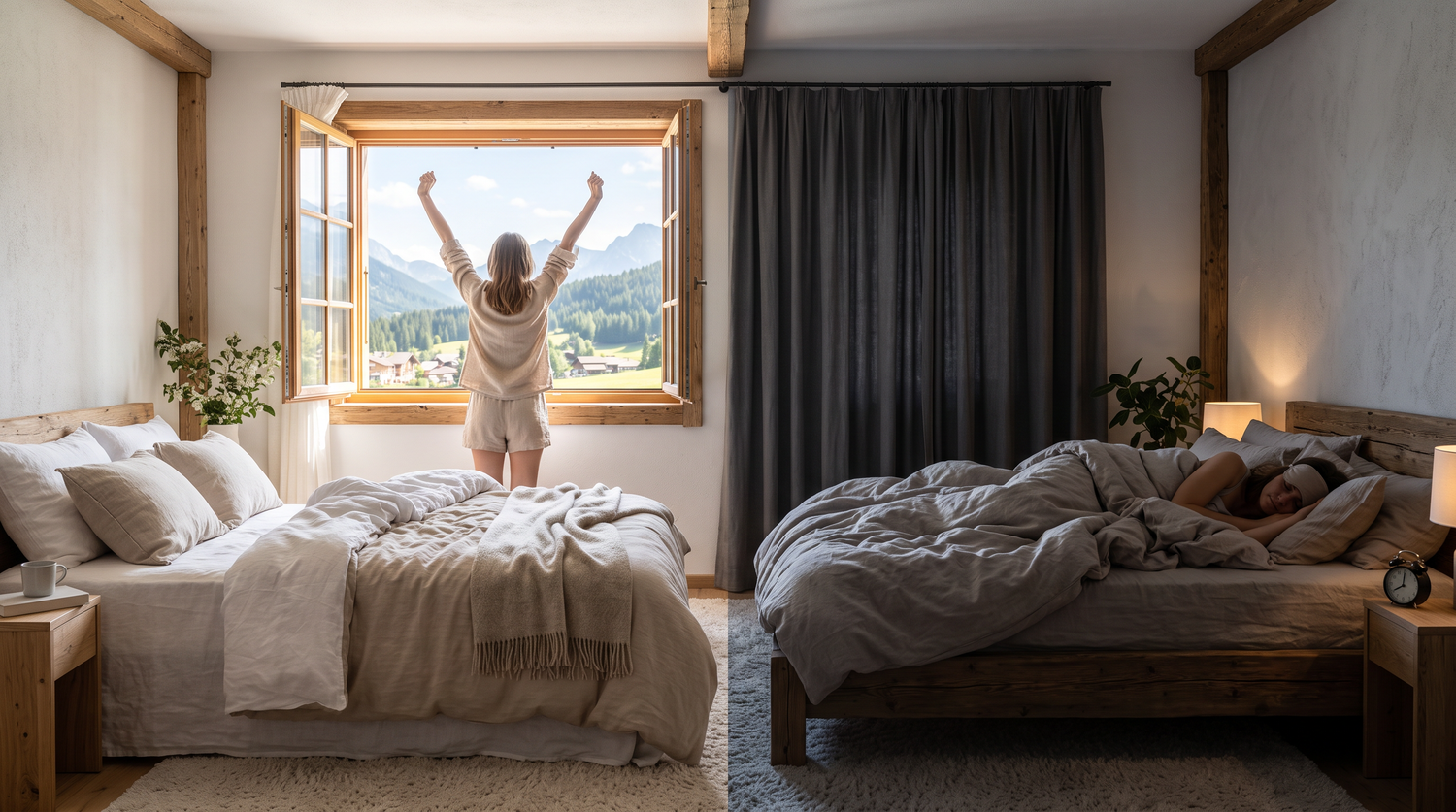
Some people are wide awake even before their alarm goes off, jump out of bed, and tackle their most important tasks before breakfast. Others can barely get going in the morning but perform at their peak in the evening. The reason lies in your chronotype – your innate predisposition to be active early ("lark") or late ("owl").
The short answer: The chronotype describes at what time of day your body is naturally most efficient. Larks are early risers, owls perform best in the evening – most people are somewhere in between. The chronotype is largely genetically determined and cannot be completely re-trained, but it can be cleverly integrated into daily life.
- The chronotype is predominantly genetically determined and changes with age.
- Pure larks and pure owls are rare – most people are mixed types.
- Those who live in harmony with their own rhythm sleep better and are more productive during the day.
- Regardless of type, everyone benefits from a comfortable, adaptable sleeping environment.
What is a chronotype?
Your chronotype is the individual time window in which your internal clock paces wakefulness, concentration, and fatigue. It determines when you prefer to sleep, when you are mentally fit, and when the afternoon slump hits you. Scientifically, the chronotype is often determined by the "midpoint of sleep" on free days – i.e., the exact time between falling asleep and waking up.
Important: The chronotype is not a matter of discipline or laziness. It is largely genetically determined. An owl who has to go to bed at 10 PM often just lies awake – not out of unwillingness, but because their body is not yet ready for sleep.

Lark, Owl or Mixed Type? A comparison of the types
| Characteristic | Lark (Early Type) | Owl (Late Type) | Mixed Type |
|---|---|---|---|
| Waking up | Early and easy | Late and difficult | Flexible |
| Peak performance | Morning | Evening | Distributed throughout the day |
| Falling asleep | Early in the evening | Late at night | Mid-range |
| Share of population | approx. 15–20% | approx. 15–20% | Majority |
| Typical challenge | Long evenings | Early appointments | Rarely overwhelmed |
How to identify your chronotype
A simple self-test: Consider when you naturally fall asleep and wake up on a free day without an alarm clock and without obligations. If your natural sleep midpoint is very early, you tend to be a lark. If it's late, you're more of an owl. The question of when you feel most mentally fit also provides a good indication.
How chronotype changes throughout life
The chronotype is not set in stone – it shifts with age. Children are often larks, adolescents shift strongly towards being owls (which is why early school starts are particularly difficult for them), and in older adulthood, many people wake up earlier again. Parents will find suitable tips in our article Helping children sleep better, and older readers in Sleep in old age.
Regardless of type: Those who chronically live against their rhythm – keyword "social jetlag" – risk poorer sleep and less energy. The weekend should therefore also not completely throw you off rhythm. More on this in our guide to sleep hygiene.

Adapting daily life to your chronotype
You cannot completely reprogram your chronotype, but you can work intelligently with it:
- Schedule important tasks during your peak performance: Larks in the morning, owls from afternoon to evening.
- Utilize morning light: Especially for owls, bright light in the morning helps to get tired a little earlier. Consciously design evenings: Owls should avoid bright screen light late in the evening – see Blue light in the evening.
- Consistent times: Even the best rhythm needs regularity – avoid extreme fluctuations on weekends.
- Cleverly time caffeine: Especially owls should be cautious in the afternoon – more in Caffeine and Sleep.
If your partner has a different chronotype, it's worth taking a look at our article Mattress for couples – because different sleep times present unique challenges for shared nights.
Get CHF 25 discount
Subscribe to the newsletter and receive a one-time CHF 25 discount. ✓ 200 nights trial sleep ✓ 10 years warranty
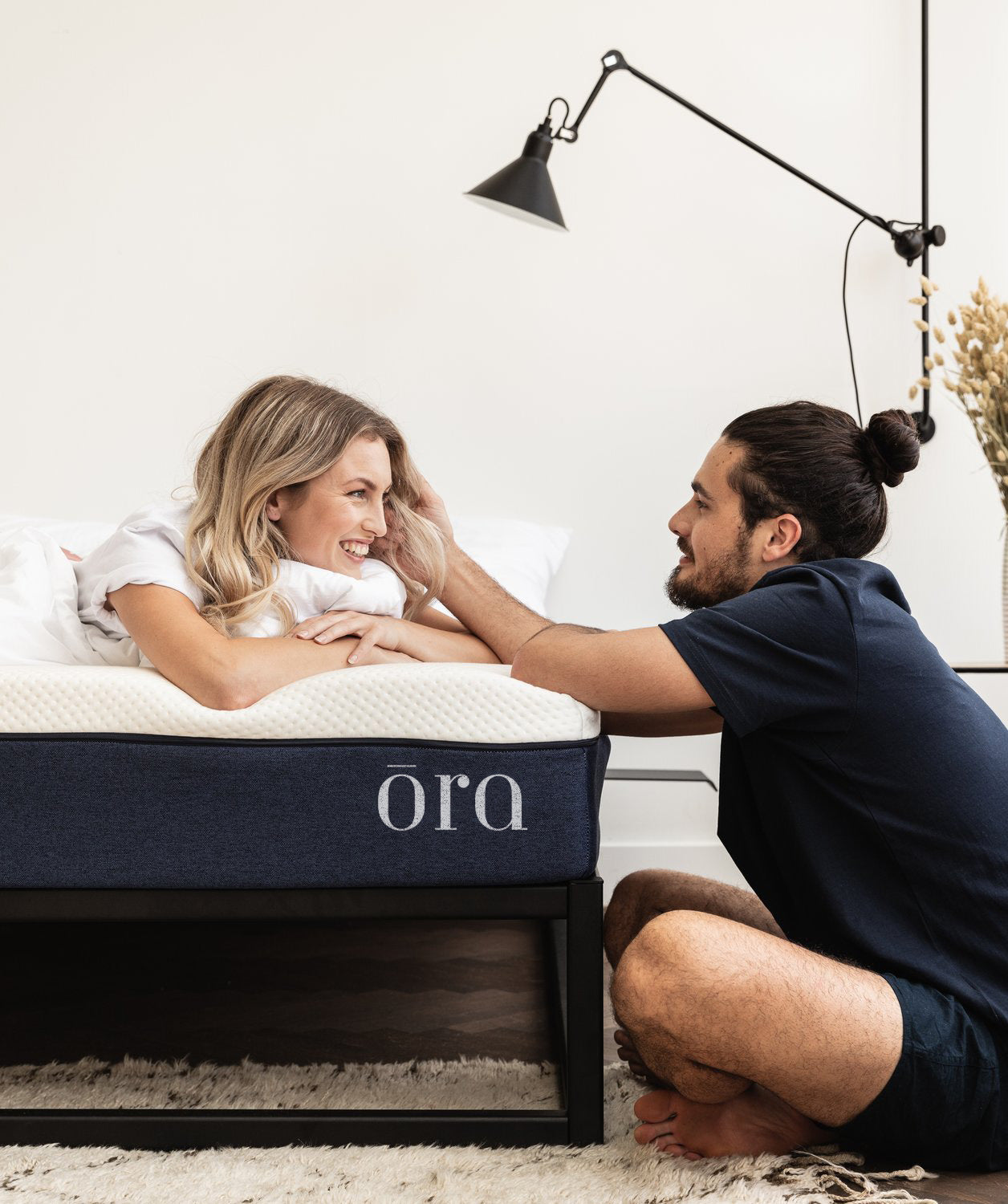
Whether you're a lark or an owl – both should sleep well. The Ora Ultra mattress deliberately foregoes rigid firmness levels and instead relies on adaptive EvoPoreHRC Premium memory foam: A mattress that automatically adapts to your body and sleeping position – for every chronotype and every preference. Also ideal for couples with different rhythms. Test it out at your leisure: 200 nights trial sleep, 10 years warranty.
Frequently asked questions about chronotypes
Can you change from an owl to a lark type?
Not completely. Your chronotype is genetically determined, but it can be shifted within certain limits – for example, by consistent morning light, fixed times, and dimmed evening light. However, expect a shift of hours, not a complete reversal.
Is a certain chronotype healthier?
No type is inherently healthier. Problems only arise when you constantly live against your own rhythm. Then the so-called social jetlag increases, which promotes fatigue and concentration problems.
What is social jetlag?
Social jetlag describes the discrepancy between your natural sleep rhythm and the times dictated by work or school. The greater this gap, the more your well-being often suffers.
Which chronotype am I if I'm fit in the morning and evening?
Then you probably belong to the mixed types, which make up the majority of the population. You have the advantage of being able to flexibly adapt to different daily routines.
This article serves as general information and does not replace medical advice.




Leave a comment
This site is protected by hCaptcha and the hCaptcha Privacy Policy and Terms of Service apply.