
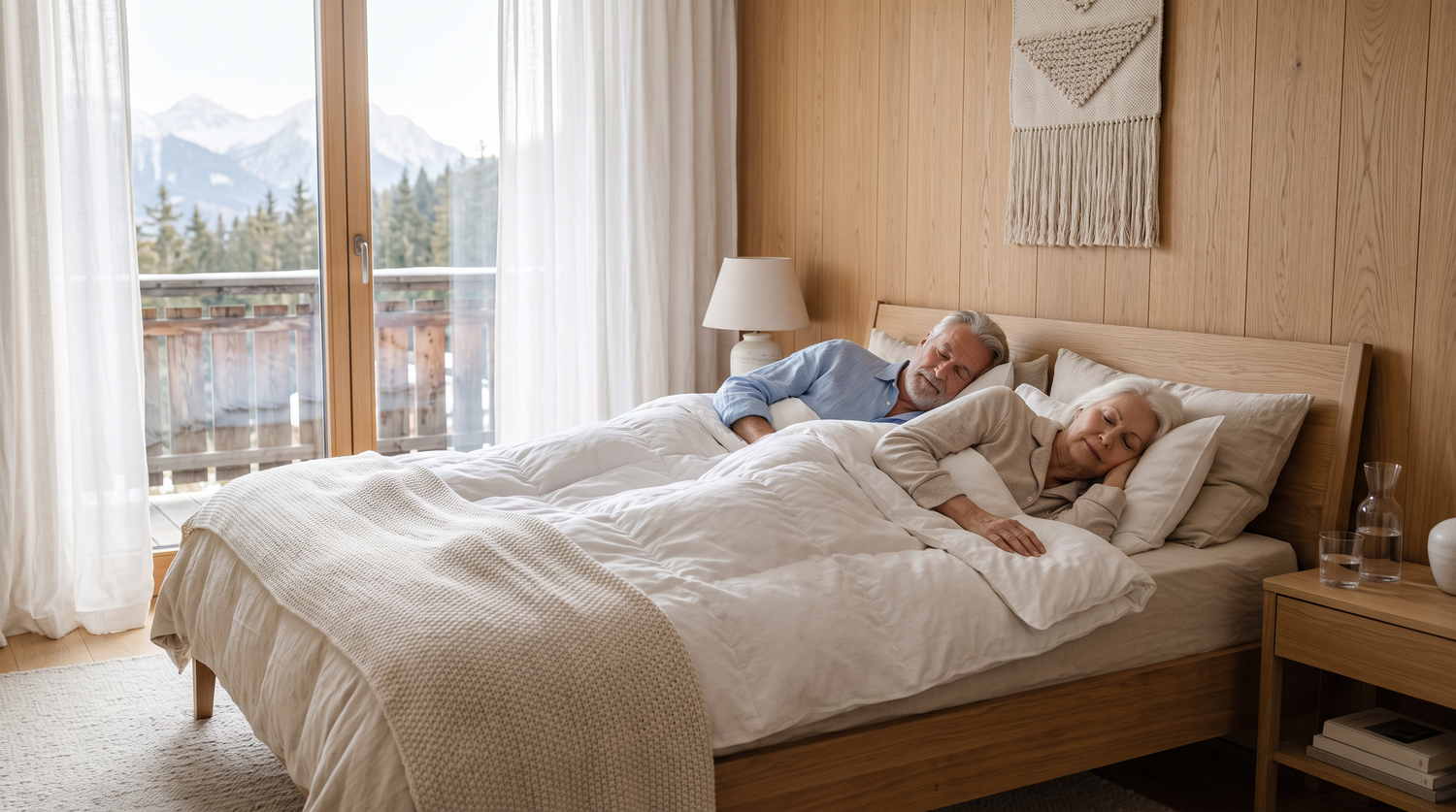
At 25, you slept like a log; at 70, you're suddenly wide awake at five in the morning? Many older people notice that their sleep changes significantly with age: Falling asleep takes longer, the night is interrupted more frequently, and deep sleep feels rarer. The good news: Much of this is a normal part of aging – and almost all of it can be influenced. In this guide, you will learn how sleep changes with age, what causes these changes, and what measures seniors can take to achieve restful nights again.
The short answer: With age, sleep becomes lighter, shorter, and more prone to disturbances because the proportion of deep sleep decreases and the internal clock shifts earlier – this is generally normal. Sleep remains restorative if the sleep rhythm, daylight, exercise, and sleep environment are right: A pressure-relieving, adaptive mattress becomes particularly important in old age because joints and tissues react more sensitively to pressure.
- Less deep sleep, more frequent awakenings, and earlier wake-up times are normal in old age – but the sleep requirement only slightly decreases to about 6 to 8 hours.
- The most common disruptive factors are insufficient daylight and exercise, long naps, medication, and pain from an unsuitable sleeping surface.
- Since older people are more sensitive to pressure, pressure relief is doubly important: A point-elastic, adaptive mattress automatically relieves pressure on the shoulders, hips, and back.
- Fixed sleep times, morning light, and a quiet, cool sleeping environment often significantly improve sleep quality – without sleep aids.
How sleep changes with age
Sleep is not a constant: its architecture changes throughout the lifespan. From about the age of 60, the proportion of deep sleep – the most physically restorative phase – significantly decreases, while light sleep phases increase. The result: noises, light stimuli, or a full bladder wake you up faster than in your younger years. Our article on sleep phases explains how the individual phases interact.
At the same time, the internal clock shifts earlier: Many seniors get tired earlier in the evening and are awake in the early morning. The production of the sleep hormone melatonin also decreases with age. Important to know: The sleep requirement itself only decreases moderately. Most older people still need six to eight hours – more on this in our guide How much sleep does a person need?
| Change | What's behind it | What helps |
|---|---|---|
| Early waking | Internal clock shifts earlier | Light and activity in the evening, don't go to bed too early in the morning |
| Frequent night waking | Less deep sleep, lighter sleep | Quiet, dark, cool sleeping environment; reduce caffeine |
| Longer time to fall asleep | Less melatonin, less sleep pressure | Daylight in the morning, exercise, short instead of long naps |
| Morning pain | More pressure-sensitive tissue, unsuitable mattress | Point-elastic, adaptive mattress with good pressure relief |
Typical sleep disruptors in old age
Too little daylight and exercise
Those who spend a lot of time indoors get too few light stimuli for their internal clock – and those who exercise little build up too little sleep pressure. A daily morning walk has a double effect: light resets the internal clock, and exercise makes you tired in the evening.
Long afternoon naps
A short nap of 20 to 30 minutes is refreshing. However, sleeping for one to two hours in the afternoon takes away sleep pressure for the night – and means you lie awake longer in the evening.
Medication and illnesses
Many commonly prescribed medications – for example, for high blood pressure or depression – can affect sleep. Frequent urination at night, pain, or breathing pauses also disturb nightly rest. Discuss such issues openly with your family doctor instead of accepting them as "normal."
A worn-out or too hard mattress
With age, skin, muscles, and joints become more sensitive to pressure. On a mattress that is too hard or worn out, pressure points develop on the shoulders and hips, leading to frequent turning and night waking. Our article How often should you change your mattress? shows when a change is due.

The right sleep environment for seniors
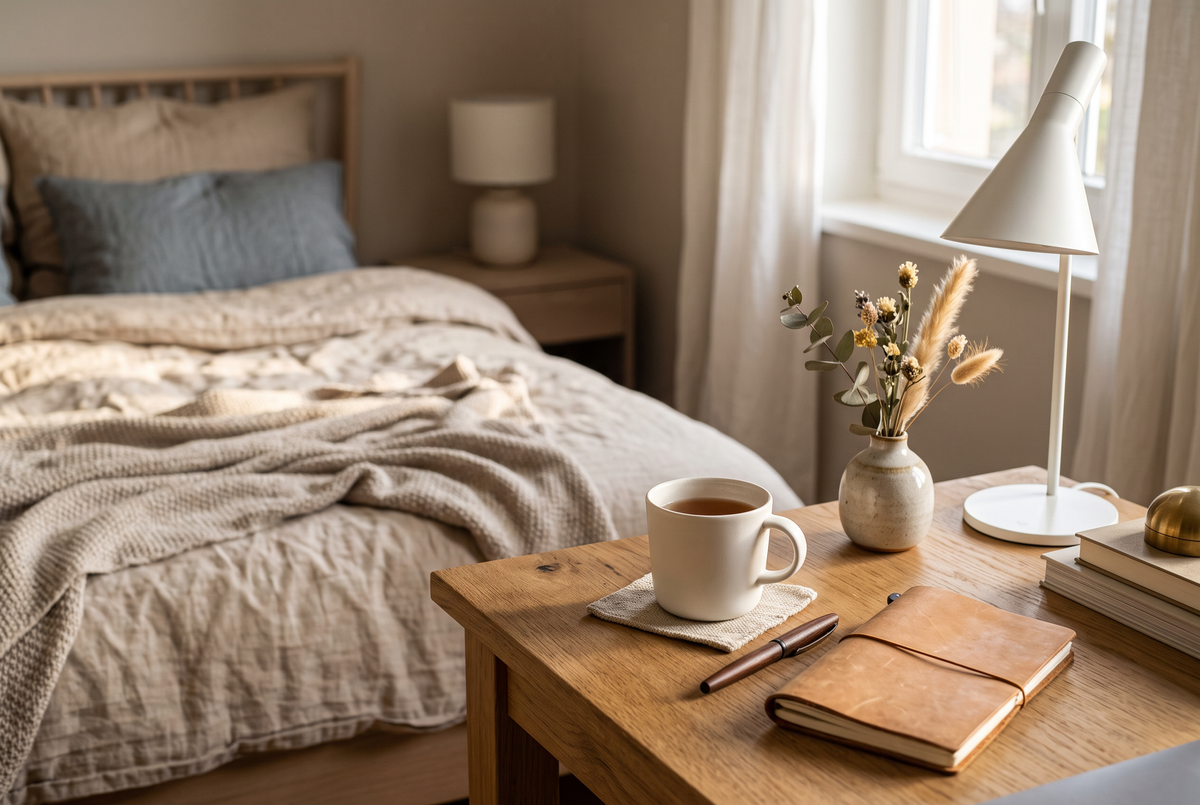
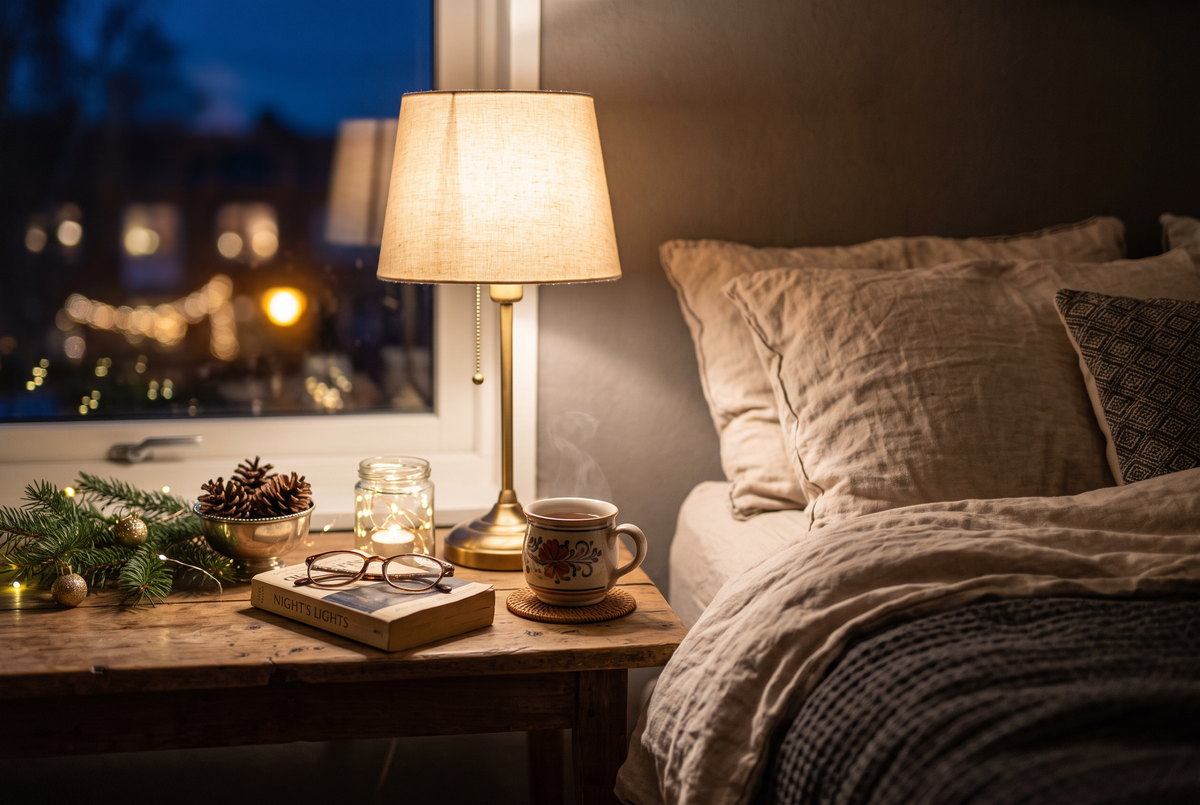
A cool, dark, and quiet bedroom is the basis: 16 to 18 degrees Celsius is considered ideal – details can be found in the guide to the ideal sleep temperature. The bed itself can be a bit higher in old age (comfort height from about 50 cm) to make getting in and out easy.
For mattresses, a "senior-friendly firmness level" is often recommended – but firmness levels are not standardized and do not indicate whether shoulders and hips are truly relieved. More crucial is point elasticity: an adaptive mattress like the Ora Ultra with EvoPoreHRC Premium memory foam automatically adapts to body shape, weight, and sleeping position. Pressure-sensitive areas gently sink in, the spine remains supported – this reduces night turning and prevents back pain and neck pain. Another advantage for couples: The high body adaptability dampens movements, so partners wake each other less.
Get CHF 25 discount
Subscribe to the newsletter and receive a one-time CHF 25 discount. ✓ 200 nights trial sleep ✓ 10 years warranty
7 tips for better sleep in old age
First: Get up at the same time every day – even on weekends. Second: Get 30 minutes of daylight in the morning. Third: Exercise daily, ideally outdoors. Fourth: Limit naps to a maximum of 30 minutes before 3 p.m. Fifth: Avoid caffeine after noon and drink only a little in the evening to reduce night-time urination. Sixth: Create a fixed evening ritual – reading, quiet music, or a warm foot bath. Seventh: Only go to bed when you are truly tired. Further basics can be found in the guide Sleep Hygiene.

The Ora Ultra mattress automatically adapts to the body and sleeping position thanks to EvoPoreHRC Premium memory foam – ideal when joints and tissues become more sensitive with age. If you want to upgrade an existing mattress first, the Ora Ultra Topper offers a gentle solution, and the tested Ora Ultra Second Life offers the same comfort at a lower price. All models come with 200 nights trial sleep and 10 years warranty.
Frequently asked questions about sleep in old age
How much sleep do seniors need?
Most people over 65 need six to eight hours of sleep. The need only slightly decreases with age – what diminishes, above all, is the ability to sleep for long stretches at a time.
Is frequent night waking normal in old age?
Yes, in moderation: Since the deep sleep component decreases, older people wake up more easily. It only becomes problematic if you lie awake for a long time afterward or feel exhausted during the day – then it's worth looking at sleep hygiene, medication, and the sleep environment.
Which mattress is suitable for seniors?
A point-elastic, adaptive mattress with high pressure relief: It allows shoulders and hips to sink in, supports the spine, and makes turning over easier. A general firmness level, on the other hand, is not a reliable criterion, as it is not standardized.
Are sleeping pills a good solution in old age?
Sleeping pills should – if at all – only be used short-term and under medical supervision, as side effects such as increased risk of falls and habituation increase with age. Daylight, exercise, fixed sleep times, and a good sleep environment have a more sustainable effect.
This article is for general information only and does not replace medical advice.





Leave a comment
This site is protected by hCaptcha and the hCaptcha Privacy Policy and Terms of Service apply.