

Espresso after dinner, cola in the afternoon, energy drinks in the office: Caffeine is the most consumed psychoactive substance in the world – and one of the most common, yet most underestimated, sleep disruptors. Many people say of themselves: “I can fall asleep easily after coffee.” That may be true. However, research shows that even those who fall asleep sleep measurably worse under the influence of caffeine – less deep sleep, more nocturnal awakenings, less recovery. The key to understanding lies in a single term: half-life.
The short answer: In healthy adults, caffeine has a half-life of about five to six hours. This means that if you have a coffee at 4 PM, about half of the caffeine will still be in your blood at 10 PM – and a quarter will still be there at 3 AM. Those who are sensitive or sleep poorly should ideally consume their last caffeinated drink before 2 PM and switch to caffeine-free alternatives in the evening.
- The half-life of caffeine is on average 5–6 hours; after 10–12 hours, a quarter is still active.
- Caffeine blocks adenosine receptors and thus suppresses the natural signal of tiredness – the "sleep pressure" is masked, not reduced.
- Studies show: Caffeine up to 6 hours before bedtime measurably shortens sleep and reduces the proportion of deep sleep.
- Rule of thumb: last coffee before 2 PM, switch to decaffeinated drinks or herbal tea in the evening – combined with good sleep hygiene.
What caffeine does in the brain: The adenosine principle
To understand why caffeine keeps you awake, you need to know about the molecule adenosine. Adenosine is produced in the brain as a byproduct of energy consumption and accumulates during the day. The more adenosine binds to its receptors, the more tired we feel – experts call this "sleep pressure," which is also central to the sequence of our sleep stages.
Caffeine is so chemically similar to adenosine that it occupies the same receptors – without activating them. It acts like a wrong key in a lock: the fatigue signal no longer gets through. Important note: The adenosine does not disappear. It continues to accumulate in the background. As soon as the caffeine is broken down, the pent-up fatigue returns all at once – the well-known "caffeine crash" in the afternoon, which leads many to reach for their next coffee. This creates a cycle that makes it difficult to fall asleep quickly in the evening.
The half-life: Why afternoon coffee works until deep into the night
The half-life describes the time it takes for the body to break down half of a substance. For caffeine, it is about five to six hours in healthy adults – with a wide individual variation of about two to over ten hours. The liver enzyme CYP1A2, whose activity varies greatly due to genetics, is primarily responsible. This is why some people can fall asleep almost undisturbed after an evening espresso – and others are accompanied by their morning coffee until deep into the night.
A calculation example with a cup of coffee (approx. 90 mg caffeine) at 4 PM:
| Time | Time since consumption | Caffeine in the body (approx.) |
|---|---|---|
| 16:00 | 0 hrs. | 90 mg |
| 22:00 | 6 hrs. | approx. 45 mg |
| 04:00 | 12 hrs. | approx. 22 mg |
| 10:00 (next day) | 18 hrs. | approx. 11 mg |
At 10 PM – the usual bedtime – the effect of half a cup of coffee is still circulating in the blood. A much-cited study by Drake and colleagues (2013) showed: Even caffeine consumed six hours before bedtime shortened objectively measured sleep time by about an hour – without the participants subjectively noticing it. This is precisely the insidious part: the damage remains invisible and is often attributed to other causes, such as sleep maintenance insomnia.

How much caffeine is in what?
Caffeine is hidden in more products than many people realize. For orientation:
- Espresso (30 ml): approx. 60–80 mg
- Filter coffee (200 ml): approx. 90–120 mg
- Black tea (200 ml): approx. 40–50 mg
- Green tea (200 ml): approx. 30–40 mg
- Cola (330 ml): approx. 35 mg
- Energy drink (250 ml): approx. 80 mg
- Dark chocolate (50 g): approx. 25–40 mg
"Decaffeinated" coffee also contains residual amounts of 2–5 mg per cup – unproblematic for most, but relevant for highly sensitive individuals. If you want to make your diet more sleep-friendly overall, you can find further levers in our article on nutrition for better sleep.
What caffeine does to sleep architecture
Caffeine not only prolongs the time it takes to fall asleep. Polysomnographic studies show three further effects: First, caffeine reduces the proportion of deep sleep – the phase in which the body and immune system regenerate most strongly. Second, short nocturnal awakenings increase, often without conscious memory. Third, caffeine shifts the internal clock: evening consumption can shift the circadian rhythm by up to 40 minutes – one becomes "tired later" and the sleep window shifts.
The result is sleep that looks long enough on paper, but is less restorative. If you want to know how much sleep is actually necessary, you will find the answers in our guide How much sleep does a person need?.
Practical strategies: Enjoy coffee, still sleep well
1. The 2 PM Rule
Count back eight to ten hours from your bedtime – that's your personal caffeine cut-off point. If you go to bed around 10:30 PM, this means your last coffee should be in the early afternoon at the latest.
2. Keep an eye on your dose
The European Food Safety Authority considers up to 400 mg of caffeine per day (about 3–4 cups of coffee) to be safe for healthy adults – in terms of sleep, less is often more, especially in the second half of the day.
3. Consciously switch in the evening
Herbal tea, water with lemon, or golden milk signal relaxation to the body. Combined with a cool, dark bedroom – the ideal sleep temperature is 16–19 °C – a strong evening ritual is created.
4. Do not use caffeine as a sleep substitute
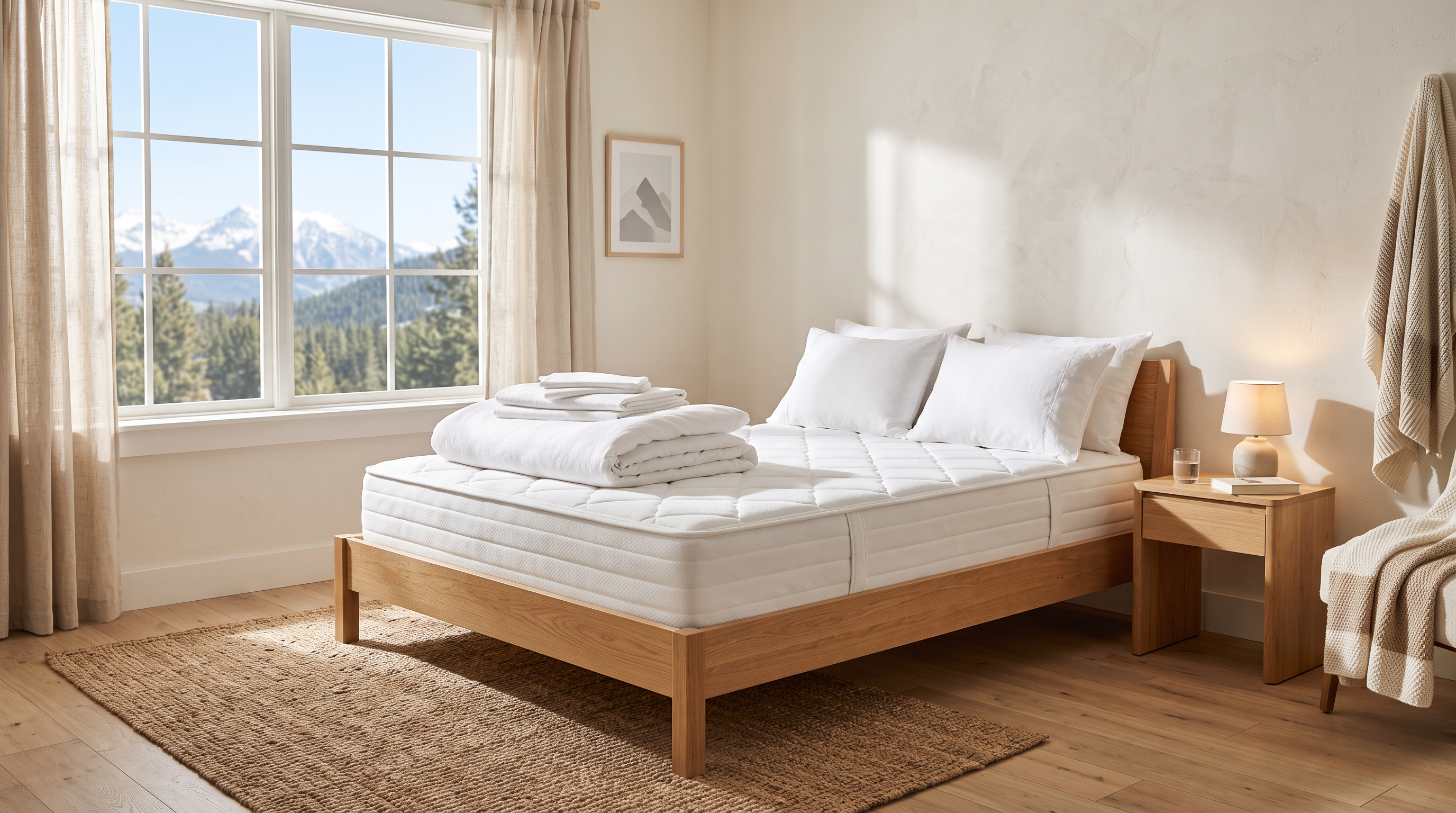
Anyone who is chronically tired and compensates with more and more caffeine is treating the symptom instead of the cause. It is often worth taking a look at the sleeping environment: a sagging or unsuitable mattress causes micro-awakenings that one only feels as "leaden fatigue" in the morning. This is where the Ora Ultra mattress comes in: its EvoPoreHRC Premium memory foam automatically adapts to the body and sleeping position – without having to choose a firmness level, which as an unstandardized concept means something different from manufacturer to manufacturer anyway.

Get CHF 25 discount
Subscribe to newsletter and receive a one-time CHF 25 discount. ✓ 200 nights trial sleep ✓ 10 years warranty
Good sleep starts with the right base: The Ora Ultra mattress with EvoPoreHRC Premium memory foam automatically adapts to your body and sleeping position – an adaptive mattress for everyone, without guessing at firmness levels. If you want to upgrade your existing mattress first, the Ora Ultra topper offers a clever alternative, and the Ora Ultra Second Life offers tested quality at a lower price. With 200 nights of trial sleep and a 10-year warranty – try it risk-free.
Frequently Asked Questions about Caffeine and Sleep
How long before bed should you stop drinking coffee?
As a rule of thumb, there should be at least six, preferably eight to ten hours, between the last caffeinated drink and bedtime. If you go to bed around 10:30 PM, this means your last coffee should ideally be before 2 PM. Sensitive individuals will do better with an even earlier cut-off.
Why can some people still fall asleep after an espresso?
The rate at which caffeine is broken down varies greatly due to genetics – the half-life ranges from about two to over ten hours. Fast metabolizers hardly feel anything in the evening. However, studies show that caffeine can still reduce their deep sleep, even if they don't consciously perceive it.
Does decaffeinated coffee cause problems in the evening?
Decaffeinated coffee contains only about 2–5 mg of caffeine per cup and is unproblematic for most people in the evening. Only in cases of very high caffeine sensitivity can even this residual amount be noticeable.
Does quitting caffeine immediately help with sleep?
The body needs some patience: with regular consumption, withdrawal symptoms such as headaches and fatigue can occur in the first few days after quitting. After about one to two weeks, the adenosine receptors have re-regulated, and many people report deeper, more restorative sleep.
Is morning caffeine safe for sleep?
For most people, yes: if caffeine is consumed in moderate amounts (up to approx. 400 mg per day) and primarily in the morning, most of it will have been broken down by the evening. It only becomes critical with later intake, high doses, or very slow metabolism.
This article is for general information only and does not replace medical advice.







Leave a comment
This site is protected by hCaptcha and the hCaptcha Privacy Policy and Terms of Service apply.