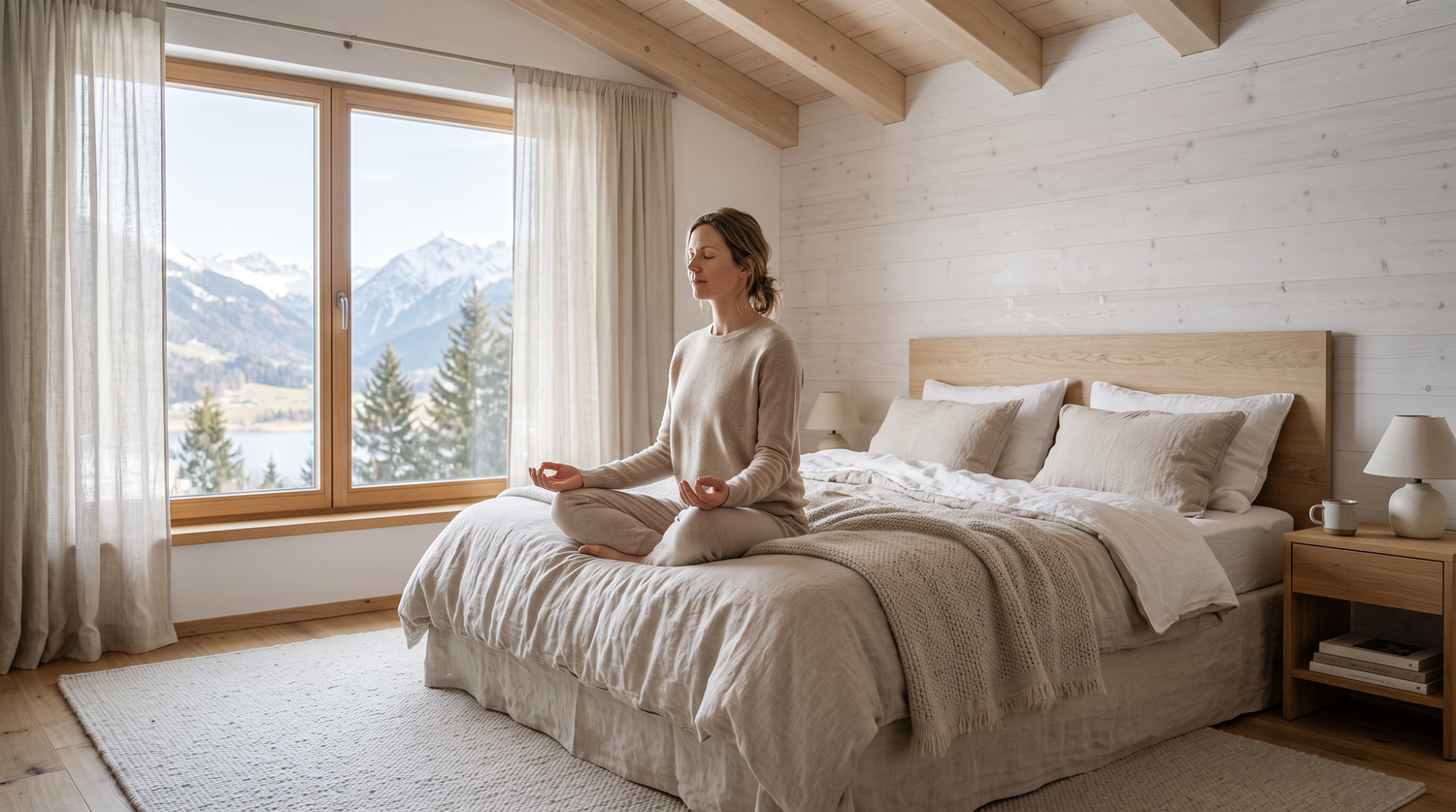
Your head is full, your heart is noticeably pounding, and sleep is out of the question: If you know this feeling, breathing exercises are an astonishingly effective tool right at your fingertips. Breathing is the only bodily function that is both automatic and can be consciously controlled – and therein lies its potential: Through breathing, we can specifically influence the autonomic nervous system and switch the body from stress to relaxation mode.
The short answer: Breathing exercises such as the 4-7-8 method or box breathing slow down the heart rate, lower blood pressure, and activate the parasympathetic nervous system – the body's relaxation nerve. Crucial is an extended exhalation: exhaling for longer than inhaling signals safety and calm to the brain. Just five minutes of conscious breathing before bed can noticeably shorten the time it takes to fall asleep.
- Slow breathing with extended exhalation activates the parasympathetic nervous system and demonstrably induces sleepiness.
- The 4-7-8 method is considered a classic for falling asleep: inhale for 4 seconds, hold for 7, exhale for 8.
- Regularity beats intensity – practicing for 5 minutes daily is more effective than occasional marathon sessions.
- Breathing exercises work best as part of a fixed evening routine in a quiet sleeping environment.
Why breathing exercises help with falling asleep
Stress and racing thoughts activate the sympathetic nervous system: pulse and muscle tension increase, the body is geared for performance – the opposite of readiness for sleep. Slow, deep breaths with an emphasis on exhalation reverse this pattern. Studies show that a breathing rate of about six breaths per minute improves heart rate variability and reduces the release of stress hormones. The brain receives the message: no danger, rest is allowed. We have explained how the body then moves through the sleep phases in a separate article.

The 5 best breathing exercises for better sleep
1. The 4-7-8 Method
The most famous sleep classic, popularized by US doctor Andrew Weil: Inhale through your nose while counting to 4. Hold your breath for 7 seconds. Then exhale audibly through your slightly open mouth while counting to 8. Repeat the cycle four times. Beginners can halve the counts – only the ratio is important. The long exhalation and the short breath hold are particularly effective in calming the nervous system.
2. Box Breathing (4-4-4-4)
Also called "square breathing" and popular with emergency responders: Inhale for 4 seconds, hold for 4 seconds, exhale for 4 seconds, pause for 4 seconds. The uniform structure gives the mind a simple task and thus stops the carousel of thoughts – ideal for people who cannot switch off in the evening.
3. Abdominal Breathing (Diaphragmatic Breathing)
Lie on your back, one hand on your chest, one on your abdomen. Breathe so that only the hand on your abdomen rises and falls. This deep diaphragmatic breathing is the basis of all other techniques and releases tension in the torso. Five to ten minutes are enough.
4. Extended Exhalation (2:1 Breathing)
The simplest technique of all: Exhale for twice as long as you inhale, for example, 3 seconds in and 6 seconds out. No counting of four different phases, no breath holding – perfect for anyone who finds more complex methods too strenuous.
5. Alternate Nostril Breathing (Nadi Shodhana)
Originating from yoga: Close your right nostril with your thumb and inhale through the left. Then close the left and exhale through the right, inhale through the right, switch. This exercise requires some concentration and is well suited as part of an evening routine before you lie down.
Comparison of Breathing Techniques
| Technique | Rhythm | Difficulty | Ideal for |
|---|---|---|---|
| 4-7-8 Method | 4 in – 7 hold – 8 out | Medium | Fast falling asleep, acute tension |
| Box Breathing | 4 – 4 – 4 – 4 | Easy | Racing thoughts, stress reduction |
| Abdominal Breathing | Free, deep into the abdomen | Very Easy | Beginners, tension |
| 2:1 Breathing | e.g. 3 in – 6 out | Very Easy | Minimalists, applicable anytime |
| Alternate Nostril Breathing | Alternate nostrils | Medium | Yoga experienced, focus before sleep |
How to integrate breathing exercises into your evening
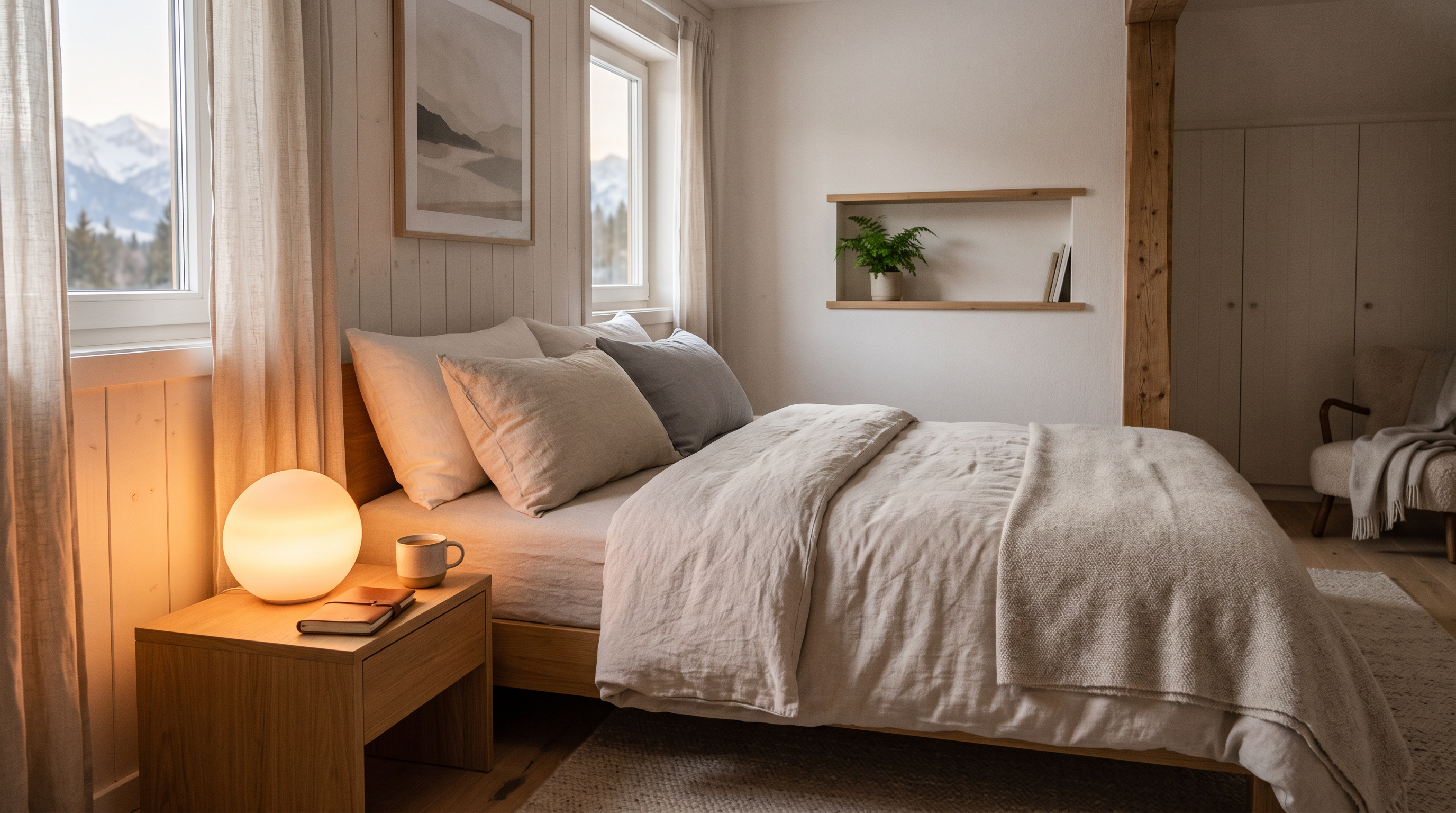
Breathing exercises are most effective directly in bed with the lights off or as the last step before going to bed. Combine them with the basic rules of sleep hygiene: a dark, cool room, no screens, fixed times. If you frequently wake up at night, you can also use these techniques to fall back asleep – more on this in our guide to trouble staying asleep.
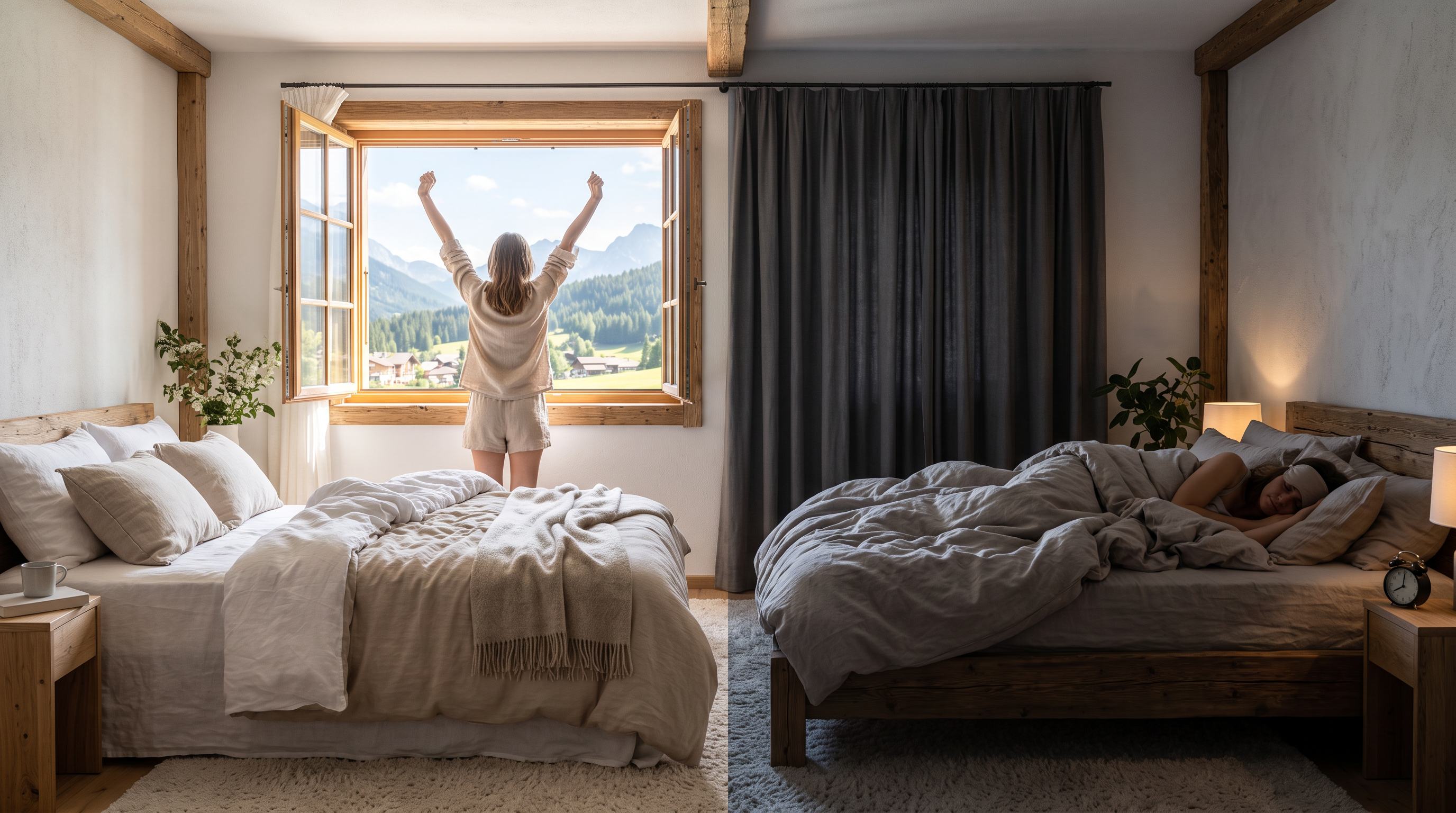
The effect can be enhanced by fresh air: ventilating briefly before going to bed lowers the CO2 content in the room and facilitates deep breathing. By the way: if you have difficulty breathing at night or snore loudly, you should also check your sleeping position and mattress – our articles on mattresses for snoring reduction and on recognizing sleep apnea provide guidance.

Breathing needs posture: the role of the mattress
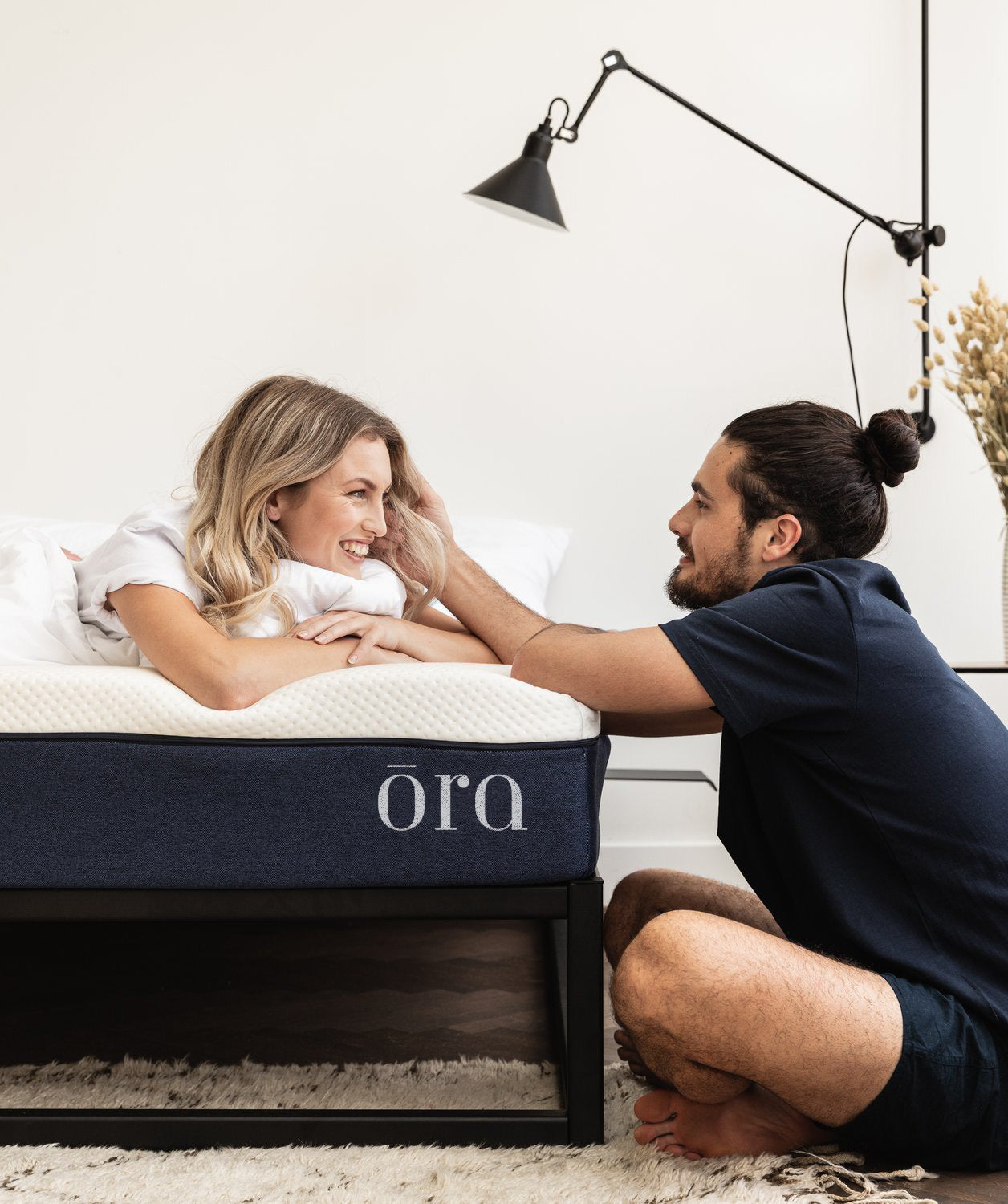
Deep abdominal breathing is only possible if the chest can move freely. A surface that keeps the spine in its natural shape – without sagging and without counter-pressure – is a prerequisite for this. Instead of guessing through non-standardized firmness levels, which can vary widely depending on the manufacturer, the Ora Ultra takes a different approach: The EvoPoreHRC premium memory foam automatically adapts to your body and sleeping position – an adaptive mattress for everyone, whether side, back, or stomach sleeper. We explain why the firmness level concept is outdated in our article Mattress Firmness Levels.
Get CHF 25 discount
Subscribe to our newsletter and receive a one-time CHF 25 discount. ✓ 200 nights trial sleep ✓ 10 years warranty
Breathe easy, lie easy
The Ora Ultra mattress supports the spine in every sleeping position and automatically adapts to your body – without choosing a firmness level. For a quick comfort boost, there's the Ora Ultra Topper, and as a budget-conscious alternative, the Ora Ultra Second Life.
✓ 200 nights trial sleep ✓ 10 years warranty
Frequent questions about breathing exercises and sleep
How quickly do breathing exercises work?
Most people feel an acute calming effect after just two to five minutes: the pulse slows, muscles relax. The full effect on sleep onset time unfolds after two to four weeks of regular practice, because the body associates the technique with falling asleep.
Which breathing exercise is best for falling asleep?
There's no objectively best technique – what's effective is what you use regularly. The 4-7-8 method is considered particularly sleep-promoting, while 2:1 breathing is the simplest. Try two or three techniques for a week each and stick with your favorite.
Can I do breathing exercises directly in bed?
Yes, most techniques work even better when lying down because the diaphragm can move freely. Lying on your back with one hand on your belly is ideal. If you fall asleep during the exercise – even better, that's precisely the goal.
Are breathing exercises suitable for everyone?
Basically, yes. People with respiratory illnesses such as asthma or COPD, as well as pregnant women, should avoid breath-holding phases and instead choose gentle techniques such as extended exhalation. When in doubt, clarify with a doctor.
What if counting keeps me awake?
Then simplify it: omit the counting and simply focus on exhaling noticeably longer than you inhale. Feeling your breath at the tip of your nose also has a calming effect, without requiring mental calculation.
This article is for general information purposes only and does not replace medical advice.



Leave a comment
This site is protected by hCaptcha and the hCaptcha Privacy Policy and Terms of Service apply.