
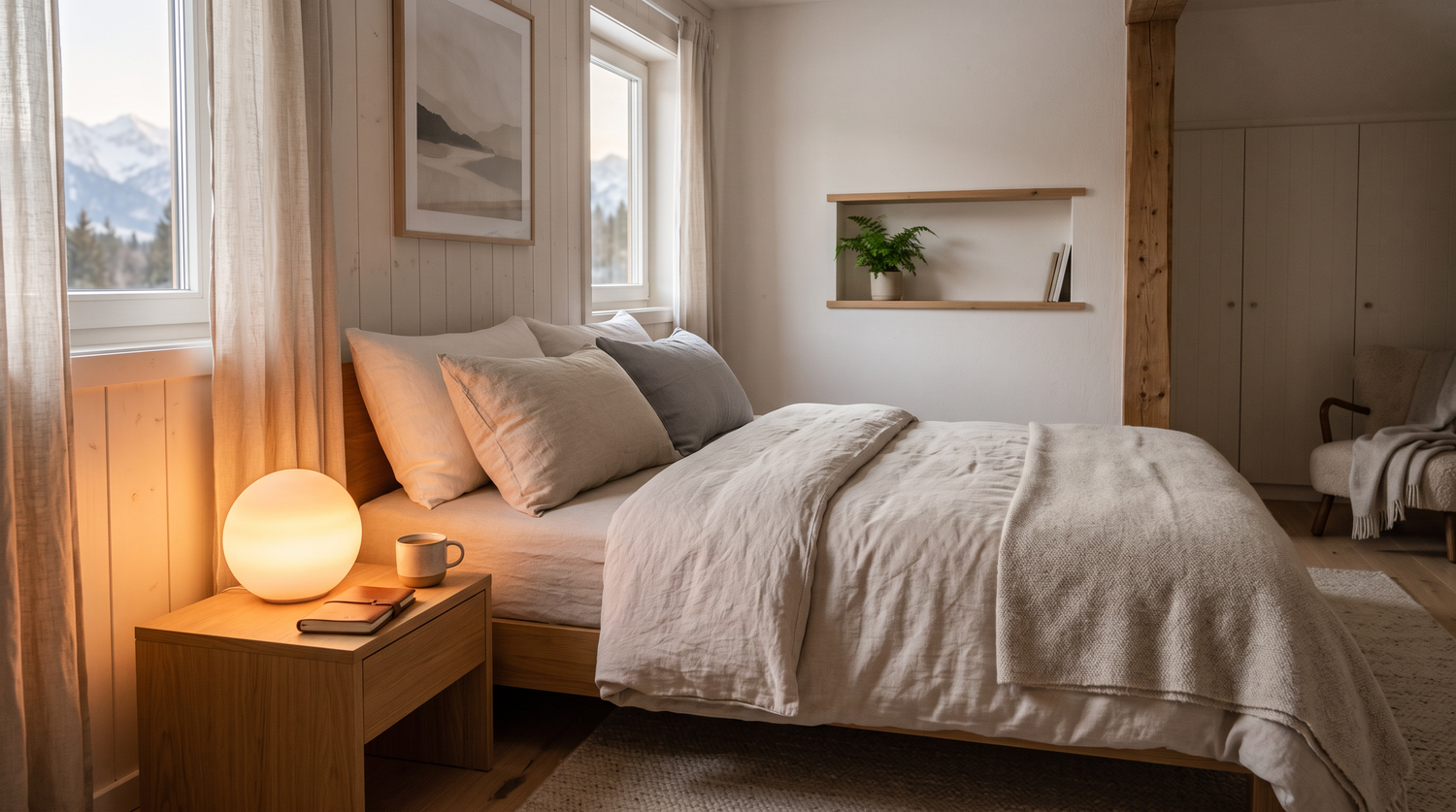
The jarring sound of a classic alarm clock often rips us out of deep sleep – the result: a racing heart, grogginess, and a difficult start to the day. A wake-up light alarm clock takes a different approach: it simulates a sunrise directly on the nightstand, gently preparing the body for waking up even before the actual alarm time. But what's behind this principle, and for whom is the purchase really worthwhile?
The short answer: A wake-up light alarm clock slowly increases the light intensity from warm red to bright daylight white 20–40 minutes before the alarm time. The light suppresses melatonin production and activates the stress hormone cortisol in its natural wake-up function – you are therefore more likely to wake up in a light sleep phase and feel less groggy. Especially during the darker months and for people who struggle to get up, a wake-up light alarm clock is a sensible investment.
- A wake-up light alarm clock simulates the sunrise and wakes you up with increasing brightness instead of an abrupt sound.
- Light in the morning suppresses melatonin and stabilizes the internal clock – especially valuable during the darker Swiss winter half-year.
- Ideally, the light should increase over 20–40 minutes, reaching a final brightness of about 200–300 lux at the pillow.
- Gentle waking up starts with good sleep: sleep hygiene, a dark bedroom, and a mattress that conforms to the body are the foundation.
How does a wake-up light alarm clock work?
Our internal clock – the circadian rhythm – is largely controlled by light. Special receptors in the retina report to the brain whether it is light or dark. In darkness, the pineal gland releases the sleep hormone melatonin; with increasing light, production is slowed down and the body increases circulation, body temperature, and cortisol levels. The wake-up light alarm clock uses precisely this mechanism: depending on the setting, it starts with a weak, reddish light 20 to 40 minutes before the alarm time and continuously increases the intensity to a bright, warm-white tone – just like a real sunrise.
The effect: The body leaves deep sleep even before the actual alarm tone (usually nature sounds or gentle melodies) begins. Anyone familiar with the individual sleep phases knows how unpleasant an alarm clock can be in the middle of deep sleep – the so-called sleep inertia can then last up to 30 minutes. The gradual increase in light significantly increases the likelihood of waking up during a light sleep phase.

Who benefits from a wake-up light alarm clock?
Not everyone benefits equally. A wake-up light alarm clock is particularly useful for:
- Winter grouches: Between November and February, it's often pitch dark in Switzerland when getting up. The simulated sunrise replaces the missing daylight.
- People with sleep inertia: Those who feel groggy for a long time in the morning demonstrably wake up clearer with light.
- Shift workers: Those who have to get up at unusual times can signal an artificial morning to their internal clock with light.
- Families: Children often wake up more relaxed with gentle light too – more on this in the guide Child sleeps better.
However, if you already wake up on your own before the alarm or sleep with open blinds in summer, you hardly need the technology.
Wake-up light, classic alarm clock, or smartphone?
| Criterion | Wake-up light alarm clock | Classic alarm clock | Smartphone |
|---|---|---|---|
| Wake-up quality | Gentle, gradual, less sleep inertia | Abrupt, often stress reaction | Abrupt, plus risk of distraction |
| Effect on internal clock | Stabilizing due to morning light | None | Rather disturbing (blue light in the evening) |
| Temptation to keep scrolling | No | No | High |
| Additional functions | Sleep light, nature sounds, radio | Few | Many, but with side effects |
| Recommendation | Ideal for dark months | Solid basic solution | Better to banish from the bedroom |
The smartphone as an alarm clock has a decisive disadvantage: it is within reach next to the bed and tempts you to scroll in the evening – with negative consequences for melatonin production. Why this is problematic can be read in the article Blue light and screens in the evening.
Setting up your wake-up light alarm clock correctly: 5 practical tips
1. Adjust light duration to your own rhythm
Start with 30 minutes of light increase. If you wake up too early, shorten it to 20 minutes; if you stay in deep sleep, extend it to 40 minutes.
2. Pay attention to position
The wake-up light alarm clock should be at head height, about 40–50 cm from your face – only then will the light reach your closed eyelids with sufficient intensity.
3. Do not choose too weak a final brightness
A guideline is 200–300 lux at the pillow. Many devices can be set in stages – gradually adjust it.
4. Keep backup tone activated
Especially during the adjustment period, a gentle tone as a backup is recommended in case the light alone doesn't wake you up.
5. Use the reverse function in the evening
Many wake-up light alarm clocks offer a sunset simulation: The light dims over 15–30 minutes and helps you fall asleep. This complements the rituals from our guide Fall asleep faster and helps to naturally promote melatonin.

Gentle waking up starts with good sleep
A wake-up light alarm clock can make waking up significantly more pleasant – but it cannot fix a bad night. Anyone who is sleep-deprived will still wake up tired even with the most beautiful artificial sunrise. The basis for restful mornings therefore remains consistent sleep hygiene: regular sleep times, a cool and dark bedroom with the ideal sleeping temperature – and a surface that correctly supports the body throughout the night.
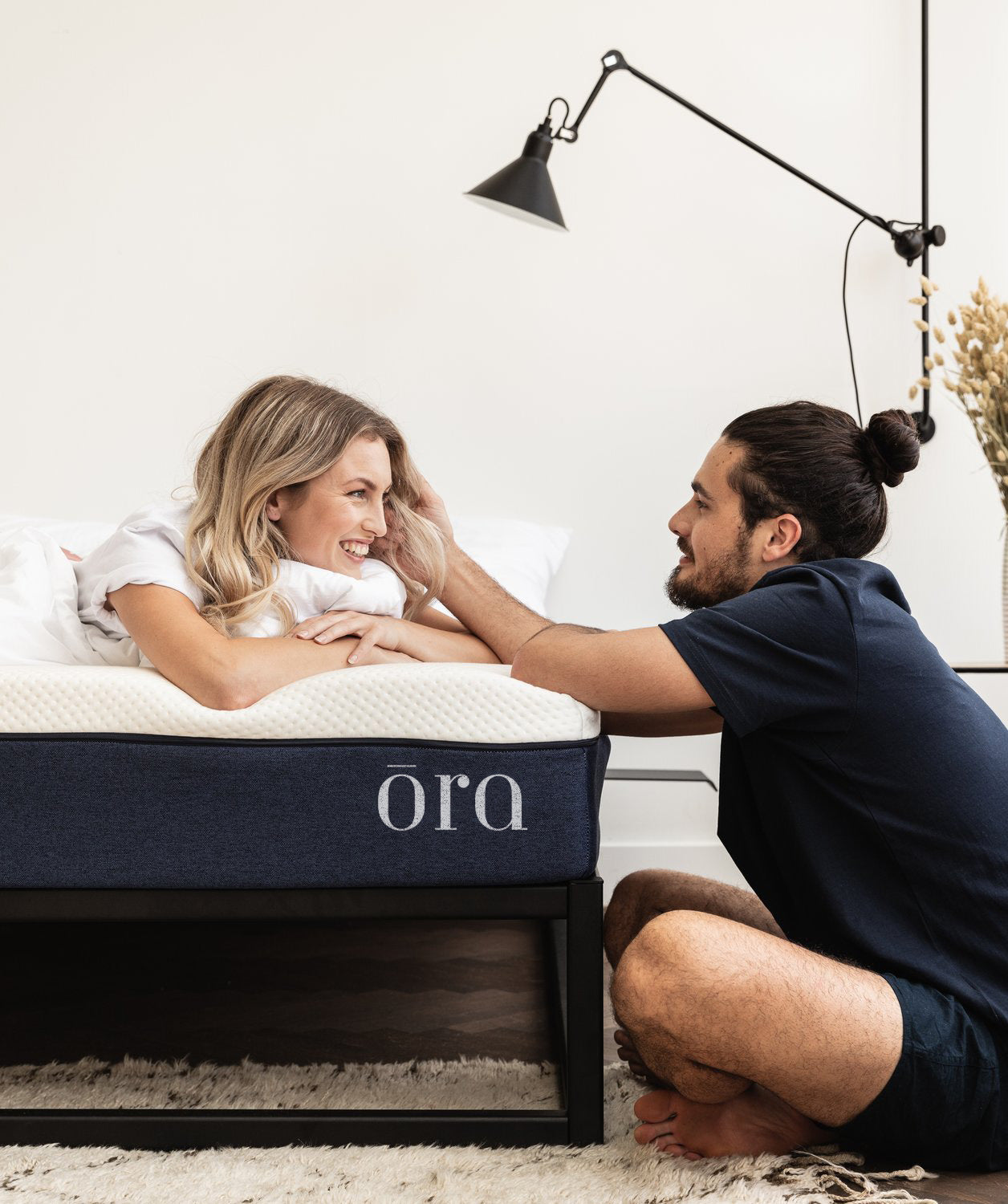
Often underestimated: Anyone who wakes up several times during the night due to pressure points or tension spends less time in deep sleep and consequently starts the day feeling run down. Unlike classic mattresses with rigid firmness levels – a concept that is not standardized and varies completely from manufacturer to manufacturer – the adaptive EvoPoreHRC Premium memory foam of the Ora mattress automatically adapts to the body and sleeping position. This keeps the spine straight in every position, and the body can fully utilize the regenerative phases of the night.
Get CHF 25 discount
Subscribe to the newsletter and receive a one-time CHF 25 discount. ✓ 200 nights trial sleep ✓ 10 years warranty
The basis for gentle waking: the Ora Ultra mattress
Thanks to adaptive EvoPoreHRC Premium memory foam, the Ora Ultra mattress automatically adapts to every body and sleeping position – without any guesswork about firmness levels. If you want to upgrade your existing mattress first, the Ora Ultra Topper is a clever alternative, and budget-conscious sleepers can opt for the Ora Ultra Second Life mattress. All models come with 200 nights of trial sleep and a 10-year warranty.
Frequently asked questions about wake-up light alarm clocks
Does a wake-up light alarm clock work even with closed eyes?
Yes. Eyelids let some light through, and the light-sensitive receptors of the retina register increasing brightness even during sleep. The prerequisite is that the device is close enough to the head and set to a sufficient brightness.
How long does it take to get used to a wake-up light alarm clock?
Most people get used to waking up with light within one to two weeks. In the beginning, it is advisable to also activate a gentle alarm tone as a backup until the body has adjusted to the new signal.
Does a wake-up light alarm clock help with winter fatigue?
A wake-up light alarm clock can significantly alleviate morning fatigue during the darker months because it replaces the missing natural morning light and stabilizes the internal clock. For pronounced seasonal affective disorder, a daylight lamp with 10,000 lux in the morning is also advisable.
Is a wake-up light alarm clock also suitable for children?
Yes, many children benefit from gentle waking up with light. Some devices offer child-friendly displays that indicate when it's time to get up. It is important to use an age-appropriate, not too bright setting.
Does a wake-up light alarm clock replace good sleep?
No. A wake-up light alarm clock improves waking up, not sleep itself. Sufficient sleep duration, good sleep hygiene, and a suitable, body-supporting mattress remain the foundation for rested mornings.
This article is for general information purposes only and does not replace medical advice.




Leave a comment
This site is protected by hCaptcha and the hCaptcha Privacy Policy and Terms of Service apply.