
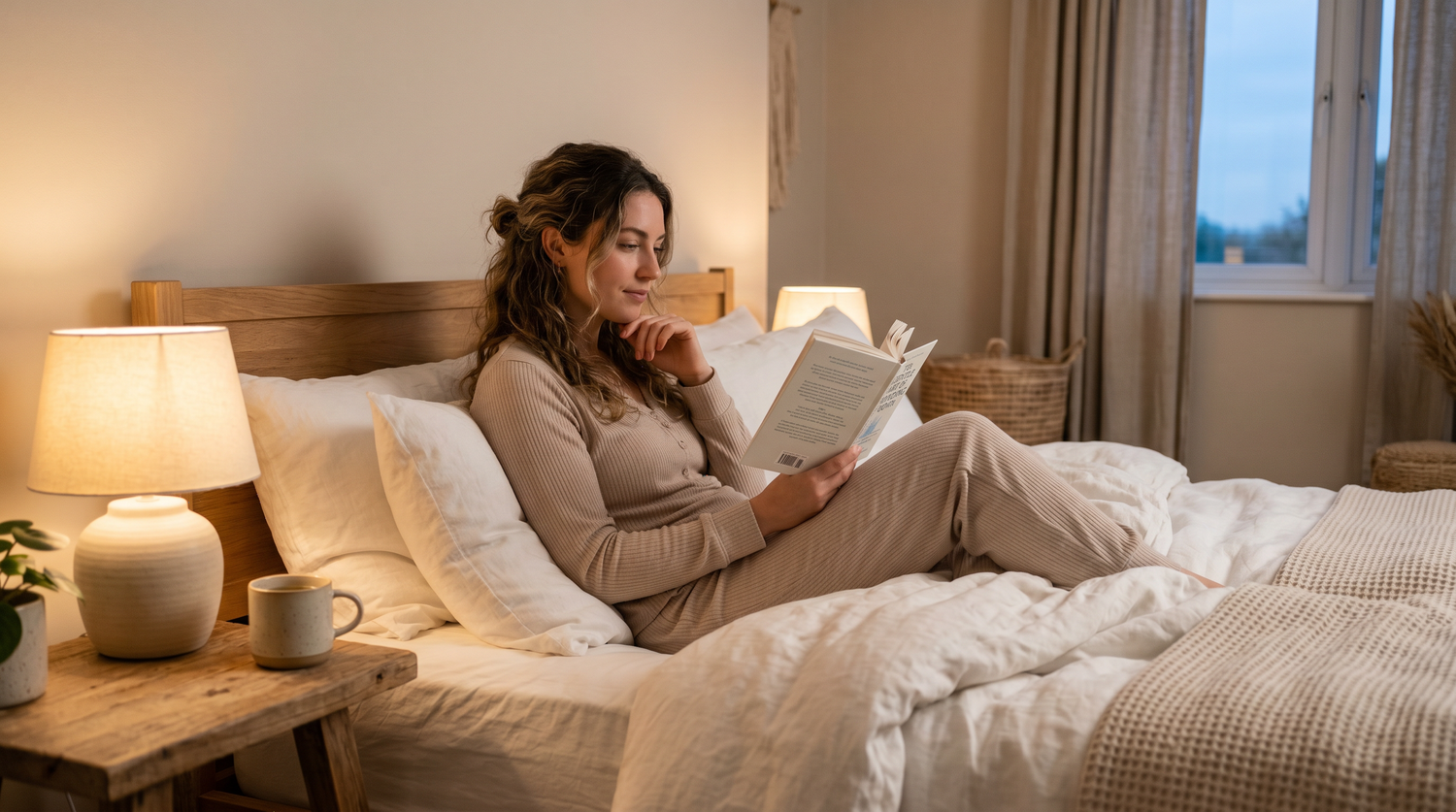
You're in bed, tired – but sleep just won't come. Your thoughts race, your eyes dart to the clock, and with each passing minute, the pressure builds. The good news is: falling asleep can be learned and actively supported.
The short answer: If you want to fall asleep faster, you should wind down in the evening (dimmed lights, no screens), stick to fixed times, and prepare your body for sleep with routines and breathing techniques. The following 12 tips will help.
Key takeaways
- Fixed bedtimes stabilize the internal clock.
- Dimmed lights and no screens before sleeping.
- Breathing techniques like 4-7-8 calm the nervous system.
- If you're awake for a long time: get up instead of overthinking.
Why we sometimes can't fall asleep
Falling asleep succeeds when the body switches from "tension" to "relaxation." Disruptive factors like bright light (especially blue light from screens), caffeine, stress, or an irregular rhythm keep the body in wake mode. This is exactly where the following tips come in.
The 12 tips for falling asleep faster
- Fixed bedtimes – go to bed and get up at roughly the same time every day.
- Reduce screen time – put away your smartphone and TV at least 30–60 minutes before.
- Dim the lights – warm, dim light signals evening to the body.
- Keep the bedroom cool – see ideal sleep temperature.
- Cut out caffeine – no coffee or black tea from the afternoon onwards.
- Evening routine – consistent rituals prepare you for sleep.
- Relaxation techniques – breathing exercises, light stretching, meditation.
- Write down thoughts – a to-do list for tomorrow clears your head.
- No heavy meals – avoid late, heavy meals.
- Exercise during the day – but not right before bedtime.
- Bed for sleeping only – don't work or watch TV in bed.
- Don't look at the clock – that only increases the pressure.

The 4-7-8 breathing technique
A simple, effective method to calm the nervous system: Inhale through your nose for 4 seconds, hold your breath for 7 seconds, exhale slowly through your mouth for 8 seconds. Four repetitions are often enough to feel noticeably calmer. The long exhale activates the relaxing part of the nervous system.

What you should avoid
Some habits sabotage sleep: caffeine and alcohol in the evening, intense screen time, strenuous discussions shortly before bedtime, or the famous "I'll just check my phone quickly." Even strenuously trying to fall asleep is counterproductive. If you're still awake after about 20 minutes, it's better to get up briefly and do something calm until sleepiness returns. More about waking up at night in the article Waking up at night?
The right foundation: a calm sleeping environment
Falling asleep is easier when you feel completely comfortable. A quiet, adaptable sleeping surface removes the last physical stress factor. The guide Sleep Hygiene describes a comprehensive concept.
Get CHF 25 discount
Subscribe to the newsletter and receive a one-time CHF 25 discount. ✓ 200 nights trial sleep ✓ 10 years warranty
Fall asleep relaxed on a mattress that adapts
The Ora Ultra Mattress with EvoPoreHRC premium memory foam relieves pressure points and creates the pleasant body sensation that facilitates falling asleep.
Frequent questions about falling asleep
How do I fall asleep in 2 minutes?
There's no guaranteed way, but breathing techniques like 4-7-8 and progressive muscle relaxation can significantly speed up the process if practiced regularly.
What to do if I wake up at night and can't fall back asleep?
Don't look at the clock, stay in the dark, and breathe calmly. If sleep doesn't return for a while, get up briefly and do something quiet until sleepiness comes back.
Does warm milk help you fall asleep?
The effect is primarily a ritual effect: a warm, caffeine-free drink as part of the evening routine can help you wind down.







Leave a comment
This site is protected by hCaptcha and the hCaptcha Privacy Policy and Terms of Service apply.