

During the day, it's easy to ignore – but as soon as the bedroom falls silent, it's there: the whistling, buzzing, or ringing in the ear. For many people with tinnitus, falling asleep is the most difficult time of day. However, there are well-proven strategies to relieve the nightly terror of ear noises – from the right soundscape to targeted relaxation.
The short answer: Tinnitus sounds louder at night because there are no ambient noises to mask it during the day – and because tension and attention amplify it. The most effective immediate help is a gentle soundscape (soft white noise, nature sounds, calm music) that offers the brain an alternative to the ear noise. In addition, relaxation techniques combat the stress-tinnitus spiral, a consistent evening routine, and a sleep environment where the body can quickly find rest. New or one-sided tinnitus should always be medically evaluated.
- Silence amplifies tinnitus: A gentle soundscape gives the brain an alternative and makes it easier to let go.
- Stress and tinnitus escalate each other – relaxation techniques break the spiral.
- Absolute contraindication: intently "listening" to the ear noise – attention makes it louder.
- New, one-sided, or pulsatile tinnitus should always be medically evaluated.
Why Tinnitus Is Loudest at Night
The ear noise itself doesn't get stronger in the evening – it just loses its competition. During the day, voices, traffic, and everyday noise largely mask tinnitus; in the quiet bedroom, it remains the only signal. Added to this is a psychological amplifier: The more attention the sound gets, the more present it becomes – and the more it annoys you, the stronger the stress system reacts, which subjectively further elevates the tinnitus. This creates the typical spiral of listening intently, annoyance, tension, and sleeplessness – similar to the pattern we describe in the article on stress and rumination.
The Soundscape: Immediate Help Number One
The simplest measure is to soften the nightly silence: A quiet, steady background noise – significantly softer than the perceived tinnitus – gives the brain something neutral to "anchor" to. White or pink noise, nature sounds like rain and ocean waves, or very calm instrumental music – played through a small speaker or a sound machine with a sleep timer – have proven effective. The dosage is important: The soundscape should not drown out the tinnitus, but only soften the contrast to silence – this way, the brain gradually learns to classify the ear noise as unimportant.

Relaxation: Breaking the Spiral
Because tension amplifies tinnitus, relaxation techniques work twofold: They calm the nervous system and take the spotlight off the ear noise. Body-oriented methods that redirect attention away from the ear are particularly suitable – such as progressive muscle relaxation, where the focus systematically moves through the body, or calm breathing exercises with prolonged exhalation. Guided sleep meditations are also ideal for many sufferers because the voice simultaneously serves as a gentle soundscape. Crucially: practice before it gets serious – those who train the technique during the day can recall it at night.
Sleep Environment and Routine: Optimizing the Framework
| Measure | Why it helps with tinnitus |
|---|---|
| Gentle soundscape with timer | Softens the contrast to silence without disturbing sleep later |
| Textile-rich furnishings (carpet, curtains) | Dampened room acoustics feel less "echoey-still" |
| Reduce caffeine and alcohol | Both can worsen tinnitus and disrupt sleep |
| Fixed evening routine | Lowers stress levels before the silence begins |
| Comfortable, pressure-free lying | Fewer position changes = fewer awakenings where tinnitus is noticeable |
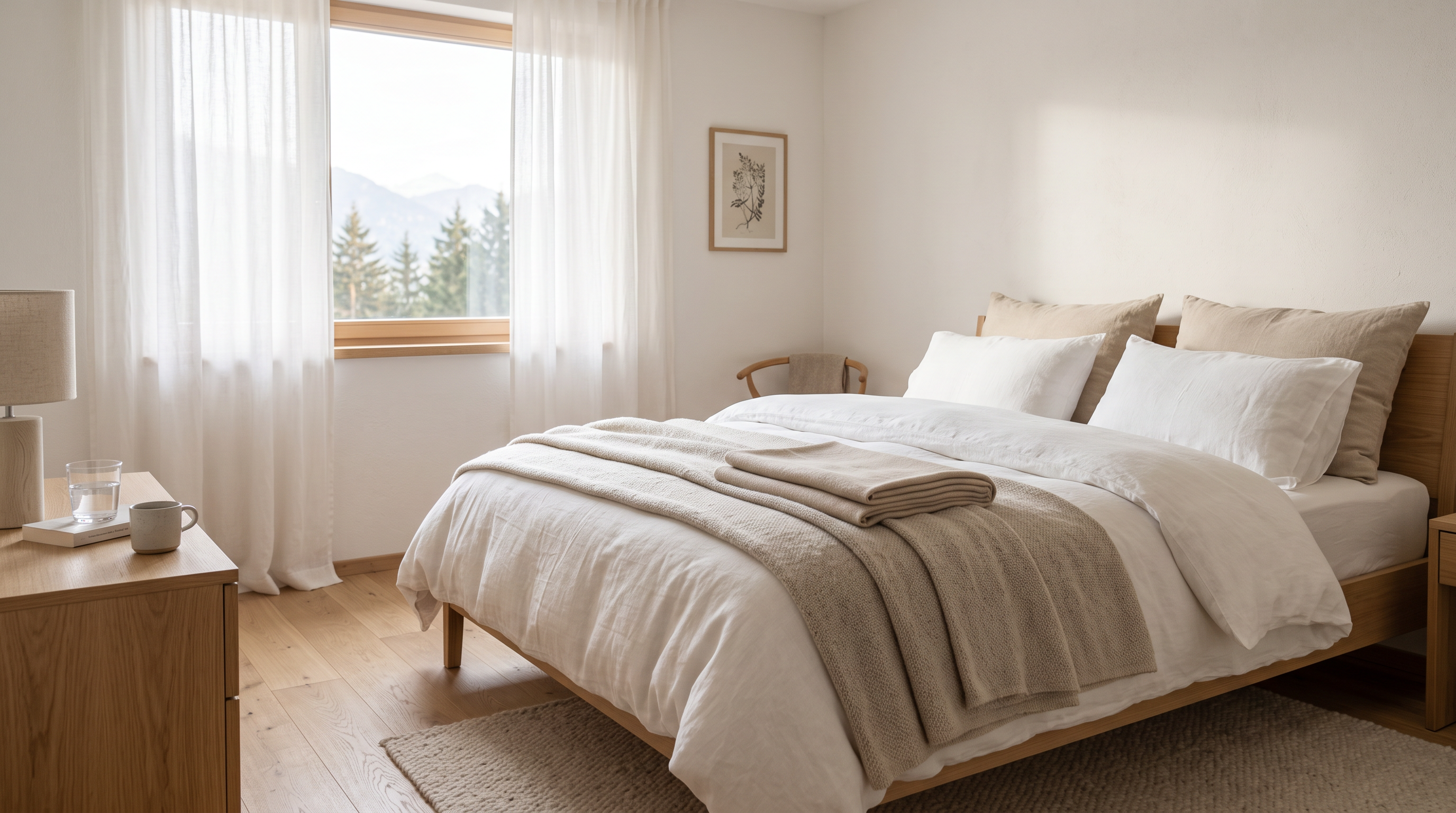
One detail is often underestimated: room acoustics. Highly reverberant, empty rooms amplify the feeling of oppressive silence. Carpets, curtains, and upholstery dampen the room sound and make the silence "softer." This also includes an evening without additional stimulants: Caffeine and alcohol can worsen ear noises and further fragment sleep.

Physical Rest as a Basis
The longer you lie awake, the more opportunity tinnitus gets to take center stage. Everything that physically accelerates falling asleep therefore indirectly helps against ear noise. A mattress that avoids pressure points and allows the body to relax from the outset shortens the critical waking phase: The Ora Ultra automatically adapts to your body and sleeping position with its EvoPoreHRC premium memory foam – without firmness levels – creating the physical calm that helps the mind let go.
Get CHF 25 discount
Subscribe to our newsletter and get a one-time CHF 25 discount. ✓ 200 nights trial sleep ✓ 10 years warranty
Rest faster: The Ora Ultra mattress supports the body pressure-free and automatically adapts to any sleeping position – so the waking phase, during which tinnitus dominates, remains short. Additionally, the Ora Ultra Topper provides extra comfort.
Frequent Questions About Tinnitus and Sleep
Why do I hear my tinnitus louder at night?
Because the masking ambient noises of the day are absent, and in the silence, attention automatically shifts to the ear noise. A gentle soundscape and relaxation techniques mitigate both effects.
Should I sleep with headphones on?
It's generally not recommended for prolonged use: Headphones can press against your head when lying on your side, and cables or in-ear headphones can disturb sleep. A small speaker or a sound machine with a sleep timer is a more comfortable and safer solution.
Can poor sleep worsen tinnitus?
Yes – sleep deprivation increases stress levels, and stress amplifies tinnitus perception. This creates a vicious cycle that is best broken at both ends: with a better sleep routine and targeted relaxation.
When do I need to see a doctor for tinnitus?
Always for new onset tinnitus – especially if it's one-sided, pulsatile, or accompanied by hearing loss and dizziness. Even with existing tinnitus, medical evaluation is worthwhile, as advice, hearing aid solutions, and therapies can significantly reduce the burden.
This article is for general information purposes only and does not replace medical advice.









Leave a comment
This site is protected by hCaptcha and the hCaptcha Privacy Policy and Terms of Service apply.