
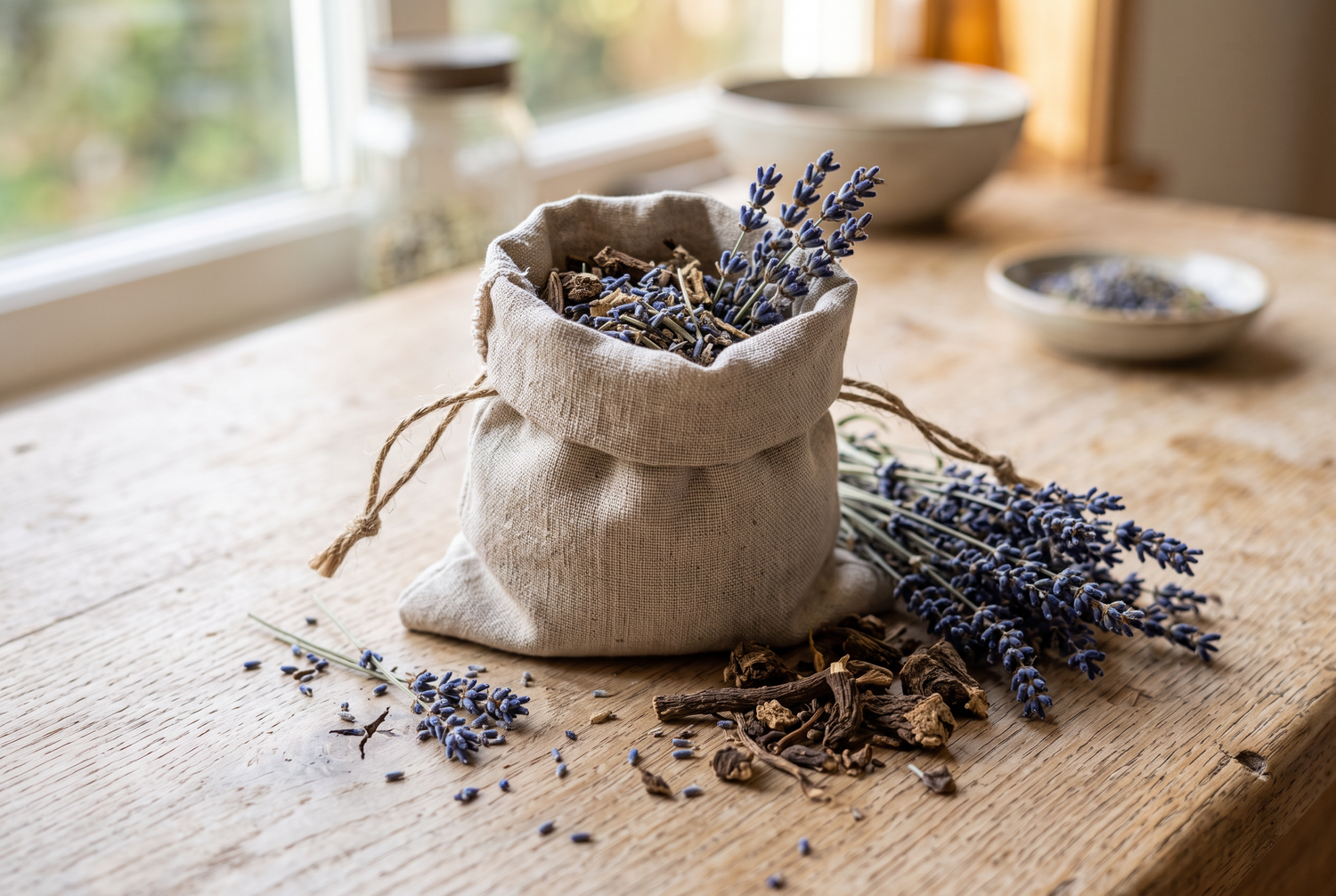
The path to the pharmacy is often the first step when sleep evades you for weeks. Valerian drops, hop cones, passionflower dragees, lavender oil capsules – the shelf is well-stocked, and the promises sound gentle. Herbal sleep aids do indeed have a legitimate place, although a smaller one than advertising suggests. They usually have a mild effect, require patience, and do not replace any measures that structurally improve sleep. Those who know what to realistically expect will be less disappointed – and can use them more effectively.
The short answer: Herbal sleep aids primarily have a calming and anxiety-reducing effect, not sleep-inducing in the strict sense. Valerian, passionflower, hops, lemon balm, and lavender oil are the most thoroughly researched. The study data is mixed: many studies show small but measurable effects on sleep onset time and subjective sleep quality, often within a few minutes. Crucial factors are adequate dosage and patience – valerian usually only unfolds its effects after two to four weeks of regular use. A favorable side effect profile without addictive potential is considered an advantage. However, they do not replace behavioral therapy for chronic sleep disorders.
- Valerian needs 2–4 weeks of regular use – it does not act like an as-needed tablet.
- Underdosing is the most common mistake; many teas contain too little active ingredient.
- Lavender oil in capsule form is primarily studied for internal restlessness.
- No addictive potential, but interactions with medications are possible.
How herbal sleep aids work at all
The starting point for most plant extracts is not sleep itself, but the tension preceding it. Valerian root contains valerenic acid and other ingredients that are thought to influence the GABA system – the neurotransmitter system that dampens the excitability of nerve cells. Similar mechanisms are discussed for passionflower and hops. Lavender oil works through a different pathway and primarily shows anxiolytic effects in studies. This explains why these remedies work best for people whose sleep problems are caused by internal restlessness, rumination, or nervousness. Those who are awake due to pain, nocturnal breathing pauses, or a shifted rhythm will hardly benefit. For a shifted day-night rhythm, the contribution to the internal clock is more helpful.

The most important plants at a glance
Not every plant is suitable for every problem. Valerian is the classic for sleep onset disorders with inner restlessness and is often combined with hops, which complements its effect. Passionflower is considered particularly well-tolerated and is often used for nervous restlessness. Lemon balm is mild and frequently an ingredient in combination preparations. Lavender oil in enteric-coated capsules is the best-documented option for pronounced inner tension. In all cases, the dosage is important: a tea bag with 1.5 grams of valerian root is far below the amount used in studies. Standardized dry extracts in tablet form are significantly more reliable here.
| Plant | Typical application | Onset of effect |
|---|---|---|
| Valerian | Sleep onset disorder with restlessness | after 2–4 weeks |
| Hops | mostly as a combination with valerian | after 2–4 weeks |
| Passionflower | nervous restlessness, tension | after 1–2 weeks |
| Lemon balm | mild calming, combination preparations | variable |
| Lavender oil (capsule) | inner tension, feelings of anxiety | after 2 weeks |
What to realistically expect
The effect sizes of herbal remedies are small. Meta-analyses on valerian show, depending on the evaluation, a reduction in sleep onset time of a few minutes to about fifteen minutes and a subjectively improved sleep quality; some high-quality studies also find no difference to placebo. This is not a rejection – but it puts expectations into perspective. Anyone who feels no effect after two days and stops has not given the remedy a chance. Conversely: anyone who notices no change after eight weeks of consistent use should discontinue the preparation and investigate the underlying causes. It is also helpful never to use herbal remedies in isolation, but together with a reliable evening routine – the placebo component is high with sleep aids, and a ritualized intake utilizes it effectively.
Safety, interactions, and limitations
Herbal sleep aids are considered well-tolerated and, according to current knowledge, are not addictive. However, they are not without side effects. Valerian can, in rare cases, cause stomach discomfort or paradoxical restlessness. Since several plant extracts are metabolized by the liver, interactions with other medications are possible – particularly relevant with sedatives, antidepressants, and blood thinners. St. John's wort, which sometimes appears in sleep preparations, has a significant interaction potential and can, among other things, weaken the effect of the birth control pill. Pregnant women, breastfeeding mothers, and children should only use herbal sleep aids after consulting a doctor. And those who are already taking prescription sleep aids should not combine or discontinue anything on their own.
When something else is needed
Herbal remedies are useful for temporary sleep problems during stressful periods. They are not the right answer if the sleep disorder has lasted longer than three months, if you are severely impaired during the day, if you wake up at night with a racing heart or shortness of breath, or if your mood is persistently low. In these cases, the cause should be clarified. Cognitive behavioral therapy is considered the first-line treatment for chronic insomnia – more on this in the article on insomnia. Even seemingly trivial factors are worth a second look: Caffeine has a half-life of five to six hours, and alcohol reliably destroys the second half of the night more effectively than any herb can save it.

Get CHF 25 discount
Subscribe to the newsletter and receive a one-time CHF 25 discount. ✓ 200 nights trial sleep ✓ 10 years warranty
Frequently Asked Questions about Herbal Sleep Aids
How long do I need to take valerian before it works?
Typically two to four weeks with daily intake. Valerian is not an acute remedy – a single dose on the evening of a sleepless night usually does little. An sufficiently high dosage of a standardized extract is also important.
Are herbal sleep aids addictive?
According to current knowledge, no. There is no known physical addictive potential and no rebound effect after discontinuation. Psychological habituation to the ritual is possible, but is considered unproblematic.
Can I combine herbal remedies with other medications?
Not without consultation. Several plant extracts are metabolized by the same liver enzymes as many medications. You should be particularly careful with sedatives, antidepressants, and blood thinners. St. John's wort has a high potential for interaction.
Is melatonin an herbal sleep aid?
No. Melatonin is an endogenous hormone and works differently: It signals night to the body and shifts the internal clock, rather than generally calming. It is therefore primarily used for jet lag and shifted rhythms.
Is a valerian tea from the drugstore sufficient?
Usually not. A tea bag contains significantly less active ingredient than the extracts studied. As part of a calming evening ritual, it is still useful – but you should not overestimate the pharmacological effect.
This article is for general information and does not replace medical advice.






Leave a comment
This site is protected by hCaptcha and the hCaptcha Privacy Policy and Terms of Service apply.