
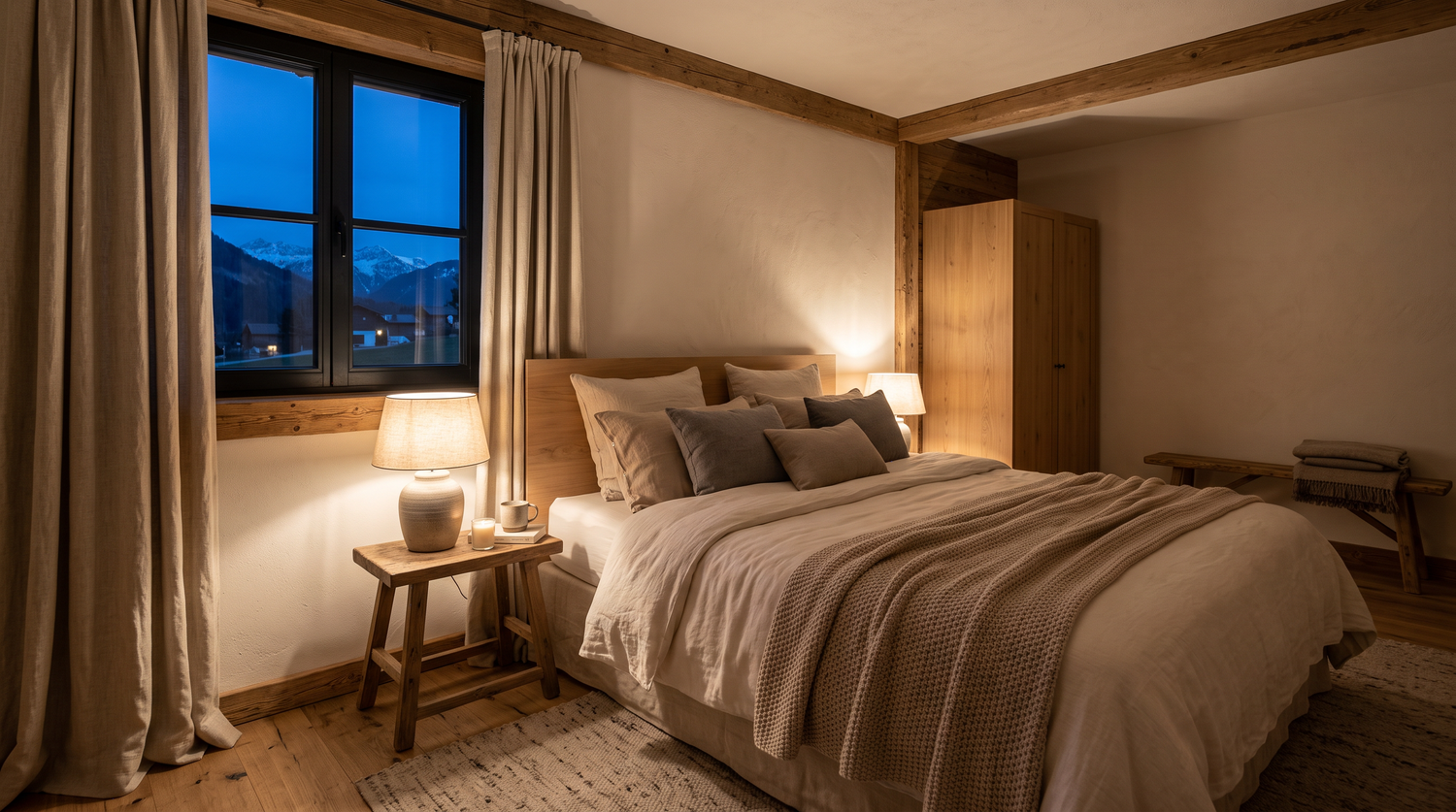
Melatonin is considered the ultimate sleep hormone – and is a widely discussed dietary supplement. However, it is often forgotten: Our body produces melatonin itself, every night, for free. The pineal gland in the brain secretes it as soon as it gets dark, making us tired. The problem: Our modern daily life with screens, artificial light, and late meals systematically sabotages this production. The good news: Those who want to promote melatonin naturally can achieve a lot with simple habits.
The short answer: The most effective way to increase your body's melatonin production is through light management: plenty of bright daylight in the morning, dim warm light and a screen break in the evening, plus a dark, cool bedroom. Regular sleep times, tryptophan-rich foods such as nuts and dairy products, and avoiding late alcohol and caffeine can also help. Pills are usually unnecessary for healthy sleepers.
- Melatonin is released in darkness – light in the evening is its biggest natural antagonist.
- Bright daylight in the morning resets the internal clock and improves melatonin production in the evening.
- Tryptophan-rich foods like nuts, oatmeal, and dairy products provide the building blocks for melatonin.
- A dark, cool bedroom (16–19 °C) further supports release and sleep quality.
How Melatonin Works – In 60 Seconds
Melatonin is formed in the pineal gland from the "happiness hormone" serotonin, which in turn is produced from the amino acid tryptophan. Its release is controlled by the eyes: When a lot of light – especially blue light – hits the retina, production is inhibited. When it gets dark, melatonin levels rise, body temperature drops, and we become sleepy. In the second half of the night, the level drops again, preparing us to wake up. This interplay paces our sleep stages – and it can be deliberately supported. Incidentally, production naturally decreases with age, which explains sleep problems in old age.
9 Ways to Naturally Boost Melatonin Production
1. Get Out into Daylight in the Morning
Sounds paradoxical, but it's the most important lever: 20–30 minutes of bright daylight in the morning – ideally outdoors – synchronize your internal clock. Those who soak up a lot of light during the day will produce melatonin earlier and more reliably in the evening.

2. Dim the Lights in the Evening
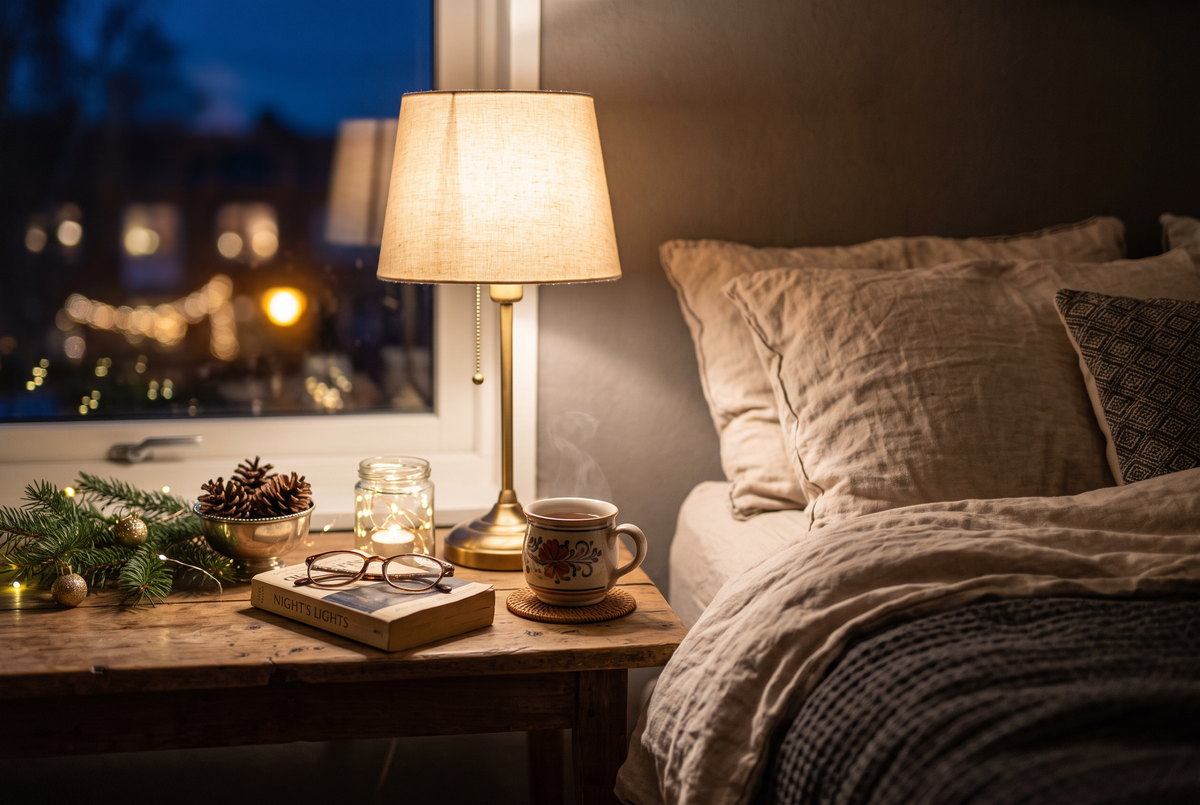
Approximately two hours before bedtime: Turn off overhead lights, turn on warm, dim light sources. Even normal room lighting can measurably delay melatonin secretion.
3. Put Away Screens in Time
Smartphones, tablets, and televisions emit blue-light-rich light directly onto the retina – plus there's the activating content. An ideal screen break is 60–90 minutes before sleeping; night mode and blue light filters are only the second-best solution.
4. Maintain Regular Sleep Times
Melatonin secretion follows a rhythm that loves reliability. Going to bed and waking up at roughly the same time every day – even on weekends – trains the internal clock. Learn more in the guide Sleep Hygiene.
5. Eat the Right Foods
Melatonin is created from tryptophan – and some foods even contain melatonin directly:
| Food | Active Ingredient | Practical Tip |
|---|---|---|
| Walnuts, Almonds, Pistachios | Melatonin and Tryptophan | A small handful in the evening |
| Sour Cherries (Montmorency) | Natural Melatonin | As juice or dried with dinner |
| Oatmeal, Whole Grains | Tryptophan plus Carbohydrates | Carbohydrates improve tryptophan absorption in the brain |
| Milk, Yogurt, Cheese | Tryptophan | The classic warm milk has a true core |
| Bananas | Tryptophan, Magnesium | Good evening snack instead of sweets |
| Eggs, Poultry | Tryptophan | Light dinner, not too late and not too rich |
Our article on the right diet for better sleep shows how much nutrition generally affects night rest.
6. Time Caffeine and Alcohol
Caffeine blocks fatigue signals for up to six hours – so the last coffee is ideally in the early afternoon. Alcohol makes you sleepy, but it disrupts melatonin production and fragments the second half of the night – a common trigger for problems sleeping through the night.
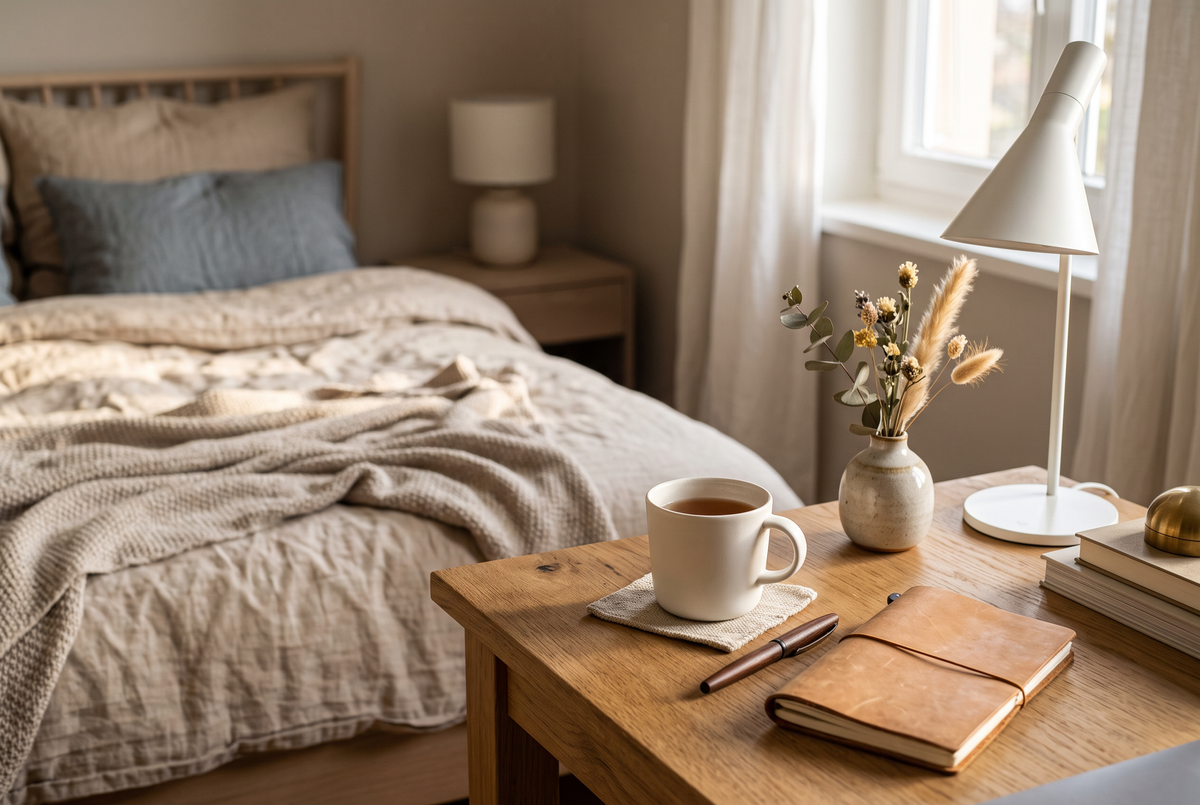
7. Make the Bedroom Really Dark
Even small light sources – standby LEDs, streetlights, the display on the bedside table – can suppress melatonin secretion. Blackout curtains or a sleep mask can help.
8. Sleep Cool
Evening melatonin secretion is accompanied by a drop in body temperature – a cool bedroom of 16–19 °C supports this process. You can read which temperature is ideal for whom in the article on the ideal sleep temperature.
9. Establish a Fixed Evening Routine
Reading, a warm bath, calm music, breathing exercises: Recurring rituals signal to the brain that night is beginning – and give melatonin production a final boost. Further techniques can be found in the guide falling asleep faster.

What About Melatonin Pills?
Melatonin preparations can be useful in individual cases – for example, with jet lag or shift work. However, for healthy sleepers with a normal rhythm: The causes of poor sleep usually lie in behavior and the sleep environment, not in hormone deficiency. A pill cannot compensate for bright evening light, late coffee, or a worn-out mattress. Talk to your doctor or pharmacist before long-term use – and first check the natural levers. Our article How Much Sleep Is Enough? clarifies how much sleep you actually need.
The Underestimated Factor: The Sleep Environment
Melatonin makes you tired – but you have to sleep through the night yourself. Those who constantly change position at night due to pressure points or heat buildup negate the hormonal tailwind. In addition to darkness and coolness, the sleeping surface is therefore crucial: The Ora mattress automatically adapts to the body and sleeping position with its EvoPoreHRC premium memory foam – without the outdated, non-standardized firmness rating system. This keeps the body relaxed, and the naturally released melatonin can unfold its effect.
Get CHF 25 Discount
Subscribe to our newsletter and receive a one-time CHF 25 discount. ✓ 200 nights trial sleep ✓ 10 years warranty
The Quiet Foundation for Restful Nights: The Ora Ultra Mattress
The Ora Ultra Mattress, with its adaptive EvoPoreHRC premium memory foam and breathable construction, supports exactly what melatonin production needs: quiet, cool, pressure-free lying. For a gentle addition to an existing mattress, the Ora Ultra Topper is suitable. Both come with 200 nights of trial sleep and a 10-year warranty.
Frequently Asked Questions About Natural Melatonin
How can I naturally increase my melatonin levels?
Most effectively through light: 20–30 minutes of bright daylight in the morning, dim warm light and a screen break in the evening. Plus regular sleep times, a dark, cool bedroom, and tryptophan-rich foods like nuts, oatmeal, and dairy products.
Which foods contain natural melatonin?
Direct melatonin is found primarily in sour cherries (especially Montmorency), walnuts, and pistachios. The building block tryptophan is supplied by dairy products, eggs, poultry, oatmeal, and bananas – ideally combined with some carbohydrates.
How long before bedtime should I stop using my phone?
An ideal screen break is 60 to 90 minutes. The blue-light-rich light inhibits melatonin secretion, and activating content also keeps the brain awake. Night mode filters only mitigate the light effect, not the content effect.
Why do I produce less melatonin as I age?
The pineal gland naturally secretes less melatonin with increasing age, and it also partially calcifies. This makes natural enhancers all the more important: plenty of daylight, fixed routines, and a dark, cool sleep environment.
Are melatonin pills harmful?
In the short term and at low doses, they are considered relatively safe, for example for jet lag. However, for continuous use, they are not a solution, as they do not address the actual causes of poor sleep. Clarify long-term use with a doctor.
This article is for general information purposes only and does not replace medical advice.





Leave a comment
This site is protected by hCaptcha and the hCaptcha Privacy Policy and Terms of Service apply.