
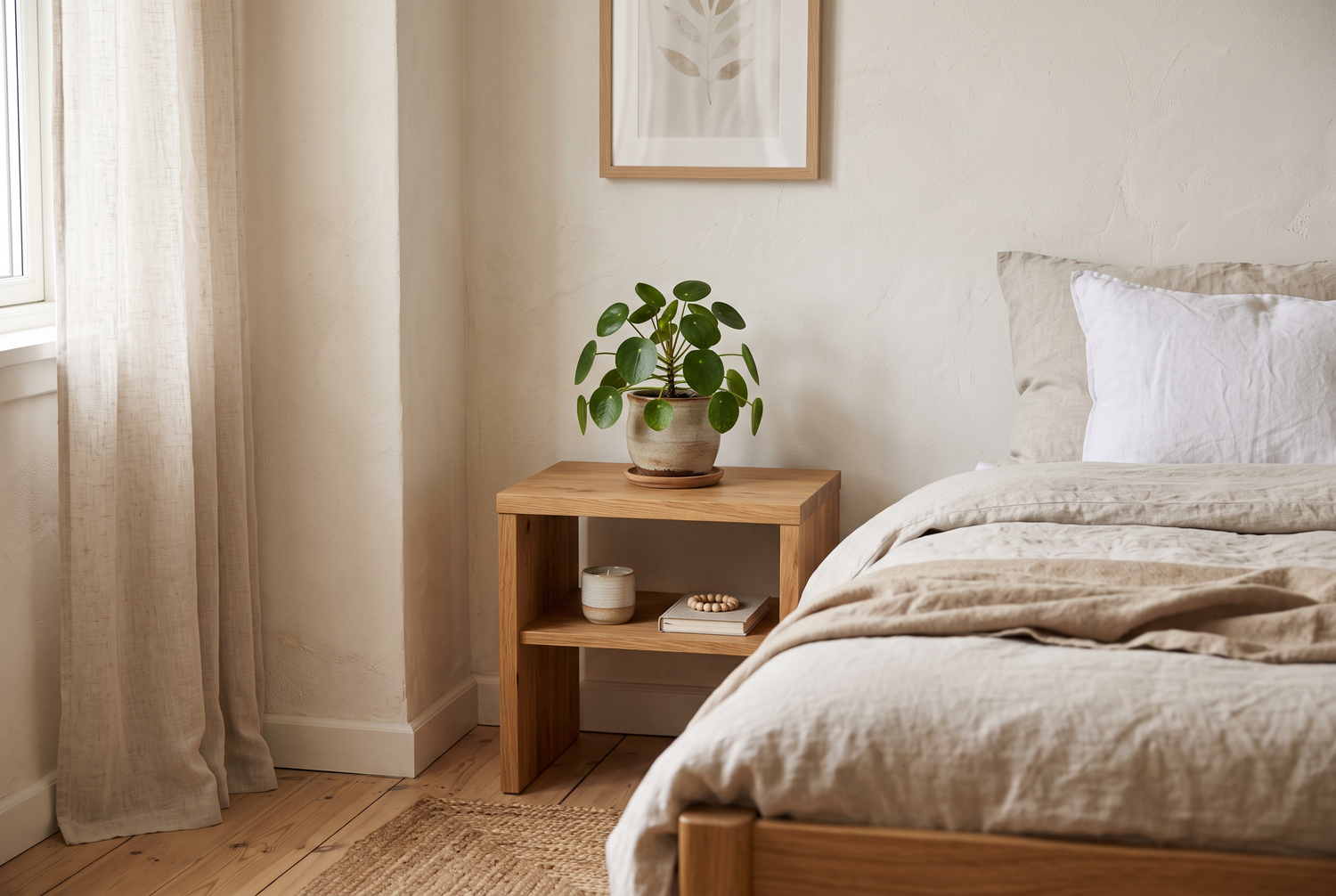
Few interior design topics are as polarizing as Feng Shui: for some, it's ancient Eastern wisdom; for others, it's esotericism. It becomes interesting when you look closer, because many classic Feng Shui rules for the bedroom align surprisingly well with what modern sleep research recommends. A bed with a solid wall behind it, clear order, muted colors, and minimal technology in the room have been proven to promote good sleep, regardless of whether you believe in energy flows. In this article, we practically dissect the most important Feng Shui principles for the bedroom. You will learn which rules are worthwhile, how to implement them in a normal Swiss apartment, and where healthy pragmatism is appropriate. The result is a room that exudes tranquility, and that is precisely the best foundation for good sleep.
The short answer: At its core, Feng Shui in the bedroom means: a bed with a headboard against a solid wall, the door in view but not in direct line with the bed, calm earthy tones, clear order, few mirrors, and minimal technology. There is no scientific evidence for energy flows, but most of these rules demonstrably create a low-stimulus, safe sleeping environment, and this actually improves sleep. So, Feng Shui can be pragmatically used as a proven design philosophy for tranquility.
- The command position is the central Feng Shui rule: headboard against a solid wall, door visible, but not directly in front of the bed.
- Muted earthy and natural tones like sand, sage green, or warm gray are calming; strong red and stark white are considered unfavorable.
- Order is a core principle: nothing stored under the bed, banishing work items and piles of laundry from the room.
- Mirrors facing the bed and electronics in the bedroom are considered disruptive sources in Feng Shui, and sleep research agrees for screens.
- Many Feng Shui rules work through psychology and stimulus reduction, which does not require belief in energy flows.
What Feng Shui is and how it should be classified today
Feng Shui (literally "wind and water") is an over 3000-year-old Chinese philosophy of harmony that aims to design living spaces so that the life energy Qi can flow freely. The bedroom is considered the most important room because people spend about a third of their lives there and are said to be particularly receptive during sleep. Scientifically, a Qi flow cannot be measured or proven, which is part of an honest assessment. Nevertheless, it is worth looking at the practice: many rules have evolved over centuries from observation and ultimately aim for safety, order, and low stimulation, precisely the factors that modern sleep psychology also describes as sleep-promoting. People who feel safe and secure in their bedroom fall asleep with less tension, as research on stress and sleep onset latency clearly shows. So, Feng Shui can be read as a culturally evolved checklist for a soothing bedroom, without any esoteric claim, and that is exactly how we treat it in this article.
The Command Position: Correctly Placing the Bed
The most well-known Feng Shui rule concerns bed placement, the so-called command position. It states: the headboard should be against a solid wall, the door should be visible from the bed, but the bed should not be in a direct line between the door and the window. Psychologically, this makes sense, because someone who can see the entrance and feels the wall at their back unconsciously doesn't have to fear surprises, a remnant of our evolutionary need for security. Specifically, this means: do not place the bed freely in the room, do not place the headboard under the window (drafts, noise, lack of support), and ideally, the feet should not point directly at the door, which is frowned upon in Feng Shui as the "coffin position." In small Swiss bedrooms of 10 to 14 m², the perfect position is not always possible; in that case, the priority list applies: solid wall behind the head first, door in view second, distance from the window third. A solid wooden headboard or a padded headboard further enhances the feeling of support; read more about choosing a bed in the guide Choosing a Bed Frame.

Colors, Light, and Materials: The Calming Palette
Feng Shui recommends muted, earthy tones for the bedroom: sand, cream, terracotta, soft sage green, warm gray, or delicate blue. Strong red and orange are considered too activating, while pure cold white is seen as sterile. Color psychology arrives at similar conclusions: muted, desaturated colors lower arousal levels, while bright, saturated tones can keep one awake. For materials, Feng Shui emphasizes natural elements: wood, linen, cotton, wool, with as little plastic and metal as possible. This also aligns with practical arguments, as natural textiles regulate moisture better and support a pleasant sleeping climate; details on this can be found in the article on Bedding Materials. Regarding light: several small, warm light sources instead of one harsh ceiling lamp, dimmable, and with a maximum of 2700 Kelvin in the evening. If you want to implement it consistently, combine a warm bedside lamp with indirect lighting; suggestions can be found in the guide to Bedroom Lighting.
Order and Clarity: Why Less Really Is More
Few Feng Shui principles are as practical as the demand for order. Nothing should be stored under the bed, open shelves full of trinkets are considered unsettling, and anything related to work—a desk, laptop, stacks of files—has no place in the bedroom. Psychology provides the rationale: visual clutter demonstrably increases stress levels, and if you see a pile of laundry or tax documents from your bed, it's harder to mentally switch off. Studies also show that people who perceive their bedroom as tidy and pleasant report better sleep. Practically, this means: closed cabinets instead of open shelving, a designated place for worn clothes, a maximum of three decorative objects per surface, and a consistently clear bedside table. A bed base with storage is a compromise: if space is tight, then neatly stored bedding under the bed is better than open boxes. Once you thoroughly declutter, you often notice after just a few days that the room feels calmer, and that this calm translates to falling asleep.
Feng Shui and Sleep Research Compared
How well do the classic rules align with current research? This overview shows:
| Feng Shui Rule | Reasoning in Feng Shui | Sleep Research Perspective |
|---|---|---|
| Headboard against a solid wall | Protection and support for Qi | Feeling of security reduces tension when falling asleep |
| No electronics in the room | Disrupts energy flow | Blue light and notifications are proven to disrupt sleep |
| Muted earthy tones | Calms the Yin of the room | Desaturated colors lower arousal levels |
| No mirror facing the bed | Reflects energy back | Movement reflections in dim light can be unsettling |
| Order, nothing under the bed | Free flow of Qi | Visual clutter increases stress, order calms |
Common mistakes in Feng Shui for the bedroom
Mistake 1: Wanting everything at once. Anyone who meticulously plans the entire bedroom according to Bagua zones, elements, and cardinal directions will get bogged down; the basics of bed position, order, and light provide 80 percent of the effect. Mistake 2: Prioritizing rules over comfort. If the "correct" bed position means you sleep next to the heater or directly by a drafty door, practical sleep comfort always wins. Mistake 3: Banning plants completely. Classic Feng Shui is reserved about plants in the bedroom, but one or two easy-care houseplants are harmless from today's perspective and improve the perceived atmosphere; more on this in the article about Houseplants in the Bedroom. Mistake 4: Buying expensive Feng Shui accessories. Crystals, fountains, and wind chimes are decoration, not necessities; a water feature in the bedroom even contradicts most Feng Shui schools. Mistake 5: Forgetting the basics. No room concept replaces darkness, quiet, and a room temperature of 16 to 19 degrees, the basis of good sleep hygiene remains unchanged.

Secure CHF 25 discount
Subscribe to our newsletter and receive a one-time CHF 25 discount. ✓ 200 nights trial sleep ✓ 10 years warranty
Practice: organizing the bedroom according to Feng Shui in one afternoon
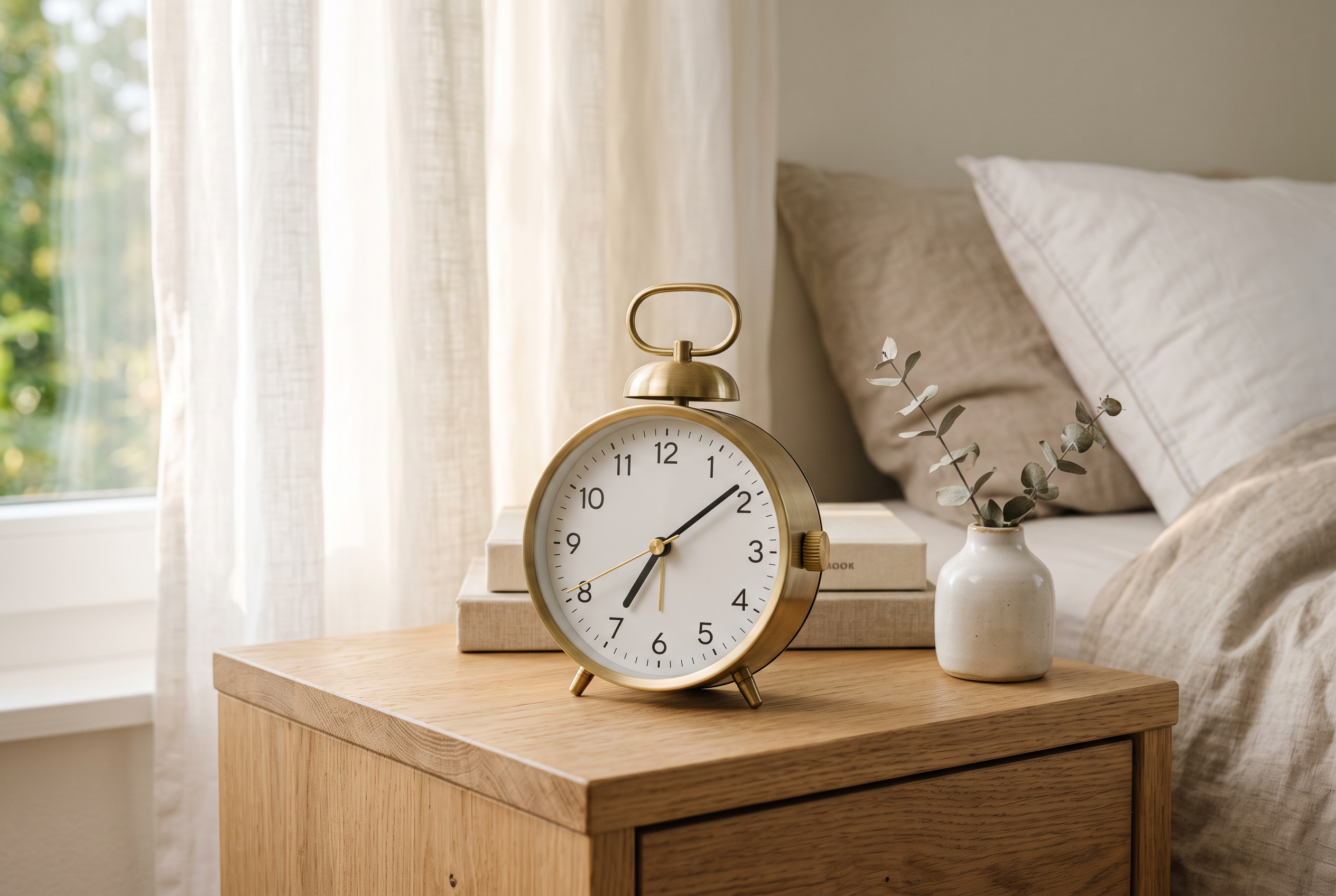
Step 1 (30 minutes): Declutter. Everything not related to sleep, relaxation, or clothing leaves the room, including work documents, sports equipment, and laundry racks. Under the bed is completely cleared out or neatly organized into flat boxes. Step 2 (30 minutes): Reposition the bed. Headboard against the most stable wall, door visible from the bed, at least 50 cm distance from the heater and window, accessible from both sides if space permits. Step 3 (30 minutes): Arrange nightstands symmetrically, each with a warm lamp, charging cables and devices removed, an analog alarm clock replaces the smartphone. Step 4 (30 minutes): Freshen up textiles, natural fiber bedding, a soft rug as a bedside runner, heavy curtains for darkness and quiet, see also the guide to Darkening the Bedroom. Finally, air out the room vigorously for 10 minutes. The result is not a certified Feng Shui bedroom, but a noticeably calmer room, and that is what matters most.
Frequently Asked Questions about Feng Shui in the Bedroom
How do I position the bed correctly according to Feng Shui?
In the command position: headboard against a solid wall, the door visible from the bed, but your feet not pointing directly at it, and the bed not in the line between the door and the window.
Is Feng Shui in the bedroom scientifically proven?
Energy flows like Qi are neither measurable nor proven. However, many Feng Shui rules demonstrably create a low-stimulus, organized, and safe sleeping environment, and such environments do indeed improve sleep.
Which colors does Feng Shui recommend for the bedroom?
Muted earthy and natural tones such as sand, cream, terracotta, sage green, or warm gray. Strong red, bright orange, and cold pure white are considered too activating or too sterile.
Why is a mirror facing the bed considered unfavorable?
In Feng Shui, it is said to reflect energy back and disturb sleep. Practically speaking, reflections and perceived movements in dim light can indeed be irritating; if you are sensitive, reposition the mirror or cover it at night.
Are plants allowed in the bedroom according to Feng Shui?
Classical schools are reserved, but from today's perspective, one or two easy-care houseplants are harmless. They consume minimal oxygen at night and improve the room's atmosphere for many people.
What does Feng Shui in the bedroom really do for sleep?
The greatest effects come from order, calm colors, warm light, minimal technology, and a protected bed position. These factors reduce tension and stimuli, and that is precisely what benefits falling asleep, regardless of the underlying philosophy.









Leave a comment
This site is protected by hCaptcha and the hCaptcha Privacy Policy and Terms of Service apply.