
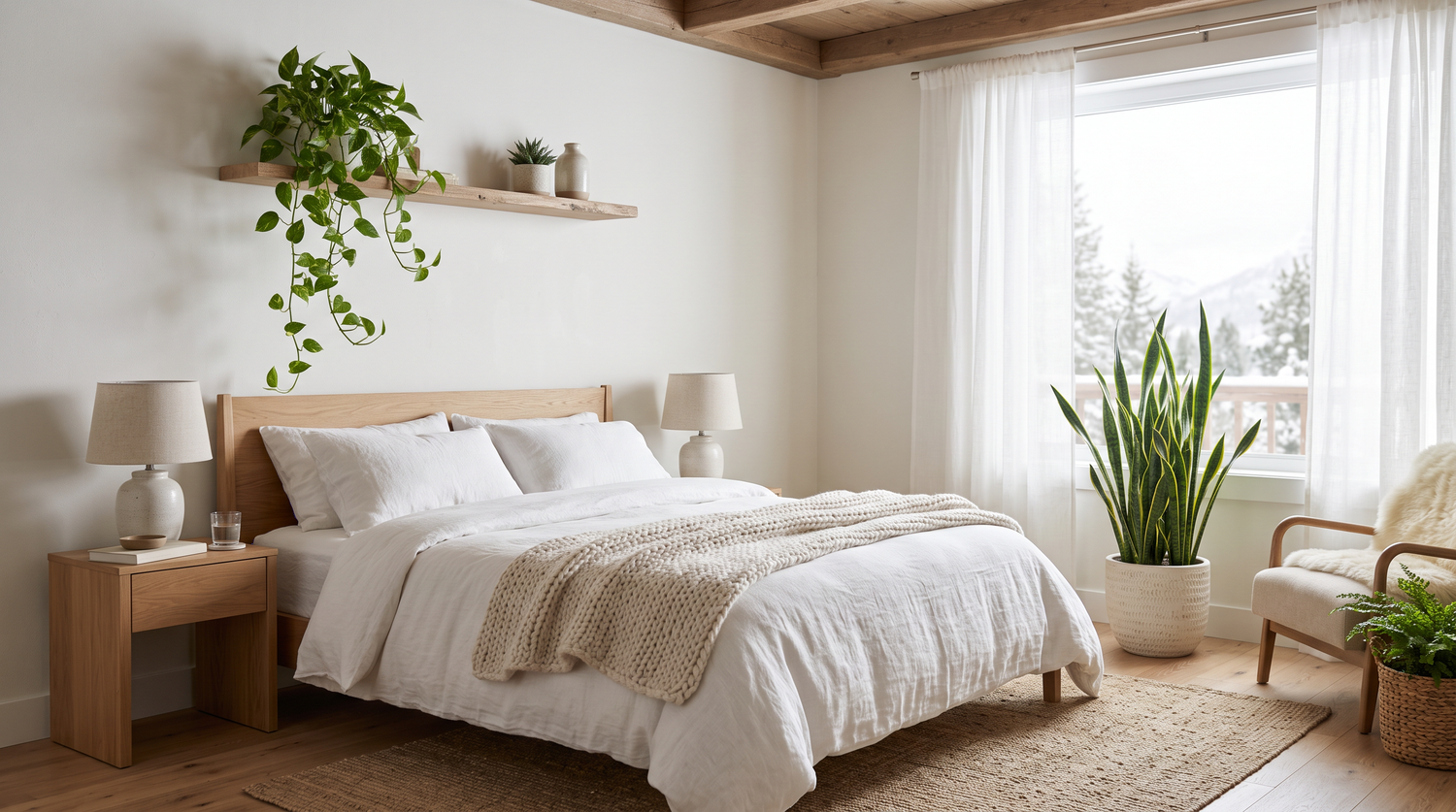
Do plants in the bedroom steal oxygen at night – or do they improve the indoor climate? Few interior design topics are surrounded by so many myths. The good news: The oxygen consumption of houseplants is negligible, and if chosen correctly, plants can even actively contribute to better sleep. They regulate humidity, dampen sound, demonstrably reduce stress levels – and some species even produce oxygen at night. In this guide, we introduce the best houseplants for the bedroom and show you what to consider when choosing and caring for them.
The short answer: Plants belong in the bedroom – the nightly oxygen consumption of a houseplant is less than that of a sleeping companion and completely harmless. Snake plants, aloe vera, and orchids are particularly suitable, as they even release oxygen at night thanks to their special metabolism, as is lavender, whose scent has a calming effect. Important: not too many strongly scented varieties, no waterlogging prone to mold, and for allergies, avoid profusely flowering plants.
- The myth of the "oxygen robber" has been debunked: plants consume only minimal amounts of oxygen at night.
- CAM plants like snake plant, aloe vera, and orchids even release oxygen at night.
- Plants increase humidity, dampen sound, and demonstrably reduce stress – good for falling asleep.
- Caution with allergies, strongly scented flowers, and waterlogging (risk of mold in potting soil).
The myth of the oxygen robber
During the day, plants photosynthesize and produce oxygen; at night, they breathe like us – they take in oxygen and release CO2. This led to the recommendation to banish plants from the bedroom. However, the calculation shows: A large houseplant consumes only a fraction of what a sleeping person breathes out per night. If two people sleep together, the "oxygen robber" has long been in bed – not on the windowsill. What is crucial for fresh air is regular cross-ventilation, not the absence of greenery.
What plants really do in the bedroom
Better indoor climate
Through their leaves, plants transpire water, thus increasing humidity – a real advantage, especially in winter when heating dries out mucous membranes. You can find ideal values in our guide on humidity in the bedroom. Some species can also filter small amounts of pollutants like formaldehyde from the air – no substitute for ventilation, but a meaningful contribution.
Calming for mind and senses
Studies on biophilic design show that the sight of plants lowers pulse and stress levels. A green bedroom appears softer, more muted, and more inviting – leaves also absorb some of the sound. Our article on design principles for bedrooms shows how to incorporate this effect specifically into room design.

An overview of the best plants for the bedroom
| Plant | Special feature | Maintenance | Location |
|---|---|---|---|
| Snake plant (Sansevieria) | Releases oxygen at night, very robust | very low | bright to partial shade |
| Aloe vera | Nighttime oxygen release, stores water | low | bright, sunny |
| Orchid | CAM metabolism, subtle bloom | medium | bright, without direct sun |
| Lavender | Calming scent, can aid in falling asleep | medium | very bright, cool |
| Peace Lily (Spathiphyllum) | Humidifying, filters pollutants | low | partial shade |
| Pothos | Air purifying, decorative hanging | very low | bright to shady |
| Spider Plant | Indestructible, humidifying | very low | flexible |
Lavender: Scent with an effect
Lavender is the only plant whose sleep-promoting effect has been comparatively well researched: Its essential oil has been proven to calm and facilitate falling asleep. A small pot on the windowsill or a sachet in the pillowcase is enough – the scent should remain subtle. If you are looking for sleep rituals, you will find more natural helpers in the guide Fall asleep faster.

What you should pay attention to
- Allergies: Heavily blooming or fragrant plants can affect allergy sufferers. In doubt, opt for pure foliage plants – more on this in the guide Allergy-friendly bedroom.
- Avoid waterlogging: Permanently moist soil can mold and attract fungus gnats. It's better to water less frequently but thoroughly; a drainage layer helps.
- Don't overdo it: Three to five plants are sufficient for a normal bedroom. A jungle unnecessarily increases humidity and maintenance.
- Consider toxic species: Pothos and peace lily are toxic to pets and small children – place them out of reach. For families, it's also worth a look at our article Child sleeps better.
Green bedroom, perfect foundation
Plants create atmosphere and a good indoor climate – but the basis for restful sleep remains the right mattress. Here, too, less complexity, more effect. Instead of puzzling over the outdated, never standardized firmness level system, the Ora Ultra relies on EvoPoreHRC Premium memory foam, which automatically adapts to the body and sleeping position – an adaptive mattress for all sleeper types.
Get CHF 25 discount
Subscribe to our newsletter and receive a one-time CHF 25 discount. ✓ 200 nights trial sleep ✓ 10 years warranty
The heart of the green bedroom: The Ora Ultra mattress adapts automatically to body and sleeping position with EvoPoreHRC Premium memory foam – without compromising on firmness. Those who furnish sustainably will also like the resource-saving Ora Ultra Second Life. Both with 200 nights trial sleep and 10 years warranty.
Frequently asked questions about plants in the bedroom
Are plants in the bedroom unhealthy?
No. The nightly oxygen consumption of houseplants is minimal – significantly less than that of a sleeping person. Chosen correctly, plants even improve humidity and well-being.
Which plants release oxygen at night?
So-called CAM plants open their stomata at night: These include snake plant, aloe vera, orchids, and many succulents. They are therefore ideal bedroom plants.
How many plants are advisable in the bedroom?
Three to five medium-sized plants are a good guideline for a normal bedroom. More plants increase humidity and maintenance without additional benefit for sleep.
Does lavender really help with falling asleep?
Lavender's essential oil has a proven calming effect and can facilitate falling asleep. A pot on the windowsill or a scented sachet with dried lavender is enough – the scent should remain subtle.
Which plants should be avoided in the bedroom?
Strongly fragrant flowering plants such as hyacinths or lilies can cause headaches, while Ficus benjamina and heavily flowering species are unsuitable for allergy sufferers. Also, for pets and small children, pay attention to toxic species like pothos.
This article is for general information only and does not replace medical advice.







Leave a comment
This site is protected by hCaptcha and the hCaptcha Privacy Policy and Terms of Service apply.