

Lighting determines whether our bedroom feels like a sanctuary or an extended office – and it directly influences how well we sleep. Cold white ceiling light in the evening signals "day" to the brain and slows down the release of the sleep hormone melatonin. Warm, dimmed light, on the other hand, allows the body to calm down. The good news: a sleep-friendly lighting concept is not a question of budget, but of proper planning. In this guide, we show you how to think about bedroom lighting in zones, which light color suits which situation, and which mistakes you should avoid.
The short answer: In the bedroom, opt for several small, warm white light sources (2200–2700 Kelvin) instead of a single bright ceiling lamp. Dimmable bedside lamps, indirect lighting, and a maximum of 3000 Kelvin in the evening keep melatonin production intact – bright, cold white light should only be used in the morning, for example, when getting dressed.
- Warm white light under 3000 Kelvin (ideally 2200–2700 K) interferes least with melatonin production.
- Multiple small light sources in different zones are better than one bright ceiling lamp.
- Dimmable lamps allow you to gradually reduce the light in the evening – like an artificial sunset.
- Avoid blue, cold white light (over 5000 K) in the evening – it acts as a stimulant.
Why Light Color Affects Your Sleep
Our internal clock primarily reacts to the blue component of light. Daylight and cold white LEDs contain a lot of it – they make us awake and alert. In the evening, this is counterproductive: the blue component suppresses the release of melatonin, the hormone that prepares the body for the night. Warm light with a high red and yellow component – like candlelight or incandescent bulbs – largely leaves the internal clock undisturbed. You can read how to further support melatonin production in the article Naturally promoting melatonin; why screens are the biggest disruptors is explained in our article on Blue light and screens in the evening.
Kelvin Values at a Glance: Which Light for What?
| Light Color | Kelvin | Effect | Suitable for the Bedroom? |
|---|---|---|---|
| Candlelight / Extra Warm White | 1800–2200 K | Very calming, hardly any blue component | Ideal for late evening |
| Warm White | 2700–3000 K | Cozy, relaxing | Ideal as general lighting |
| Neutral White | 3300–5000 K | Objective, activating | Only in the morning for getting dressed at most |
| Daylight White | over 5300 K | Strongly activating, high blue component | Avoid in the evening |

The Lighting Concept: Think in Zones, Not in Lamps
1. General Lighting
A central ceiling light is acceptable – but it should be dimmable and warm white. Even better are multiple light islands: floor lamps or wall lights that illuminate the room softly and indirectly, without glare. If you're redesigning your bedroom anyway, you'll find the right overall concept in the article on Bedroom Design Principles.
2. Reading Light by the Bed
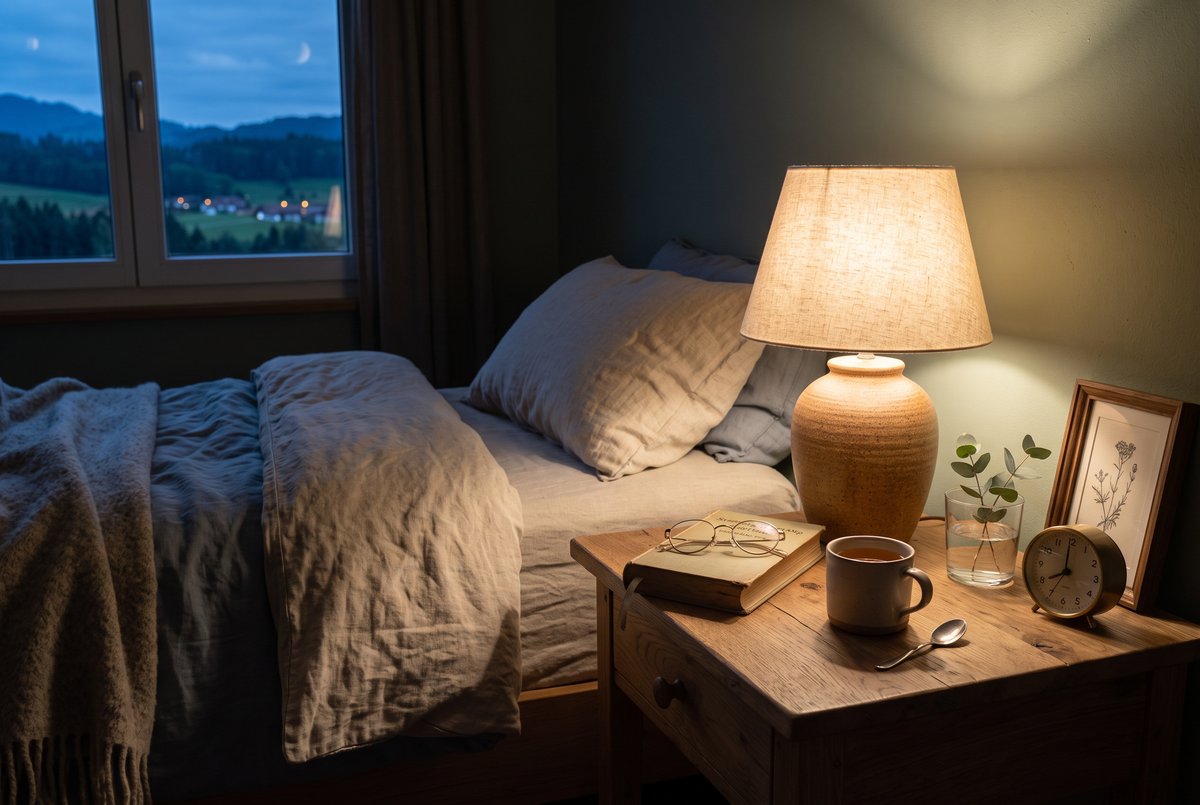
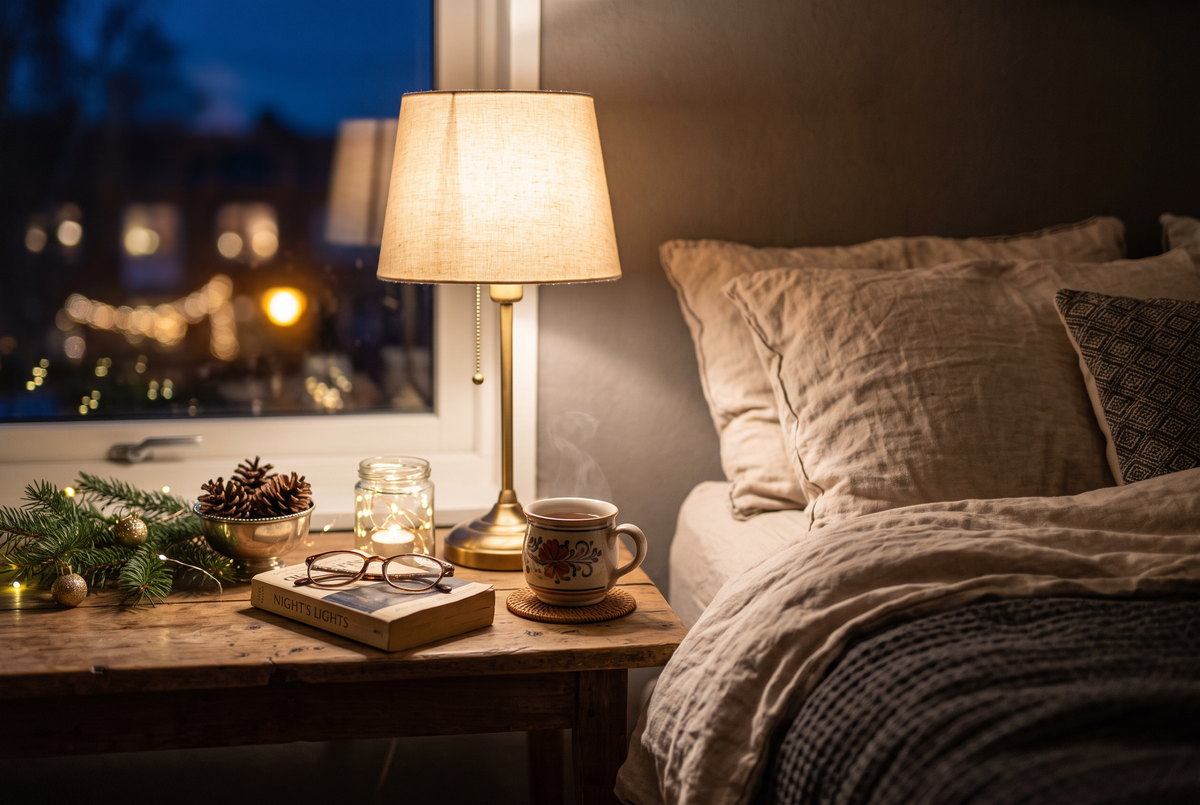
Bedside or wall lamps with directed, warm light (2700 K, dimmable) allow for relaxed reading without disturbing your partner. Separately switchable lights on both sides of the bed are practical – a detail that is especially valuable for couples with different sleep times, as our guide to Mattresses for Couples also shows.
3. Mood and Orientation Lighting
Indirect LED strips behind the headboard, small salt lamps, or fairy lights create a calm atmosphere in the evening. For a nocturnal trip to the toilet, a motion-controlled night light near the floor with very warm, heavily dimmed light is recommended – this way you stay sleepy and still find your way.

Smart Lighting: The Artificial Sunset
Smart light sources fully demonstrate their strength in the bedroom: they can be automatically dimmed and made warmer in the evening according to a schedule – an artificial sunset that gently tunes the body to the night. In the morning, wake-up lights simulate sunrise and wake you more gently than any alarm sound. Such light routines are an effective component of good sleep hygiene and demonstrably help with falling asleep faster.
Common Mistakes in Bedroom Lighting
- A single bright ceiling lamp: Glare when lying down and makes the room uncomfortable.
- Cold white LEDs in bedside lamps: Act like an espresso before falling asleep – pay attention to the Kelvin value.
- Status LEDs and displays: Even small constant lights are disturbing; how to completely darken the room at night is shown in the guide Properly darkening the bedroom.
- Too late bright light in the bathroom: The harsh mirror light right before bedtime makes you awake again – dim it or use warm secondary lighting.
Light is the Scenery – The Stage is the Bed
Even the most beautiful lighting concept only unfolds its effect when the bed also invites you to switch off. Instead of pondering over the outdated, never standardized firmness scale when buying a mattress, you can make it easy: The Ora Ultra automatically adapts to your body and sleeping position with its EvoPoreHRC Premium memory foam – an adaptive mattress for everyone who, in the warm evening light, only wants one thing: to be gently lulled to sleep.
Get a CHF 25 discount
Subscribe to our newsletter and receive a one-time CHF 25 discount. ✓ 200 nights trial sleep ✓ 10 years warranty
Perfectly illuminated, perfectly bedded: The Ora Ultra mattress automatically adapts to your body and sleeping position with EvoPoreHRC Premium memory foam. For a quick comfort upgrade of an existing mattress, the Ora Ultra topper is recommended. Both come with 200 nights of trial sleep and a 10-year warranty.
Frequently Asked Questions about Bedroom Lighting
What is the best light color for the bedroom?
Warm white light with 2200 to 2700 Kelvin – it contains little blue light and hardly disturbs melatonin production. For general lighting, up to 3000 Kelvin is fine; cold white light should be avoided in the evening.
How bright should bedroom lighting be?
Significantly dimmer than in living areas: For general lighting, about 100–150 lumens per square meter are sufficient, and even less in the late evening. Dimmable lights allow for stepless adjustment to the time of day.
Are LED strips behind the bed sleep-friendly?
Yes, if they are warm white (under 2700 K) and dimmable. Indirect light behind the headboard doesn't glare and creates a calm evening atmosphere – turn them off completely before falling asleep.
What does a wake-up light do?
A wake-up light simulates sunrise and wakes you with slowly brightening light instead of an abrupt alarm. Many people find this makes waking up gentler – especially in the dark winter months.
Why should you not turn on bright lights at night?
Even short, bright light impulses at night suppress melatonin and make it harder to fall back asleep. For nocturnal trips, a heavily dimmed, warm orientation light near the floor is suitable.
This article is for general information purposes only and does not constitute medical advice.








Leave a comment
This site is protected by hCaptcha and the hCaptcha Privacy Policy and Terms of Service apply.