
The classic mattress purchase begins with a question no one can reliably answer: "Which firmness level do I need?" You state your weight, are recommended H2 or H3, and hope it fits. What is rarely mentioned, however, is that firmness levels are not standardized. H3 from one manufacturer can be softer than H2 from another, and the same person can receive two different recommendations from two providers. This is precisely where the "one mattress for all" principle comes in: instead of shifting the choice to the customer, the material adapts. This article explains how this works, the arguments in its favor, and its limitations.
The short answer: A mattress for all works because adaptive premium memory foam reacts to pressure and body heat, automatically adapting to the body and sleeping position – with varying degrees of support for the shoulders, waist, and pelvis. This makes firmness level as a selection criterion obsolete. This is not a marketing trick, but the logical consequence of firmness levels not being standardized and weight charts being arbitrary. What remains is the correct size, a suitable pillow, and an intact bed base.
- Firmness ratings like H1 to H5 are not standardized and not comparable between manufacturers.
- Adaptive foam reacts specifically to pressure and heat instead of generally to body weight.
- For couples with different weights, the compromise between two firmness levels is eliminated.
- Without firmness level selection, there are no incorrect orders – only the correct size.
Why firmness levels are the wrong criterion
In Switzerland and the EU, there is no binding standard that defines how firm a mattress designated as H2 or H3 must be. Each manufacturer defines the scale themselves, usually in relation to their own product range. This leads to the well-known problem that a mattress sold as "medium-firm" by provider A feels noticeably different than by provider B. In addition, the validity of weight charts is questionable: two people weighing 80 kilograms can differ so much in height, build, shoulder width, and preferred sleeping position that an identical recommendation for both can hardly be sensible. Furthermore, most people change positions several times during the night, and a rigid firmness level cannot adapt to this. The article on mattress firmness levels describes how the scale historically originated.
How adaptive foam works instead
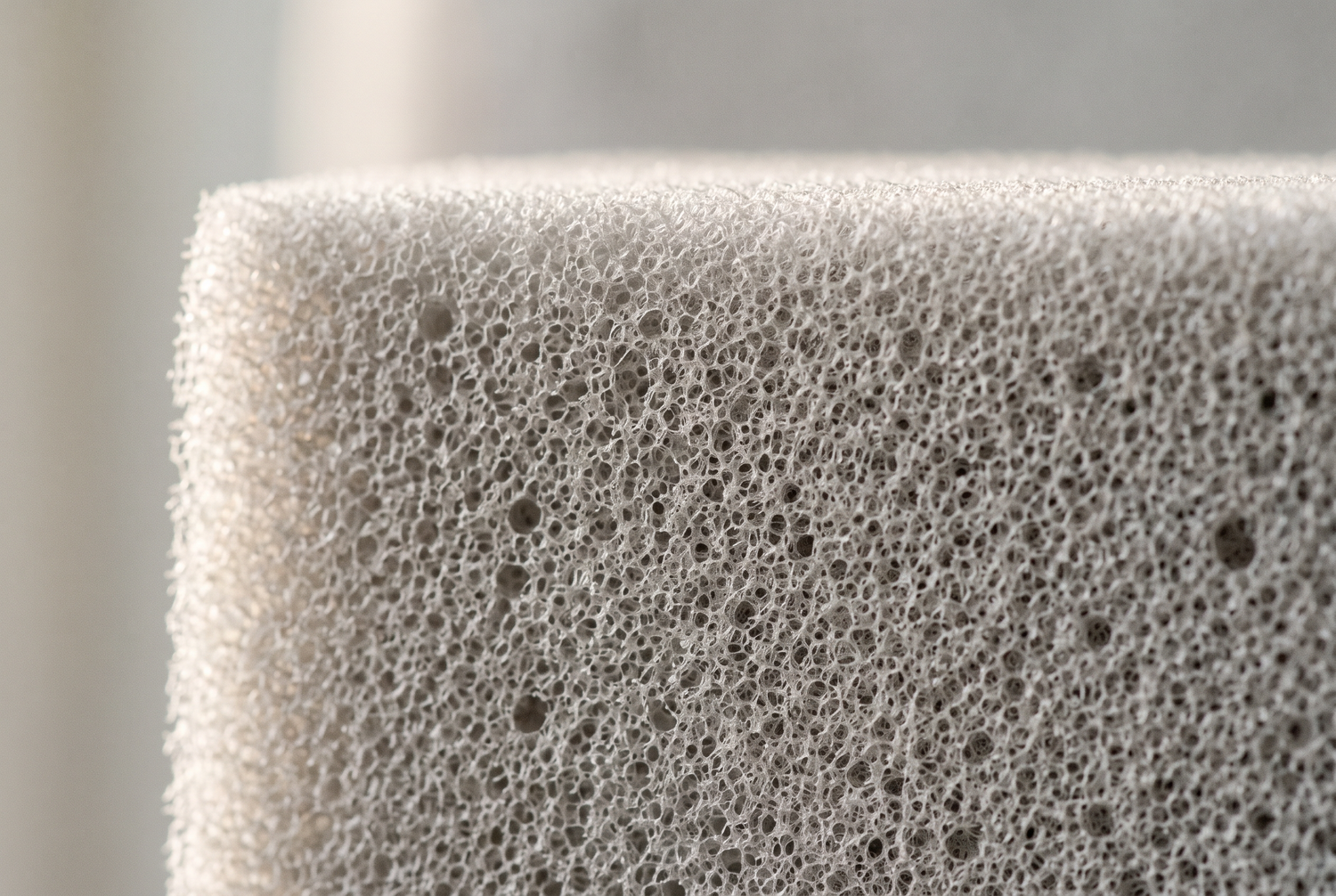
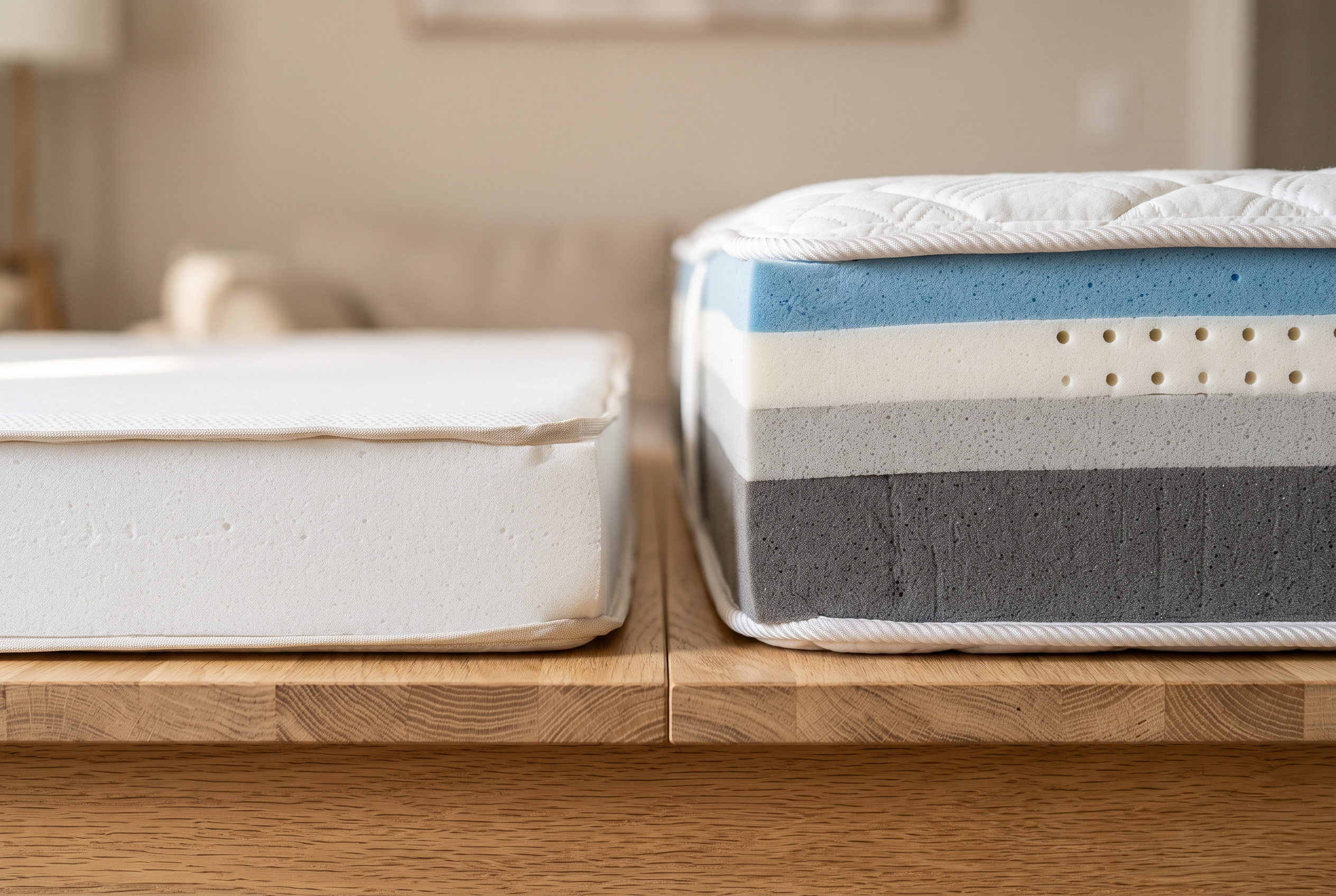
Adaptive premium memory foams are viscoelastic: they react not only to pressure but also to body heat. Where pressure and heat are high – typically at the shoulders and pelvis – the material yields, allowing these areas to sink deeper. Where there is less pressure, such as in the lumbar region, it remains supportive and fills the hollow space. The result is a straight spinal alignment, without you having to make a decision beforehand. If you switch from your side to your back during the night, the pressure profile changes – and the mattress reacts accordingly. A general firmness level cannot provide this specific, situation-dependent adaptation. The article on viscoelastic foam and memory foam explains the material fundamentals.

Two approaches compared
The difference between the classic and adaptive approaches is most evident when situations change.
| Situation | Classic with Firmness Level | Adaptive Principle |
|---|---|---|
| Couple with 25 kg weight difference | Compromise or two mattresses with a gap | One sleeping surface, each side reacts independently |
| Changing position during the night | Fixed resistance remains the same | Pressure profile changes, material follows |
| Weight change over years | Firmness level eventually no longer fits | Adjustment occurs automatically |
| Ordering without trial sleeping | Risk of wrong choice | Only the size needs to be correct |
What the principle means for couples
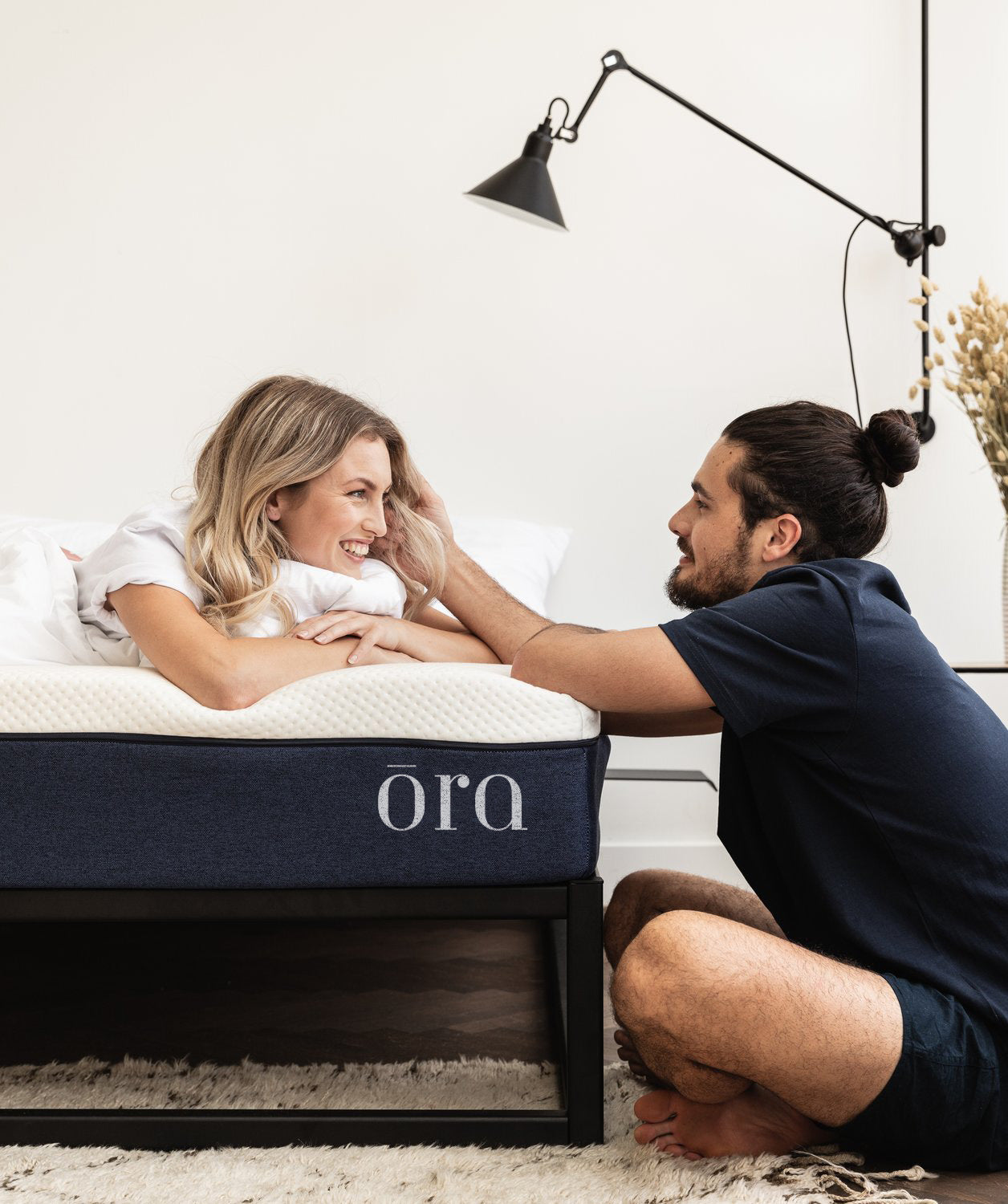
The advantage is most visible in a double bed. Traditionally, couples face the choice between a compromise firmness level, with which neither is completely satisfied, or two separate mattresses with a noticeable "visitor's gap" in the middle. Adaptive foam circumvents the problem because it reacts independently to the respective pressure profile on each side. Point-elastic materials also have the advantage that movements are hardly transmitted – those who get up at night are less likely to wake the other person. This is particularly true during life phases with restless sleep, for example, with a small child in the room. Read more in the article Mattress for Couples.
Where the principle has limits
Honesty is important: one mattress for all does not mean that all other factors become irrelevant. First, the size must be right – the mattress should be at least 20 centimeters longer than you are tall. Second, the pillow also plays a role: a pillow that is too high will kink the cervical spine, no matter how well the mattress works; see our pillow guide for more information. Third, even the best core needs an intact base with sufficiently narrow slat spacing. And fourth: for special medical requirements – such as after spinal operations, for pronounced misalignments, or for decubitus risk – the choice of sleeping surface should be medically or physiotherapeutically supervised. In such cases, the adaptive principle does not replace individual professional advice.

Get CHF 25 Discount
Subscribe to our newsletter and receive a one-time CHF 25 discount. ✓ 200 nights trial sleep ✓ 10-year warranty
Frequent Questions about the "One Mattress for All" Principle
Can a single mattress really fit everyone?
It can, if the mattress is not generally firm or soft, but the material reacts specifically to pressure and body heat. Shoulders and pelvis sink deeper, the lumbar region is supported – regardless of the weight or physique of the sleeping person.
Why are firmness levels not standardized?
Because there is no binding regulation that defines what resistance H1 to H5 must represent. Each manufacturer defines the scale relative to their own product range. Therefore, H3 from one provider cannot be compared with H3 from another.
What about very heavy or very light individuals?
Here too, an adaptive foam reacts via the pressure profile rather than a fixed weight limit. Important alongside this are a sufficient core height and a stable slatted frame. If uncertain, a home trial period helps more than any chart.
Does the principle replace consultation for back problems?
No. For persistent back pain, after spinal surgery, or for pronounced deformities, the choice of sleeping surface should be medically or physiotherapeutically supervised. A mattress is a component, not a substitute for treatment.
What else do I need to pay attention to then?
Above all, the correct size – at least 20 centimeters longer than your height – a suitable pillow, and an intact bed base with narrow slat spacing. These three points influence the lying comfort more than many realize.







Leave a comment
This site is protected by hCaptcha and the hCaptcha Privacy Policy and Terms of Service apply.