

"Which mattress type is right for me?" is one of the most frequently asked questions before buying a mattress – and rightly so, because the construction determines how a mattress feels, how well it supports, and how long it lasts. This guide explains the most important types, their advantages and disadvantages, and what truly matters when making a choice.
The short answer: The most common types are cold foam, memory/comfort foam, innerspring, pocket spring, and latex. For most people, an adaptable foam is the most balanced choice because it conforms precisely to the body's contours and distributes pressure well. Ultimately, it's less about the construction and more about the mattress's adaptability.
Key takeaways
- Foam mattresses excel with high point elasticity and pressure relief.
- Innerspring is well-ventilated but tends to be more surface-elastic.
- Latex is elastic and durable, but heavy.
- More important than the construction type is how well the mattress adapts to your body.
An overview of mattress types
| Type | Strengths | Weaknesses | Point Elasticity |
|---|---|---|---|
| Cold foam | Adaptable, pressure-relieving, lightweight | Ventilation is model-dependent | High |
| Memory/Comfort foam | Precise contour adaptation, very good pressure relief | Reacts to temperature | Very high |
| Innerspring | Very well-ventilated, stable | More surface-elastic, less contour-adaptive | Low |
| Pocket spring | Better zoning than innerspring, well-ventilated | Heavy, bulky | Medium |
| Latex | Very elastic, durable, pressure-relieving | High weight, higher price | High |

Foam mattresses: cold foam and memory foam
Foam mattresses are the most popular type of construction today – and for good reason. They offer high point elasticity: they only yield where weight is applied, precisely conforming to the body's contours. This particularly relieves the shoulders, hips, and lower back. Cold foam is a bit more responsive, while high-quality memory foam adapts even more finely. You can find more details in the article on foam mattresses.
Innerspring and pocket spring
Innerspring mattresses are exceptionally well-ventilated because air circulates through the spring core. However, classic innerspring mattresses tend to be surface-elastic – they yield over a large area instead of allowing individual body zones to sink in specifically. Pocket springs improve this with individually sewn springs, but don't quite achieve the precise contour adaptation of good foam mattresses.
Latex mattresses
Latex is very elastic, point-elastic, and durable. The biggest disadvantages are its heavy weight, which makes turning and transporting difficult, and its often higher price.

What really matters in your choice
While comparing types is helpful, the construction type alone doesn't tell you if a mattress is right for you. These four criteria are much more indicative:
- Adaptability: Does the mattress respond differently in each body zone?
- Resilience: Does it maintain its shape even after months?
- Climate: Does it dissipate heat and moisture?
- Durability: How stable does the support remain over the years? (See When to replace your mattress?)
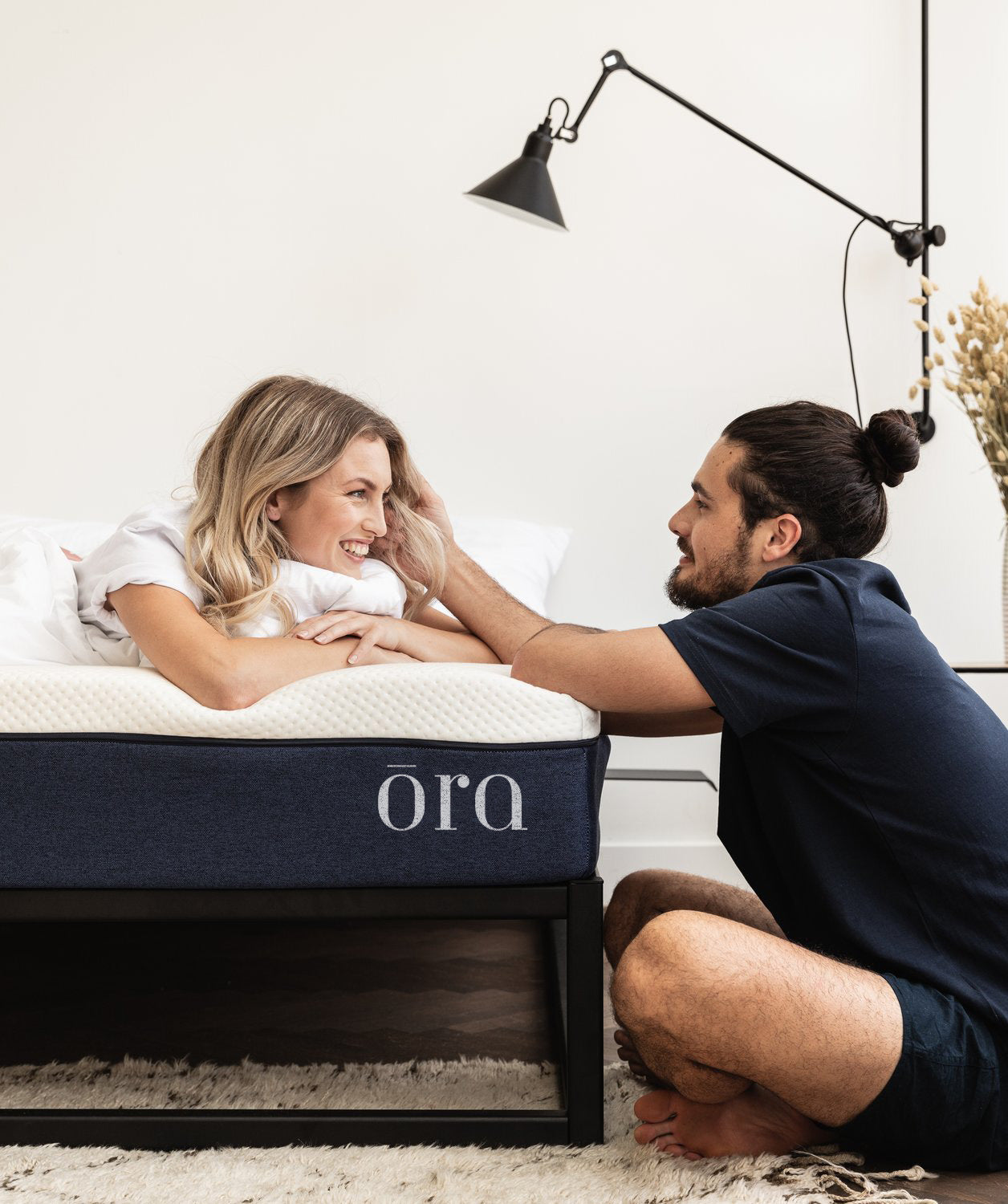
This is precisely where the "one mattress for all" principle comes in: The Ora Ultra mattress uses adaptable EvoPoreHRC Premium memory foam, which automatically adjusts to the body and sleeping position – eliminating the need to ask about the "right" type or firmness level for most sleepers. If you're still undecided between a mattress and a slatted frame, the article box spring bed or mattress offers decision-making assistance.
Get a CHF 25 discount
Subscribe to our newsletter and receive a one-time CHF 25 discount. ✓ 200 nights trial sleep ✓ 10-year warranty
Adaptation beats construction type
Instead of choosing a type, the Ora Ultra mattress allows the mattress to adapt to you. A sustainable option is the tested, refurbished Ora Ultra Second Life.
Frequently asked questions about mattress types
Which mattress type is the best?
For most people, an adaptable foam is the most balanced choice because it precisely conforms to the body's contours and distributes pressure well. More important than the type is how well the mattress adapts to your body.
What is the difference between cold foam and memory foam?
Cold foam is a bit more responsive and springs back faster. Memory foam adapts more precisely to contours and absorbs pressure particularly gently, but reacts more strongly to body heat.
Is innerspring or foam better?
Innerspring is better ventilated, while foam offers higher point elasticity and more precise pressure relief that conforms to the body's contours. For ergonomic adaptation, foam usually has the advantage.
Which mattress lasts the longest?
The resilience of the material is crucial. High-quality foam and latex mattresses maintain their support over many years if properly cared for.









Leave a comment
This site is protected by hCaptcha and the hCaptcha Privacy Policy and Terms of Service apply.