

The moment your head hits the pillow, your thoughts start racing: unfinished tasks, conversations of the day, worries about tomorrow. This is exactly where meditation comes in. It trains your ability to consciously direct your attention – away from brooding and towards the present moment. What was long dismissed as esoteric is now well-researched: mindfulness-based methods can shorten the time it takes to fall asleep and improve subjective sleep quality.
The short answer: Meditation for falling asleep works best with simple, body-focused techniques like the body scan or breath meditation – directly in bed, with the lights off, for 10 to 20 minutes. The goal is not to force yourself to sleep, but to free your mind from brooding. Sleep usually comes on its own. Beginners should ideally start with guided meditations and later switch to independent practice.
- Meditation reduces the activity of the stress system and interrupts nocturnal rumination.
- The body scan is the best beginner technique: attention slowly moves through the entire body.
- Don't force sleep – the relaxed, unintentional state is the actual goal.
- 10 to 20 minutes daily is sufficient; the effect grows with regular practice over weeks.
Why meditation helps you fall asleep
Falling asleep is paradoxical: the more we want it, the harder it becomes. The reason is what is known as hyperarousal – an overactive state of body and mind, where stress hormones block natural drowsiness. Meditation works precisely at this point: it lowers the heart rate, relaxes the muscles, and reduces the activity of the Default Mode Network – the brain network responsible for brooding and self-referential thought. The body can then undisturbed glide into the first of the sleep phases.
The right attitude towards the exercise is important: meditation is not a sleeping trick that works at the push of a button, but a training. Those who practice it without pressure of expectation benefit the most – and often fall asleep exactly when they no longer want to force it.

The best meditation techniques for falling asleep
Body scan: the classic for bed
Lie comfortably on your back and slowly move your attention through your body: from your toes, over your feet, legs, pelvis, back, hands, arms, shoulders and neck, up to your face. Observe each region for a few breaths, without changing anything. The body scan gives the mind a calm task and releases unnoticed tension – many fall asleep before they reach the top.
Breath meditation: observing the breath
Direct your attention to the spot where you feel your breath most clearly – the tip of your nose, your chest, or your abdomen. Observe each breath without trying to control it. If your thoughts wander (this is normal and not a mistake), gently bring your attention back to your breath. If you also want to actively slow your breathing, you can find specific techniques in our article on breathing exercises for better sleep.
Guided meditation: ideal for beginners
A calm voice guides you through the exercise – via app or audio. The advantage: you don't have to remember anything and can fully relax. Pay attention to a sleep timer and a dark display so that your smartphone doesn't become a new source of wakefulness. You can read more about screen light in the article on blue light in the evening.
Visualization: mind cinema in calm images
Imagine a peaceful place in all sensory details – a mountain lake, a forest path, a fireplace. What do you see, hear, smell? The concrete imagination displaces worried thoughts because the brain cannot do both at the same time.
Meditation techniques in comparison
| Technique | Duration | Difficulty | Especially suitable for |
|---|---|---|---|
| Body Scan | 10–30 min. | Easy | Physical tension, restlessness |
| Breath Meditation | 5–20 min. | Medium | Racing thoughts, stress |
| Guided Meditation | 10–45 min. | Very easy | Beginners, concentration problems |
| Visualization | 5–15 min. | Medium | Worries and brooding |
Step by step: Your first sleep meditation
1. Prepare your bedroom: darkened, ventilated, pleasantly cool – details can be found in the guide to the ideal sleep temperature. 2. Lie down comfortably and close your eyes. 3. Take three deep breaths with long exhalations. 4. Start the body scan at your toes and take your time. 5. If thoughts wander, register them, let go, and continue. 6. Fall asleep whenever it happens. Embedded in a fixed evening routine, meditation unfolds its strongest effect.

The right base for deep relaxation
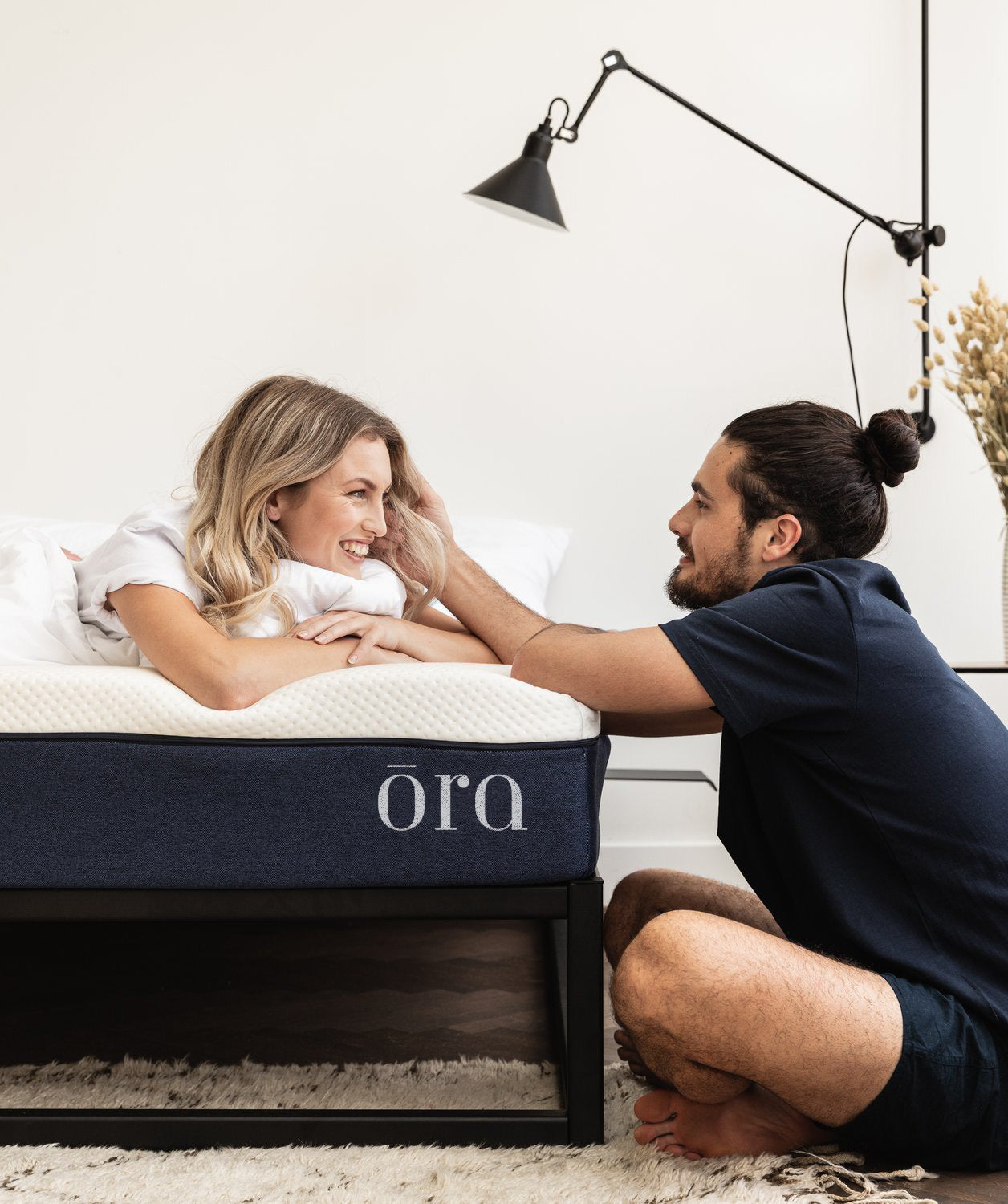
A body scan mercilessly reveals where the body is not properly supported: pressure points on the shoulder and hip, a hollow back, a tense neck. A mattress that gives way precisely and supports simultaneously is therefore the silent foundation of every meditation practice in bed. The classic firmness level thinking is of little help here – firmness levels are not standardized and say little about how a mattress actually supports your body. The Ora Ultra takes a different approach: its EvoPoreHRC premium memory foam automatically adapts to your body and sleeping position – an adaptive mattress for everyone. You can read more about the outdated firmness level concept here.
Get CHF 25 discount
Subscribe to our newsletter and receive a one-time CHF 25 discount. ✓ 200 nights trial sleep ✓ 10 years warranty
Meditate and sleep on the right foundation
The Ora Ultra mattress relieves pressure points and automatically adapts to any sleeping position – without guesswork on firmness levels, for all body types. The Ora Ultra Topper is suitable as an addition to an existing mattress, and the Ora Ultra Second Life offers an affordable entry point.
✓ 200 nights trial sleep ✓ 10 years warranty
Frequently asked questions about meditation for falling asleep
How long should a sleep meditation last?
For beginners, 10 to 15 minutes is ideal; experienced meditators often meditate for 20 to 30 minutes. When meditating in bed, the rule is: if you fall asleep beforehand, the exercise has served its purpose – there's no need to persevere to the end.
Is it bad if I fall asleep during meditation?
No, when meditating in bed in the evening, it's actually desirable. Only if you use meditation as a mindfulness training for the day should you practice it sitting and at an alert time of day to avoid dozing off.
How often do I have to meditate for it to work?
Many feel an immediate relaxing effect the very first time. Stable improvements in sleep onset time usually show up in studies after four to eight weeks of daily practice. Short and regular is better than long and infrequent.
Meditation or breathing exercises – which is better for falling asleep?
Both work through similar mechanisms and can be wonderfully combined: first a few minutes of consciously slow breathing, then transition into a body scan. Breathing exercises work faster; meditation trains the long-term management of ruminating thoughts.
Do I need an app for meditation?
No. Apps with guided meditations make it easier to get started, but they are not a must. The body scan works completely without tools. If you use an app, activate night mode and place the device out of reach.
This article is for general information purposes only and does not replace medical advice.







Leave a comment
This site is protected by hCaptcha and the hCaptcha Privacy Policy and Terms of Service apply.