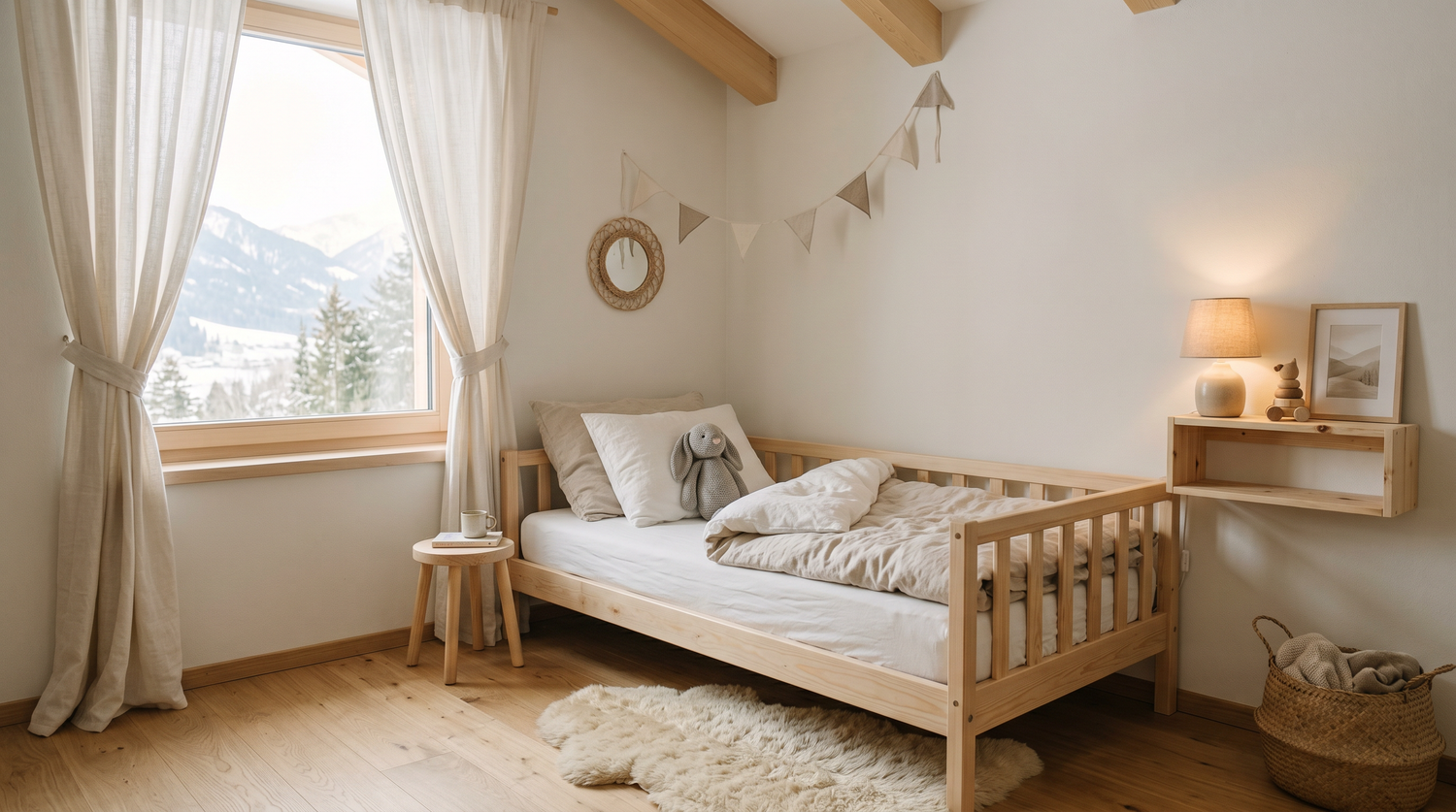
Children spend significantly more time in bed than adults – newborns up to 17 hours a day, schoolchildren still 9 to 11 hours. The mattress is therefore the most important piece of furniture in a child's room, yet it is often bought based on price or appearance. However, a growing body places very specific demands on its sleeping surface: the spine only develops its double S-shape over years, body weight constantly changes, and issues like harmful substances, hygiene, and safety are more critical for children than for adults.
The short answer: A good children's mattress is tested for harmful substances (e.g., OEKO-TEX Standard 100, Class 1), breathable, equipped with a washable cover, and supports the child's light body without it sinking in. For babies and toddlers, the rule is: rather firm and flat. From school age, and certainly when transitioning to a 90x200 bed, a high-quality adaptive mattress is the best choice – it automatically adapts to the growing body and thus grows with the child for years, without parents having to guess a firmness level.
- Babies and toddlers need a firm, flat mattress with a sturdy edge – soft sinking is a safety risk at this age.
- Absence of harmful substances is mandatory: Look for certifications like OEKO-TEX Standard 100 (Product Class 1) and allow the mattress to air out after unpacking.
- The classic firmness level is not standardized and particularly misleading for children – it's crucial that the mattress supports the light body precisely.
- When transitioning to a large bed (90x200), a durable adaptive mattress that grows with the child is worthwhile – from school-age to teenage years.
Why children need a different mattress than adults
A child's back is a construction site in the best sense: the typical S-curve of the spine only fully develops during childhood. A mattress that gives too much can disrupt this development; a surface that doesn't react at all puts uncomfortable pressure on the shoulders and hips. Added to this is the low body weight: a child weighing 20 or 30 kilograms hardly activates a classic hard mattress – they lie on it instead of in it. We explain why this is problematic in detail in our article on mattresses for light individuals.
Children also sweat more in relation to their body size and frequently change positions at night. Breathable materials and a good sleep climate are therefore not an optional extra, but a basic requirement – more on this in our guide to the ideal sleep temperature.
The most important buying criteria
Support instead of firmness level
Many parents first ask about the correct firmness level. The problem: firmness levels are not standardized in Switzerland and the EU – what one manufacturer calls H2 could be H3 for the next. For children, this classification is doubly unsuitable because it is based on adult weights. Instead, the decisive factor is point-elastic support: the mattress should yield where the body needs it and remain stable everywhere else. Modern adaptive foams do exactly this automatically – regardless of whether the child weighs 25 or 55 kilograms. Our article Viscoelastic foam and memory foam explained provides an overview of the materials.
Materials and harmful substances
Children are more sensitive to volatile organic compounds and emissions. Therefore, only buy mattresses with recognized seals of approval – the benchmark is OEKO-TEX Standard 100 in Product Class 1, which applies specifically to baby articles. A new foam core may initially have a slight odor, but should be odorless after a few days of airing out.
Safety for the little ones
Different rules apply to babies: the mattress must be firm so that the face cannot sink in, it should lie flush in the bed (gap no more than two fingers wide) and not have soft overlays. A firm edge prevents the foot from getting trapped between the mattress and the bed rails when the baby first stands up.

Sleep climate and hygiene
A removable cover, washable at 60 degrees, is indispensable for children – nocturnal accidents are part of it. Open-pored foams wick away moisture and prevent mites and mold. Our articles on cleaning mattresses and mite-resistant mattresses show you how to keep your mattress clean.
Children's mattresses by age: an overview
| Age | Typical size | What to look for |
|---|---|---|
| 0–3 years | 60x120 / 70x140 cm | Firm, flat (approx. 8–10 cm), firm edge, OEKO-TEX Class 1, washable cover |
| 3–6 years | 70x140 / 90x200 cm | Still rather firm, breathable, robust against trampoline antics |
| 6–12 years | 90x200 cm | Point-elastic, adaptive support; mattress should grow with the child |
| From 12 years | 90x200 / 120x200 cm | Full-fledged quality mattress – the body now has adult demands |
Read more about suitable dimensions in the guide Mattress Sizes and in the detailed article on the 90x200 Mattress.
When does a "proper" mattress become worthwhile?
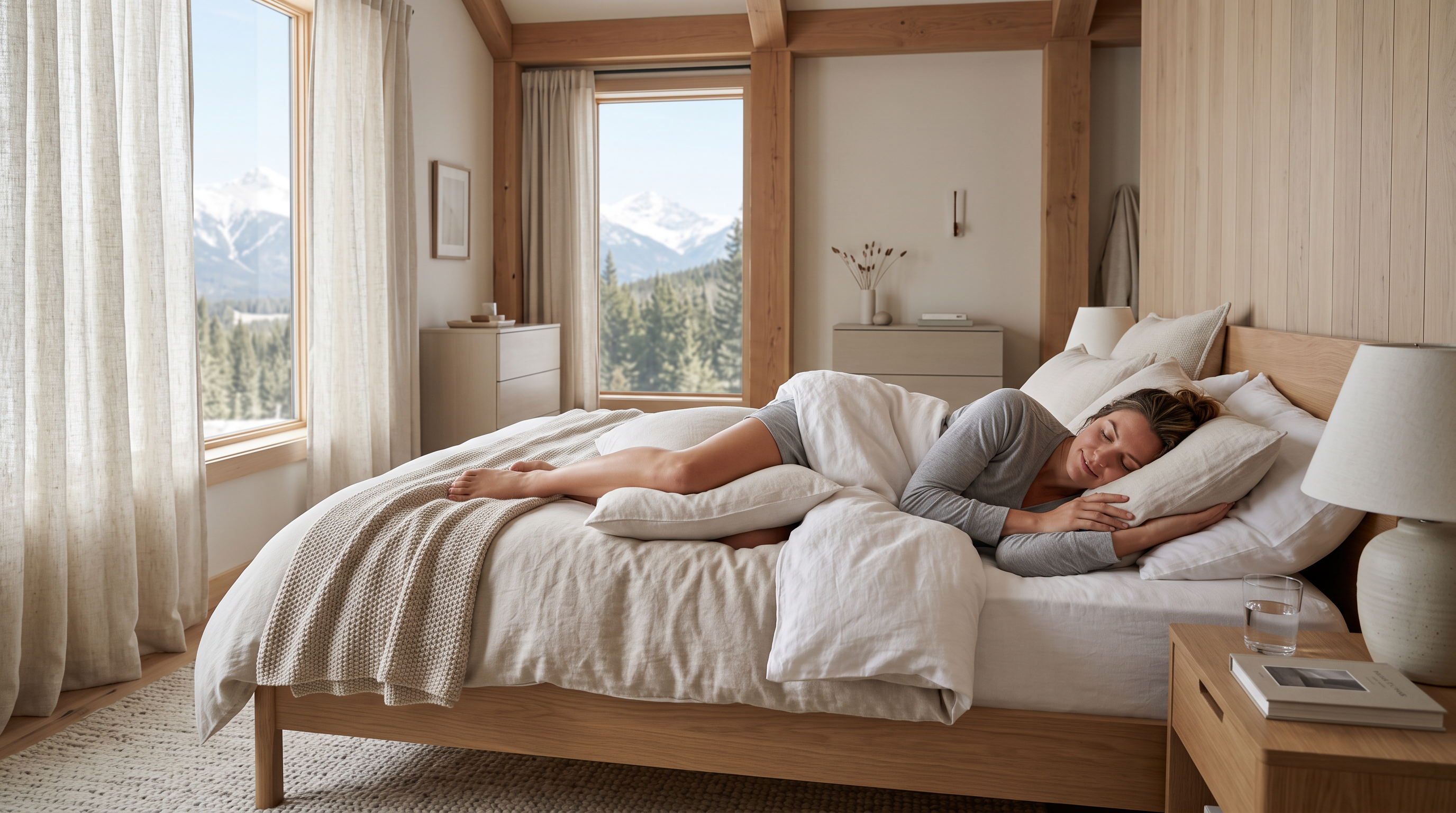
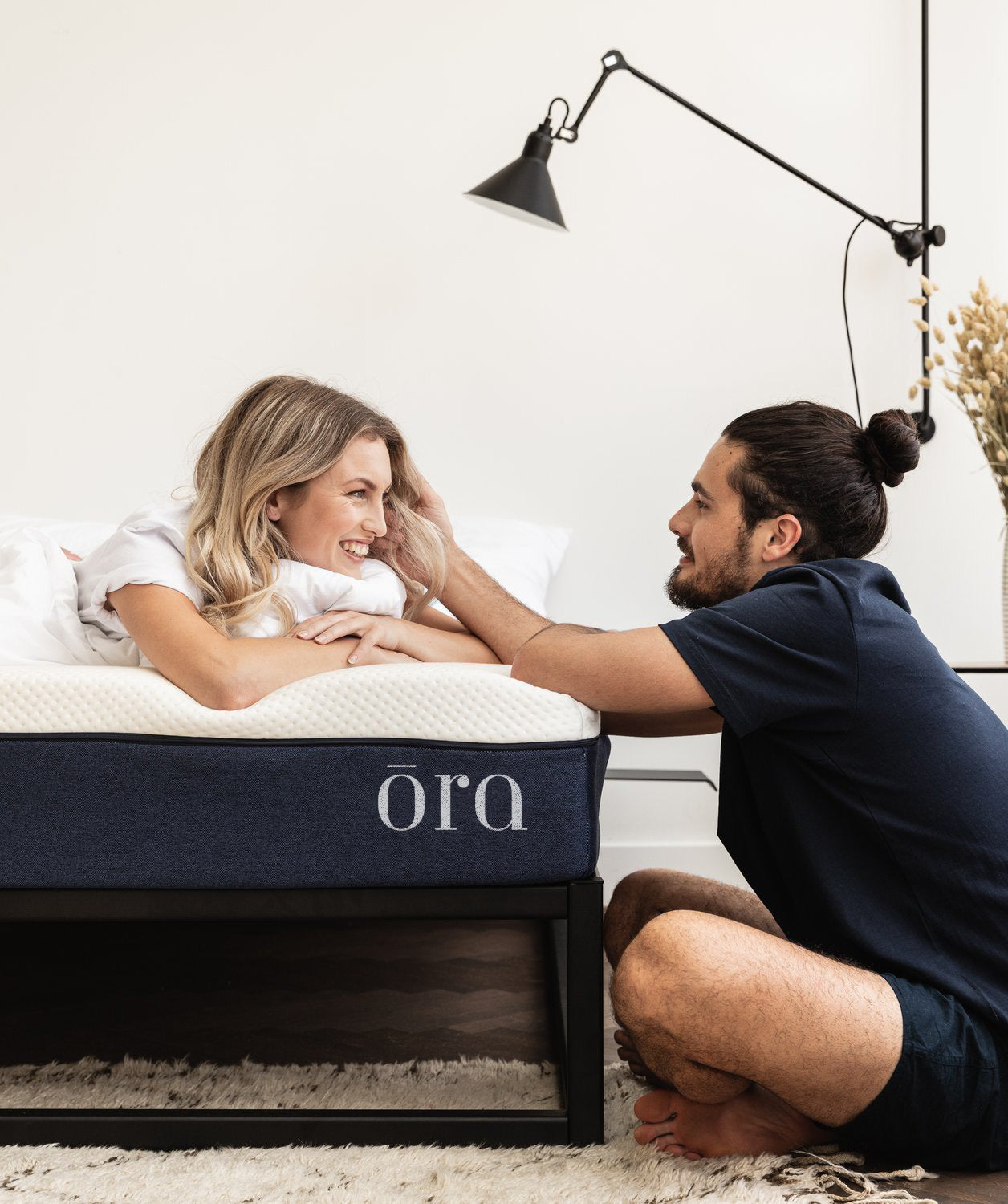
At the latest when moving to a larger bed, parents face the question: another cheap children's mattress – or a high-quality mattress that will last until adulthood? If you do the math, the answer is usually clear: A child often uses a 90x200 mattress for ten years or more. This is where an adaptive mattress truly shines: the EvoPoreHRC premium memory foam of the Ora Ultra automatically adapts to body weight and sleeping position – it supports the 25-kilo school child just as reliably as it later supports the 70-kilo teenager. The question of firmness level, which is not standardized anyway, thus no longer arises.

Secure a CHF 25 discount
Subscribe to our newsletter and receive a one-time CHF 25 discount. ✓ 200 nights trial sleep ✓ 10-year warranty
The mattress that grows with you: The Ora Ultra mattress automatically adapts to every body thanks to adaptive EvoPoreHRC foam – from school children to adults, without needing to guess firmness. Budget-conscious families will find a tested, sustainable alternative for children's or guest rooms with the Ora Ultra Second Life.
How long does a child's mattress last?
Baby mattresses should ideally be bought new for each child for hygienic reasons. Mattresses for school children, if of good quality, last 8 to 10 years – provided they are regularly aired and cared for. Visible hollows, sagging spots, or persistent odors are clear signals for a replacement. Our article How often should you change your mattress? provides guidance, and practical tips are available in the care guide.
Frequently asked questions about children's mattresses
How firm does a child's mattress need to be?
For babies and toddlers: rather firm, so the face cannot sink in. From school age, firmness is not the deciding factor, but rather point-elastic support. Since firmness levels are not standardized, an adaptive mattress that automatically adjusts to weight and sleeping position is the most reliable choice.
When does my child need a 90x200 mattress?
Usually between 4 and 6 years of age, when transitioning from a toddler bed to a youth bed. From this point on, a high-quality mattress that grows with the child into their teenage years is worthwhile – over the lifespan of the mattress, this is more economical than several cheap mattresses.
Are memory foam mattresses suitable for children?
Yes, from school age, modern, breathable memory foams are well suited: they support the light body precisely without allowing it to sink in. They are not recommended for babies and toddlers under three years old – here, a firm, flat surface is needed.
How do I recognize a pollutant-free child's mattress?
Most reliably by independent seals of approval such as OEKO-TEX Standard 100, Product Class 1. Additionally, let a new mattress air out for 24 to 48 hours before the first night and ensure it has a washable cover.
How often should a child's mattress be replaced?
Baby mattresses should be new for each child, then depending on quality, every 8 to 10 years – or sooner if hollows, stains, or odors appear. A growth spurt can also necessitate a change if the bed simply becomes too short.
This article is for general information and does not replace medical advice.





Leave a comment
This site is protected by hCaptcha and the hCaptcha Privacy Policy and Terms of Service apply.