Anyone looking for a new mattress will encounter an enormous price range: from a discounter model for under 200 Swiss francs to a luxury bed for several thousand francs. This inevitably raises the question: How much do you really need to spend to sleep well and healthily? And at what point are you just paying for the brand name?
The short answer: A good mattress in Switzerland costs around 600 to 1500 Swiss francs, depending on its size. In this price range, you get high-quality foam cores, tested materials, and a lifespan of 8 to 10 years. However, the price alone is not the decisive factor; it's whether the mattress adapts to your body – calculated over its lifespan, restful sleep often costs less than 30 centimes per night.
- Good quality starts at around 600 Swiss francs – above this, the added value is often smaller than the surcharge.
- The price is determined by material, foam density, production, and distribution costs – not every expensive model is better made.
- Calculate in cost per night: A mattress for 1000 Swiss francs costs only about 27 centimes per night over 10 years.
- More important than the price: The mattress should automatically adapt to your body and sleeping position, rather than assigning you a rigid firmness level.
Price ranges at a glance
To help you classify the offers on the market, it's worth looking at the typical price ranges for mattresses in sizes 90x200 cm to 160x200 cm. The transitions are fluid, but the patterns are clearly recognizable:
| Price Range | Typical Quality | Lifespan | Cost per Night* |
|---|---|---|---|
| Under 300 CHF | Simple foams with low density, often quick indentation formation | 3–5 years | approx. 0.16–0.27 CHF |
| 300–600 CHF | Solid mid-range, sometimes good cores, but often thin comfort layers | 5–8 years | approx. 0.14–0.25 CHF |
| 600–1500 CHF | High-quality, adaptive foams with high density, very good pressure relief | 8–10+ years | approx. 0.16–0.41 CHF |
| Over 1500 CHF | Luxury segment; extra cost often for brand, design, and retail rather than sleeping comfort | 8–10+ years | from approx. 0.41 CHF |
*Calculated based on typical lifespan with daily use.
The table shows: Buying very cheaply rarely saves money. Mattresses under 300 francs often need to be replaced after just a few years – and usually offer significantly less sleeping comfort and support during that time. You can read about how to tell if your mattress is sagging in our guide How often should you change your mattress?
What determines the price of a mattress?
1. Material and density
The most important cost factor is the foam core. The decisive factor is the so-called density (RG): it indicates how many kilograms of raw material per cubic meter of foam were used. A high-quality core with RG 50 simply contains more material than a cheap foam with RG 25 – and therefore retains its shape for many years. Modern premium memory foams like EvoPoreHRC also react elastically to pressure and body heat and thus automatically adapt to every sleeping position. You can find more about the differences in materials in our mattress type comparison and in the article on foam mattresses.

2. Cover and workmanship
A good cover is removable, washable at 60 degrees, and moisture-regulating. Here too, the wheat is separated from the chaff: cheap covers are thin, static, and often cannot be removed at all. Our article on mattress care shows how to keep the cover and mattress properly clean.
3. Sales and marketing
A large part of the price has little to do with the mattress itself: store rents, sales staff, intermediaries, and advertising budgets are included in the final price. This is precisely why online providers with direct sales can be significantly cheaper with the same or better material quality – more on this in the guide Buying a mattress online and trying it out.
Why expensive doesn't automatically mean better
Many expensive mattresses justify their price with a large selection of firmness levels – H2, H3, H4, and more. What sounds like precision is, in reality, an outdated concept: firmness levels are not standardized, each manufacturer defines them differently, and anyone who falls between two levels almost always chooses incorrectly. We explain why this is the case in detail in the article Firmness levels for mattresses.
The more modern approach: an adaptive mattress that automatically adapts to body shape, weight, and sleeping position thanks to pressure-relieving premium foam. Heavier zones like the shoulders and hips sink in exactly as far as the spine needs – without a firmness level lottery. This not only makes the choice easier but also more accurate: Side sleepers benefit just as much as back and stomach sleepers or couples with different needs.
Think in nights, not in francs
We spend about a third of our lives in bed. A mattress for 1000 francs that lasts 10 years costs about 27 centimes per night – less than an espresso a week. Conversely, on a 250-franc mattress that sags after four years, you sleep hardly cheaper, but significantly worse. Good sleep directly affects concentration, mood, and health – hardly any investment has a better price-performance ratio. Tips for restful nights can be found in our article on sleep hygiene.

Get CHF 25 discount
Subscribe to the newsletter and receive a one-time CHF 25 discount. ✓ 200 nights trial sleep ✓ 10 years warranty
How to save money on a mattress purchase – without compromising on quality
There are three clever ways to save your budget: First, direct online purchase, which eliminates intermediaries and store costs. Second, certified second-life models – professionally refurbished returns from trial sleeps, which are technically flawless but cost significantly less. And third: If your existing mattress is still intact but has lost comfort, a high-quality topper can significantly improve sleeping quality for a fraction of the new price.
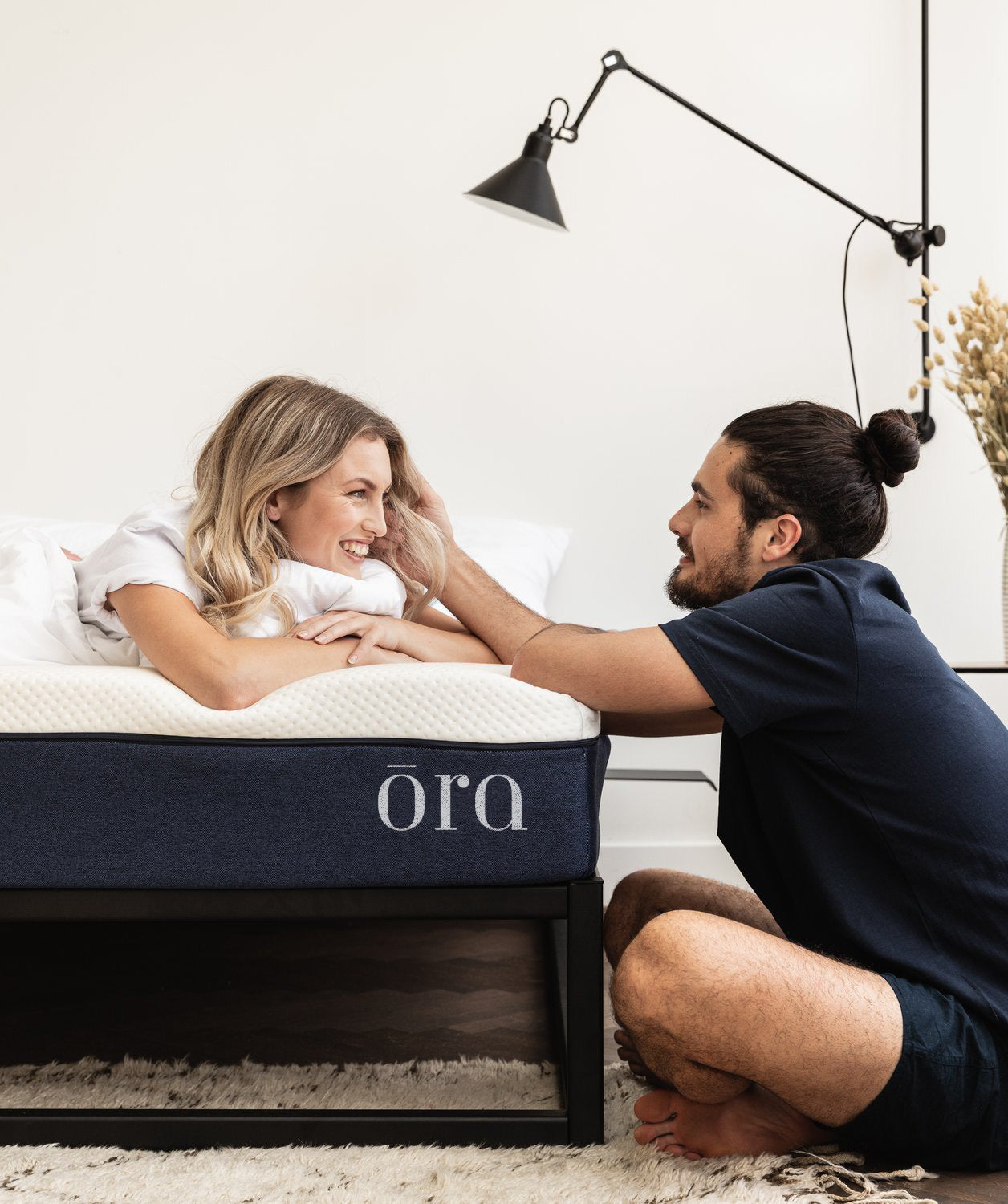
One mattress instead of a firmness level lottery: The Ora Ultra mattress automatically adapts to your body and sleeping position with its EvoPoreHRC premium memory foam – one mattress for all, without firmness levels. If you want to save money, opt for the professionally refurbished Ora Ultra Second Life; for a quick comfort refresh, there's the Ora Ultra Topper. With 200 nights of trial sleep and a 10-year warranty, you buy without risk.
Frequent questions about mattress prices
What does a good mattress cost in Switzerland?
A good mattress in Switzerland costs around 600 to 1500 Swiss francs, depending on its size. In this price range, you get high-quality adaptive foam cores with high density, washable covers, and a lifespan of 8 to 10 years.
Are expensive mattresses really better?
Only to a limited extent. Up to about 1500 Swiss francs, quality usually increases with price; beyond that, you often primarily pay for the brand, design, and distribution costs. Density, point elasticity, and workmanship are decisive – not the price alone.
How much should you spend on a mattress at a minimum?
Below 300 Swiss francs, you can expect simple foams that quickly form indentations and need to be replaced after 3 to 5 years. Calculated over its lifespan, a high-quality mattress from around 600 Swiss francs is usually more cost-effective.
How long does a good mattress last?
A high-quality mattress lasts 8 to 10 years with daily use, sometimes longer. A high foam core density and good care significantly extend its lifespan.
Why are online mattresses cheaper than in specialty stores?
Online providers with direct sales save on store rents, sales staff, and intermediaries. These costs account for a significant part of the final price in stationary retail – with the same or better material quality.





Leave a comment
This site is protected by hCaptcha and the hCaptcha Privacy Policy and Terms of Service apply.