

Around two-thirds of all people primarily sleep on their side – and many of them still regularly wake up with tense shoulders, numb arms, or a twisted lower back. A side sleeper pillow or body pillow can make a surprisingly big difference: It stabilizes the side sleeping position, relieves joints, and prevents the spine from twisting during the night.
The short answer: A side sleeper pillow is a long body pillow (usually 120–160 cm) that you hug in a side-lying position and place between your knees. It keeps your shoulders, pelvis, and spine aligned, prevents your upper body from rotating inwards, and relieves pressure on your hips and knees. Side sleepers with shoulder or hip problems, pregnant women – and anyone who sleeps restlessly at night – benefit particularly. However, it only unfolds its full effect on a mattress that allows the shoulders and pelvis to sink in correctly.
- Side sleeper pillows stabilize the side sleeping position and keep the spine in a straight line.
- A pillow between the knees significantly relieves the hips, pelvis, and lower back.
- For pregnant women, body pillows are often the easiest aid for comfortable side sleeping.
- Pillows do not replace a suitable mattress – both together create an ergonomic side sleeping position.
What does a side sleeper pillow really do?
In the side-lying position, the shoulders and pelvis must sink deep enough for the spine to remain straight. At the same time, the body tends to tilt forward: The upper arm seeks support, the upper leg slides forward, twisting the pelvis in the process. This is precisely where the side sleeper pillow comes in:
- It stops rotation: The hugged pillow supports the upper arm, the pelvis remains neutral – the lower back is no longer twisted. This provides particular relief for back-friendly sleeping positions.
- It relieves the hip: If the upper knee rests on the pillow instead of on the lower leg, the pelvis and thigh remain parallel – a noticeable relief for hip pain.
- It calms sleep: The "hugging position" provides support and security – many restless sleepers measurably turn less with a body pillow.
- It indirectly relieves the lower shoulder: Those who lie stably roll less onto the edge of their shoulder – relevant for shoulder pain in the side-lying position.

The most important shapes in comparison
| Shape | Length/Format | Strengths | Suitable for |
|---|---|---|---|
| Straight body pillow (I-shape) | 120–160 cm | Versatile, space-saving, affordable | Beginners, most side sleepers |
| 7-shape / J-shape | approx. 140–150 cm | Additional head support, integrated neck support | Side sleepers who want to combine head and body pillows |
| U-shape | approx. 140–170 cm | Supports both sides, no need to turn the pillow when turning over | Pregnant women, very restless sleepers |
| Half-moon/kidney shape | approx. 40–70 cm | Targeted support between the knees | Hip and knee relief without a large pillow |
| Nursing pillow | approx. 170–190 cm | Flexible, can still be used after childbirth | Pregnancy and breastfeeding |
Please note: A side sleeper pillow does not necessarily replace your head pillow. With straight body pillows, you still need a suitable head pillow that fills the gap between your shoulder and head – our head pillow guide shows you how to find one. Even with neck pain, head support remains the decisive factor.
Body pillows during pregnancy
From the second trimester, side sleeping becomes the recommended sleeping position for pregnant women – at the same time, comfortable lying becomes increasingly difficult with a growing belly. A body pillow supports the belly from below, relieves the lower back, and keeps the upper leg in position. U-shaped pillows have the advantage that no repositioning of the pillow is necessary when changing sides at night. You can find more tips in the article Sleeping during pregnancy.
What to look for when buying
Filling
Microfiber fillings are soft, light, and usually washable. Foam flakes or sticks provide firmer support and retain their shape longer. EPS microbeads (like in nursing pillows) are very malleable but audible. Natural fillings like spelt husks provide strong support but are heavy and more difficult to care for.
Cover and Hygiene
A removable cover, washable at 60 °C, is a must – body pillows have a lot of skin contact. Breathable cotton or Tencel covers prevent heat buildup on the body.
Length and Firmness
The pillow should reach from the shoulder to at least below the knee – for most adults, 140–160 cm is ideal. Pillows that are too soft collapse under the knee and lose their supportive effect.
The pillow is half – the mattress is the rest
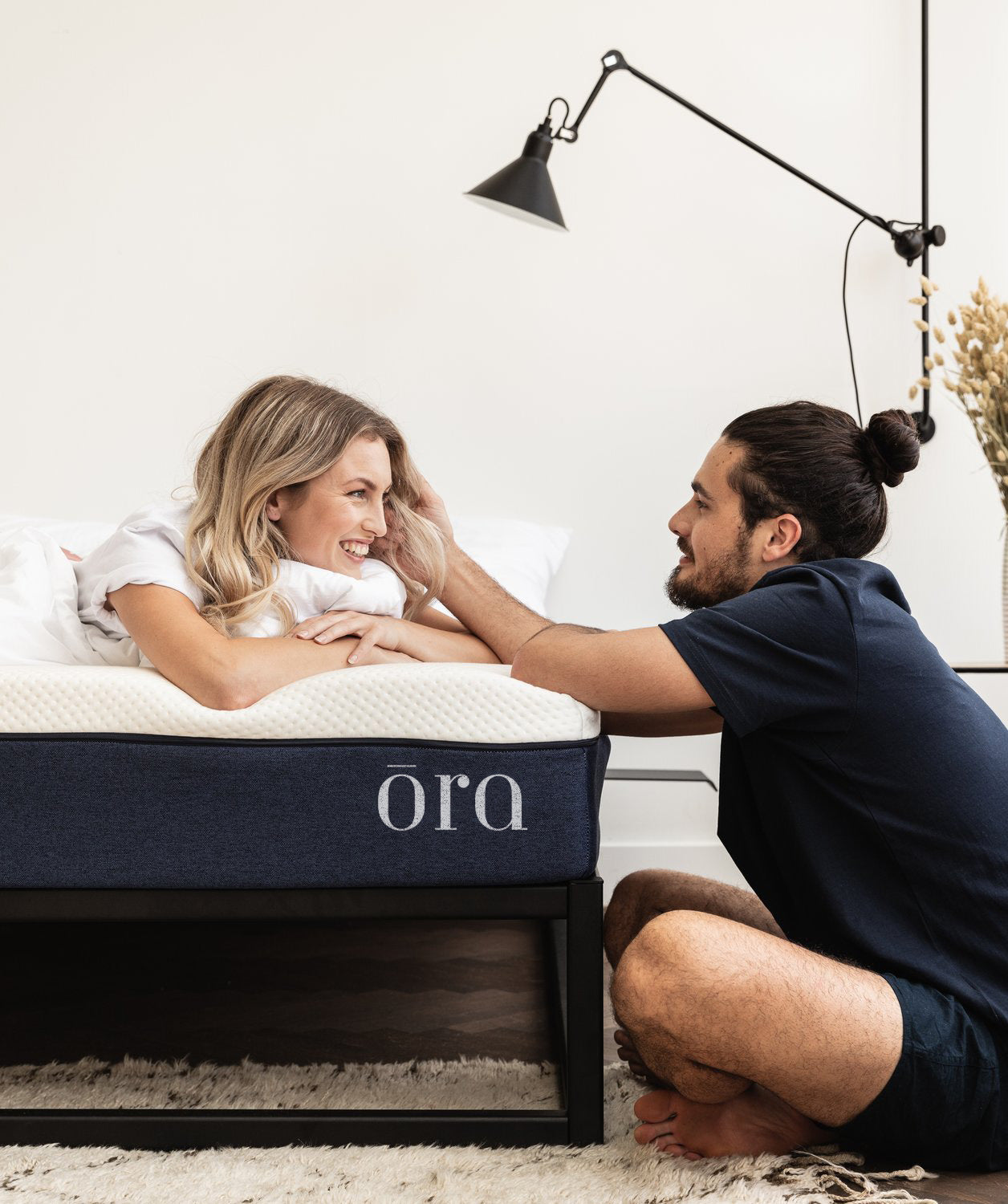
As effective as a side sleeper pillow is, it cannot compensate for an unsuitable sleeping surface. If the shoulder does not sink deep enough, the cervical spine remains bent – no matter how well the body pillow supports. Classic mattresses try to solve this with firmness levels, but H2 to H4 are not standardized and often lead side sleepers to the wrong choice. The Ora mattress takes a more modern approach: Its EvoPoreHRC premium memory foam automatically adapts to the body and sleeping position – the shoulder sinks in precisely, the pelvis remains supported, without you having to decide on a firmness level. What else the side position needs can be found in the guide Mattress for side sleepers.

Secure CHF 25 discount
Subscribe to newsletter and receive a one-time CHF 25 discount. ✓ 200 nights trial sleep ✓ 10 years warranty
The ideal base for side sleepers: the Ora Ultra Mattress
The Ora Ultra Mattress allows shoulders and pelvis to sink in just right thanks to adaptive EvoPoreHRC premium memory foam – automatically adjusted to your body and sleeping position. Is your mattress still good but too firm for side sleeping? The Ora Ultra Topper provides a remedy. Both come with 200 nights of trial sleeping and 10 years warranty.
Frequently Asked Questions about Side Sleeper and Body Pillows
Does a side sleeper pillow replace a head pillow?
For straight body pillows, no – you still need a head pillow that fills the gap between your shoulder and head. For 7- or U-shaped pillows, the upper curve can replace the head pillow, provided the height matches your shoulder width.
How do you properly sleep with a side sleeper pillow?
Lie on your side, hug the pillow with your upper arm, and place your upper knee on it. Your shoulder, pelvis, and spine should form a straight line; the pillow should ideally extend from your chest to below your knee.
What length should a side sleeper pillow have?
For most adults, 140 to 160 cm is ideal – long enough to support both arm and knee simultaneously. Smaller individuals can manage with 120 cm, and those who only want to relieve their knees can use a compact half-moon pillow.
Are body pillows suitable for pregnant women?
Yes, they are among the most popular sleeping aids during pregnancy. They support the belly and back in the recommended side position and can often be reused as nursing pillows after childbirth.
Does a side sleeper pillow help with back or hip pain?
It can provide significant relief: A pillow between the knees keeps the pelvis neutral and reduces twisting of the lower back. For persistent discomfort, you should also check your mattress and head pillow and seek medical advice.
This article is for general information and does not replace medical advice.








Leave a comment
This site is protected by hCaptcha and the hCaptcha Privacy Policy and Terms of Service apply.