
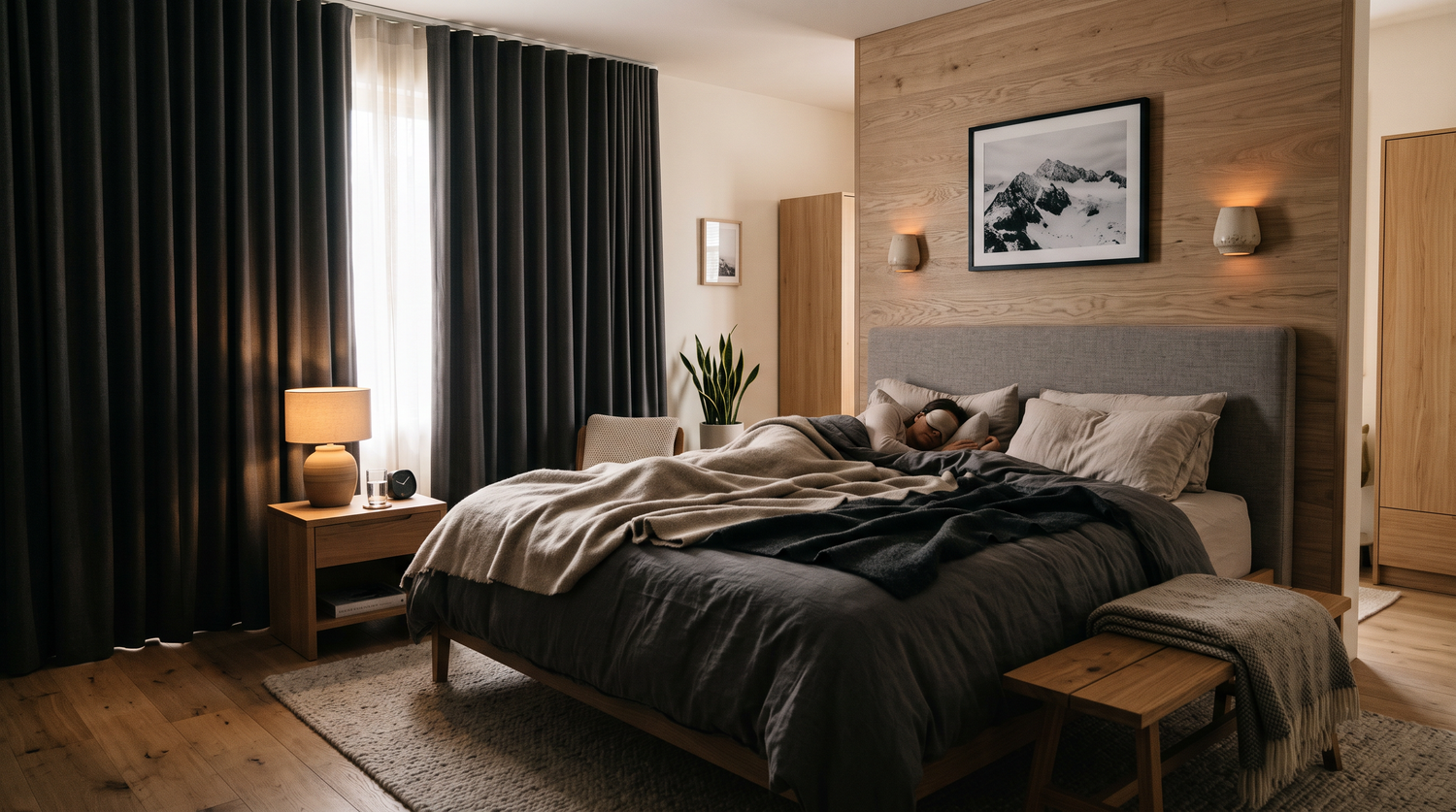
Those who work at night while the world sleeps face a fundamental conflict: The body wants to sleep when it's on duty – and be awake when it's finally time to sleep. Shift work puts the internal clock to the test. But with the right strategy, restful sleep can be found even with changing shifts.
The short answer: With shift work, the natural sleep-wake rhythm regularly gets out of sync because working hours and the internal rhythm do not match. The most important things are consistent darkness during daytime sleep, targeted use of light during waking phases, fixed routines, and a quiet, cool sleeping environment.
- The biggest enemy of daytime sleep is light – complete darkness is crucial.
- Light during the night shift keeps you awake, darkness on the way home promotes falling asleep.
- Fixed sleep rituals and mealtimes stabilize the rhythm even with shift changes.
- A quiet, cool, and comfortable sleeping environment is particularly valuable for shift workers.
Why shift work puts such a strain on sleep
Your internal clock is designed to make you tired at night and awake during the day. With night or rotating shifts, you are working against this program. The body releases melatonin at night and slows down, even though you need to be productive. During the day, when you want to sleep, daylight signals "wakefulness." The result: Daytime sleep is often shorter and less deep than nighttime sleep, and over time, a sleep deficit accumulates.
Added to this is the social factor: daytime noise, appointments, and family life make it even more difficult to sleep through the night. No wonder many shift workers complain about problems sleeping through the night.

Optimizing the sleeping environment
For shift workers, the bedroom is the most important ally. These points make the difference:
- Darkness: Blackout curtains or a good sleep mask reliably block out daylight.
- Quiet: Earplugs, a quiet device with consistent white noise, or a quiet room dampen daytime noise.
- Coolness: A pleasantly cool room temperature supports deep sleep – more in ideal sleep temperature.
- Comfort: A comfortable, pressure-relieving mattress helps you fall asleep quickly, even at suboptimal times of the day.
- Signal to the family: Clear agreements on when quiet applies prevent disturbances.
Shift types and suitable sleep strategies
| Shift Type | Biggest Challenge | Recommended Strategy |
|---|---|---|
| Early Shift | Very early rising | Go to bed early, dim lights in the evening |
| Late Shift | Late wind-down | Consciously relax after the shift, avoid screens |
| Night Shift | Daytime sleep against the internal clock | Maximum darkness, sleep immediately after work |
| Rotating Shift | Constantly new rhythm | Fixed anchor times, short power naps |
Targeted use of light and darkness
Light is your most powerful control tool. During the night shift, bright lighting helps you stay awake and focused. On the way home in the morning, however, daylight is unfavorable because it sets the internal clock to "day" and makes it difficult to fall asleep. Sunglasses on the way home can help dampen the light stimulus. At home, you then ensure consistent darkness. Conversely, those who seek bright light after waking up will become awake and productive more quickly. You can read more about evening light in our article on blue light and screens in the evening.

Diet, caffeine, and naps
Food and drinks also influence shift sleep. Heavy meals in the middle of the night strain digestion – lighter food is more digestible. Caffeine helps in the first half of the shift, but should be avoided a few hours before planned sleep, as our guide to caffeine and sleep explains. A short power nap of 20 to 30 minutes before or during a night shift can significantly improve alertness without disturbing subsequent main sleep.
Those who work shifts long-term should also pay attention to regular exercise, a balanced diet, and fixed social anchors. These stabilize the body, even when the sleep rhythm fluctuates. Basic tips can be found in our article on sleep hygiene.
Secure CHF 25 discount
Subscribe to the newsletter and receive a one-time CHF 25 discount. ✓ 200 nights trial sleep ✓ 10 years warranty
When sleep times constantly change, the mattress must be all the more reliable. The Ora Ultra Mattress dispenses with rigid firmness levels and relies on adaptive EvoPoreHRC premium memory foam: A mattress that automatically adapts to the body and sleeping position – for quick falling asleep and cool deep sleep, no matter the time of day. Those who want to further enhance daytime sleep can combine it with the Ora Ultra Topper. Test it at your leisure: 200 nights trial sleep, 10 years warranty.
Frequently asked questions about shift work and sleep
How many hours of sleep should I aim for with shift work?
The need remains the same as usual, mostly seven to nine hours. Because daytime sleep is often less deep, it can help to divide sleep into a main block and a short additional sleep.
Should I sleep immediately after the night shift?
Mostly yes. Sleeping immediately after work takes advantage of the remaining fatigue. Make sure the room is dark and quiet, and avoid bright light and heavy meals beforehand.
How do I handle the transition back to a daytime rhythm?
On days off, a compromise helps: Do not completely switch to a daytime rhythm if night shifts are soon to follow. During longer periods of time off, you can gradually readjust with morning light and fixed times.
Which mattress is suitable for shift workers?
It is important to have a mattress that allows for quick, comfortable falling asleep and remains pleasantly tempered. An adaptable model without fixed firmness levels adjusts to different sleeping positions and thus supports daytime sleep as well.
This article is for general information and does not replace medical advice.








Leave a comment
This site is protected by hCaptcha and the hCaptcha Privacy Policy and Terms of Service apply.