
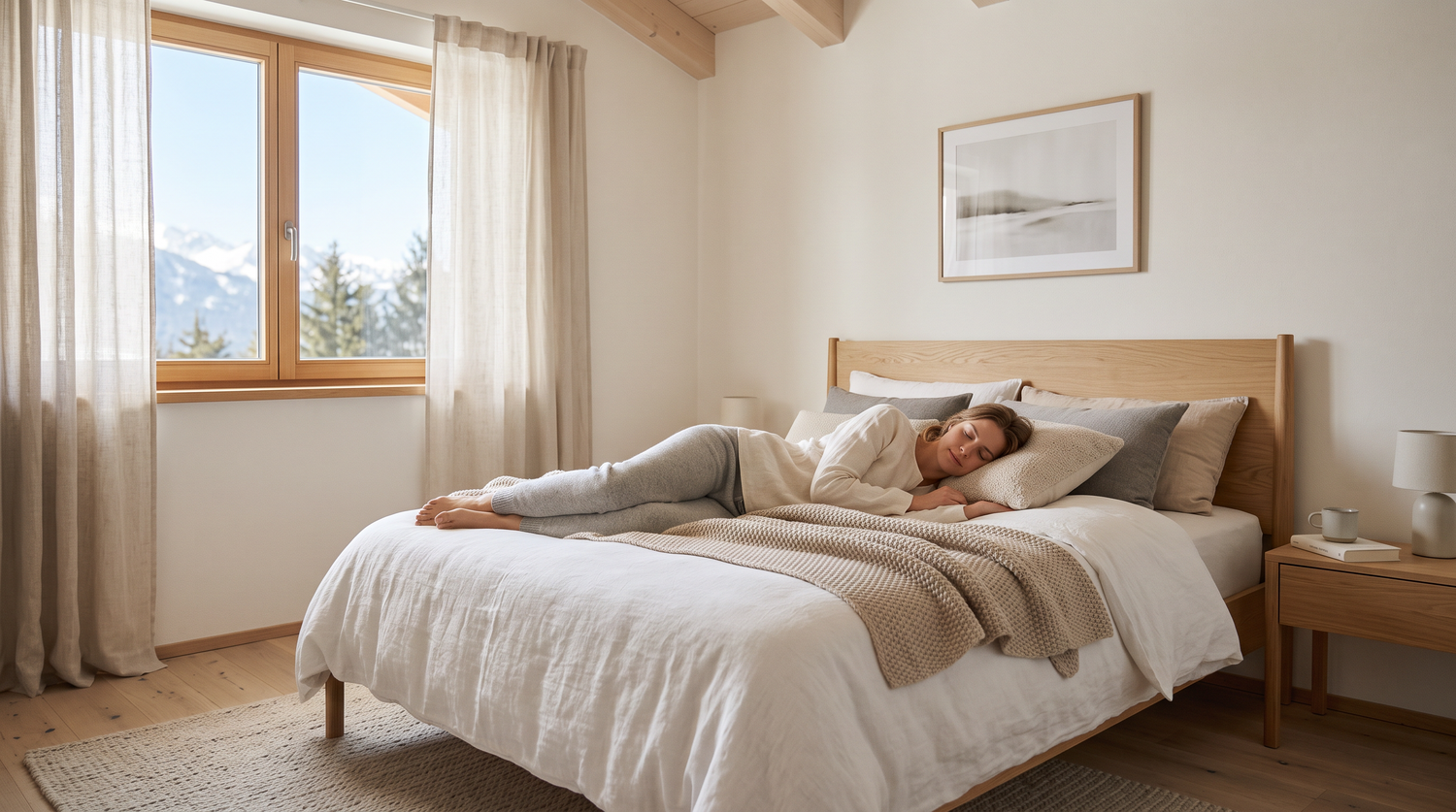
Almost everyone experiences the midday slump: between 1 PM and 3 PM, concentration and performance noticeably decline – a normal signal from your internal clock, not a sign of laziness. While the siesta is a tradition in many cultures, here in this country, we often fight our way through the afternoon with coffee. However, sleep research clearly shows: A short, properly timed power nap increases alertness, memory performance, and mood – provided you do it correctly.
The short answer: The ideal power nap lasts 10 to 20 minutes and takes place between 1 PM and 3 PM – no later than eight hours before bedtime. This way, you stay in light sleep and wake up refreshed instead of groggy. If you sleep longer than 30 minutes, you slip into deep sleep and risk sleep inertia and difficulty falling asleep in the evening. Set an alarm, darken the room, lie down – that's all it takes.
- 10–20 minutes is the ideal power nap duration – short enough not to fall into deep sleep.
- Best time: early afternoon (1–3 PM), during the natural performance slump of your internal clock.
- An espresso immediately before the nap ("Coffee Nap") enhances the wake-up effect upon waking.
- No napping after 3 PM – otherwise, your night's sleep will suffer.
What happens in the body during a power nap
Sleep occurs in cycles: from light sleep to deep sleep to REM sleep. The trick of the power nap is to only use the first light sleep stages. Even a few minutes of light sleep clears the brain: sleep pressure decreases, working memory is relieved, and stress hormones reduce. If you sleep deeper, however, you will be woken up in the middle of deep sleep – the result is the notorious sleep inertia: grogginess that can last 30 minutes or longer. Our article on sleep stages explains how the individual stages work.
The right duration: Nap lengths compared
| Duration | Effect | Risk | Recommendation |
|---|---|---|---|
| 10–20 Min. | Freshness, concentration, mood boost | Virtually none | Ideal for everyday life |
| 30 Min. | Recovery, but transition to deep sleep possible | Sleep inertia upon waking | Set alarm precisely |
| 60 Min. | Promotes memory consolidation | Significant sleep inertia | Only with large sleep deficit |
| 90 Min. | One complete sleep cycle incl. REM | Can shift night's sleep | Exception, e.g., before night shift |

How to achieve the perfect power nap: Step by step
1. Choose your timing
Utilize the natural midday slump between 1 PM and 3 PM. As a rule of thumb: The nap should be at least eight hours before your usual bedtime, otherwise you'll lack sleep pressure in the evening. If you struggle with falling asleep anyway, you'll find tips in the guide Fall asleep faster.
2. Prepare your surroundings
Darken the room or use a sleep mask, earplugs for noise, set your phone to silent – but with an alarm set (20 to a maximum of 25 minutes, including time to fall asleep). A pleasantly cool room also helps during the day; the guidelines from our article on the ideal sleep temperature also apply to afternoon naps.
3. Find your position
Most people fall asleep fastest lying down – a bed, sofa, or recliner is clearly superior to napping with your head on a desk. An important factor is a relaxed posture without pressure points, to prevent tension in the neck and shoulders.
4. The Coffee Nap Trick
Drink an espresso immediately before lying down: caffeine takes about 20 minutes to kick in – precisely when your alarm rings, and the effect of the nap combines with the caffeine boost. You should avoid this in the late afternoon; you can read why in the article Caffeine and Sleep.
5. Wake up correctly
Get up immediately after the alarm, stretch, get some daylight, drink a glass of water. If you stay in bed and doze for "just five more minutes," you'll slip into deep sleep – and negate the benefits of the nap.

When a power nap is not a good idea
For chronic difficulty falling or staying asleep, daily napping can undermine nightly sleep pressure – sleep doctors therefore often advise those affected to stay awake during the day. Anyone suffering from difficulty staying asleep or lying awake for hours in the evening should also try eliminating naps. A significantly increased need for sleep during the day despite sufficient night sleep can also indicate a sleep disorder – our article Recognizing Sleep Apnea shows the warning signs. The guide How much sleep do humans need? clarifies how much night sleep you actually need.
The surface makes the difference – even at midday
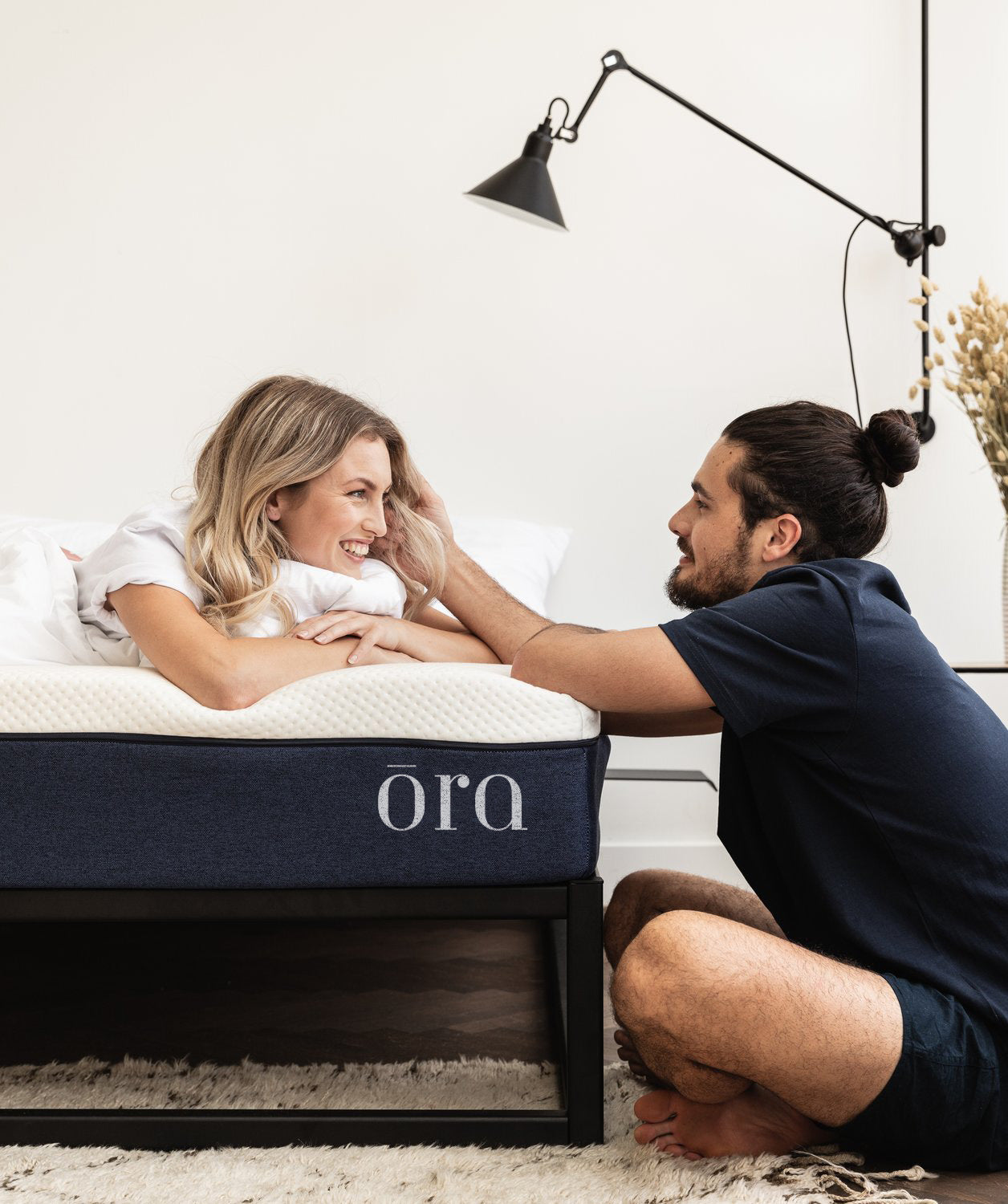
A 20-minute nap doesn't allow for long periods of tossing and turning: the body needs to be comfortable immediately. This is where the weakness of rigid mattresses with a fixed firmness level becomes apparent – a concept that is not standardized anyway and means something different from manufacturer to manufacturer. The Ora Ultra makes it easier: its EvoPoreHRC Premium memory foam automatically adapts to your body and sleeping position – whether side sleeping during a midday nap or back sleeping at night, an adaptive mattress for everyone. More on this topic in the article Mattress firmness level.
Get a CHF 25 discount
Subscribe to our newsletter and receive a one-time CHF 25 discount. ✓ 200 nights trial sleep ✓ 10-year warranty
Immediately comfortable – at midday and at night
The Ora Ultra mattress automatically adapts to your body and sleeping position – without choosing a firmness level, ideal for quick comfort during a power nap and deep sleep at night. The Ora Ultra Topper enhances existing mattresses and guest beds, the Ora Ultra Second Life is the budget-conscious alternative.
✓ 200 nights trial sleep ✓ 10-year warranty
Frequently Asked Questions about Power Naps
How long should a power nap last at most?
A maximum of 20 to 25 minutes, including the time it takes to fall asleep. After about 30 minutes of sleep, the risk of falling into deep sleep and waking up groggy increases. Therefore, set your alarm consistently – even if you think you'll wake up on your own.
What are the concrete benefits of a power nap?
Studies show improved attention, faster reaction times, better mood, and enhanced learning performance for several hours after the nap. The cardiovascular system also benefits from the short stress break.
Is it bad if I don't fall asleep during a power nap?
No. Just lying quietly with closed eyes lowers your pulse and stress levels – researchers call this the "Quiet Rest" effect. Simply lie relaxed for the planned 20 minutes; with a little routine, sleep usually comes on its own.
Why am I often more tired after a midday nap than before?
You likely slept too long and were jolted awake from deep sleep. This sleep inertia typically disappears after 20 to 60 minutes. The solution: sleep for a shorter duration (10–20 minutes) and get up immediately after the alarm, expose yourself to light, and move around.
Does a power nap replace lost night sleep?
No. A nap temporarily compensates for performance dips, but it does not replace either deep sleep or REM sleep of a full night. Chronic sleep deprivation can only be remedied by sufficient night sleep – the power nap is a supplement, not a substitute.
This article is for general information purposes only and does not replace medical advice.




Leave a comment
This site is protected by hCaptcha and the hCaptcha Privacy Policy and Terms of Service apply.