
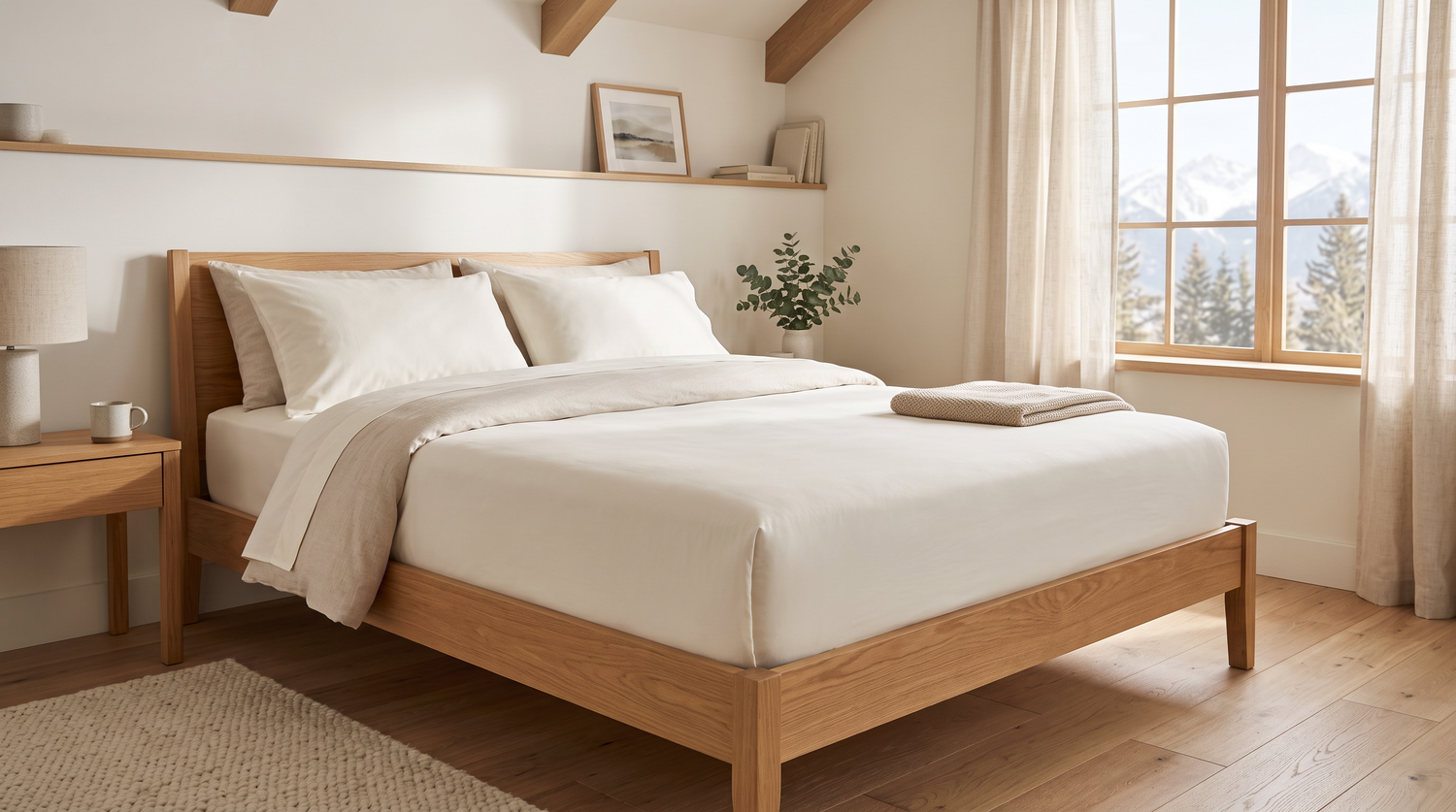
It's a small detail with a big impact: the fitted sheet. If it fits correctly, it stays smooth and wrinkle-free all night long – if it fits incorrectly, it slips off the corners, wrinkles, and disturbs sleep. Nevertheless, fitted sheets are often treated as an afterthought when buying a bed. Yet, size, depth, and material determine how your bed feels every night – and how well your mattress is protected.
The short answer: The right fitted sheet precisely matches the mattress size (in Switzerland usually 90x200 or 160x200 cm) and has a depth that corresponds to the mattress height plus 5–10 cm for tucking under – for higher mattresses or an additional topper, models with a depth of 30–40 cm are needed. For material: jersey for easy care, percale or linen for cool sleepers, flannel for those who get cold easily. A high elastane or elastic content ensures the corners stay taut.
- Mattress width, length, and height are decisive: The depth of the sheet should be mattress height plus 5–10 cm.
- If you use a topper, cover it with its own shallow fitted sheet – do not cover the topper and mattress together.
- Choose material according to sleep type: Jersey (uncomplicated), percale/satin (cool and smooth), linen (temperature-regulating), flannel (warm).
- The sheet protects the mattress from sweat and abrasion – regular washing at 60 °C extends the life of the entire sleeping surface.
The right size: Width, length – and especially the depth
The base area is quickly determined: It corresponds to the mattress size. In Switzerland, 90x200 cm for single beds and 160x200 or 180x200 cm for double beds are the most common – our guide to mattress sizes in Switzerland provides an overview. Many sheets cover size ranges (e.g., 140–160x200 cm); the more elastic the fabric, the better this works.
The depth is often underestimated – the side height of the sheet that is pulled over the mattress edge. Measure the height of your mattress and add 5–10 cm for tucking under the mattress. Modern comfort mattresses are often 20–25 cm high – here, sheets with at least 30 cm depth are needed. For box spring beds or mattress plus topper, it can be 40 cm.

Size chart for Swiss mattresses
| Mattress size | Suitable sheet size | Recommended depth* |
|---|---|---|
| 90x200 cm | 90–100x200 cm | 25–30 cm |
| 140x200 cm | 140–160x200 cm | 25–30 cm |
| 160x200 cm | 160–180x200 cm | 25–30 cm |
| 180x200 cm | 180–200x200 cm | 25–30 cm |
| Box spring / Mattress with topper | Depending on width | 35–40 cm or separate topper sheet |
*For mattress heights of 20–25 cm. For higher mattresses, choose a correspondingly larger size.
Material comparison: From jersey to linen
The fitted sheet lies directly on the skin – the material significantly influences the sleeping climate and care effort:
- Jersey (cotton knit): Elastic, wrinkle-free, uncomplicated – the all-rounder for the whole year. Thanks to its stretchability, it also fits snugly on intermediate sizes.
- Percale (smooth cotton weave): Cool, breathable, and durable – ideal for people who sweat at night. Fits well with the strategy from our guide on cool mattresses.
- Linen: Naturally temperature-regulating, cool in summer, warm in winter – with a characteristic texture, but prone to wrinkling.
- Flannel/Biber: Brushed cotton with a warm feel – the choice for cold bedrooms and those who get cold easily.
- Blended fabric with elastane: Maximum fit for high mattresses and toppers.
A detailed comparison of all bed textiles can be found in the article Bed linen materials compared – and how the interaction with room climate and temperature works, in the guide to the ideal sleeping temperature.
Fitted sheets and toppers: How to combine them correctly
If you supplement your mattress with a topper, both layers should be covered separately: The fitted sheet goes on the topper (there are flat topper fitted sheets with 4–12 cm depth for this purpose), while the mattress underneath remains protected with a protector. If a deep sheet is stretched over both the mattress and the topper, the topper can slip more easily and the conforming effect suffers. More on this topic can be found in the mattress topper guide.

Care: How to keep your sheet hygienic and durable
The fitted sheet is your mattress's first line of defense against sweat, skin flakes, and dust mites. Ideally, wash it every one to two weeks at 60 °C – this temperature reliably removes mites and bacteria. Two to three sheets in rotation distribute wear and tear. Additional protection is provided by a waterproof mattress protector or an encasing, especially for allergy sufferers. And if something does go wrong, our guide cleaning a mattress helps with proven home remedies. Further tips on bed care can be found in our care guide.
The best sheet needs the right base
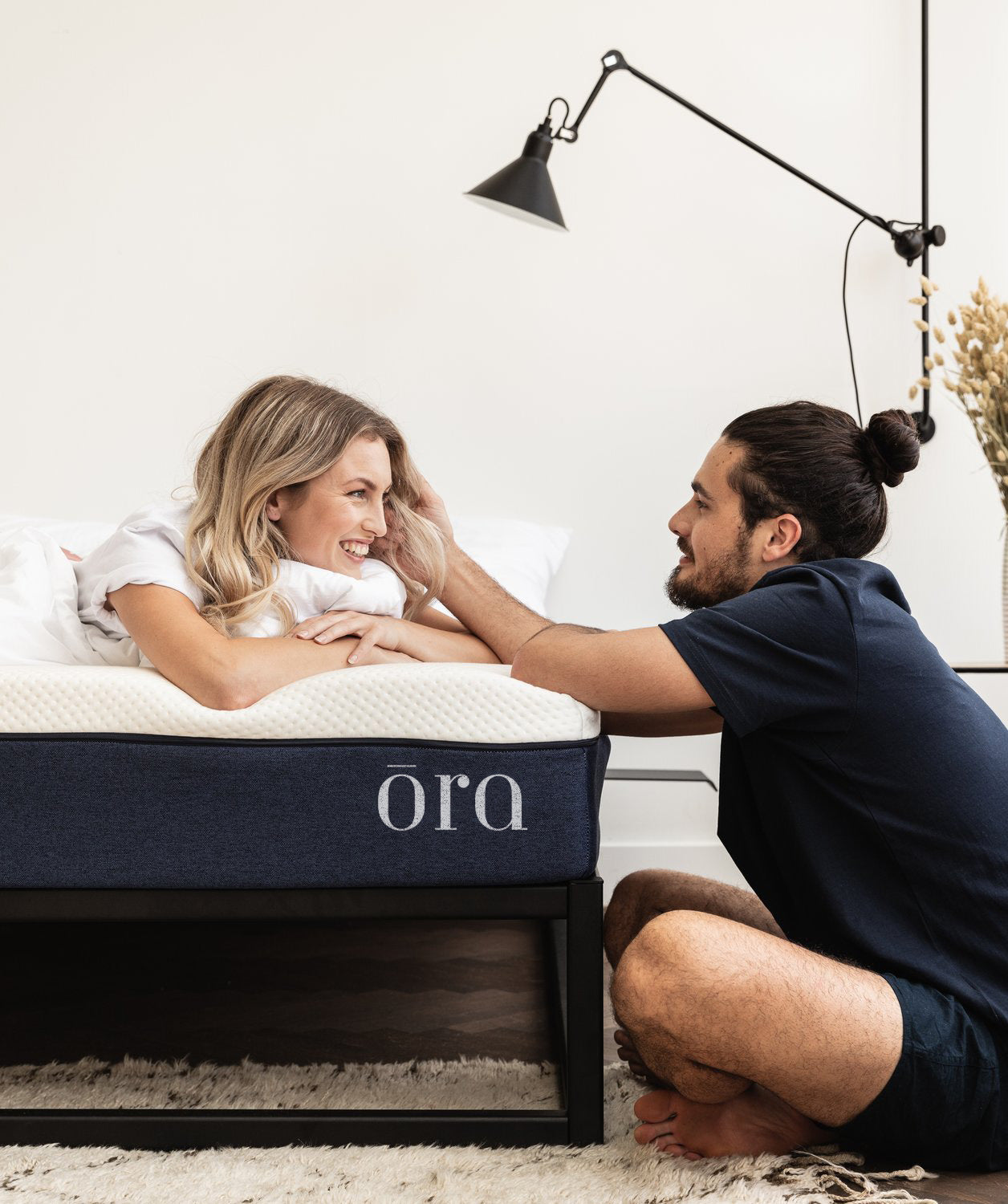
A perfectly fitting fitted sheet makes the bed more comfortable – but the actual lying quality comes from underneath. It is important to know: A thin, elastic sheet transmits the properties of the mattress almost unchanged, while a thick, tightly stretched one can slightly dampen the adaptability of fine comfort layers. Especially with adaptive mattresses, a stretchable material is therefore worthwhile. The Ora mattress deliberately dispenses with the outdated firmness concept – which was never standardized anyway – and automatically adapts to the body and sleeping position with its EvoPoreHRC Premium Memory Foam. An elastic sheet allows this adaptation to work unhindered.
Get CHF 25 discount
Subscribe to our newsletter and receive a one-time CHF 25 discount. ✓ 200 nights trial sleep ✓ 10 years warranty
The suitable base under the sheet
The Ora Ultra Mattress automatically adapts to every body and sleeping position thanks to adaptive EvoPoreHRC Premium Memory Foam – no need to guess firmness levels. The Ora Ultra Topper upgrades existing mattresses (don't forget the topper fitted sheet), and the Ora Ultra Second Life Mattress offers the same comfort at an attractive price. With 200 nights of trial sleep and 10 years warranty.
Frequently asked questions about fitted sheets
How do I find the right depth for my fitted sheet?
Measure the height of your mattress on the side and add 5–10 cm for tucking under the mattress. For a 24 cm high mattress, a sheet with a 30 cm depth will fit. Depths that are too low will slip off the corners, while those that are too high will wrinkle.
Will a 140x200 sheet fit a 160x200 mattress?
This is not advisable. While elastic jersey sheets stretch considerably, a constantly overstretched sheet slips off the corners more easily and wears out faster. Choose a sheet whose size range explicitly includes your mattress width.
How often should you wash your fitted sheet?
Every one to two weeks at 60 °C – this reliably removes dust mites, bacteria, and sweat residues. If you sweat a lot or have allergies, it's better to wash weekly.
Does a topper need its own fitted sheet?
Yes. The topper is covered with a shallow topper fitted sheet (4–12 cm depth), and the mattress underneath is protected separately. This keeps the topper in place and fully preserves its conforming effect.
Which material is suitable for people who sweat at night?
Percale cotton and linen are particularly breathable and cooling. Special functional fabrics with moisture-wicking fibers are also a good choice. Tightly woven synthetic sheets without climate function are generally not recommended.







Leave a comment
This site is protected by hCaptcha and the hCaptcha Privacy Policy and Terms of Service apply.