
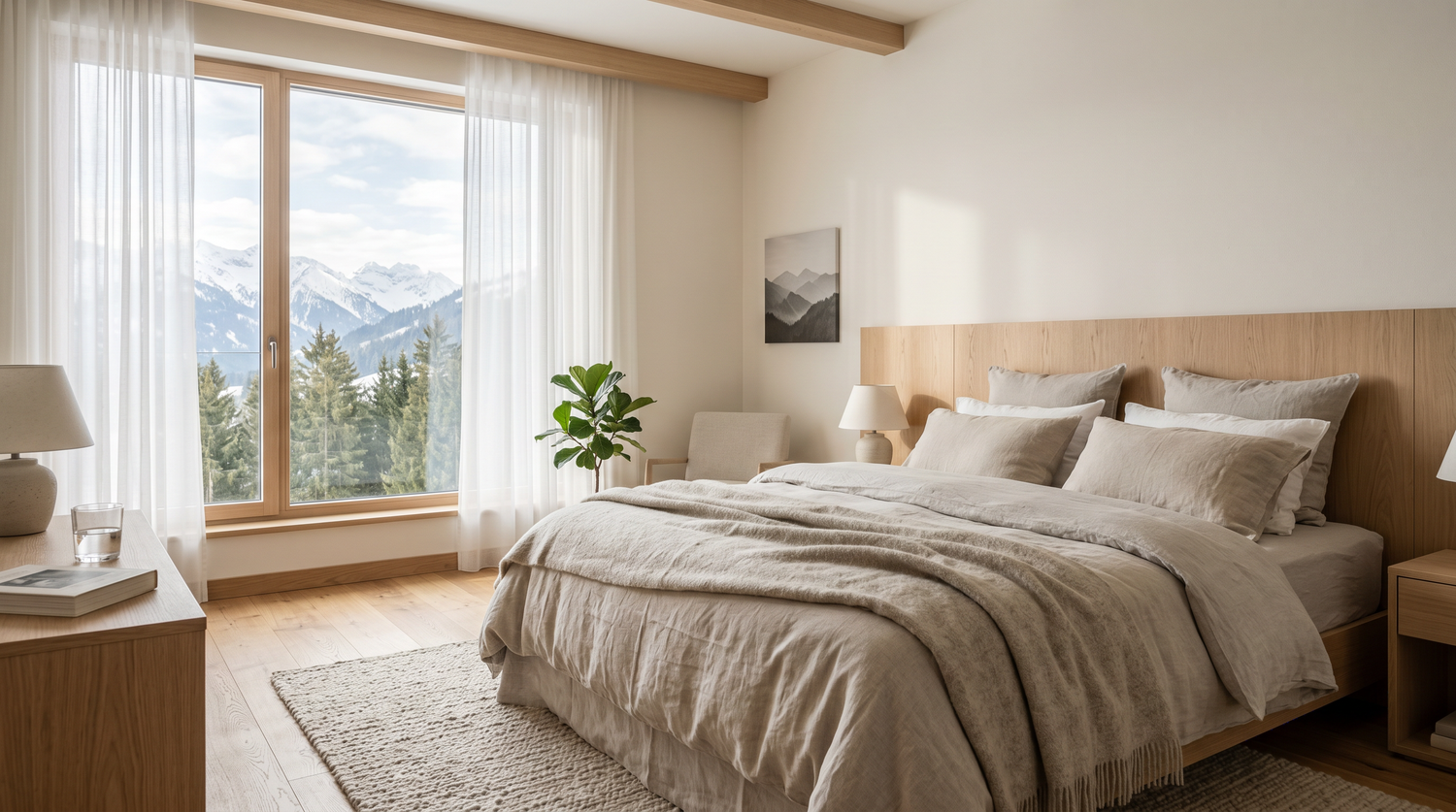
Anyone who has ever woken up with a sharp pain in their lower back or a radiating pull down their leg knows: sciatica and disc problems rob you of sleep – and poor sleep, in turn, intensifies the pain. The mattress plays a central role in this. It helps determine whether your spine is relieved at night or remains in an unfavourable position for hours. In this guide, you will read what really matters when choosing a mattress for sciatica and disc problems – and why the answer does not lie in a specific firmness level.
The short answer: For sciatica and disc problems, the spine needs a surface that supports the body precisely and at the same time allows the shoulders and pelvis to sink in controllably, so that the spine maintains its natural double-S curve. The decisive factor is not a general firmness level, but a mattress that adaptively adjusts to weight and sleeping position and avoids pressure points in the lumbar region.
- Sciatica and disc pain require neutral spinal alignment – the mattress should support and simultaneously yield specifically.
- A general "firmness level" is not a reliable criterion: too firm creates pressure points, too soft causes the pelvis to sag.
- Adaptive mattresses that automatically adjust to the body and position are superior to rigid models for back problems.
- Sleeping position, slatted frame, and sleep hygiene work together – the mattress is the most important, but not the only, component.
Sciatica and spinal disc: What happens at night
To understand which mattress is suitable for sciatica, a brief look at the anatomy is worthwhile. Lower back problems are often related to the sciatic nerve and the intervertebral discs – two structures that particularly depend on good positioning at night.
The sciatic nerve – the body's longest nerve
The sciatic nerve runs from the lower back, through the buttocks, and down into the legs. If it is irritated or pinched – for example, by a bulging disc or tense muscles – the typical radiating pain occurs. An unfavourable sleeping posture can maintain pressure on the nerve for hours. This is precisely where a well-adjusted mattress comes in: it keeps the spine in a relaxed neutral position, instead of allowing the lower back to overextend or bend.
Intervertebral discs regenerate at night
Intervertebral discs act as shock absorbers between the vertebrae. During the day, they lose fluid due to stress; at night, they reabsorb fluid while lying down and regenerate. This regeneration is best achieved when the spine is evenly relieved and not forced into a misalignment by a sagging or overly hard surface. A mattress that supports the body precisely at every point aids this nocturnal recovery process.

What really matters when choosing a mattress for sciatica
The most important task of a mattress for back problems is to bring the spine into a neutral alignment. This means a combination of two seemingly contradictory properties. On the one hand, the mattress must support so that heavier body zones like the pelvis do not sag. On the other hand, it must yield specifically so that protruding zones like the shoulder and hips can sink in when lying on your side. Only then does the spine remain straight and pressure on nerves and discs decrease.
Good pressure relief is indicated by the absence of significant pressure on any single body part. Those who frequently change positions at night or wake up with numb limbs have often struggled with pressure points. Which type of mattress achieves this depends less on the material label than on the core's ability to adapt to the body's contours. The following overview shows what each sleeping position demands from the mattress.
| Sleeping Position | Impact on Sciatica / Disc Problems | What the Mattress Must Account For |
|---|---|---|
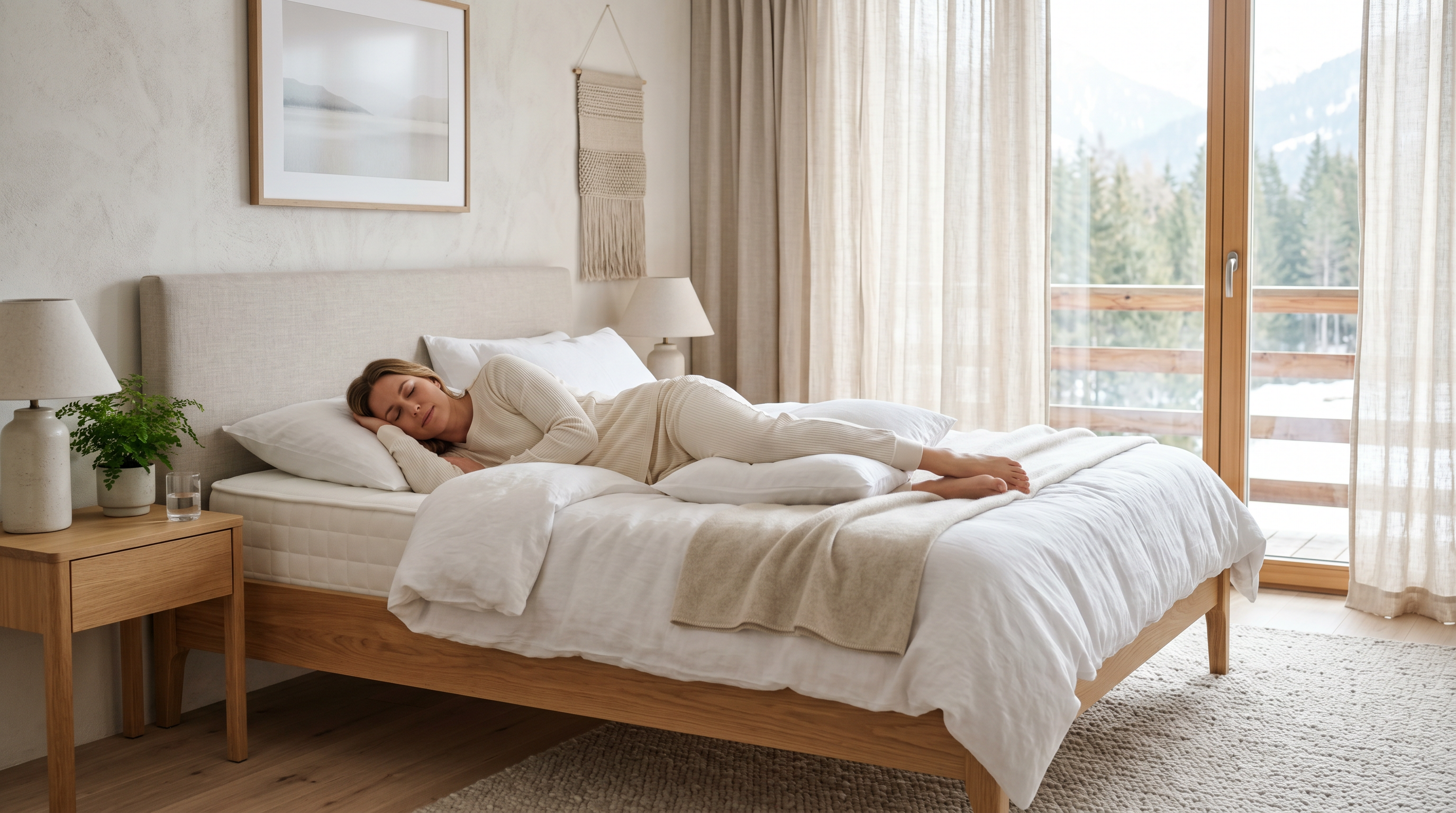
| Side Sleeper | Most comfortable for many; relieves discs if legs are slightly bent | Shoulder and pelvis must be able to sink in, while the waist is simultaneously supported |
| Back Sleeper | Even weight distribution, often recommended | Lumbar spine needs support to prevent sagging |
| Stomach Sleeper | Usually unfavourable, overextends the lumbar spine | Avoid if possible; if necessary, use a flat pillow and a supportive core |
The myth of the "right firmness level"
Hardly any term causes as much uncertainty when buying a mattress as firmness level. In reality, it is an outdated and non-standardised concept: what one manufacturer calls "H3" can feel completely different to the next. A uniform standard is lacking – two mattresses with identical firmness specifications often support the back completely differently. Anyone who fixates on a specific firmness number for sciatica is therefore choosing blindly. You can read more about this in the article on firmness level myths and facts.
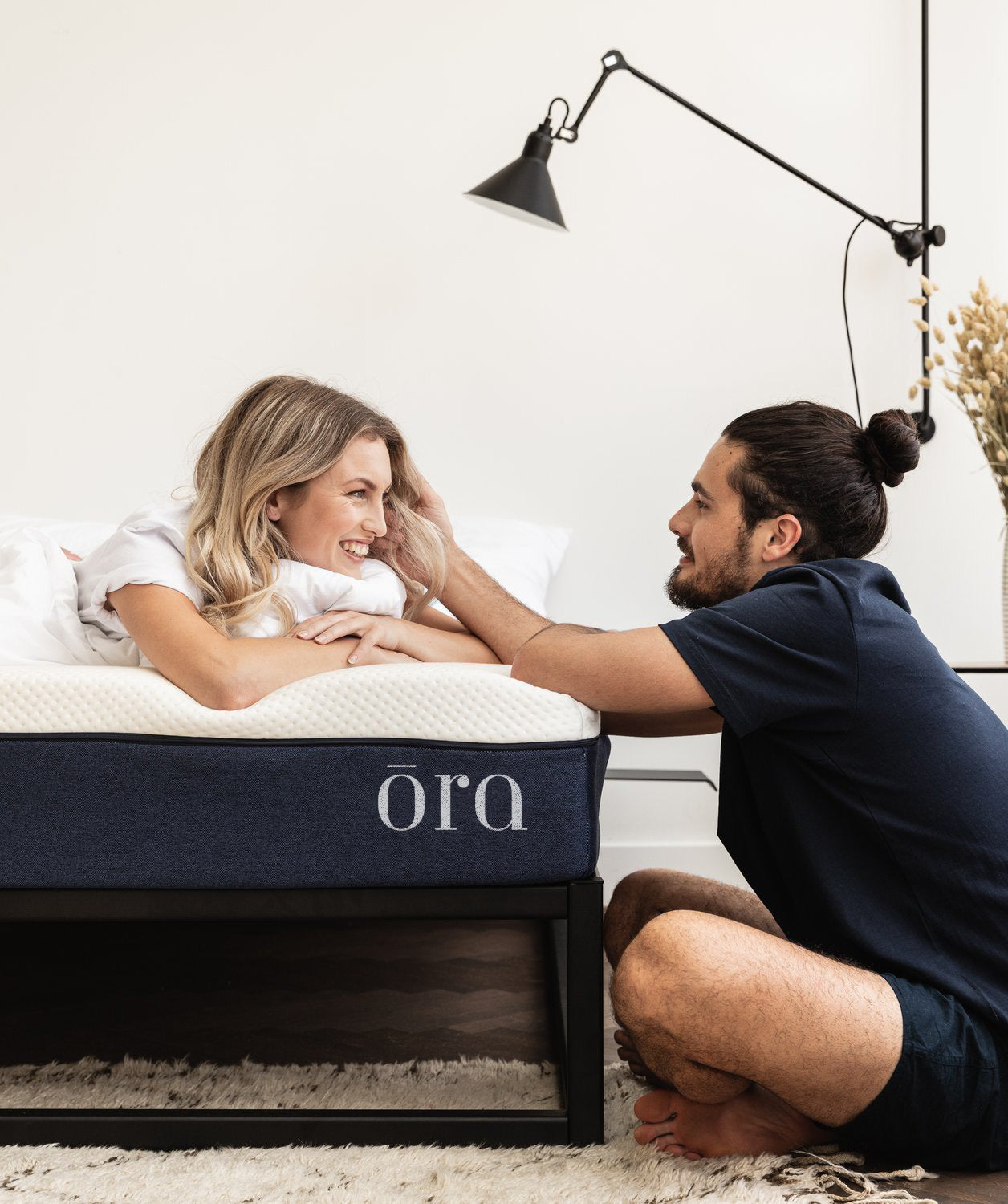
The crucial point: the body is of different weight and width at the shoulders, waist, and pelvis. A mattress with only one rigid firmness cannot properly accommodate these zones simultaneously. A more sensible choice is an adaptive mattress that automatically adjusts to your body and sleeping position, rather than forcing you into a fixed firmness scheme. The Ora Ultra is built precisely on this principle, with its adaptive premium memory foam EvoPoreHRC – a mattress for all body types and positions, without any firmness level selection.

The best sleeping position for sciatica and disc problems
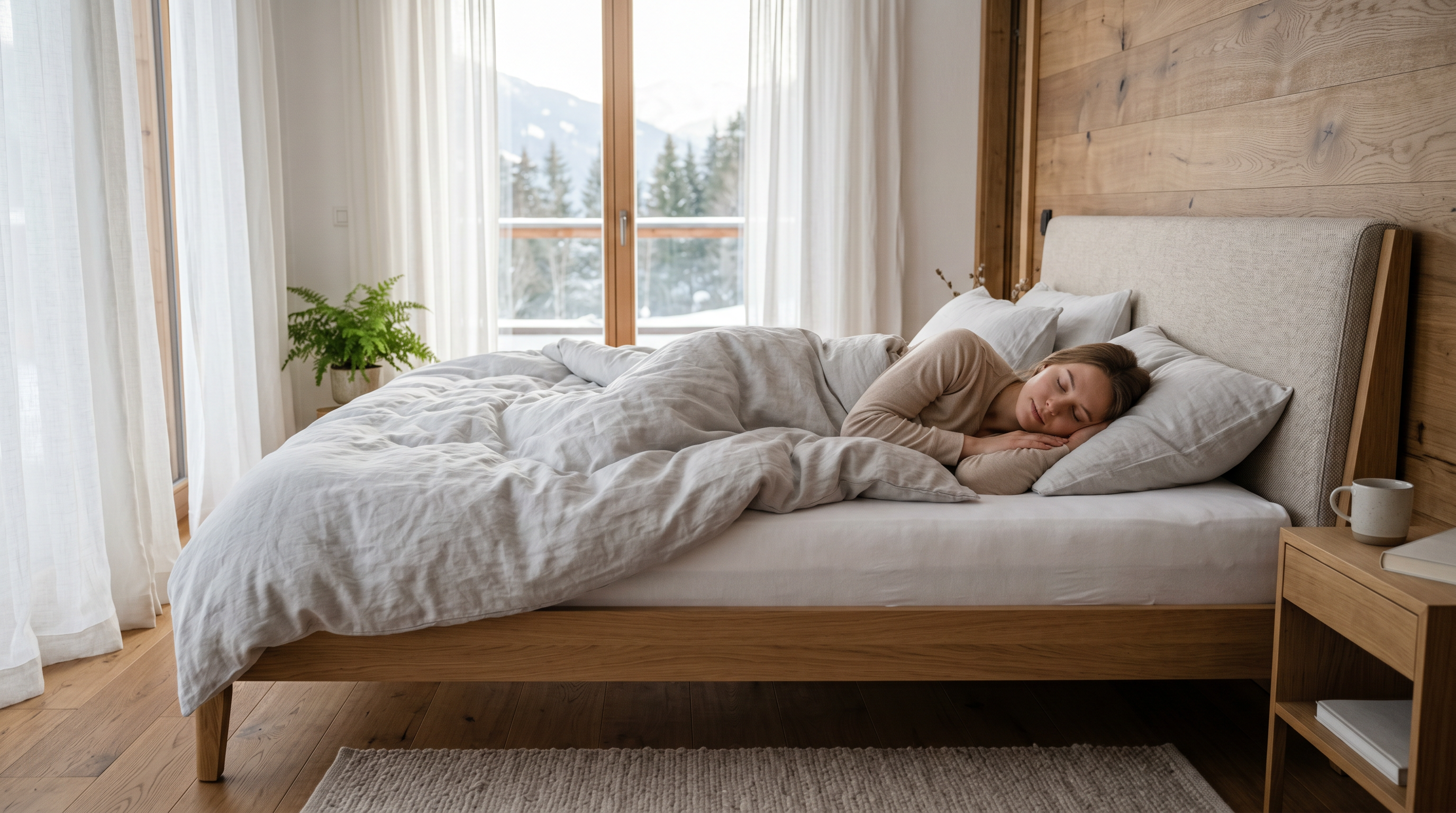
In addition to the mattress, your sleeping posture influences how much stress the sciatic nerve experiences at night. The side sleeping position with slightly bent legs is considered particularly relieving, ideally with a thin pillow between the knees to keep the pelvis and spine aligned. Our guide for side sleepers explains how to lie optimally in this position.
The back sleeping position is also often comfortable, especially with a small roll or flat pillow under the knees to relieve the lumbar spine. The stomach sleeping position, however, overextends the lower back and is usually unfavourable for sciatica. If you cannot sleep any other way, you will find practical tips in our article on back and stomach sleepers. Generally, a mattress that adapts to your position is more forgiving of nocturnal position changes than a rigid model.
Mattress, slatted frame, and sleep environment as a team
Even the best mattress only works effectively in conjunction with the right environment. A worn-out or incorrectly adjusted slatted frame can negate the support. The pillow also matters: a pillow that is too high can bend the cervical spine and lead to additional neck pain. If you want to relieve your back holistically, you will find further advice in the guide to mattresses for back pain.
Last but not least, general sleep hygiene plays a role: a cool, dark bedroom, consistent bedtime, and gentle stretching exercises in the evening can release tension that irritates the sciatic nerve. The mattress provides the foundation – habits build upon it.
Get CHF 25 discount
Subscribe to our newsletter and receive a one-time CHF 25 discount. ✓ 200 nights trial sleep ✓ 10 years warranty
The Ora Ultra mattress relies on adaptive premium memory foam EvoPoreHRC: instead of rigid firmness levels, it automatically adjusts to body weight and sleeping position, supporting the lower back and allowing shoulders and pelvis to sink in controllably – ideal for bringing the spine into a neutral alignment for sciatica and disc problems. If you want to upgrade an existing base, combine it with the Ora Ultra Topper. For particularly sustainable sleep, choose the Ora Ultra Second Life Mattress. All models come with 200 nights of trial sleep and a 10-year warranty.
Frequently Asked Questions about Mattresses for Sciatica and Disc Problems
Which mattress is best for sciatica?
The best mattress is one that adaptively adjusts to your body and sleeping position, keeping the spine in a neutral alignment. It supports heavier areas like the pelvis and allows the shoulders and hips to sink in, thereby avoiding pressure points on the sciatic nerve. A specific firmness level is secondary.
Is a firm mattress better for a slipped disc?
No, a very firm mattress is not automatically better. If it's too firm, pressure points will form on the shoulders and pelvis, and the spine will not be aligned properly. Too soft, on the other hand, will cause the pelvis to sag. Ideal is a mattress that supports and also yields specifically.
Which sleeping position relieves the sciatic nerve?
The side position with slightly bent legs and a thin pillow between the knees is considered particularly relieving. The back position with a flat roll under the knees is also comfortable. The stomach position overextends the lower back and should be avoided as much as possible for sciatica.
Can a new mattress initially worsen back pain?
Yes, during the first few nights, the body may need to adjust to a new, correctly supportive mattress, which can temporarily lead to an unfamiliar feeling. This adjustment period usually lasts one to two weeks. If the discomfort persists longer, the positioning should be checked.
This article is for general information and does not replace medical advice.






Leave a comment
This site is protected by hCaptcha and the hCaptcha Privacy Policy and Terms of Service apply.