
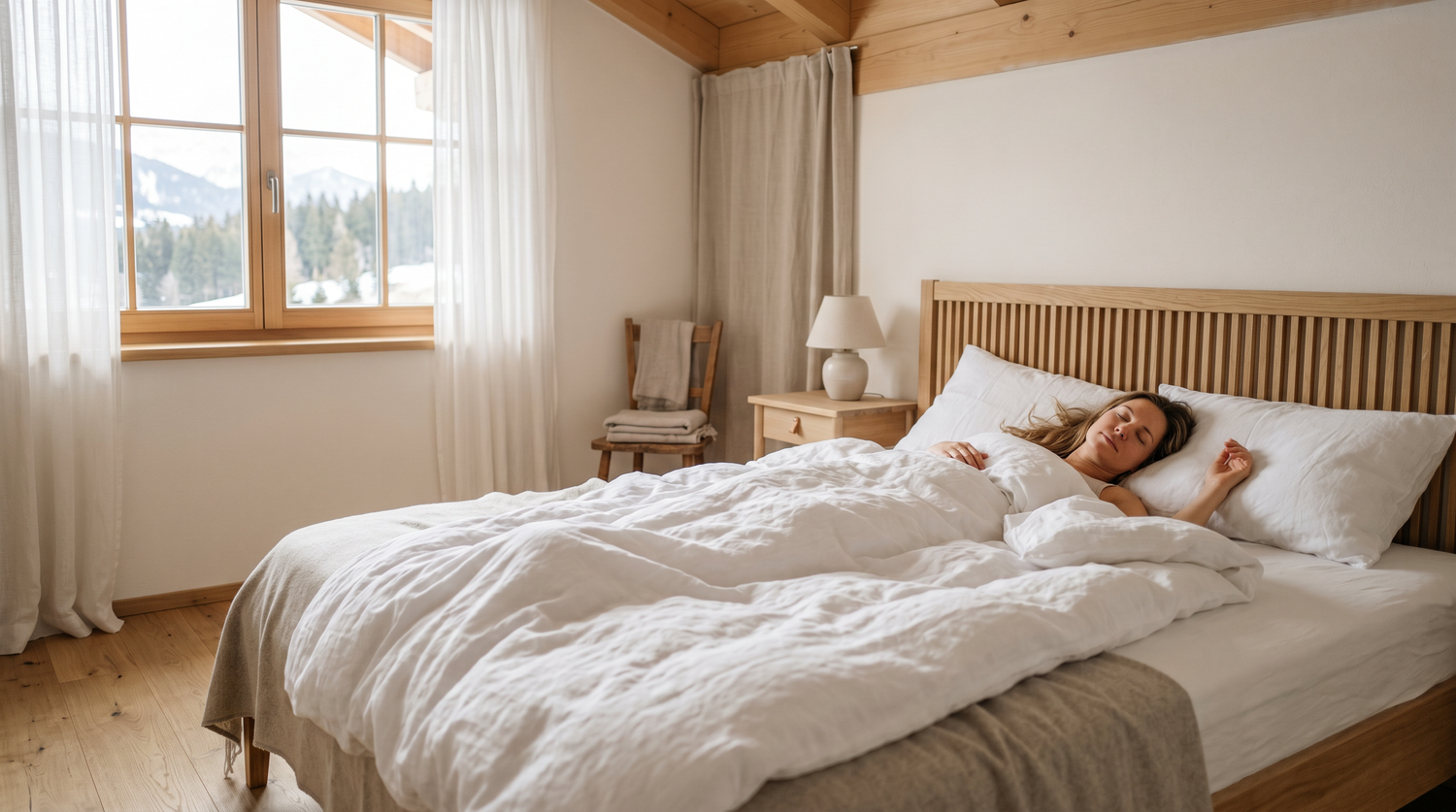
Whether you sleep on your back or your stomach fundamentally changes how your body weight rests on the mattress – and therefore, what a good mattress needs to do. Both positions are less common than side sleeping, but they have very specific requirements.
The short answer: Back sleepers need a mattress that supports the natural S-curve of the spine and prevents the pelvis from sinking too deeply. Stomach sleepers need a flatter, more even surface to prevent the lower back from arching excessively. In both cases, the crucial factor is not a specific firmness level, but rather how well the mattress adapts to the individual body.
Key takeaways
- Back sleepers: Support the lumbar region, prevent the pelvis from sagging.
- Stomach sleepers: Flat positioning, flat pillow, avoid hyperextension of the lower back.
- An adaptable mattress reacts differently to each zone – ideal for both positions.
- The right pillow is crucial depending on the position.
Back sleepers: What the spine needs
In the supine position, body weight is distributed over a relatively large area. This is ergonomically favourable – provided the mattress supports the lumbar spine. If the pelvis sinks too deeply, the lower back arches excessively; if the mattress is too firm, the lumbar area remains unsupported, creating a gap. Both lead to tension in the lower back.
An ideal mattress allows the heavier pelvis to sink in a little, while gently filling and supporting the lumbar area. This maintains the natural double S-shape of the spine. Back sleepers with discomfort can find more tips in the article Mattress for back pain.

Stomach sleepers: The most demanding sleeping position
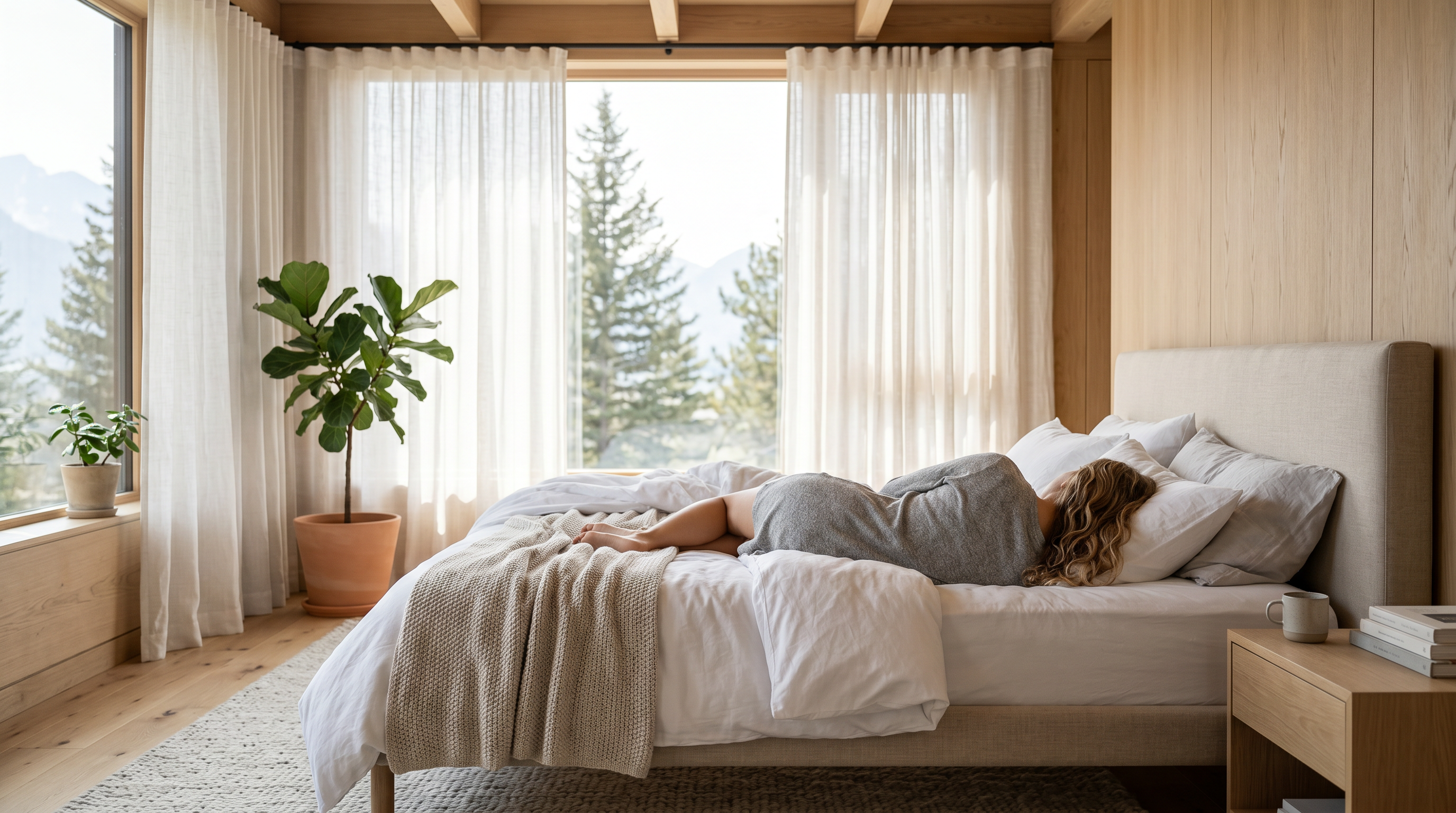
Stomach sleeping is considered the most ergonomically difficult position by sleep experts because the head is necessarily turned to the side and the lower back easily arches excessively. To minimise strain, the mattress should support the body flatly and evenly – the pelvis should not sink too deeply.
Just as important is the pillow: Stomach sleepers are best off with a very flat pillow or no pillow at all, so that the neck is not hyperextended. More on this in the pillow guide and in the article on neck pain.
Back vs. stomach sleepers: A comparison of needs
| Criterion | Back Sleeper | Stomach Sleeper |
|---|---|---|
| Main Goal | Support lumbar spine | Avoid excessive arching of the lower back |
| Pelvis | Can sink slightly | Should lie as flat as possible |
| Pillow Height | Medium, supportive | Very flat or none |
| Ideal Mattress | Adaptable with good support | Adaptable, evenly supportive |
Why adaptability solves both positions
At first glance, the requirements seem contradictory – back sleepers want the pelvis to sink in, while stomach sleepers want it to remain flat. The solution lies not in a specific firmness level, but in a mattress that reacts differently in each body zone. This is precisely what adaptable memory foam achieves: it selectively yields under heavier parts and supports lighter, flatter areas.
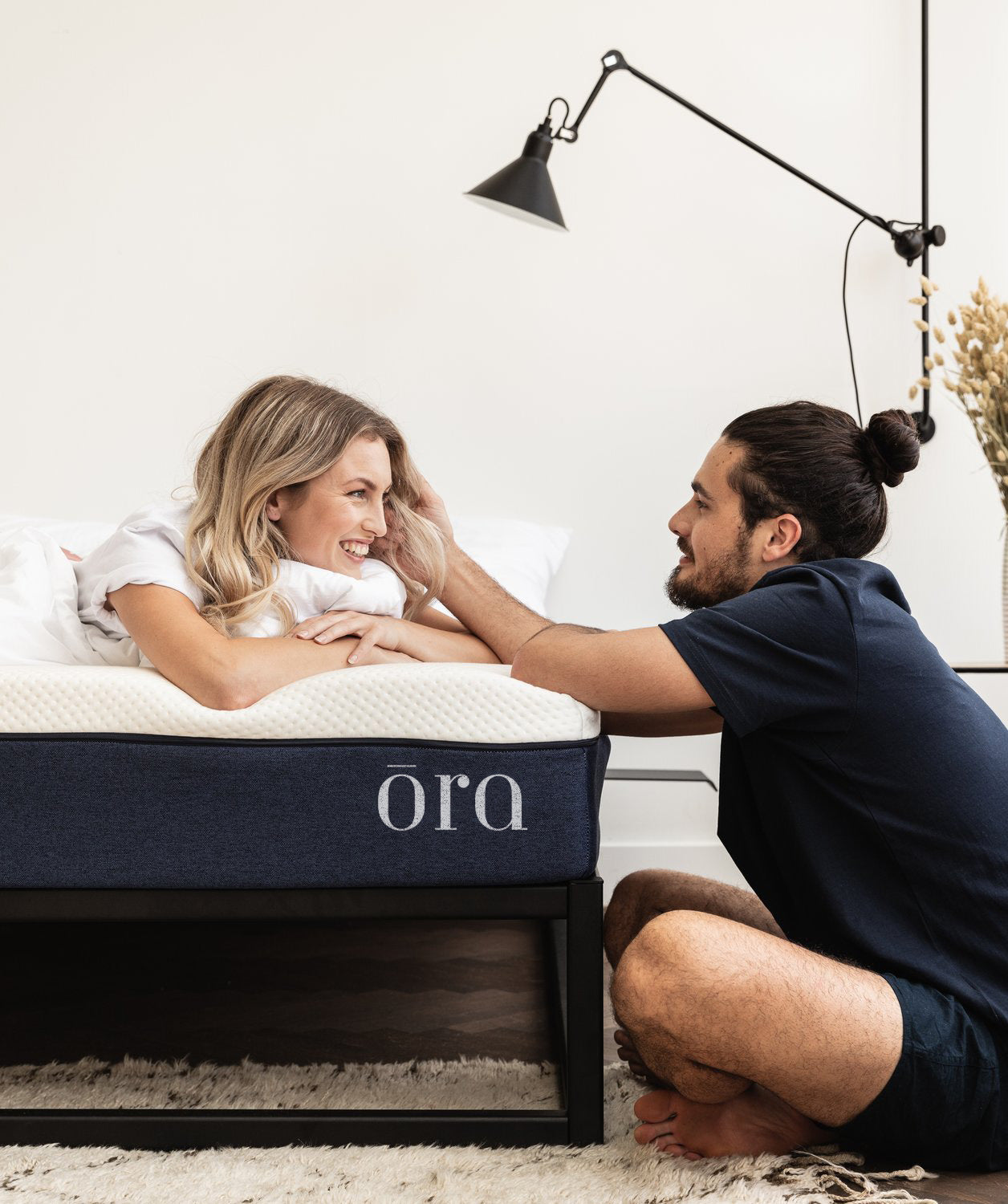
The Ora Ultra mattress is built on the principle of "one mattress for all": Its EvoPoreHRC Premium memory foam automatically adapts to your body and sleeping position – whether you sleep on your back, stomach, or side. This means you don't have to choose between positions or firmness levels, which is particularly practical if you change position during the night.

What about combination sleepers?
Most people don't sleep in a single position all night, but rather switch between back, side, and stomach. This is precisely where an adaptable mattress shows its strength: it reacts anew with every change of position, instead of providing a single compromise firmness level. Those who frequently change positions should also pay attention to a pillow with good adaptability.
Tips for stomach sleepers
- Use a flat pillow or no pillow at all to relieve pressure on the neck.
- A thin pillow under the pelvis can reduce excessive arching of the lower back.
- Choose a mattress that prevents the pelvis from sinking too deeply.
- If possible, gradually transition from stomach sleeping to side sleeping – it's better for your back.
Get CHF 25 discount
Subscribe to our newsletter and receive a one-time CHF 25 discount. ✓ 200 nights trial ✓ 10-year warranty
A mattress for every sleeping position
The Ora Ultra mattress with EvoPoreHRC Premium memory foam automatically adapts – whether you sleep on your back, stomach, or side. A sustainable alternative is the tested Ora Ultra Second Life.
Frequently Asked Questions
Which mattress is best for back sleepers?
A mattress that allows the pelvis to sink slightly while supporting the lumbar spine, maintaining the natural S-curve. An adaptable mattress achieves this without a fixed firmness level.
How should stomach sleepers lie?
As flat as possible, with a very flat or no pillow, to prevent neck hyperextension and excessive arching of the lower back. The mattress should not allow the pelvis to sink too deeply.
Is stomach sleeping unhealthy?
It is considered the most ergonomically demanding position because it strains the neck and lower back. With a flat pillow and an evenly supportive mattress, the strain can be significantly reduced.
Which mattress is suitable if I change position?
An adaptable mattress that reacts anew with every change of position is ideal for combination sleepers – this way you don't need a compromise firmness level.





Leave a comment
This site is protected by hCaptcha and the hCaptcha Privacy Policy and Terms of Service apply.