
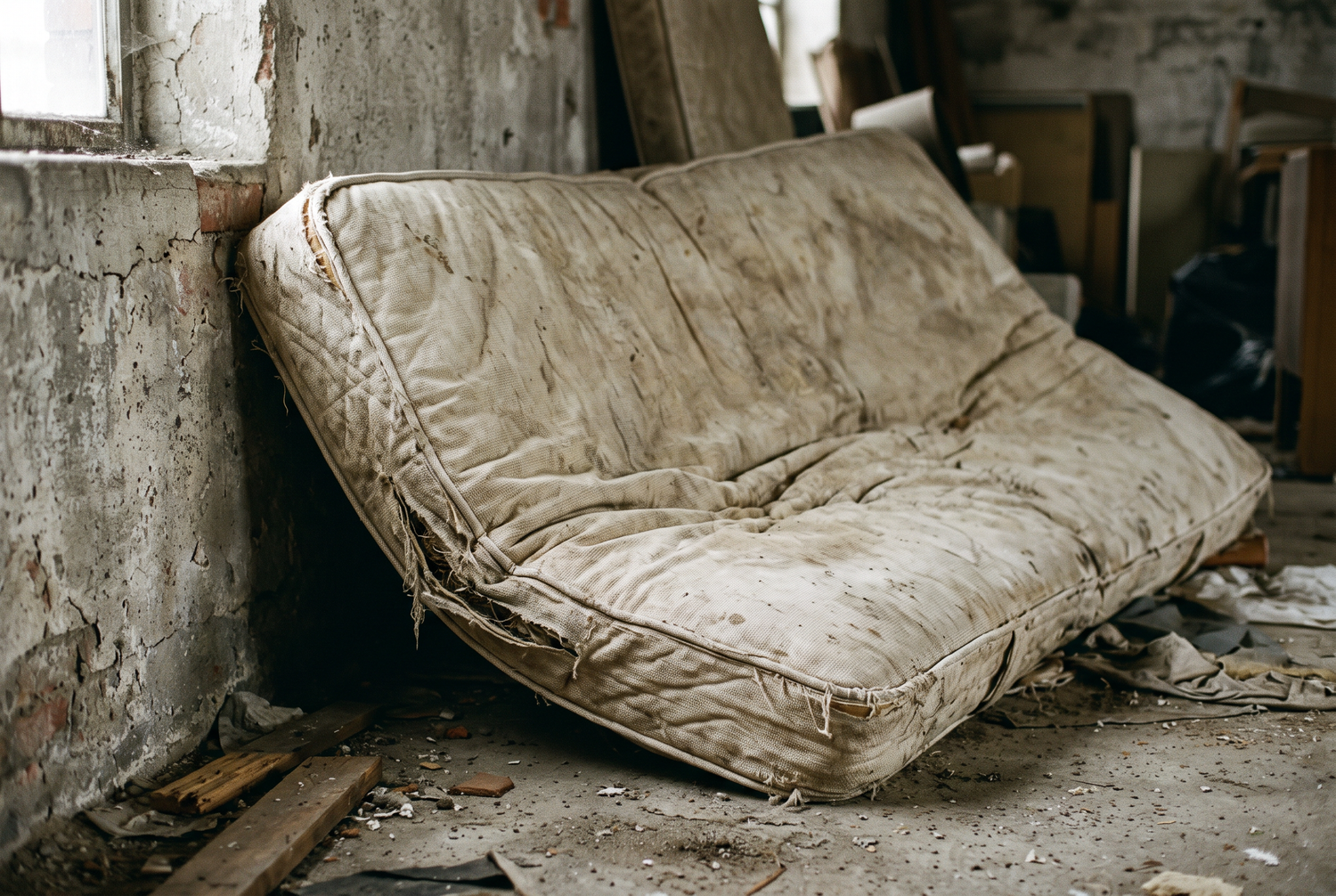
CHF 80 instead of CHF 1,000: Dozens of used mattresses change hands daily on online marketplaces – "as good as new, only 2 years old, non-smoking household." The temptation is understandable, especially with tight budgets, for a guest room or a first apartment. But a mattress is not a bookshelf: it has direct body contact for eight hours a night, absorbs moisture, skin flakes, and dust mites over years, and invisibly loses its support. What looks impeccable in the photo can be hygienically and ergonomically at its end. At the same time, not every used mattress is automatically a bad buy – it depends on where it comes from, how old it is, and how it was reconditioned. This guide reveals the real risks beyond the "ick" factor, provides a checklist for those who still want to buy used, and presents the safe middle ground: professionally reconditioned mattresses with a warranty.
The short answer: Used mattresses bought from private sellers are risky from a hygiene and ergonomic perspective: they can harbor dust mites, moisture damage, and invisible depressions, and neither their origin nor actual age can be verified. Buying a used mattress is at most justifiable for young mattresses (under 2 to 3 years old) with a washable cover, inspected in daylight. The significantly safer alternative is professionally reconditioned mattresses directly from the manufacturer – hygienically inspected, with a new cover, trial sleep, and warranty, at a similarly attractive price.
- Main risks of private purchase: dust mites and allergens, absorbed moisture leading to hidden mold, odors, and bed bugs.
- Ergonomically critical: foams fatigue from within – a visually flat mattress may have long lost its support.
- Age matters: After 7 to 10 years, a mattress reaches the end of its life, even with good care – buying used is only worthwhile for young models.
- When buying used: remove the cover, inspect the core in daylight, smell it, look for stains and depressions over 2 cm – and question its origin.
- Safe alternative: professionally reconditioned mattresses from the manufacturer – inspected, hygienically prepared, with trial sleep and warranty.
Hygiene: what's inside a used mattress
A mattress absorbs up to half a liter of moisture per night – over years, this adds up to hundreds of liters that have passed through the core and cover. This leaves ideal conditions for house dust mites: a mattress used for several years typically harbors hundreds of thousands to millions of these creatures, and their feces are one of the most common allergens. For allergy sufferers, a strange, old mattress is therefore taboo – the infestation cannot be significantly reduced by vacuuming or wiping, as our article on house dust mites in mattresses shows. In addition, there are risks that are neither visible nor immediately detectable by smell: absorbed moisture in deep foam layers, incipient mold on the underside (common in beds without under-ventilation), residues of bodily fluids, and – rarely, but with serious consequences – bed bugs that hide in seams and zippers and can infest entire homes. Only a fully removable cover washable at 60 °C mitigates some of these points – the core itself always remains a black box when buying privately.
Ergonomics: the invisible fatigue of the core
Even if the hygiene were perfect, the second problem remains: material fatigue. Foams gradually lose their resilience – the cell structure becomes softer due to millions of compression cycles, first where the pelvis and shoulders rest most heavily. The insidious thing is that this fatigue is not visible for a long time. A mattress can appear flat and still have lost 30 to 40 percent of its support in the middle; only when lying down does the hip sag, and the spine sags in the side position like a hammock. The consequences – morning back pain and tension – are then often attributed to one's own back instead of the mattress's history. This can only be roughly checked: Place a straight board across the unweighted lying surface; permanent depressions of about 2 cm are a clear exclusion criterion, as described in the article recognizing a saggy mattress. Furthermore, it's important to remember: the previous owner had a different weight, a different sleeping position, and different pressure point impressions – so you are literally taking over the 'slept-in' profile of a foreign body.

When a used purchase is justifiable: the checklist
If you still want to buy privately – for example, for a seldom-used guest bed – you should consistently check these seven points. First, the age: a maximum of 2 to 3 years, verifiable with a purchase receipt or order confirmation; "almost new" without a receipt is a gut feeling, not a fact. Second, the origin: a pet-free, non-smoking household, no damp rooms, no cellar or attic storage – ask explicitly. Third, the cover: fully removable and washable at 60 °C, otherwise steer clear. Fourth, the visual inspection: remove (or have removed) the cover and inspect the core in daylight for stains, discolorations, mildew, and dark spots in the seams – the latter can indicate bed bugs. Fifth, the smell test: musty, sweetish, or masked by perfume? All three are exclusion criteria. Sixth, the sag test with a straightedge and ruler. Seventh, the price reality check: If the used price is more than 30 to 40 percent of the new price, the risk simply isn't worth it – compare it with the cost of a new or professionally reconditioned mattress. And for children's beds, a special rule applies: For babies, a new, firm mattress is recommended for safety and hygiene reasons – details in the article on baby mattresses and safety.
New, used or reconditioned? The comparison
| Criterion | New | Privately used | Professionally reconditioned |
|---|---|---|---|
| Hygiene | Impeccable | Unknown, not verifiable | Inspected, reconditioned, new cover |
| Support | 100% | Unknown, often reduced | Inspected, only intact cores |
| Trial sleep | Yes, e.g., 200 nights | No | Yes |
| Warranty | Up to 10 years | None | Yes, manufacturer-dependent |
| Price | Full | Very low | Significantly reduced |
| Ecological footprint | New production | Very good | Very good (circular) |
The smart middle ground: professionally reconditioned mattresses
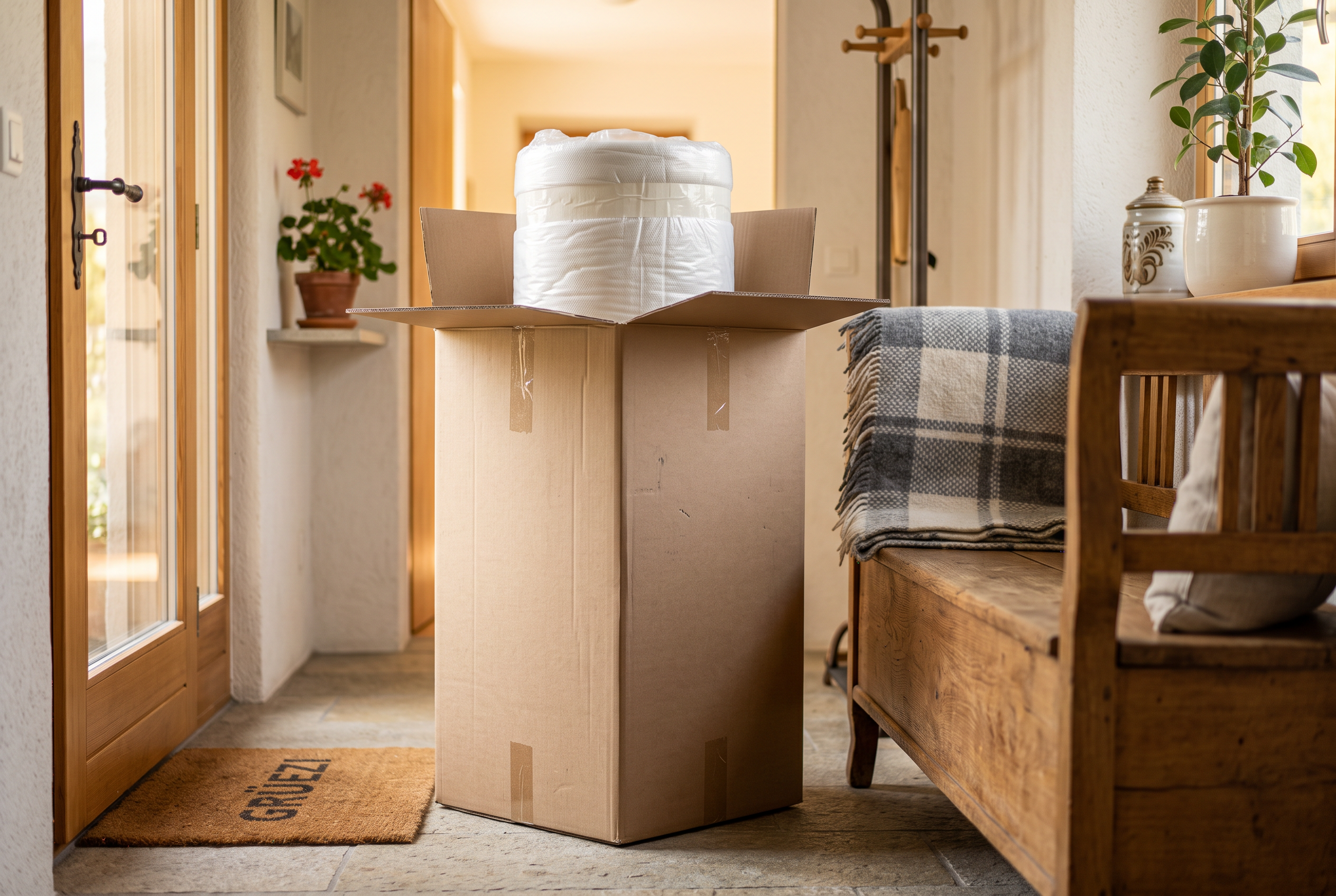
Between risky private purchases and full new prices, there is a third option that is still too little known in Switzerland: refurbished mattresses directly from the manufacturer. These are usually young returns from trial sleep programs – mattresses that have been used for a few weeks or months and then returned. The crucial difference from buying used: the manufacturer knows the complete history, checks each core for dimensional stability, hygienically reconditions the mattress, and delivers it with a freshly washed or new cover. This also includes trial sleep and a warranty – unthinkable with a private purchase. In terms of price, reconditioned models are significantly below the new price, and ecologically, they perform excellently because an almost new product remains in circulation instead of being shredded. Who is this suitable for? For anyone who shies away from new prices but doesn't want to compromise on hygiene or return policy – from student budgets to guest rooms to second homes. The article cheap vs. expensive mattresses generally explains the differences between affordable and expensive mattresses.

Get CHF 25 discount
Subscribe to our newsletter and receive a one-time CHF 25 discount. ✓ 200 nights trial sleep ✓ 10 years warranty
Frequently asked questions about used mattresses
Is it hygienically questionable to buy a used mattress?
When buying privately, yes: mite infestation, accumulated moisture, and residues cannot be checked or reliably removed. Only professionally reconditioned mattresses with an inspected core and a new cover circumvent this problem.
What is the maximum age a used mattress should have?
At most 2 to 3 years, documented by a purchase receipt. After 7 to 10 years, any mattress reaches the end of its lifespan – a free offer doesn't change that.
Can I disinfect a used mattress myself?
Only superficially. Only the cover can be washed; household remedies, steam, or sprays cannot reliably reach mites, moisture, and spores in the core. Real reconditioning requires professional procedures.
How do I recognize hidden defects when buying used?
Remove the cover and inspect the core in daylight: stains, mildew, a musty odor, and dark spots in the seams are exclusion criteria. Use a straightedge and ruler to measure permanent depressions – if they are 2 cm or more, steer clear.
Is a used mattress okay for a baby?
For babies, a new, firm mattress is recommended – used models can be saggy and pose hygienic risks. Within the family, a young, well-maintained mattress with a washable cover is most acceptable.
What is the best alternative to a used mattress?
A professionally reconditioned mattress directly from the manufacturer: inspected core, hygienic reconditioning, trial sleep, and warranty – at a significantly reduced price and with a very good ecological footprint.
This article is for general information purposes only and does not replace medical advice.








Leave a comment
This site is protected by hCaptcha and the hCaptcha Privacy Policy and Terms of Service apply.