
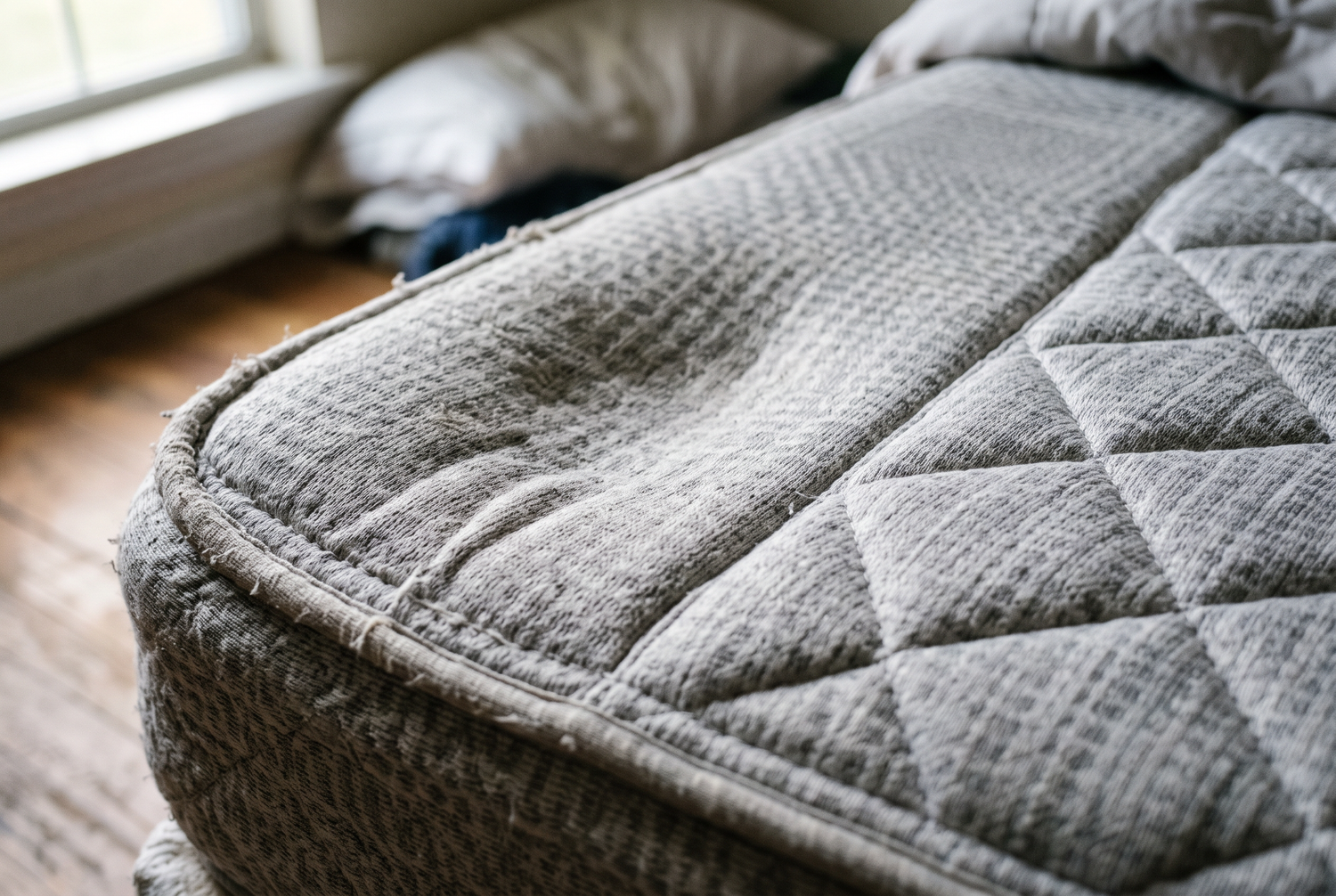
"A new mattress every eight years" – almost everyone knows this rule of thumb, and it's about as precise as saying a car lasts 150,000 kilometers. The actual lifespan of a mattress depends on the material, manufacturing quality, body weight of the sleepers, base, and care. There can easily be a five-year difference between an inexpensive roll-up mattress and a high-quality foam core. At the same time, many people change their mattress too late because wear occurs gradually, and one gets used to it. This article helps to realistically assess the lifespan of your mattress and recognize the right time to replace it.
The short answer: A good mattress lasts seven to twelve years, depending on the material and quality. High-quality foam and latex cores are at the upper end, while inexpensive roll-up mattresses often last only five to seven years. However, the condition is more crucial than the age: visible indentations of more than two to three centimeters, decreasing support, morning pain, and frequent turning at night are the most reliable signals. Regular rotation, an intact slatted frame, and good ventilation noticeably extend the lifespan.
- Realistic range: 7 to 12 years for good quality, less for inexpensive models.
- Condition matters more than the purchase date – check annually.
- An indentation of more than 2-3 cm means the support function has diminished.
- Slatted frame, rotation, and ventilation significantly affect durability.
How long individual materials last
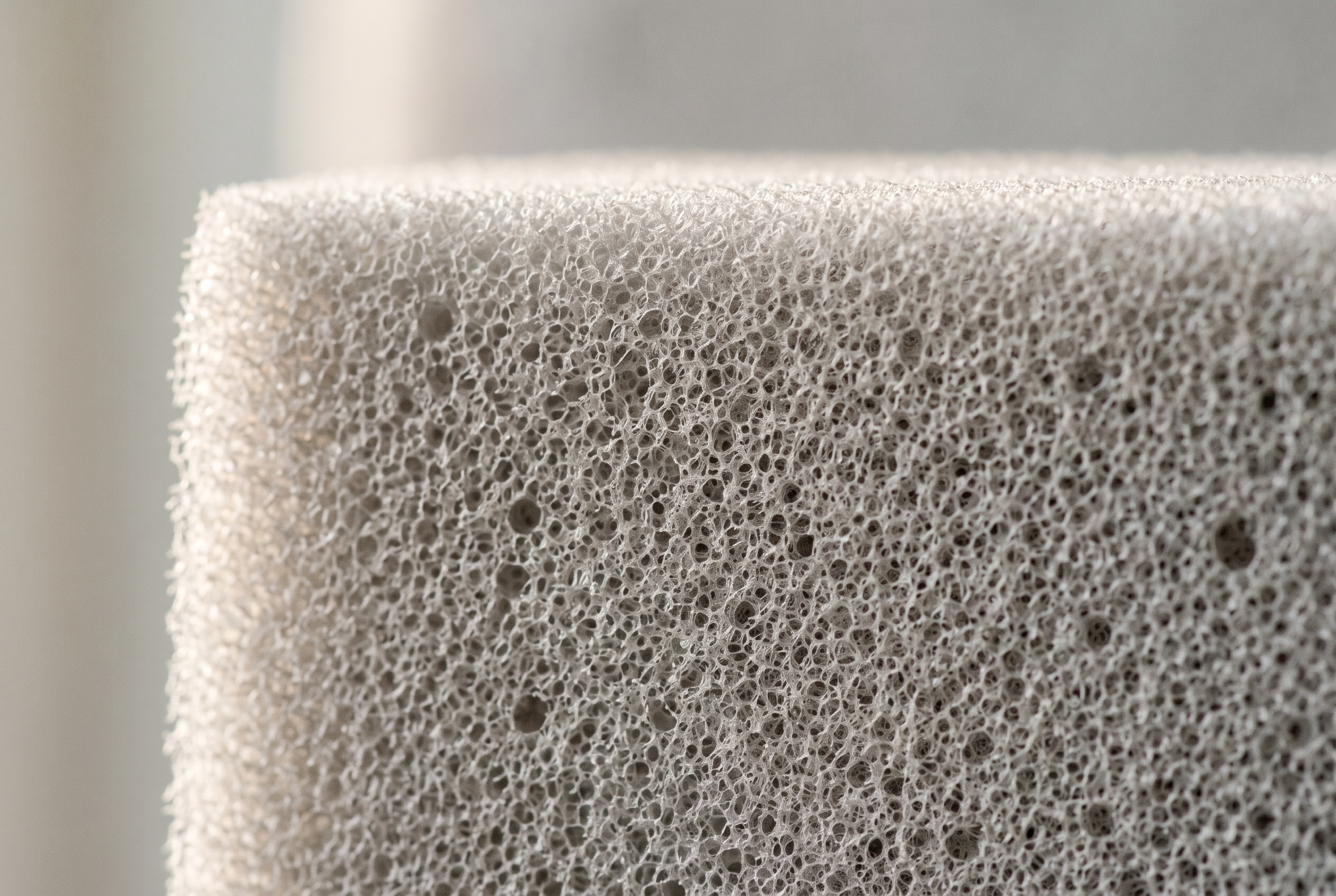
The construction determines how a mattress ages. Foams lose their resilience over time, spring cores mechanically fatigue, and latex becomes brittle. The following overview provides guidelines for medium to good quality models with normal use.
| Mattress Type | Typical Lifespan | How it ages |
|---|---|---|
| High-quality memory/cold foam | 8–12 years | Gradual loss of resilience |
| Latex (natural latex) | 8–12 years | Becomes brittle and cracked over time |
| Pocket spring | 7–10 years | Springs fatigue, upholstery layer flattens |
| Bonnel spring | 6–9 years | Earlier indentation formation, squeaking |
| Inexpensive roll-up mattress | 5–7 years | Rapid foam fatigue |
How to reliably recognize wear and tear
The simplest test takes two minutes: Strip the mattress and lay a straight broomstick or a spirit level lengthwise across the sleeping surface. If there is a gap of more than two to three centimeters between the stick and the mattress in the sleeping zone, the support function has diminished. A second indicator is your body: If you regularly wake up with lower back pain that improves after an hour of movement, this suggests a worn-out base. Frequent tossing and turning at night also indicates that you are unconsciously searching for a comfortable position. An interesting counter-test: If you sleep significantly better on holiday or at a friend's house, that's a strong signal. More details in the article How often should you change your mattress?.

What shortens the lifespan
The most commonly underestimated factor is the bed base. A slatted frame with broken or severely bent slats transmits pressure unevenly and creates indentations prematurely; slat spacing over seven centimeters is also unfavorable because the core sags between the slats. Secondly: moisture. A person loses about a quarter to half a liter of fluid per night, a large part of which enters the mattress. If it cannot dry out from below – for example, on a closed bed box panel – both the material and hygiene suffer. Thirdly: constant localized pressure, such as when always using exactly the same spot. Fourthly, body weight plays a role, which is why the lower end of the timeframes applies under higher stress.
How to gain years
Rotate the mattress 180 degrees from head to foot every three months; for reversible models, also flip it to the other side. This distributes the load and noticeably delays indentation formation – the details are explained in the article Rotating or flipping your mattress. Air the bed for 20 to 30 minutes in the morning with the duvet turned back, instead of making it immediately. Use a washable mattress protector that catches sweat and skin flakes without blocking breathability – see Mattress protectors and encasings. Check the slatted frame for cracks once a year. And: If there's a significant difference in partners' weights in a double bed, occasionally switch sides. Further care tips can be found in the article on mattress care.

Get CHF 25 discount
Subscribe to our newsletter and receive a one-time CHF 25 discount. ✓ 200 nights trial sleep ✓ 10-year warranty
Frequently asked questions about mattress lifespan
How long does a good mattress last?
With good quality and normal use, seven to twelve years is realistic. High-quality foam and latex cores are at the upper end, while inexpensive roll-up mattresses often last only five to seven years. The condition, not the purchase date, remains crucial.
How do I know if my mattress is sagging?
Lay a straight rod lengthwise across the stripped sleeping surface. A gap of more than two to three centimeters in the sleeping zone indicates a significant indentation. Other signs include morning back pain that subsides over the course of the morning, and frequent tossing and turning at night.
Does rotating the mattress really extend its lifespan?
Yes, because it distributes the stress over the entire surface instead of always on the same zones. Rotating it from head to foot every three months is sufficient; for reversible models, also flip it.
Does the slatted frame affect durability?
Significantly. Broken or severely bent slats create localized pressure and thus premature indentations. Slat spacing over seven centimeters is also unfavorable. Check the frame once a year.
Do I need to replace my mattress if it still feels comfortable?
Not necessarily. However, habit can be deceiving: wear occurs so slowly that you barely notice it. Therefore, do the rod test once a year and pay attention to how you sleep in other beds.







Leave a comment
This site is protected by hCaptcha and the hCaptcha Privacy Policy and Terms of Service apply.