
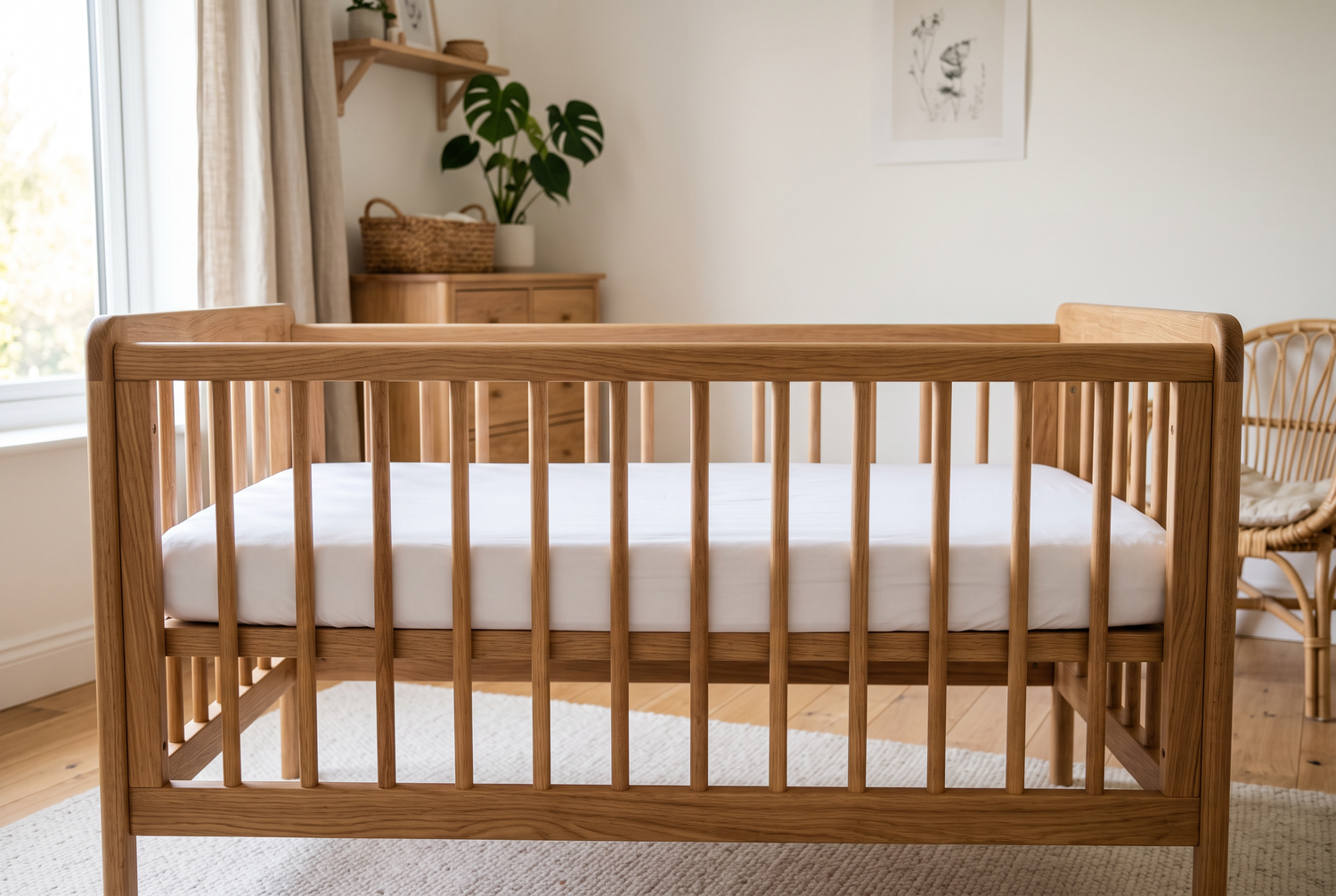
When it comes to the first child, choosing a baby mattress quickly becomes a fundamental question: Should it be particularly soft so the child lies comfortably? This is precisely where the biggest misconception lies. For adults, it's about pressure relief; for infants, it's primarily about safety – and that requires the opposite of soft. Professional societies worldwide recommend a firm, flat sleeping surface without additional padding for the first year of life. The background is the prevention of sudden infant death, the risk of which can be significantly reduced by a few clear sleep rules. This article summarizes what is important for baby mattresses and safety, and what rules apply to the sleeping environment.
The short answer: A safe baby mattress is firm, flat, even, and fits exactly into the bed – there should be no more than about two centimeters of gap between the mattress edge and the bars. It should be covered with a single, tightly fitted sheet, without pillows, blankets, bumpers, stuffed animals, or additional overlays. For the first year of life, the baby should sleep on their back, in their own bed in the parents' bedroom, at 16 to 18 degrees Celsius, and in a sleeping bag instead of under a blanket. Pressure test: If your hand sinks in significantly, the mattress is too soft.
- Firm and flat instead of soft – soft surfaces increase the risk of airway obstruction.
- The mattress must fit perfectly: a maximum of about two centimeters gap to the bed frame.
- Only a mattress, fitted sheet, and sleeping bag belong in the baby bed.
- Back sleeping, a smoke-free environment, and 16–18 degrees Celsius room temperature further reduce the risk.
Why a firm mattress is so important
In the first few months, infants cannot reliably lift their heads or turn them to the side. If the face sinks into a soft surface, a hollow forms where exhaled air can collect – the child then re-breathes carbon dioxide-rich air. A firm mattress prevents this hollowing. It does not have to be hard in the sense of uncomfortable: The safety requirement refers to the support, not an unpleasant lying sensation. The practical test is simple: Press the palm of your hand into the center of the mattress. If a visible indentation remains or your hand sinks several centimeters, it is unsuitable for a baby. For the same reason, sheepskins, thick overlays, or toppers do not belong in a baby bed.
The right size and fit
In Switzerland, baby mattresses are usually 60 × 120 cm or 70 × 140 cm. The decisive factor is less the standard size than the actual fit in the bed: There should be at most a narrow gap all around between the mattress edge and the cot frame; approximately two centimeters is a good guideline. Larger gaps pose a risk that an arm, leg, or head could get trapped. The height is usually between 8 and 12 centimeters. Also, note the distance from the mattress surface to the top edge of the bars: It should be at least 50 centimeters so that the child cannot climb out later. As soon as the child can pull themselves up, the slatted frame should be set to the lowest position.

Safe sleeping environment: an overview of the rules
The following recommendations apply in a similar form to pediatricians and professional societies in Switzerland and internationally. They refer to the first year of life.
| Area | Recommendation | Why |
|---|---|---|
| Sleeping position | Always on the back | Significantly lower risk than stomach or side sleeping |
| Sleeping surface | Firm, flat, perfectly fitting | Prevents hollowing and trapping |
| Bed contents | Only fitted sheet and sleeping bag | Pillows, blankets, and bumpers can obstruct airways |
| Sleeping place | Own bed in parents' bedroom | Proximity without the risks of co-sleeping |
| Room temperature | 16 to 18 degrees Celsius | Overheating is considered a risk factor |
| Smoke | Completely smoke-free environment | Tobacco smoke is a significant risk factor |
Material, pollutants, and care
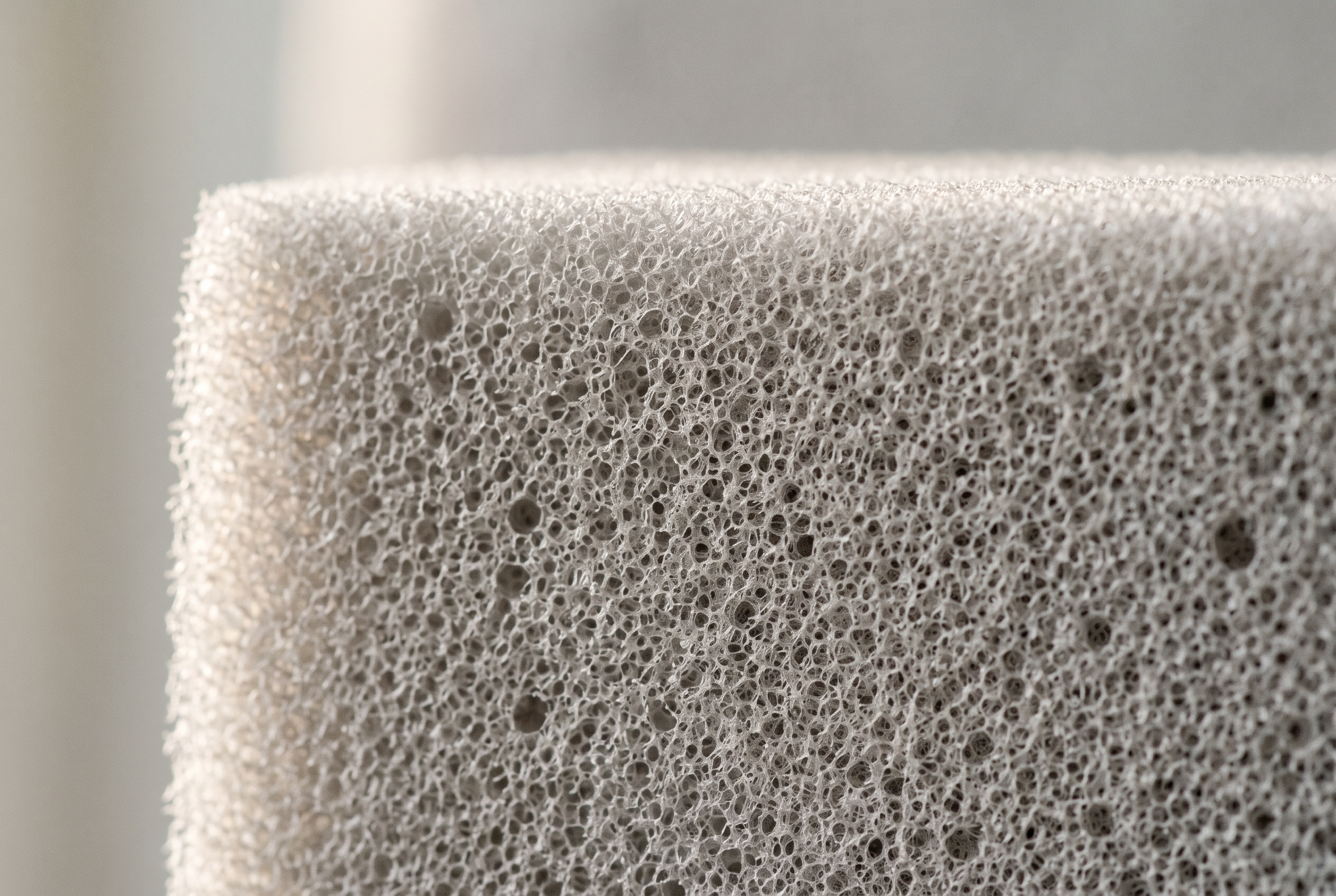
Common types are cold foam and coconut-latex mattresses; both can be safe as long as they are firm and dimensionally stable. Look for certified pollutant-free materials, for example, according to OEKO-TEX Standard 100, and air out a new mattress for several days in a well-ventilated room before first use. A removable cover that can be washed at at least 60 degrees is practical, as spitting up and wetness are part of this stage of life. A thin, breathable moisture-protective overlay directly under the fitted sheet is permissible, provided it fits snugly and does not bunch up. Used mattresses of unknown origin are not recommended: They may be worn out, and their hygiene cannot be reliably assessed. Further information on children's mattresses for later stages can be found in the Children's Mattress Guide.
If you are unsure
When in doubt, speak to your pediatrician or the Mother and Father Counseling service. This applies especially to premature births, low birth weight, or if your child frequently spits up and you are considering an inclined position – such adjustments should always be professionally guided. Even if your baby can already roll from their back to their tummy independently, the question of how to handle this is best discussed individually. Questions about sleep patterns in the first few months are answered in the article on Sleeping with a Newborn.

Get CHF 25 discount
Subscribe to our newsletter and get a one-time CHF 25 discount. ✓ 200 nights trial sleep ✓ 10-year warranty
Frequently asked questions about baby mattresses and safety
How firm does a baby mattress need to be?
So firm that when you press it with the palm of your hand, no noticeable hollow forms and the surface immediately springs back. Soft mattresses, sheepskins, and toppers increase the risk of the face sinking in and exhaled air being re-breathed.
How big can the gap between the mattress and the bed frame be?
As a guide, a maximum of about two centimeters all around. Larger gaps pose a risk that the child's arm, leg, or head could get trapped. The mattress should therefore fit exactly the internal dimensions of the bed.
Does my baby need a pillow or blanket?
No. In the first year of life, neither pillows, blankets, bumpers, nor stuffed animals belong in the bed. A suitable sleeping bag keeps warm without being able to slide over the head or face.
Is a used baby mattress okay?
Mattresses of unknown origin are not recommended, as their hygienic condition and support cannot be assessed. If the mattress comes from your own family, is undamaged, dimensionally stable, and has a freshly washed cover, there is generally less against it – if in doubt, ask your pediatrician.
What room temperature is right for babies?
16 to 18 degrees Celsius is recommended in the bedroom. Overheating is considered a risk factor. Check your child's neck to see if they are too warm – cold hands and feet are normal for infants and not a reliable sign.
This article serves for general information and does not replace medical advice.








Leave a comment
This site is protected by hCaptcha and the hCaptcha Privacy Policy and Terms of Service apply.