
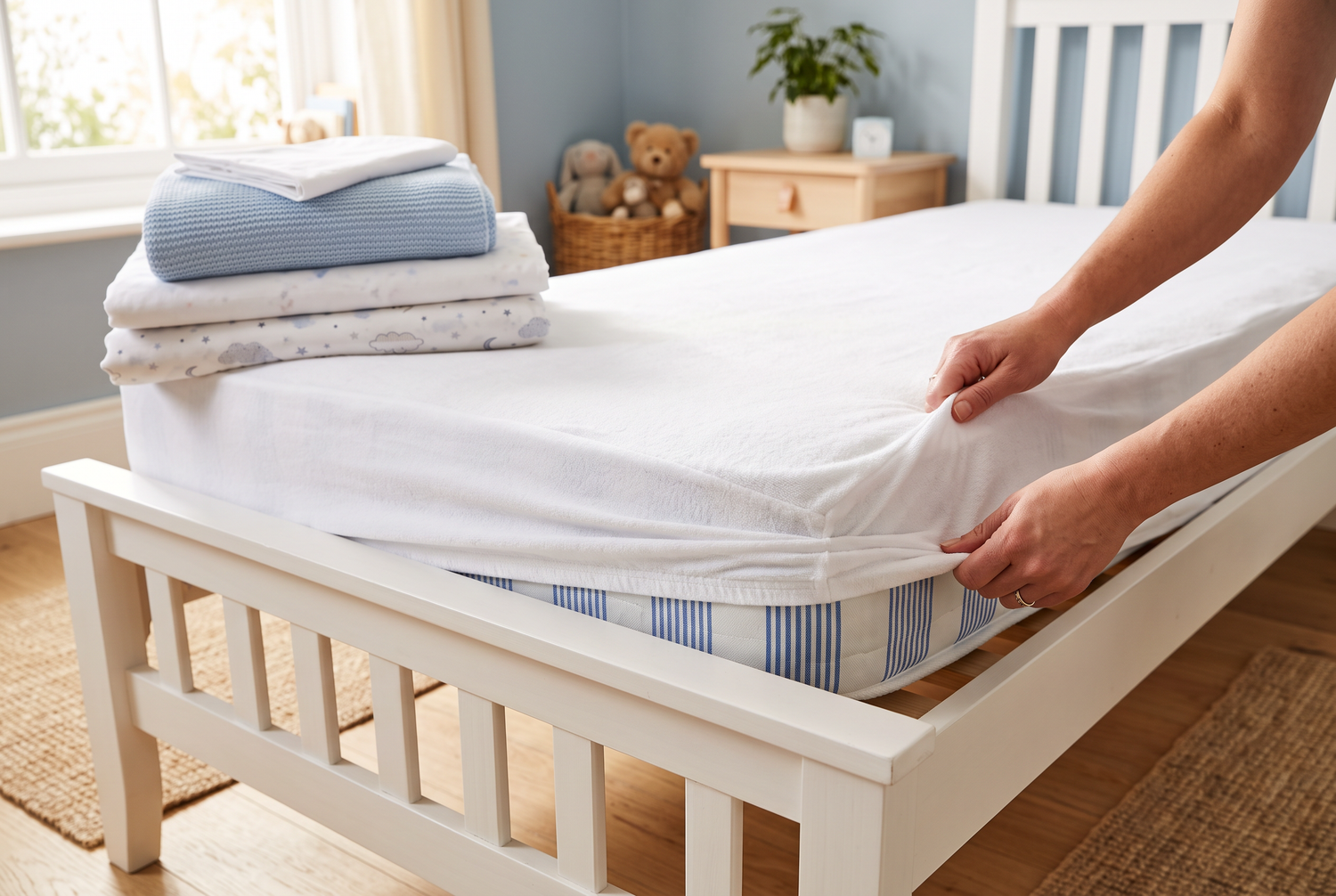
A wet bed at three in the morning is part of everyday life for families with small children – even if it's rarely talked about. Around one in ten seven-year-olds still regularly wet the bed at night, and for five-year-olds, it's about 15–20 percent; boys are more frequently affected than girls. Medically, nocturnal enuresis (bedwetting) is simply normal development up to the fifth birthday – bladder control during sleep matures at different rates for every child. Nevertheless, two very practical questions arise for parents: How do I protect the mattress and bedding so that nightly accidents leave no traces and changing can be done in five minutes at three in the morning? And how do I support my child without creating pressure and shame? This guide answers both – from the right layering system in bed and stain removal to the question of when medical clarification is advisable.
The short answer: The mattress is most reliably protected by a waterproof, breathable mattress protector with a PU membrane, supplemented by an encasing as a second barrier if needed. The practical trick for peaceful nights is the double layering system: two protectors plus two sheets layered one on top of the other – at night, the upper wet layer is simply pulled off, revealing a freshly made bed underneath. Treat fresh urine stains with cold water and an enzyme cleaner, never with hot water. And regarding the child: stay relaxed – bedwetting is not a matter of upbringing, but of maturation.
- Up to the age of 5, nocturnal enuresis is normal development; at 7 years old, about one in ten children still wet the bed.
- Waterproof, breathable protectors (PU membrane, washable at 60–95 °C) reliably protect the mattress – crinkly plastic sheets are obsolete.
- The double layering system (protector/sheet × 2) makes nighttime changes a five-minute affair.
- Urine stains: treat with cold water, enzyme cleaner, or citric acid/baking soda – never use hot water, as it sets proteins and odor.
- Medical clarification: advisable for bedwetting from about 5–6 years of age if it causes distress, or if a child starts wetting the bed again after at least 6 dry months.
Understanding Bedwetting: Normal, Common, Not a Parenting Failure
Nocturnal bladder control is a maturation process consisting of several components: the bladder must develop sufficient volume, the brain must perceive the signal of a full bladder during sleep, and the hormone vasopressin must reduce nocturnal urine production. For some children, these gears interlock at three years old, for others only at seven or eight – both are within the normal range of development. Genetics also play a role: if a parent was late to be potty-trained, the probability is significantly higher for the child. It's important to know: children do not wet the bed out of defiance, laziness, or provocation – they simply sleep so deeply that the bladder signal doesn't reach them. Therefore, scolding, reward systems for "dry nights," or waking them up at night on suspicion primarily create one thing: pressure, which tends to prolong the problem. Incidentally, a distinction is made between primary enuresis (the child has never been dry for a longer period) and secondary enuresis (bedwetting after at least six dry months) – the latter can be triggered by stress or physical causes and should be medically examined early on.
Protecting the Mattress: The Right Layering System
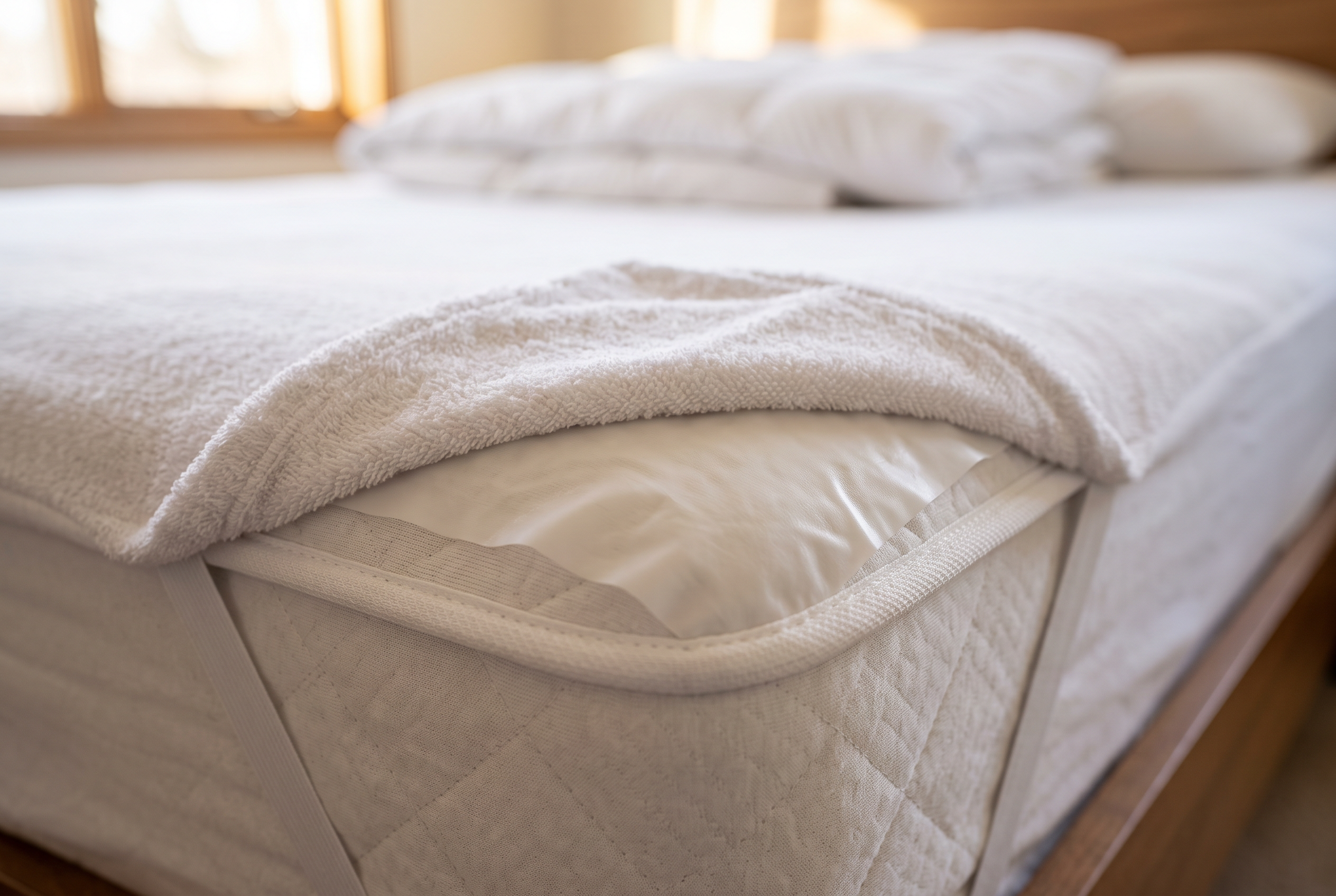
An unprotected mattress absorbs urine deep into its core – leading to stubborn odors, staining, and, in the worst case, hygiene problems that prematurely ruin the mattress. Protection is achieved in layers: at the very bottom, an encasing can completely enclose the entire mattress (useful if there is also a dust mite allergy), and above that comes the actual working layer – a waterproof mattress protector with a terry cloth or molleton surface and a polyurethane membrane. These modern protectors are silent, breathable, and washable at 60–95 °C; the crinkly plastic sheets of earlier generations are obsolete and cause sweating. For the night itself, the double layering system has proven effective: protector, sheet, second protector, second sheet. If an accident occurs, simply remove the upper wet layer along with the sheet – the freshly made bed is underneath, and everyone can go back to sleep in five minutes. Keep a fresh pair of pajamas handy and store the wet bundle in the bathroom until morning. For more details on the types of protectors available and what to look for when buying, refer to the article Mattress Protectors and Encasings.

First Aid: Removing Urine Stains and Odor from the Mattress
If it does penetrate the mattress, speed counts – and the right temperature. First, blot fresh wetness with paper towels or a terry cloth (press, don't rub). Then follow up with cold water and a little mild detergent or an enzymatic cleaner: enzymes break down the urea and proteins responsible for the odor. Hot water is taboo – it denatures the proteins and permanently sets the stain and odor. Proven home remedies: a solution of one part citric acid or vinegar to four parts water against the ammonia smell, then sprinkle baking soda on the damp spot, let it sit for several hours (preferably overnight), and vacuum thoroughly. Afterward, let the mattress dry completely upright and in a well-ventilated area – residual moisture in the core is the most common cause of mildew stains. Detailed instructions can be found in the guides Removing Stains from the Mattress and Cleaning the Mattress.
Helping Your Child: What Works – and What Harms
The most important help is composure: if parents react neutrally ("It happens, we'll quickly change it"), the child's self-esteem remains intact – and that is precisely the best predictor that this phase will pass without consequences. You can practically support this with smart fluid management: drink regularly during the day (most of the intake by early evening), only small sips in the last hour before bedtime, and a relaxed toilet visit without time pressure right before going to bed. Caffeinated drinks like iced tea or cola are diuretic and should not be part of a child's evening routine anyway. Diaper pants for the night are not a shame, but a legitimate relief for everyone – many families use them until they stay dry for several weeks in a row. What experts advise against: carrying a sleeping child to the toilet at night (they don't learn anything because they are not awake) and any kind of punishment or shaming. From about five to six years of age and if there is distress, the bed-wetting alarm or mat is the best-proven method: it wakes the child at the first drop and thus trains the perception of the bladder signal – success rates with consistent use over several weeks are about two-thirds of children. Good, adequate sleep also helps, as overtired children sleep even more deeply; the Children's Bedtimes provide guidance.
When to See a Doctor?
A consultation with a pediatrician is advisable if the child regularly wets the bed from about five to six years of age and suffers from it – or earlier if warning signs appear: bedwetting during the day, pain or burning during urination, noticeably excessive thirst, constipation, or a recurrence after at least six dry months. Secondary enuresis can be caused by urinary tract infections, constipation (a full ampulla presses on the bladder), rarely diabetes, or emotional stress – all treatable if recognized. Children who snore heavily and have restless sleep should also be examined, as nocturnal breathing disorders can promote bedwetting. Depending on the cause, treatment ranges from counseling and calendar keeping to bed-wetting alarms and medication (desmopressin) for special situations such as school camps – the decision on this belongs in the hands of a doctor.
Practical Plan for Relaxed Nights
This is what the established system looks like: In the evening after going to the toilet, the child slips into pajamas and, if necessary, a night diaper; the bed is double-layered, a spare pair of pajamas and wet wipes are ready. If an accident occurs, the quiet program runs: lights dimmed, top layer removed, child quickly freshened up, back to bed, minimal conversation – no discussion, no drama. In the morning, the laundry is washed at 60 °C, the protector goes directly into the machine, and the bed is aired open so that residual moisture evaporates. If necessary, discreetly keep a calendar – not as an evaluation system for the child, but as information for the pediatrician. And check the condition of the mattress every six months: if it remains dry and odor-free thanks to the protective system, it will easily last its full lifespan.
Get CHF 25 discount
Subscribe to newsletter and receive a one-time CHF 25 discount. ✓ 200 nights trial sleep ✓ 10 years warranty

Frequently Asked Questions about Bedwetting
Up to what age is bedwetting considered normal?
Up to the fifth birthday, nocturnal enuresis is considered normal development. Even after that, it is common: at seven years old, about one in ten children still occasionally wet the bed. Clarification is worthwhile from five to six years of age if there is distress.
How do I best protect the mattress from urine?
With a waterproof, breathable mattress protector with a PU membrane that is washable at 60–95 °C – supplemented if necessary by an encasing as a second barrier. The double layering system of two protectors and two sheets makes nocturnal changes particularly fast.
How do I remove urine odor from the mattress?Blot fresh spots, treat with cold water and an enzyme cleaner, alternatively use diluted citric acid or vinegar, then sprinkle baking soda and let it work overnight before vacuuming. No hot water – it permanently sets proteins and odor.
Should I wake my child at night to urinate?
Carrying a sleeping child to the toilet does little for the learning process, as the child is not consciously aware of what is happening. More effective are good fluid distribution throughout the day, going to the toilet before bed, and from about five to six years of age, using a bed-wetting alarm.
When should you see a doctor for bedwetting?
If a child from about five to six years of age regularly wets the bed and suffers from it, if they also wet the bed during the day, complain of pain, drink noticeably large amounts – or if they start wetting the bed again after at least six dry months.
Are night diapers harmful after a certain age?
No. Diaper pants do not delay potty training and provide relief for both child and parents. Many families use them until they stay dry for several weeks in a row – it's important to handle them neutrally and without shame.
This article provides general information and does not replace medical advice.









Leave a comment
This site is protected by hCaptcha and the hCaptcha Privacy Policy and Terms of Service apply.