
Melatonin is considered the sleep hormone par excellence – but the body cannot produce it out of nothing. At the beginning of the production chain is tryptophan, an essential amino acid that we must obtain through food. From tryptophan, serotonin is formed, and from serotonin, melatonin is produced in the dark – an elegant biochemical cascade that explains why diet and sleep are more closely linked than many people think. However, persistent myths also surround tryptophan: from the sleep-inducing turkey to warm milk as a sleep aid. This guide explains what tryptophan actually does in the body, which foods provide a lot of it, why carbohydrates play a surprising role – and what to make of tryptophan supplements from the drugstore. With concrete figures, carefully categorized study results, and practical tips for your evening meal.
The short answer: Tryptophan is the precursor for serotonin and the sleep hormone melatonin – without sufficient intake, the body literally lacks the raw material for the night. The daily requirement of about 3.5 to 6 mg per kilogram of body weight (around 250 to 425 mg for 70 kg) is easily met with a normal mixed diet; soybeans, cheese, nuts, seeds, poultry, and oats are particularly rich in it. Individual foods do not cause acute drowsiness – regular supply plus the right conditions are crucial for tryptophan to turn into melatonin in the evening: darkness, routine, and a carbohydrate-rich dinner.
- Tryptophan is an essential amino acid and the precursor of serotonin and melatonin – the body cannot produce it itself.
- The requirement (around 250–425 mg per day for 70 kg) is almost always met with a balanced diet; a real deficiency is rare.
- Carbohydrates help tryptophan enter the brain: insulin clears competing amino acids from the blood.
- Individual "sleep foods" do not act like a pill – timing, light, and evening routine are also decisive.
- Tryptophan supplements show at most mild effects in studies and should be discussed with a doctor if you are taking medication (especially antidepressants).
What is Tryptophan – and what does it do in the body?
Tryptophan (more precisely: L-Tryptophan) is one of nine essential amino acids – protein building blocks that humans cannot synthesize themselves. In addition to its role as a building block for body proteins, tryptophan is a precursor for two neurotransmitters that control sleep and mood: serotonin, often referred to as the "feel-good hormone," and melatonin, the hormone of darkness. The body also uses tryptophan to produce niacin (vitamin B3). The recommended intake is about 3.5 to 6 mg per kilogram of body weight daily – for a 70 kg person, this means roughly 250 to 425 mg. For comparison: 100 g of oats for breakfast, a yogurt, and a portion of poultry or legumes easily cover this amount. A tryptophan deficiency due to a normal diet is therefore rare – more relevant is whether the available tryptophan reaches where it is needed in the evening: in the brain.
From dinner to the brain: the melatonin cascade
Tryptophan's journey has a bottleneck: the blood-brain barrier. Tryptophan shares its transport system with other large amino acids (such as leucine, valine, tyrosine) – so after a protein-rich meal, many competitors vie for the same entrance. This is where the surprising helper comes in: carbohydrates. They trigger insulin release, and insulin preferentially shuttles competing amino acids into the muscles – tryptophan remains relatively more abundant and passes the barrier more easily. Therefore, a combination of complex carbohydrates with moderate protein in the evening is considered sleep-friendly. In the brain, tryptophan is converted into serotonin; the pineal gland converts serotonin into melatonin in the dark. The last step is the most critical: bright light – especially blue screen light – suppresses melatonin production even if there is plenty of raw material. The best tryptophan supply is therefore of little use without natural melatonin promotion through evening darkness.

The best Tryptophan sources in numbers
The values are guideline values per 100 g – they vary depending on the variety and processing:
| Food | Tryptophan (approx. mg/100 g) | Practical evening portion |
|---|---|---|
| Soybeans / Tofu | approx. 250–590 | Tofu in vegetable stir-fry |
| Hard cheese (e.g. Parmesan) | approx. 500–560 | A little grated cheese over pasta |
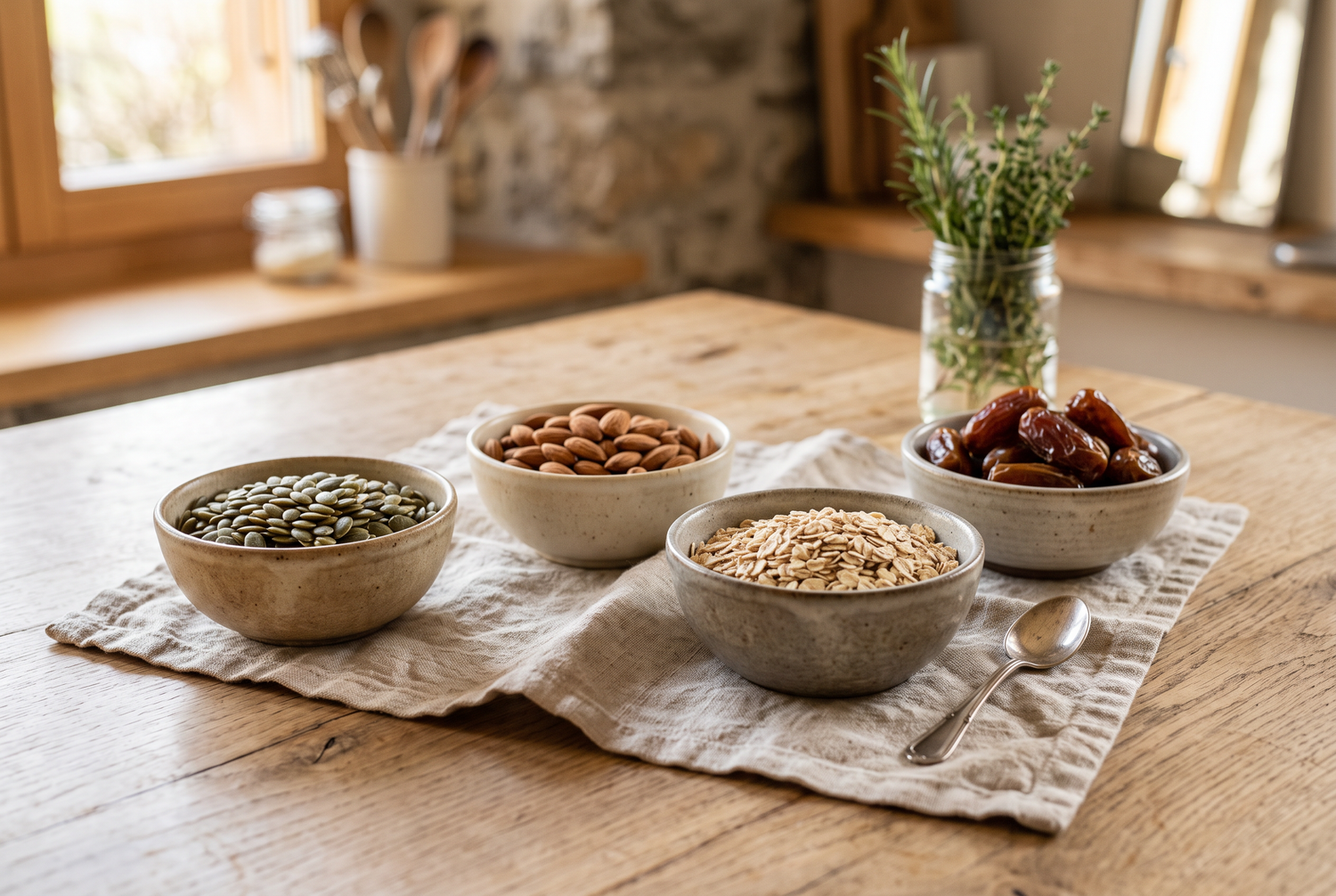
| Pumpkin seeds | approx. 500–570 | 1 tbsp over salad or soup |
| Cashews | approx. 290–450 | Small handful (approx. 30 g) as a snack |
| Chicken / Turkey | approx. 270–330 | Small portion with vegetables |
| Egg | approx. 200–230 | Boiled egg with dinner |
| Oats | approx. 160–190 | Small evening porridge with milk |
| Milk | approx. 40–50 | Glass of warm milk as a ritual |
Remarkably: milk – the most famous "sleep food" – is at the bottom of the list. Its effect is more ritual than pharmacological. More combinations are shown in the article Foods for good sleep.
Myths fact-checked
"Turkey makes you tired." The classic from the US (Thanksgiving fatigue) does not hold up to scrutiny: turkey contains no more tryptophan than other poultry. The lavish overall meal – large portions, alcohol, lots of fat – is what makes people tired. "Warm milk acts like a sleeping pill." A glass of milk only provides about 80–100 mg of tryptophan, too little for an acute effect; the calming ritual is more effective. "The more tryptophan, the better the sleep." Above the level of demand, increased intake through food does not provide any measurable additional effect – the bottleneck is in transport to the brain and light control, not in the raw material. "A sleep snack replaces sleep hygiene." No food compensates for late screen light, caffeine in the afternoon, or irregular sleep times. Nutrition is one component in the system – the basics of good sleep hygiene remain the foundation on which tryptophan can even work.
Tryptophan supplements: What does the research say?
L-Tryptophan is available as a dietary supplement and, in Germany/Austria, even as an approved medicine for sleep disorders. The research is mixed: Older reviews and newer meta-analyses suggest that doses of around 1 g can slightly shorten the time it takes to fall asleep and somewhat improve subjective sleep quality – but the effects are moderate and not noticeable in all people. Those most likely to benefit are individuals with mild, occasional sleep onset problems. Three caveats are important: First, a supplement does not replace identifying the underlying cause – for chronic insomnia, cognitive behavioral therapy is the most effective treatment. Second, tryptophan can interact with medications that affect the serotonin system (especially antidepressants like SSRIs or MAO inhibitors); the combination absolutely requires medical consultation, as in rare cases, serotonin syndrome can occur. Third, pregnant women, breastfeeding mothers, and people with liver or kidney diseases should be particularly cautious. Those who wish to supplement usually take the preparation 30 to 60 minutes before bedtime – ideally after consulting a pharmacist or doctor.
Practical application: How to effectively incorporate Tryptophan into your evening routine
A sleep-friendly evening meal combines three elements: a moderate protein source with good tryptophan content (tofu, poultry, egg, cheese), complex carbohydrates as "transport helpers" (potatoes, whole grain rice, pasta, bread), and vegetables. Specific examples: vegetable risotto with a little Parmesan; baked potatoes with herb quark; stir-fried vegetables with tofu and rice. If you still need a snack later: a small porridge with banana or yogurt with 1 tbsp pumpkin seeds – both provide tryptophan plus carbohydrates. The timing follows the well-known rule from the article Eating before bed: main meal 2 to 3 hours before bedtime, snacks up to about one hour before. It is also worth looking at micronutrients involved in the same cascade: Vitamin B6 (whole grains, bananas, nuts) is needed for the conversion to serotonin, and magnesium supports the relaxation capacity of muscles and the nervous system. And from 9 PM: dim the lights – otherwise, the melatonin factory remains closed despite a full raw material storage.
When diet alone isn't enough
Tryptophan optimizes the chemistry of the night – but sleep is an interplay of biochemistry, behavior, and environment. If you sleep poorly despite a balanced diet, it's best to systematically check: Are sleep times and light exposure correct? Are there disturbances like noise, heat, or brooding? And does the mattress support the body so that it can maintain the relaxation gained? A sagging or unsuitable mattress creates pressure points and positional changes that fragment precisely those deep sleep phases in which the body regenerates. If sleep problems persist for weeks or are accompanied by daytime fatigue, low mood, or nocturnal breathing pauses, seeing a doctor is the right step – there may be underlying causes that no food in the world can fix.

Get CHF 25 discount
Subscribe to newsletter and receive a one-time CHF 25 discount. ✓ 200 nights trial sleep ✓ 10 years warranty
Frequently Asked Questions about Tryptophan and Sleep
How much tryptophan do you need per day?
Recommendations range from about 3.5 to 6 mg per kilogram of body weight – for a 70 kg person, that's roughly 250 to 425 mg daily. A balanced diet including grains, dairy products, legumes, nuts, or meat generally covers this requirement without problems.
Which food has the most tryptophan?
Top sources include soy products, hard cheeses like Parmesan, and pumpkin seeds, with roughly 500 to 590 mg per 100 g. Cashews, poultry, eggs, and oats also provide significant amounts. Milk contains comparatively little – its reputation as a nightcap is more based on ritual.
Do tryptophan-rich foods make you tired immediately?
No. Individual meals only slightly change tryptophan levels in the brain; an acute sleeping pill effect is not to be expected. Regular intake in combination with darkness in the evening, fixed sleep times, and a carbohydrate-rich evening meal is effective.
Why do carbohydrates help tryptophan?
Carbohydrates trigger insulin release. Insulin transports competing amino acids from the blood into the muscles, allowing tryptophan to pass the blood-brain barrier more easily. Therefore, the combination of complex carbohydrates and moderate protein in the evening is considered sleep-friendly.
Are tryptophan supplements useful?
Studies show that doses of around 1 g have moderate effects on sleep onset time and subjective sleep quality – especially for mild, occasional problems. Those taking medications that affect the serotonin system (such as antidepressants) should only supplement tryptophan after consulting a doctor.
What is the difference between tryptophan and melatonin as a supplement?
Tryptophan is the raw material from which the body itself produces serotonin and melatonin – it acts indirectly and more gently. Melatonin supplements introduce the hormone directly and primarily influence the sleep-wake rhythm, for example, for jet lag. Neither replaces a clarification of persistent sleep disorders.
This article is for general information purposes only and does not replace medical advice.








Leave a comment
This site is protected by hCaptcha and the hCaptcha Privacy Policy and Terms of Service apply.