
During the day, worries can often be pushed aside – but as soon as the light goes out, they become loud. The heart pounds, thoughts race, and the more urgently sleep is needed, the more distant it becomes. People with anxiety disorders know this pattern particularly well: according to estimates, over half of them also report sleep problems requiring treatment. But the connection also works in reverse – those who sleep poorly react more anxiously and sensitively to stress the next day. This creates a vicious circle in which anxiety robs sleep and lack of sleep feeds anxiety. The good news: this cycle can be broken at both ends. In this article, we explain what happens at night in an anxiety-activated body, which strategies are proven to calm, and how to recognize when professional support is the right next step.
The short answer: Anxiety activates the stress system – increased pulse, cortisol, and an overactive brain prevent shutting down. At night, daily distractions are also absent, giving worries more room. At the same time, lack of sleep demonstrably increases the anxiety response in the brain. Effective strategies include structured worry times in the early evening, relaxation techniques such as breathing exercises and progressive muscle relaxation, and a consistent sleep routine. For persistent anxiety affecting daily life, a psychotherapeutic assessment is the most important step.
- Anxiety and sleep problems mutually reinforce each other – the majority of people with anxiety disorders sleep poorly, and sleep deprivation increases anxiety sensitivity.
- At night, distractions are absent; the brain assesses worries as more threatening when fatigued than during the day.
- Proven immediate strategies: 4-7-8 breathing, progressive muscle relaxation, getting up after 20 minutes of lying awake.
- Long-term effective: consistent sleep times, worry time in the early evening, avoiding caffeine and alcohol, CBT-based methods.
- For persistent anxiety with daily impairment: general practitioner or psychotherapeutic assessment – anxiety disorders are highly treatable.
Sleep and Anxiety: A Vicious Cycle in Both Directions
Research shows a clear bidirectional relationship. Direction one: Anxiety disrupts sleep. People with generalized anxiety disorder, panic disorder, or social anxiety report above-average rates of difficulty falling asleep, nocturnal awakenings, and unrefreshing sleep – in studies, rates range from 50 to 70 percent depending on the disorder. Direction two: Sleep deprivation amplifies anxiety. Experiments at the University of California showed that even one sleepless night significantly increases activity in the amygdala – the brain's fear center – while the prefrontal cortex, which regulates emotions, works more slowly. Participants reported measurably higher anxiety levels after sleep deprivation, some in the clinically relevant range. Conversely, deep sleep in particular acted like a nocturnal sedative: the more of it, the lower the anxiety levels the next day. This explains why both problems exacerbate each other – and why it's worth addressing both ends simultaneously.
Why Worries Get Louder at Night
Three mechanisms make night prime time for anxiety. First, lack of distraction: during the day, work, conversations, and stimuli compete for attention – in the dark, quiet bedroom, the carousel of thoughts takes center stage. Second, the body of an anxious person is in alarm mode: the sympathetic nervous system keeps heart rate, muscle tension, and breathing elevated, cortisol remains high – physiologically the opposite of what falling asleep requires. Sleep medicine specialists refer to this as hyperarousal, an over-excitement that also characterizes chronic insomnia. Third, nocturnal brain chemistry alters perception: in a fatigued state between 2 and 4 am, problems appear more threatening and unsolvable than during the day – an effect almost everyone who has lain awake at night knows. In addition, many experience fear of not sleeping itself: looking at the clock, calculating remaining hours, and the thought "tomorrow I'll be exhausted" create exactly the stress that prevents sleep. More on this pattern in the article Stress, Rumination, and Sleep Problems.
Recognizing Typical Nocturnal Anxiety Patterns
Anxiety manifests in sleep in different ways. Sleep onset anxiety expresses itself in hours of lying awake with racing thoughts – often with generalized anxiety disorder. Nocturnal awakenings with worry attacks typically occur between 2 and 4 am: one wakes up at a normal cycle boundary, but instead of falling back asleep, the worry system kicks in. Nocturnal panic attacks, in turn, abruptly pull sufferers out of sleep – with a racing heart, shortness of breath, sweating, and fear of death; they usually arise during the transition between light and deep sleep and, as frightening as they are, are physically harmless. Important for distinction: heart palpitations when falling asleep can also have other causes – from caffeine to thyroid to iron deficiency – and should be medically clarified if they occur frequently, as our article Heart Palpitations When Falling Asleep explains. And finally, there is sleep anxiety in the narrower sense: the fear of the bed itself because it has become a place of failure over months. Each pattern has its own starting points – recognition is the first step.

Immediate Strategies for Acute Nocturnal Anxiety
When anxiety is present at night, body-oriented techniques help faster than arguments against worries. The 4-7-8 breathing technique has proven effective: inhale for 4 seconds, hold for 7 seconds, exhale for 8 seconds – the prolonged exhalation activates the parasympathetic nervous system and measurably lowers pulse and tension. Alternatively, progressive muscle relaxation works: tense muscle groups sequentially for 5 to 7 seconds and release for 20 to 30 seconds. For racing thoughts, the 5-4-3-2-1 grounding exercise helps: name five things you hear, four things you feel, and so on – this shifts attention from the worry spiral to the present. The 20-minute rule is also crucial: if you lie awake for longer and notice tension building, get up, go to another room, and do something quiet in dim light – read, listen, breathe – until sleepiness returns. This prevents the brain from associating the bed with anxiety. For nocturnal panic attacks: sit up or stand, exhale slowly, and remember that the attack will subside on its own after 10 to 20 minutes.
| Strategy | When to use | Mechanism of action |
|---|---|---|
| 4-7-8 Breathing | Acute tension, falling asleep | Activates parasympathetic nervous system, lowers pulse |
| Progressive Muscle Relaxation | Physical restlessness, tension | Relieves muscular chronic tension |
| Worry Time + Notebook | Daily in the early evening | Shifts rumination out of bed |
| 20-Minute Rule | Prolonged lying awake | Prevents association of bed = anxiety |
| 5-4-3-2-1 Grounding | Racing thoughts, rising panic | Redirects attention to the present |
Breaking the Cycle Long-Term
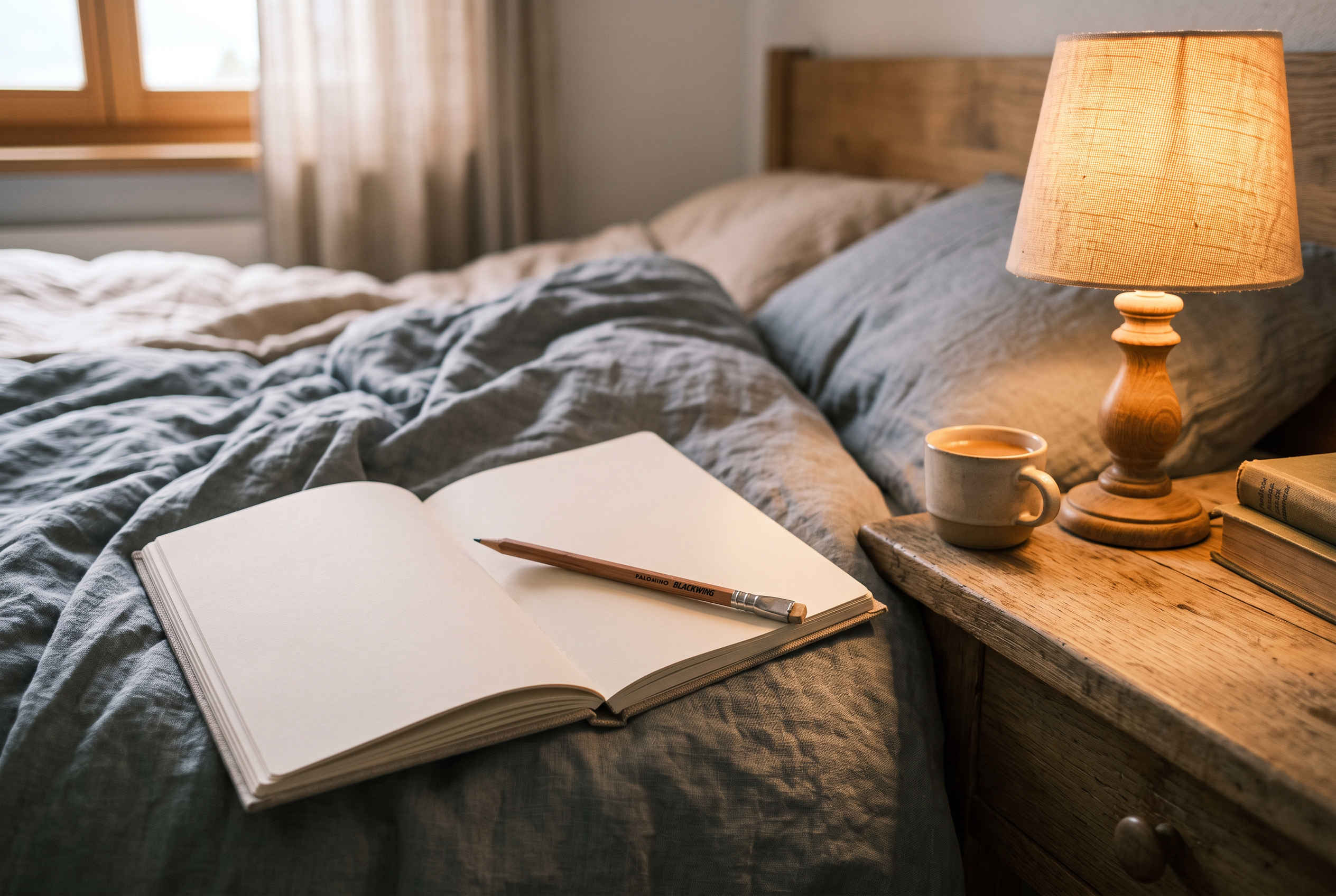
Sustainable improvement comes through structure. First: fixed sleep and wake-up times – a predictable rhythm removes the uncertainty about sleep, which particularly burdens anxious people. Second: establish a worry time in the early evening – 15 minutes in which worries are consciously noted and next steps are recorded; if the topic comes up at night, the rule is: "It's noted, it will be dealt with tomorrow." Third: reduce stimulants – caffeine often has a stronger anxiogenic effect on anxious people and should be cut out by early afternoon at the latest; alcohol seemingly calms but fragments the second half of the night and can exacerbate anxiety the next day. Fourth: exercise – 30 minutes of moderate exercise demonstrably lowers general anxiety levels, ideally not directly before bedtime. Fifth: regularly practice relaxation techniques, not just in emergencies – meditation and breathing techniques work like a muscle that needs training. The most effective structured method for chronic sleep problems is cognitive behavioral therapy for insomnia, the principles of which our article on CBT-I explains.
Common Mistakes That Worsen Anxiety and Sleep Problems
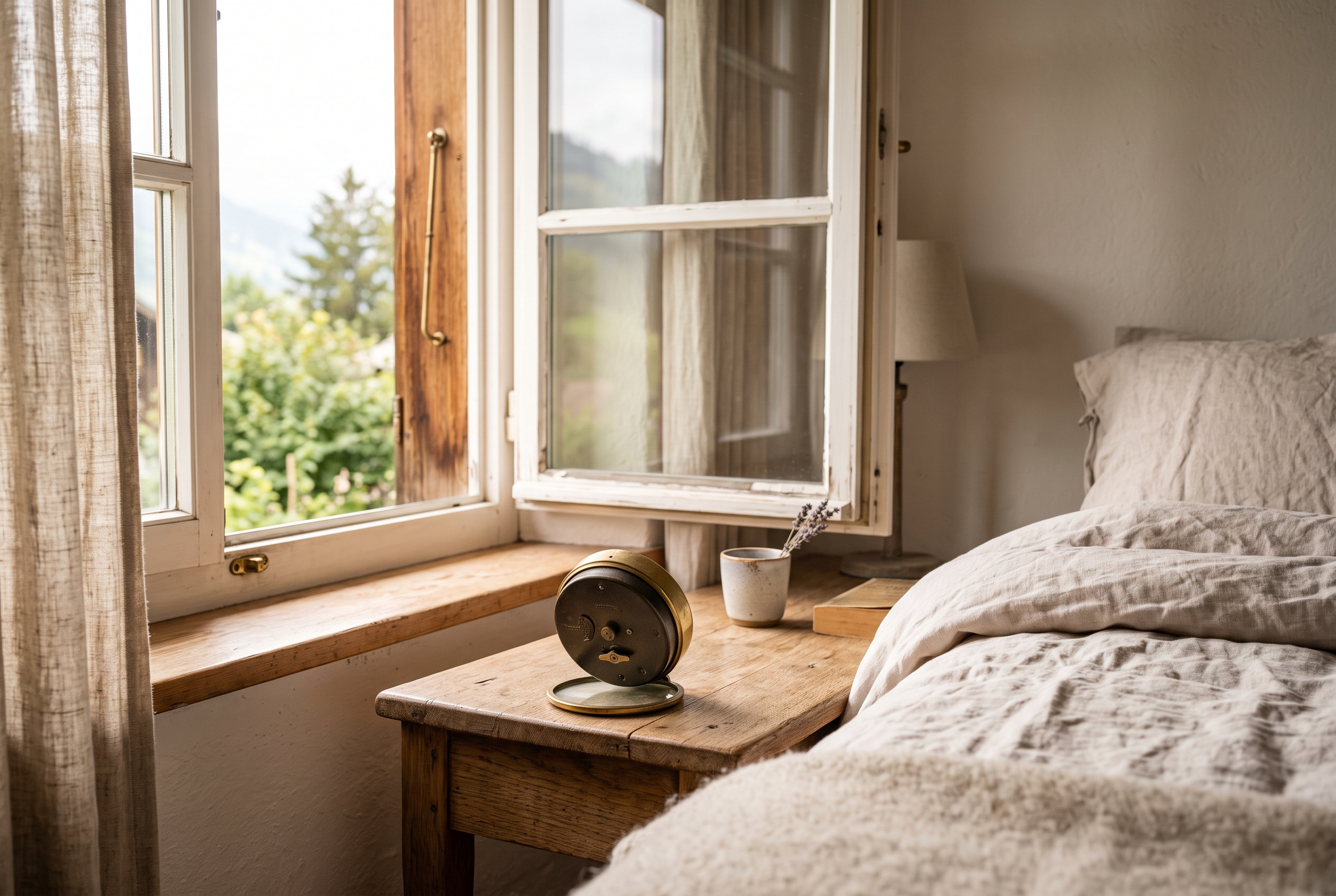
Mistake one: going to bed earlier to "surely get enough sleep." Those who go to bed without being tired lie awake longer and reinforce the association between bed and rumination – bedtime should be based on genuine tiredness. Mistake two: constantly checking the clock or sleep tracker. Constant monitoring creates performance pressure; turn the alarm clock away, and don't value tracker data over your own well-being. Mistake three: using alcohol as a sleep aid – temporarily dampening, but long-term an anxiety and sleep enhancer. Mistake four: using the smartphone as a distraction in bed; messages and social media provide new threat fodder for the alert brain, and screen light delays melatonin release. Mistake five: expanding avoidance – those who cancel appointments, skip sports, or avoid the bedroom out of fear of bad nights give anxiety more territory. And mistake six: trying to solve everything alone. Anxiety disorders are among the most treatable mental illnesses – waiting until it becomes unbearable prolongs suffering unnecessarily.
The Bedroom as a Safe Haven
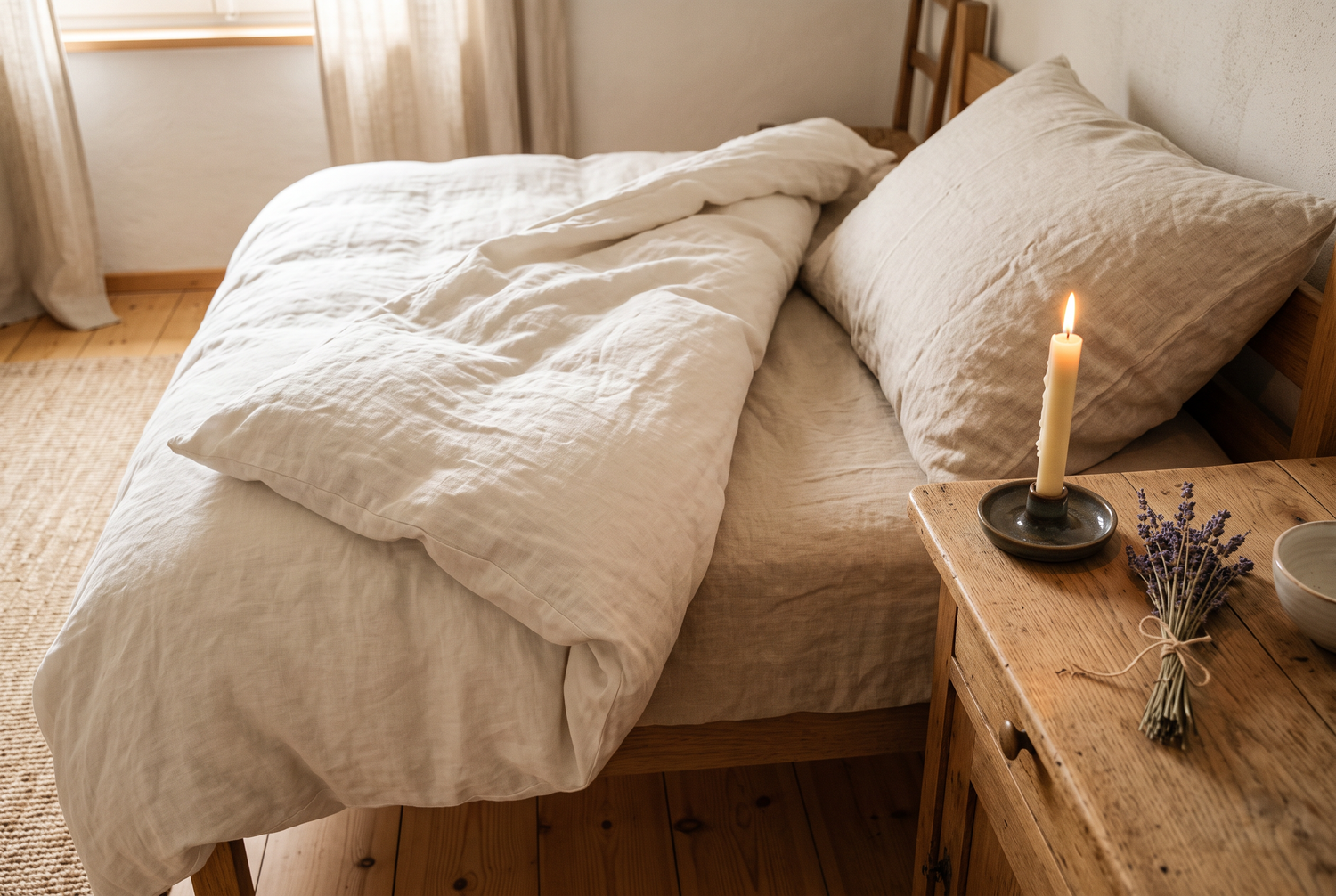
For people with nocturnal anxiety, the sleep environment is more than comfort – it's a signal to the nervous system. A tidy, cool (16 to 19 °C), dark, and quiet room conveys predictability and safety. Heavy blankets are found to be soothing by many anxious individuals; initial studies on weighted blankets show moderate effects on sleep quality and anxiety levels, even if the data is still limited. Body comfort is also important: someone already over-alert at night will be further triggered by pressure points, heat build-up, or a saggy mattress – every unnecessary awakening is a new opportunity for the worry carousel. A sleeping surface that evenly relieves pressure and creates a dry, temperature-stable sleep climate reduces these disruptive impulses. Rituals also belong to a safe environment: the same sequence every evening – such as tea, 10 minutes of reading in warm light, breathing exercise – conditions the nervous system for relaxation over weeks. Our article on the perfect evening routine offers suggestions for this.

Get CHF 25 discount
Subscribe to newsletter and receive a one-time CHF 25 discount. ✓ 200 nights trial sleep ✓ 10 years warranty
Frequently Asked Questions About Sleep and Anxiety
Why is anxiety worse at night than during the day?
At night, distractions are absent, the stress system of anxious people remains activated, and the fatigued brain perceives problems as more threatening. Additionally, even one bad night increases activity in the brain's fear center.
Can lack of sleep cause anxiety?
Lack of sleep can significantly intensify anxiety and weaken emotional regulation. Studies show increased anxiety levels and an overactive amygdala after sleep deprivation. An independent anxiety disorder usually arises from several factors – sleep deprivation is a relevant enhancer.
What helps immediately with nocturnal anxiety?
Slow breathing with prolonged exhalation (e.g., 4-7-8 breathing), progressive muscle relaxation, the 5-4-3-2-1 grounding exercise – and if lying awake for longer, get up and do something quiet in dim light until tiredness returns.
Are nocturnal panic attacks dangerous?
They are very frightening but physically harmless and usually subside after 10 to 20 minutes. If they occur repeatedly, a panic disorder should be evaluated – it is well treatable with psychotherapy.
Should I take sleeping pills for anxiety?
Sleeping pills do not treat the cause and carry risks of dependence with prolonged use. First choice are behavioral therapy methods and the treatment of the anxiety disorder itself. Medications – if at all – should be used under medical supervision.
When should I seek professional help?
If anxieties or sleep problems occur several times a week for longer than about a month, impair daily life, or you increasingly avoid situations. First points of contact are your general practitioner or a psychotherapeutic professional.
This article serves general information and does not replace medical advice.








Leave a comment
This site is protected by hCaptcha and the hCaptcha Privacy Policy and Terms of Service apply.