
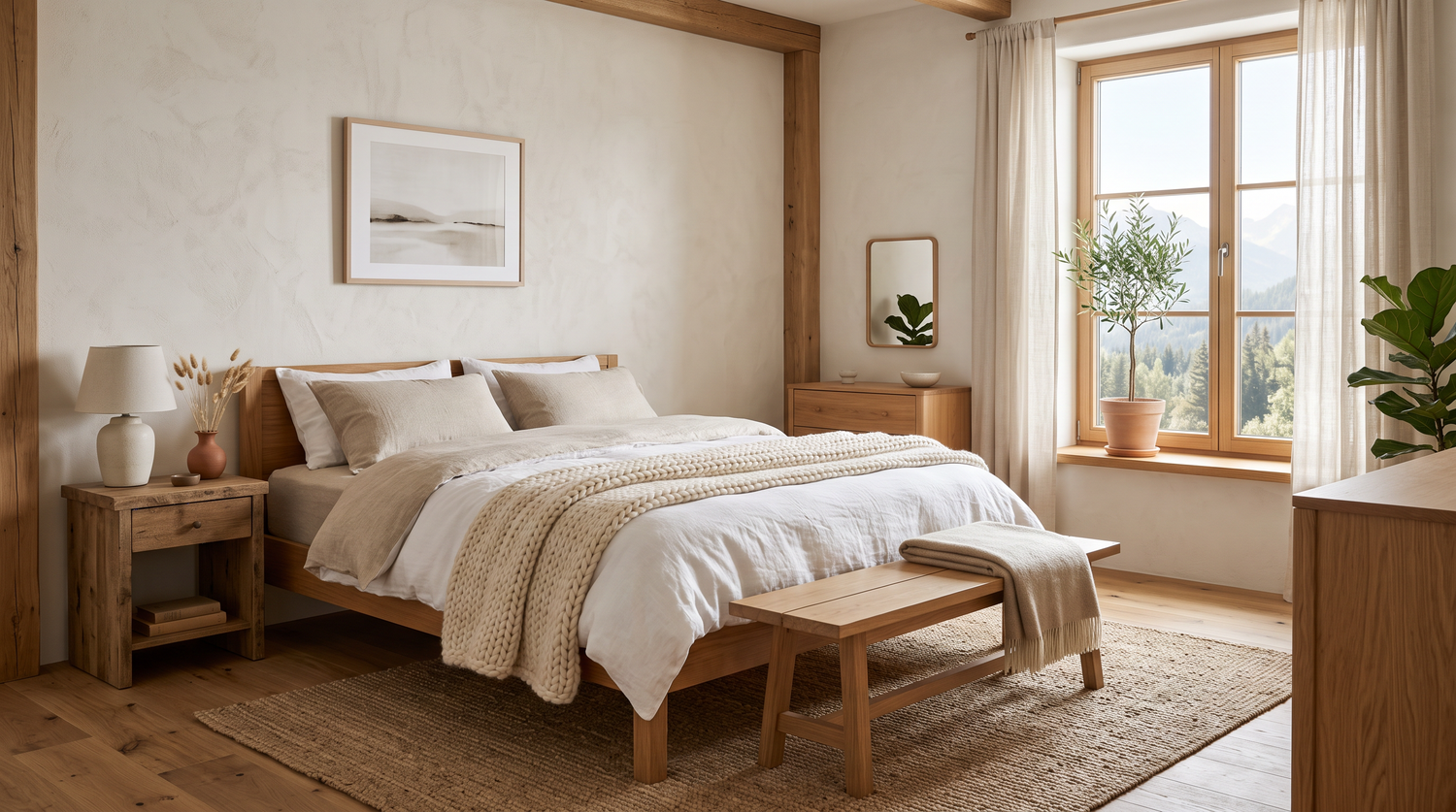
We spend about a third of our lives in the bedroom – yet few people think of this room first when it comes to sustainability. However, it's doubly worthwhile: natural materials and durable products not only conserve resources but also improve the indoor climate and thus sleep quality. A sustainable bedroom isn't created overnight, but step by step – with every conscious purchasing decision.
The short answer: A sustainable bedroom is based on three principles: durability over disposability (high-quality mattresses and solid wood furniture that last decades), natural materials over plastic (linen, cotton, wool, wood), and certified absence of harmful substances (OEKO-TEX and comparable certificates). Those who also opt for second-life products and professional recycling close the loop.
- The most sustainable product is the one that lasts a long time: quality and reparability beat any short-lived trend.
- Natural materials like linen, cotton, wool, and solid wood also improve the sleeping climate.
- Certificates like OEKO-TEX provide assurance regarding harmful substances – especially for mattresses and bedding.
- Second-life mattresses and professional recycling reduce waste and conserve resources.
Principle 1: Durability – the supreme discipline of sustainability
The most ecological purchase is the one you don't have to repeat. A solid wood bed lasts for decades with good care, while cheap particleboard furniture often doesn't survive even a second move. The same applies to mattresses: a high-quality sleeping surface will accompany you for eight to ten years – our article How often should you change your mattress? explains when a change is really necessary. Those who regularly rotate and care for their mattress also extend its lifespan – sustainability begins with care.
Principle 2: Natural materials for bed and room
Natural textiles are breathable, temperature-regulating, and biodegradable – three properties that synthetic fabrics rarely combine. Linen cools in summer, wool warms in winter, cotton is the easy-care all-rounder. Our bed linen material guide compares which fiber is suitable for which purpose. For furniture, it's also worth choosing solid wood from European, certified sustainable forestry – ideally oiled rather than varnished, so the wood can breathe. Houseplants complete the natural indoor climate.

Conventional vs. sustainable: The overview
| Area | Common practice | Sustainable alternative |
|---|---|---|
| Mattress | Buy cheap, replace early | Durable quality with certification, second-life option, recycling at end of life |
| Bed linen | Synthetic blends | Linen, organic cotton or Lyocell, OEKO-TEX certified |
| Furniture | Particleboard with plastic coating | Solid wood from certified sustainable forestry, secondhand furniture |
| Lighting | Continuous lighting, old bulbs | Warm white LED, used purposefully |
| Room climate | Permanently tilted windows, heating turned up | Shock ventilation, 16–19 degrees sleeping temperature – saves energy and promotes sleep |
Principle 3: Sleep free from harmful substances
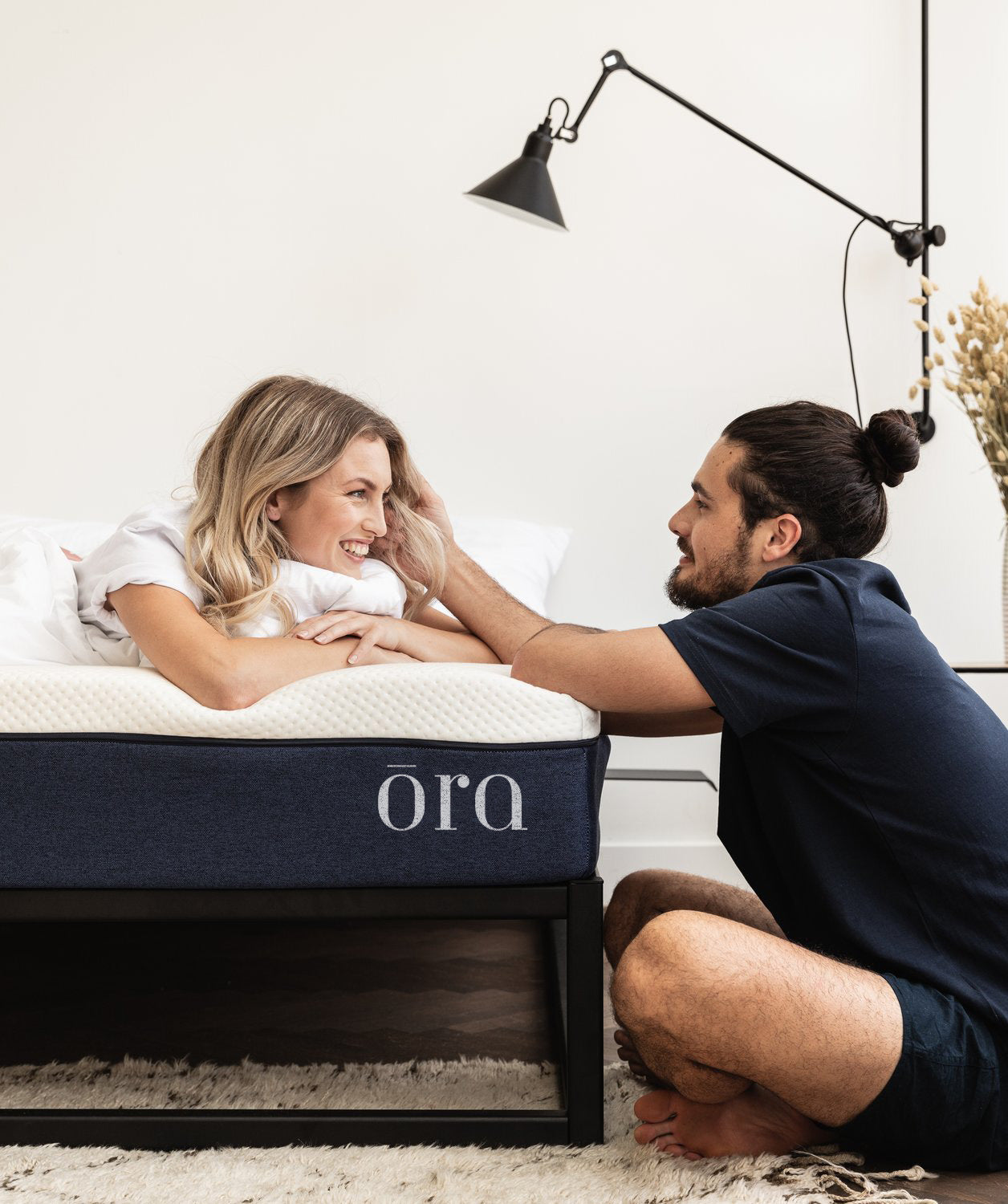
Sustainability also means no unnecessary chemicals in bed. Textiles and mattresses can contain production residues – independent seals of approval provide transparency here. Our guide on OEKO-TEX and harmful substances in mattresses explains what's behind OEKO-TEX and Co. and what to look for when buying a mattress. The Ora Ultra relies on materials tested for harmful substances and a durable EvoPoreHRC Premium memory foam – a mattress that automatically adapts to every body and therefore does not need to be replaced even when partners change or during a move. Precisely this durability is lived sustainability.

Closing the loop: Second life and recycling
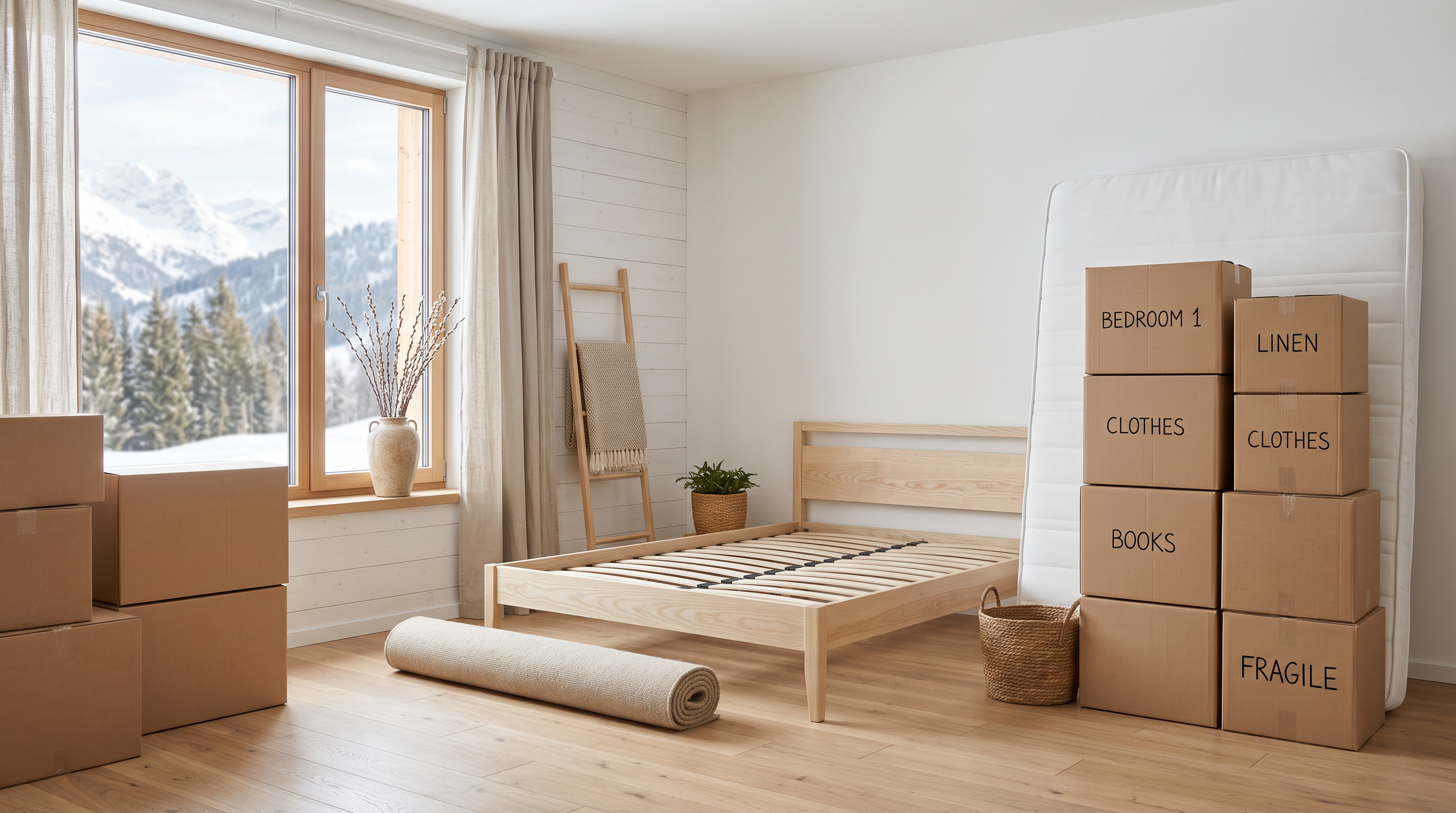
Even the most sustainable product eventually reaches the end of its life – what happens then is crucial. Mattresses don't belong in bulky waste, but in recycling: our article on mattress sustainability and recycling in Switzerland shows how this works. And at the other end of the cycle, second-life concepts come into play: returned, tested and professionally reconditioned mattresses from trial sleeps get a second life – at a significantly lower price and with full functionality. The Ora Ultra Second Life is exactly that: tested quality, less waste, smaller price.
Secure a CHF 25 discount
Subscribe to our newsletter and receive a one-time CHF 25 discount. ✓ 200 nights trial sleep ✓ 10-year warranty
Sleep sustainably well: The Ora Ultra mattress is designed for longevity and automatically adapts to every body thanks to EvoPoreHRC Premium memory foam – a mattress for everyone, without firmness levels. Even more resource-efficient: the professionally reconditioned Ora Ultra Second Life.
Frequent questions about sustainable bedrooms
What is the most important aspect of a sustainable bedroom?
Longevity. A high-quality product that lasts twice as long halves resource consumption – regardless of the material. This is followed by natural materials, certified absence of harmful substances, and an energy-efficient indoor climate.
Are second-life mattresses hygienic?
Yes, provided they are professionally reconditioned: returns from trial sleeping are inspected, cleaned, and fitted with a new cover. The result is a fully functional mattress at a reduced price – and significantly less waste.
Which certificates are useful for mattresses and bed linen?
OEKO-TEX Standard 100 is the best-known proof for textiles tested for harmful substances. For wooden furniture, it's worth looking for FSC or PEFC certification for sustainable forestry.
Is a cool bedroom really more sustainable?
Yes – and healthier: 16 to 19 degrees Celsius are considered the ideal sleeping temperature. Those who do not overheat the bedroom save energy and demonstrably sleep better. A breathable mattress and the right duvet compensate for temperature fluctuations.




Leave a comment
This site is protected by hCaptcha and the hCaptcha Privacy Policy and Terms of Service apply.