
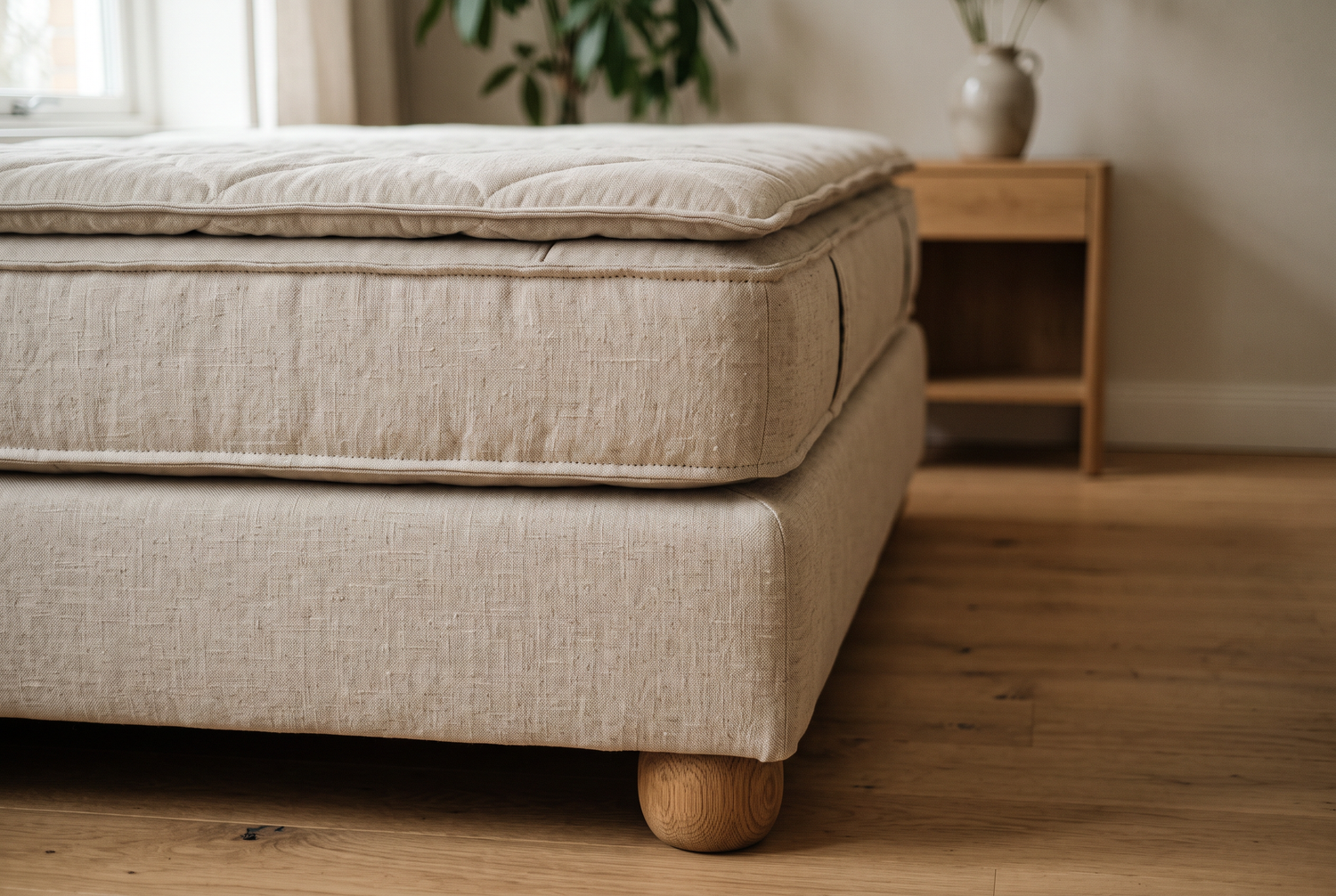
In recent years, the box spring bed has also become established in Swiss bedrooms. It looks high-quality, is comfortably high, and resembles a good hotel bed. At the same time, the term is barely protected: everything from solid three-layer systems to inexpensive bed bases with an attached foam board is sold as a box spring bed. If you don't know the difference, you can quickly pay a lot of money for a construction that doesn't deserve the name. This guide explains the correct structure of a box spring bed, what each layer does, and how to recognise in the store whether you have a genuine system in front of you.
The short answer: A genuine box spring bed consists of three superimposed layers: the box with an integrated spring core as the base, an independent mattress on top of it, and a topper of about four to eight centimetres as the uppermost comfort layer. A slatted frame is completely omitted – the suspension is in the base. This construction creates a high entry height of 55 to 70 centimetres and a tiered, springy sleeping sensation. If one of the three layers is missing, or if the box is just a wooden frame with a foam overlay, it is not a genuine box spring bed.
- Three layers are mandatory: spring core box, mattress, topper – in exactly that order.
- A slatted frame is omitted; the box with its own spring core provides the sub-suspension.
- Typical total height: 55–70 cm entry height, which makes getting in and out of bed easier.
- Warning signs for cheap goods: box without a spring core, missing or very thin topper, no information on mattress materials.
Layer 1: the box with spring core
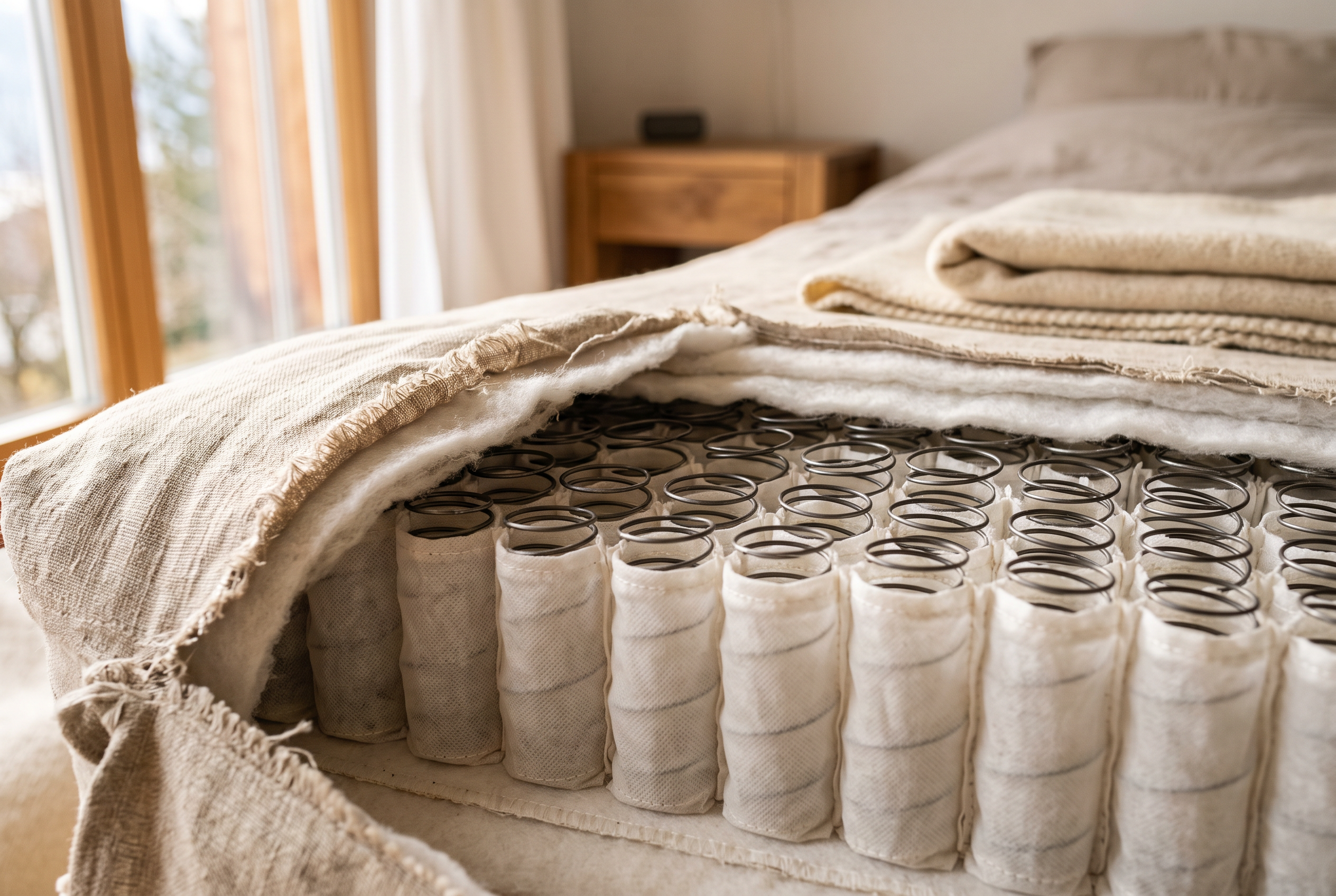
The base is the eponymous element. Within a sturdy wooden frame – ideally solid wood, not particleboard – sits its own spring core, usually a Bonnell or pocket spring core. This core is upholstered and covered with fabric, so from the outside, only an upholstered box is visible. The box performs two tasks: it replaces the slatted frame as the sub-suspension and dampens movements before they reach the mattress. The bed rests on wooden or metal feet, which also provide ground clearance and ventilation. A common quality issue: inexpensive models use a box without a genuine spring core, containing only foam. In the store, tap the side of the box – a genuine spring core sounds hollower and springs back noticeably.

Layer 2: the mattress
On top of the box lies a full-fledged mattress, usually with a pocket or barrel pocket spring core, less often made of cold foam. It is the actual support element and determines how well your spine is supported. Important: This mattress is usually an integral part of the system but is replaceable – explicitly ask when purchasing if and how it can be replaced. This is precisely where quality separates from appearance: if a provider gives no information on spring count, density, or core height, there's usually little substance behind it. A sensible core height is 18 to 24 centimetres. For classifying types, the mattress type comparison can help.
Layer 3: the topper
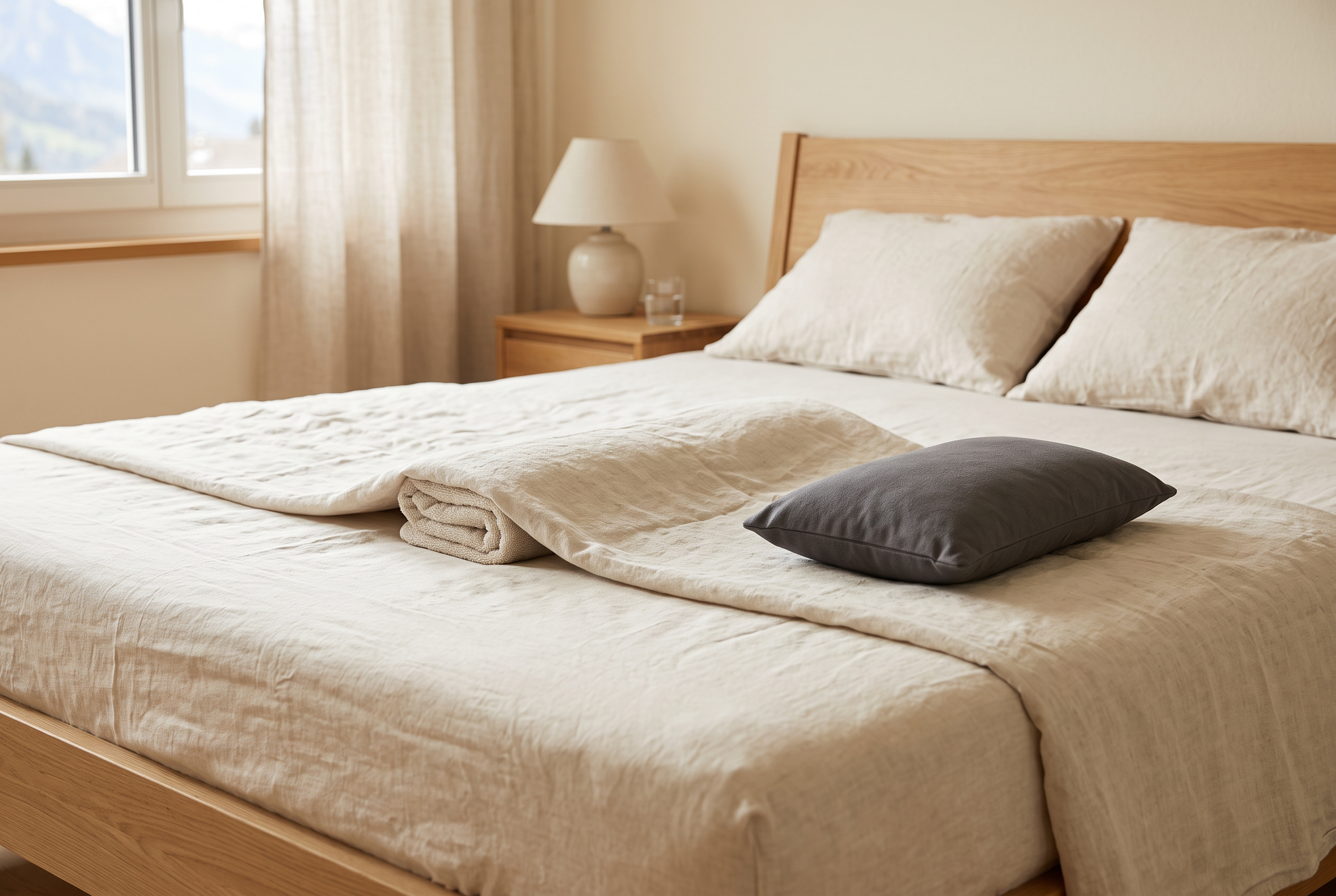
With a box spring bed, the topper is not an optional extra but part of the construction. It lies loosely on top and performs three tasks: it creates a soft contact zone for the body, relieves pressure points on the shoulders and hips, and protects the mattress from moisture and abrasion. Common heights are four to eight centimetres. Materials: cold foam for a springy feel, viscoelastic foam for close body conformity, latex for high point elasticity. For double beds, the continuous topper is a practical side effect: it covers the gap between two mattresses. What you need to know about choosing one can be found in the topper guide.
The three layers at a glance
| Layer | Typical height | Function | Quality feature |
|---|---|---|---|
| Box (base) | 20–30 cm | Sub-suspension, replaces the slatted frame | Solid wood frame, genuine spring core |
| Mattress | 18–24 cm | Spinal support | Spring count or density specified |
| Topper | 4–8 cm | Pressure relief, mattress protection |







Leave a comment
This site is protected by hCaptcha and the hCaptcha Privacy Policy and Terms of Service apply.