
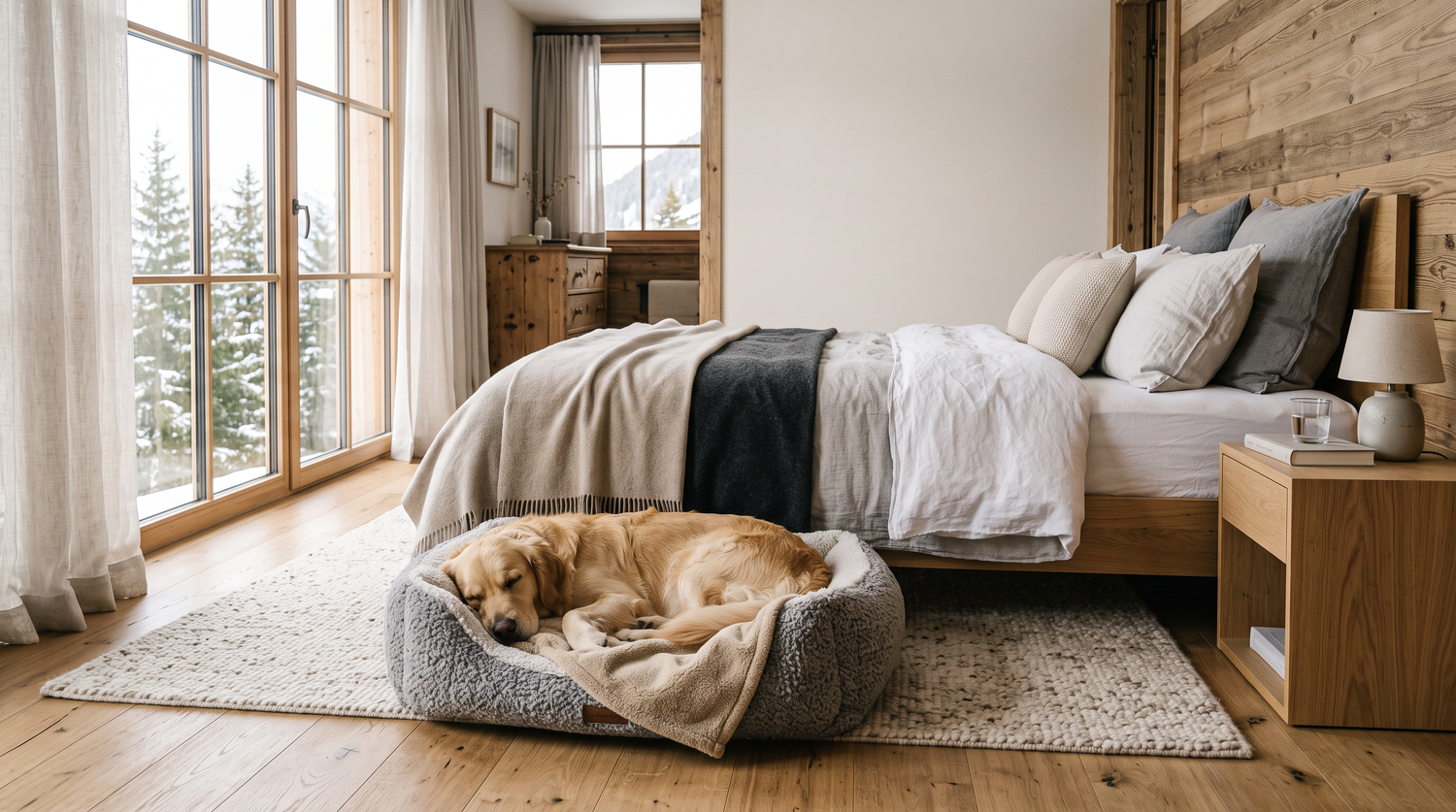
For some, it's the best thing ever; for others, a hygienic no-go: pets in the bedroom. Around half of all dog and cat owners let their pet into the bedroom at night – many even into the bed. But how does that affect sleep? The answer is more nuanced than either side might believe: it depends on the animal, the person, and a few clear rules.
The short answer: A pet in the bedroom is generally unproblematic for healthy people without allergies – many even find the closeness comforting and subjectively sleep better. It becomes measurably more disruptive when the pet sleeps in the bed: movements, noises, and warmth fragment sleep more than most people realize. The best compromise for both humans and animals: a dedicated, fixed sleeping spot in the room – combined with consistent hygiene around the bed.
- Pet in the room: usually unproblematic and often calming. Pet in the bed: measurably more sleep interruptions.
- For allergy and asthma sufferers, the bedroom should consistently remain a pet-free zone.
- A dedicated sleeping spot in the room is the best compromise – animals appreciate fixed places anyway.
- Hygiene is manageable: washable blankets, regular vacuuming, and a mattress protector.
What research says: comforting – but disruptive
Studies on the topic paint a dual picture. On one hand, many pet owners report that the presence of their pet provides a sense of security, helps them unwind, and reduces anxiety – effects that can be valuable, especially for people with difficulty falling asleep or nocturnal overthinking. On the other hand, measurements with sleep trackers show: those who have their pet in bed wake up more often and sleep more restlessly – even if they don't remember it in the morning. Dogs dream and move, cats are nocturnal and change their spot several times, and an animal at the foot of the bed restricts one's own sleeping position. Micro-awakenings accumulate and cost deep sleep – similar to a restless human partner.
Room yes, bed no: The proven compromise
The best solution for most: The pet sleeps in the bedroom, but in its own spot – dog bed, basket, or cushion. Human and animal have the closeness, but each has their undisturbed sleeping surface. Dogs can be well accustomed to a fixed spot with a bit of consistency: initially, place the bed directly next to yours, quietly praise the animal whenever it voluntarily goes to its own bed, and avoid exceptions – especially at night. With cats, it's trickier; here, an attractive alternative spot at bed height helps, such as a cushion on the windowsill or a small platform, as cats prefer elevated, warm places with a good overview.

For whom the bedroom should remain pet-free
Clear boundaries apply to allergies and respiratory diseases: pet hair and, above all, the allergenic dander spread in textiles and remain active there for months. For allergy and asthma sufferers, the bedroom should be a consistently pet-free zone – along with the measures from our article on an allergy-friendly bedroom. Also, for very light sleepers, those with sleep disorders, or if the animal itself sleeps restlessly, the door between bed and pet is often the better solution. By the way: for the animal too, a dedicated, quiet sleeping place is not a sacrifice, but appropriate for its species.
Hygiene: How to keep the bed clean despite fur
| Measure | Frequency | Effect |
|---|---|---|
| Place a washable blanket over the foot of the bed | Wash weekly | Catches hair and dirt before they reach the bedding |
| Vacuum the bedroom (incl. under the bed) | 2–3 times per week | Reduces hair, dander, and dust mite food |
| Change bedding | Weekly | More often than standard for pets in the room |
| Use a mattress protector | Wash monthly | Protects the mattress from hair, dirt, and accidents |
| Wash pet's sleeping spot | Weekly | Keeps odors and parasites in check |
Should something go wrong – paw prints, vomit, or an accident – our guides on removing stains from mattresses and removing odors from mattresses can help. A washable mattress protector makes such incidents harmless from the outset.

If the pet sleeps in the bed: Damage control
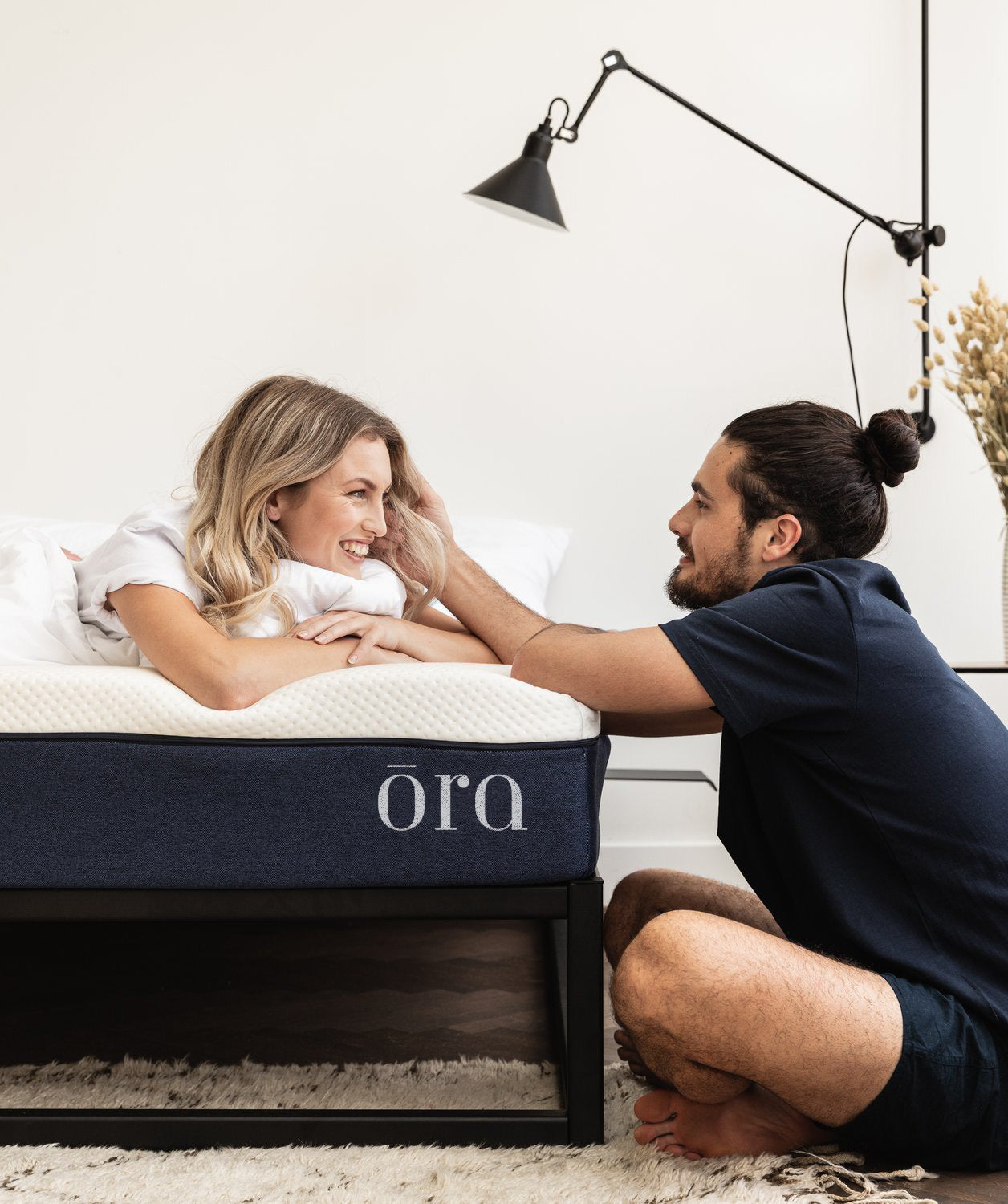
If you don't want to give up your pet in bed, you can at least minimize disturbances: a larger sleeping surface (from 160x200 cm) so everyone has space, a dedicated blanket just for the pet – and a mattress that absorbs movements. This is where the Ora Ultra shines: The EvoPoreHRC premium memory foam noticeably dampens movements – whether from a partner or a four-legged friend – and automatically adapts to body and sleeping position, without firmness levels. The removable, washable cover is invaluable when sharing with pets.
Get CHF 25 discount
Subscribe to our newsletter and receive a one-time CHF 25 discount. ✓ 200 nights trial sleep ✓ 10 years warranty
Pet-friendly sleep: The Ora Ultra mattress dampens movements, automatically adapts to every body, and has a removable, washable cover – ideal for households with four-legged friends. The Ora Ultra Topper additionally protects the mattress.
Frequently asked questions about pets in the bedroom
Is it unhygienic if the dog sleeps in the bedroom?
Not with a healthy, well-groomed, and dewormed dog. With a washable blanket, regular vacuuming, and weekly bedding changes, the room can be kept clean. It only becomes critical if there are allergies in the household.
Do you sleep worse if the cat is in bed with you?
Measurably often, yes: cats are nocturnal, change their spot several times, and sometimes demand attention at night. Many owners don't remember the micro-disturbances in the morning but feel the reduced recovery. An attractive, dedicated sleeping spot in the room is the best compromise.
How do I train my dog to sleep in its own spot?
With consistency and positive reinforcement: initially place the bed directly next to yours, quietly reward every independent settling, avoid nocturnal exceptions. After two to four weeks, the new spot is natural for most dogs.
What to do if there is pet hair on the mattress?
Vacuum with the upholstery nozzle, remove stubborn hairs with a lint roller or a slightly damp rubber glove. A mattress protector prevents hair from reaching the mattress in the first place.







Leave a comment
This site is protected by hCaptcha and the hCaptcha Privacy Policy and Terms of Service apply.