
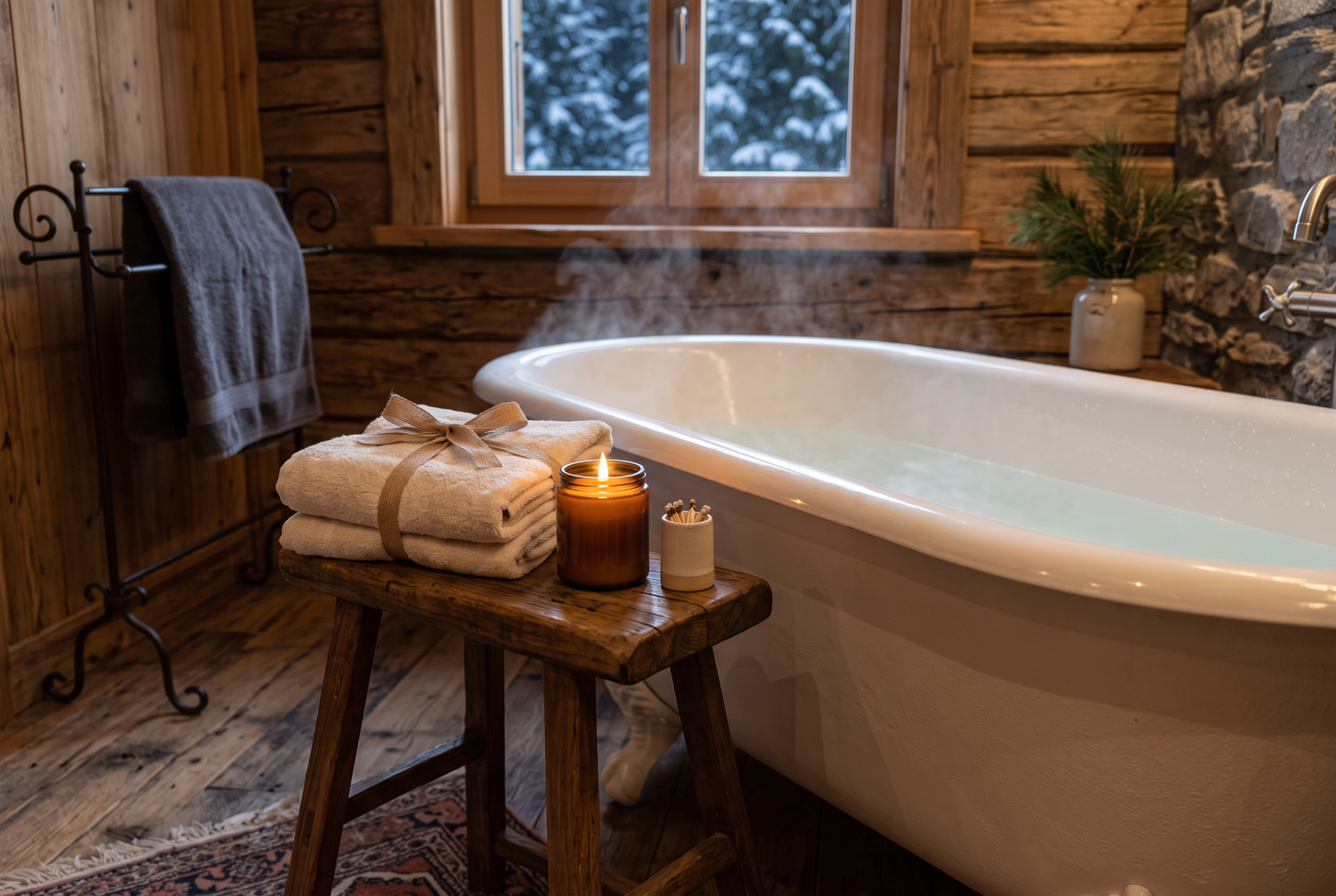
For generations, a warm evening bath has been considered a home remedy for good sleep – and it's one of the few home remedies clearly confirmed by research. A highly regarded analysis of over a dozen studies concluded: A warm bath or shower, timed correctly, shortens the time it takes to fall asleep by an average of about 10 minutes and improves subjective sleep quality. The surprising aspect is the mechanism – it's not the warmth itself that makes you drowsy, but the subsequent cooling. The warm water opens blood vessels in the hands and feet, the body releases heat, core body temperature drops – and precisely this drop is the body's strongest natural signal for sleep onset. For this effect to occur, however, water temperature, duration, and especially timing must be right. This guide provides the specific numbers, explains the physiology, and shows how to optimally integrate the bath into your evening routine – including alternatives for those without a bathtub.
The short answer: Yes – a warm bath or shower at about 40 to 42.5 °C for 10 to 20 minutes, taken 1 to 2 hours before bedtime, measurably shortens the time it takes to fall asleep in studies and improves sleep quality. The trick is timing: The bath boosts heat dissipation through the skin, causing the core body temperature to drop by a few tenths of a degree after the bath – the natural start signal for sleep. Bathing very hot directly before bed is more likely to achieve the opposite effect, as the body will still be heated up in bed.
- Meta-analyses show: Warm bathing or showering (approx. 40–42.5 °C) shortens the time it takes to fall asleep by an average of about 10 minutes.
- The ideal time is 1 to 2 hours before bedtime – not directly beforehand.
- 10 to 20 minutes are sufficient; longer and hotter does not provide additional benefits and strains the circulatory system.
- The effect is based on the subsequent cooling: Dilated skin vessels cause the core temperature to drop – the sleep onset signal.
- Warm showers and foot baths also work – ideal for those without a bathtub or with cold feet.
The Temperature Trick: Why Warmth Helps with Cooling Down
Core body temperature follows a 24-hour rhythm: it reaches its maximum in the early evening, needs to drop by about 0.5 to 1 °C to fall asleep, and reaches its minimum in the early morning hours. The body cools down by directing warm blood to the skin of the hands and feet and radiating heat from there – researchers speak of the distal-proximal gradient: warm feet and a cooling core is the perfect constellation for falling asleep. This is precisely where the warm bath comes in: It significantly dilates the skin vessels and kick-starts heat dissipation. After the bath, this dissipation continues – the core temperature drops more significantly in the following 60 to 90 minutes than without a bath, and this accelerated drop acts as an amplifier of the natural sleep signal. This is why the timing is so important: Anyone who goes straight from a hot tub to bed is still in the heating phase – and an overheated body struggles to fall asleep, as also shown in the article on ideal sleep temperature.
What the studies specifically show
The most well-known systematic analysis (involving 17 studies) found: Passive body warming through a bath or shower at 40 to 42.5 °C, timed 1 to 2 hours before sleep, shortened the time it took to fall asleep by an average of about 10 minutes – a magnitude comparable to some over-the-counter sleep aids, without their side effects. Additionally, participants reported better subjective sleep quality and, in some cases, more deep sleep. The details are interesting: even 10 minutes in warm water were sufficient for measurable effects; longer bathing times did not provide proportional additional benefits. The method is particularly well-researched and effective for older people, whose temperature regulation has become slower, and for people with difficulty falling asleep – those who fall asleep within 5 minutes anyway will hardly notice a difference. For an honest assessment, it should also be noted: the studies vary in size and methodological heterogeneity, and a bath does not replace treatment for chronic insomnia – but as a risk-free component of an evening routine, it is surprisingly well-documented.

The Guide: How to Bathe Your Way to Sleep
Timing: Plan the bath 1 to 2 hours before bedtime – so, if bedtime is 11 p.m., then between 9 p.m. and 10 p.m. Temperature: 40 to 42.5 °C; this should feel distinctly warm, but not painfully hot. A bath thermometer (starting at about 10 Swiss francs) takes away the guesswork. Duration: 10 to 20 minutes is enough – get out before you feel dizzy or too hot. Afterwards: gently towel dry, slip into comfortable, breathable clothing, and spend the rest of your evening routine in dim light – read, drink tea, do breathing exercises. After the bath, avoid strenuous activities and bright screens, otherwise you'll lose the relaxation advantage. The bedroom should be ventilated to 16 to 19 °C during this time: The coolness supports the temperature drop initiated by the bath. Extra tip for cold feet: After the bath, put on thin socks – warm feet keep the vessels open and heat dissipation going; the article on cold feet when falling asleep explains why this works.
No Bathtub? Shower, Foot Bath & Co. in Comparison
The good news: The effect depends on skin warming, not the tub.
| Method | Temperature | Duration | Best Time |
|---|---|---|---|
| Full bath | 40–42.5 °C | 10–20 min. | 1–2 h before sleep |
| Warm shower | approx. 40–42 °C | 5–10 min. | 1–2 h before sleep |
| Foot bath | approx. 38–42 °C | 15–20 min. | 30–60 min. before sleep |
| Sauna | 80–90 °C (air) | 2–3 sessions of 8–15 min. | Early evening, at least 2–3 h interval |
The warm shower is the pragmatic everyday standard – in studies, it had comparable effects to a full bath. The foot bath is the gentlest option: it specifically warms the feet, opens the blood vessels there, and is also suitable for people for whom a full bath is too much for their circulatory system – for example, during pregnancy or in old age. Finally, the sauna is a stronger stimulus and requires more time before bedtime.
Common Mistakes with Evening Baths
Mistake 1: bathing too late. Directly before bedtime, the body is still heated up – the time it takes to fall asleep is more likely to increase. Maintain at least a 60-minute interval. Mistake 2: too hot. Water above 43 °C strains the circulatory system and skin, can cause blood pressure to drop, and makes subsequent cooling more difficult. Mistake 3: too long. After 20 minutes, the benefits are exhausted; longer sessions dry out the skin and tire the circulatory system instead of relaxing it. Mistake 4: reactivating afterwards – bright light, emails, exciting TV shows nullify the relaxation effect. Mistake 5: taking a hot bath without consultation if you have cardiovascular diseases, venous conditions, or are pregnant – in these cases, always check with a doctor beforehand; if in doubt, opt for the milder foot bath. Mistake 6: viewing the bath as a single measure. It is most effective as a fixed component of a consistent routine – the article on the perfect evening routine shows how to build one.
Who an Evening Bath Particularly Benefits
Three groups benefit disproportionately. Firstly, people with cold hands and feet: their constricted skin vessels hinder nocturnal heat dissipation – the bath opens these vessels, directly removing this barrier to sleep. Secondly, older people: as we age, thermoregulation becomes slower and the temperature rhythm flatter; passive warming gives the system a significant boost – studies with seniors showed not only shorter sleep onset time but also more deep sleep. Thirdly, people with difficulty falling asleep due to tension: the bath combines the temperature effect with muscle relaxation and a clear end-of-day ritual – psychology and physiology work together. However, late hot bathing is less suitable on hot summer nights when the bedroom is already above 25 °C: then, cooling down after the bath is harder – tips for these nights can be found in the article Cooling the Bedroom in Summer. And for those with heart problems, the temperature and duration should always be discussed with a doctor.

Get CHF 25 off
Subscribe to our newsletter and receive a one-time CHF 25 discount. ✓ 200 nights trial sleep ✓ 10-year warranty
Frequently Asked Questions about Warm Evening Baths
When should one bathe before going to sleep?
Ideally, 1 to 2 hours before bedtime. In this window, the body has time to dissipate excess heat – the core temperature then drops precisely at bedtime, which accelerates falling asleep. Bathing directly before bedtime is counterproductive.
How warm should the bath water be?
Studies usually work with 40 to 42.5 °C – distinctly warm, but not painfully hot. Above 43 °C, circulatory strain increases without additional benefit. A bath thermometer helps to reliably hit the temperature.
How long should the evening bath last?
10 to 20 minutes are sufficient – even 10 minutes showed measurable effects on sleep onset time in studies. Longer bathing does not bring proportional additional benefits, dries out the skin, and can tire the circulatory system.
Does a warm shower work as well as a full bath?
Yes, in the analyzed studies, warm showers showed comparable effects on sleep onset time and sleep quality. The key is skin warming, not immersion – 5 to 10 minutes of warm showering, 1 to 2 hours before sleep, is sufficient.
Does a foot bath also help with falling asleep?
Yes – a foot bath at 38 to 42 °C for 15 to 20 minutes specifically warms the feet and opens the skin vessels through which the body dissipates heat at night. It is the gentlest option for the circulatory system and can be taken closer to bedtime, about 30 to 60 minutes beforehand.
Is hot bathing in the evening suitable for everyone?
No. For cardiovascular diseases, low blood pressure, pronounced venous conditions, or during pregnancy, temperature and duration should be discussed with a doctor. The milder foot bath is often the safer alternative here. If you feel dizzy or unwell, end the bath immediately.
This article is for general information purposes only and does not replace medical advice.








Leave a comment
This site is protected by hCaptcha and the hCaptcha Privacy Policy and Terms of Service apply.