
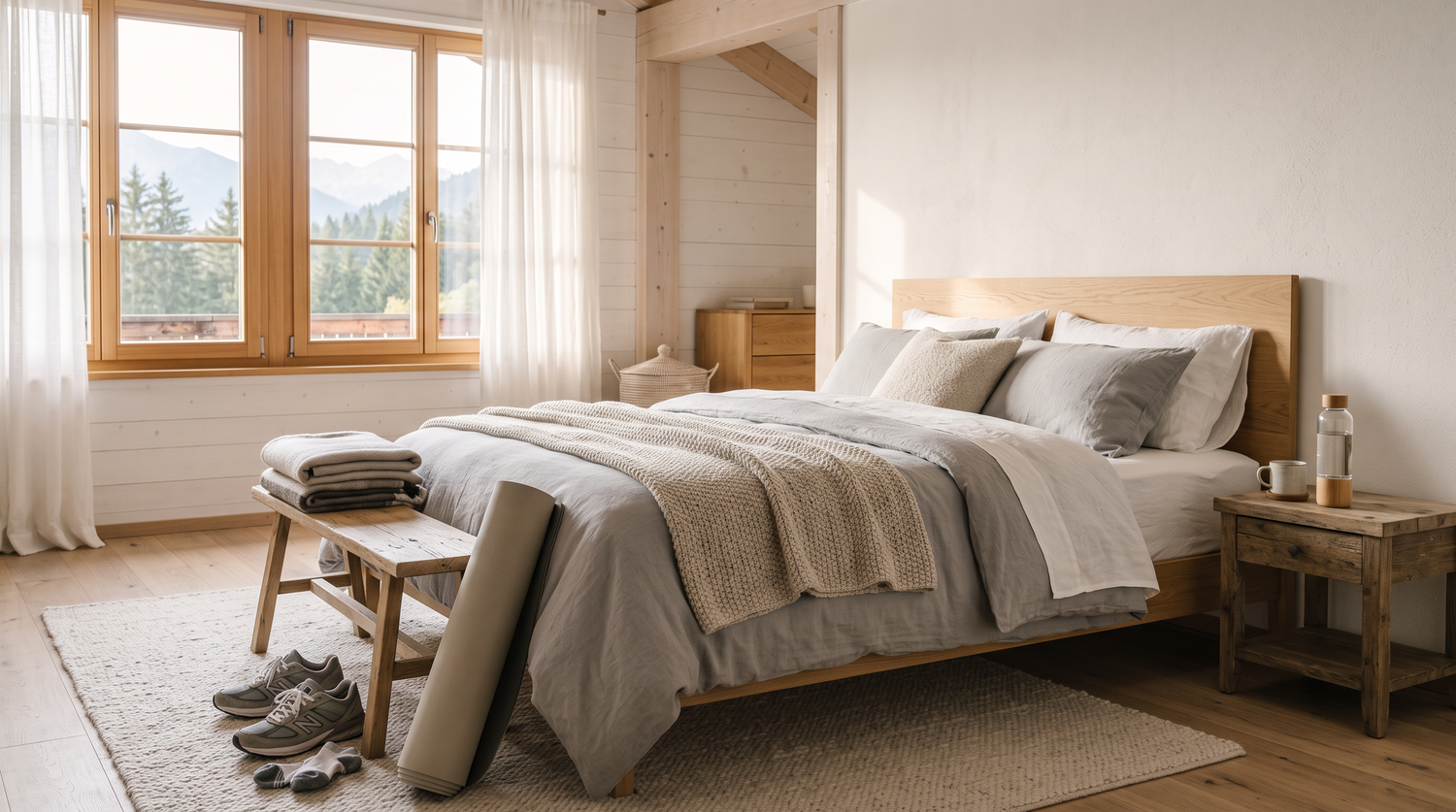
Training plan, nutrition, supplements – ambitious athletes optimize many things. Yet the most effective regeneration tool costs nothing and is still most frequently neglected: sleep. Muscles don't grow during training, but in the recovery afterward – and most of this recovery takes place at night. This article shows what happens in an athlete's sleeping body, how lack of sleep affects performance and injury risk, and how you can specifically improve your recovery.
The short answer: For athletic recovery, sleep is more important than any recovery gadget. During deep sleep, the body releases up to 70 percent of its daily growth hormone, repairs muscle fibers, replenishes energy stores, and consolidates newly learned movement sequences. Those who regularly sleep less than 7 hours risk measurably less strength, slower sprint times, poorer reaction times, and a significantly higher risk of injury. 8 to 9 hours is a realistic goal for active people.
- During deep sleep, muscle repair and growth hormone release are at their maximum – the actual training adaptation happens at night.
- Lack of sleep reduces strength, endurance, and reaction time and can more than double the risk of injury in young athletes.
- The immune system and mental recovery (motor learning, motivation) are also directly linked to sleep quality.
- Regular sleep times, a cool bedroom, and a pressure-relieving, adaptive mattress are the foundation of any recovery strategy.
What happens in an athlete's body at night
Deep sleep: the muscle workshop
Immediately after falling asleep, deep sleep dominates – the most anabolic phase of the entire day. Now the pituitary gland releases most of the growth hormone, which repairs micro-injuries in muscle fibers, strengthens tendons and bones, and supports fat metabolism. At the same time, the catabolic stress hormone cortisol decreases. Those who shorten deep sleep – for example, through late training, alcohol, or frequent awakenings – slow down precisely the processes they have trained for. Our article on sleep phases provides an overview of all phases.
REM sleep: mental technique training
In the second half of the night, the proportion of REM sleep increases. Here, the brain consolidates movement patterns: The new serve, the cleaner squat, the skiing technique – all of this is transferred into long-term memory at night. Studies show that motor skills can be recalled better after a full night's sleep than immediately after practicing.
Immune system and inflammation regulation
Intense training generates controlled inflammatory stimuli. During sleep, the body reduces these inflammations and strengthens the immune system. Chronic sleep deprivation has the opposite effect: It keeps inflammatory markers high – a risk factor for overtraining and infections.

What lack of sleep costs athletes
Research is clear: Even one night with less than 6 hours of sleep noticeably impairs reaction time and decision-making ability. In youth athletes, a widely cited study found more than twice the risk of injury with chronically less than 8 hours of sleep. Conversely, extending sleep to about 10 hours significantly improved sprint times and shooting percentage in Stanford University basketball players.
| Performance factor | With sleep deprivation (< 6–7 hours) | With optimal sleep (8–9 hours) |
|---|---|---|
| Maximum strength & power | Reduced, earlier fatigue | Fully available |
| Reaction time | Significantly slowed | Fast and stable |
| Injury risk | Significantly increased | Reduced |
| Muscle growth | Inhibited, more muscle breakdown | Maximum protein synthesis |
| Motivation & technique | Decreasing training quality | Improved motor learning |
| Immune system | More susceptible to infection | Stable |
7 Recovery Rules for Better Athlete Sleep
1. Plan sleep like a training session
If you train five times a week, you should also schedule sleep firmly: consistent bedtimes and wake-up times, an 8–9 hour window. Our guide How much sleep is enough? clarifies how much your body really needs.
2. Avoid intense training too late
Hard sessions shortly before bedtime keep heart rate, body temperature, and nervous system at operating temperature. Ideally: at least 2–3 hours between intense training and sleep; in the evening, rather light cool-downs, mobility, or stretching.
3. Sleep cool
Core body temperature must drop to fall asleep. A bedroom around 18 degrees Celsius and breathable materials help – especially for athletes who tend to sweat at night after training. Worth reading: our articles on ideal sleeping temperature and cooling mattresses.
4. Evening routine for the nervous system
Breathing exercises, light stretching, or reading lower sympathetic tone. If you find it hard to unwind after training, the guide Falling asleep faster offers concrete techniques – our overview of sleep hygiene provides the basics.
5. Time nutrition and fluids
A protein-rich, light meal in the evening supports nocturnal muscle repair. Alcohol, on the other hand, severely disrupts deep sleep and hormone release – even the "reward beer" after a competition has its price.
6. Smartly use power naps
A nap of 20–30 minutes in the early afternoon can cushion training deficits without disturbing night sleep. Avoid longer naps after 4 PM.
7. Match the sleeping surface to your body
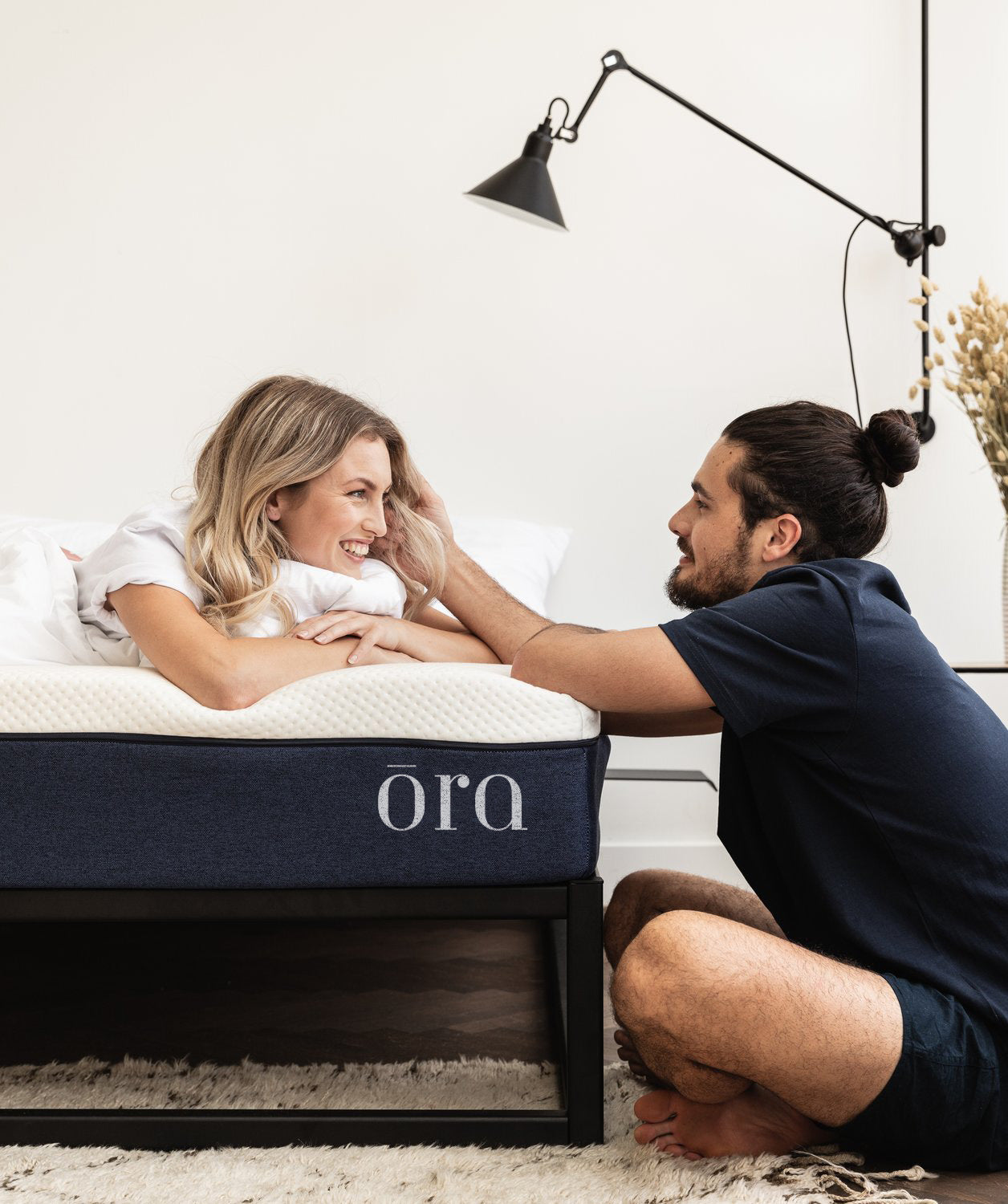
Athletes' bodies are different: more muscle mass in shoulders and glutes, often broader shoulders, higher weight in strength athletes. A rigid firmness cannot reflect this – especially since firmness levels are not standardized and vary completely depending on the manufacturer. Adaptive materials like the EvoPoreHRC Premium memory foam of the Ora mattress automatically adapt to body and sleeping position: shoulders and hips sink specifically, the spine remains straight, pressure points on strained muscles are relieved. Why we don't believe in the firmness concept is detailed under Mattress firmness – and how sleep additionally controls metabolism, in the article Sleep, weight, and metabolism.

Get CHF 25 discount
Subscribe to newsletter and receive a one-time CHF 25 discount. ✓ 200 nights trial sleep ✓ 10 years warranty
Your nightly recovery tool: the Ora Ultra Mattress
The Ora Ultra Mattress with adaptive EvoPoreHRC Premium memory foam automatically adapts to body shape, weight, and sleeping position – ideal for athletes whose bodies need to recover from peak performance. Budget-conscious athletes will find a sustainable alternative in the Ora Ultra Second Life Mattress. With 200 nights of trial sleep and a 10-year warranty, you can test it risk-free.
Frequently Asked Questions about Sleep and Athletic Recovery
How much sleep do athletes need?
Active people tend to need more sleep than average: 8 to 9 hours are considered optimal, and even more during intense training periods or in competitive sports. Below 7 hours, recovery, performance, and injury prevention measurably suffer.
Do muscles really grow during sleep?
Yes. The repair and thickening of muscle fibers occur during the recovery phase – especially during deep sleep, when the body releases most of its growth hormone and protein synthesis is running at full speed.
Is sleep more important than ice baths, massages, and the like?
According to current research, yes. No other recovery tool has such a broad and well-documented effect on muscle repair, hormone balance, immune system, and mental freshness as sufficient, good-quality sleep. Ice baths and massages can supplement, but not replace, sleep.
Why do I sleep poorly after intense training?
Intense sessions raise body temperature, heart rate, and stress hormones for several hours. If training is too close to bedtime, falling asleep becomes difficult. Plan for 2–3 hours of separation and focus on calming routines and a cool bedroom in the evening.
What kind of mattress is suitable for athletes?
It is crucial that the mattress relieves pressure on strained muscles and joints and keeps the spine straight in every position. Adaptive foams that automatically conform to the body and sleeping position achieve this more reliably than rigid firmness levels, which are not standardized.
This article serves as general information and does not replace medical advice.




Leave a comment
This site is protected by hCaptcha and the hCaptcha Privacy Policy and Terms of Service apply.